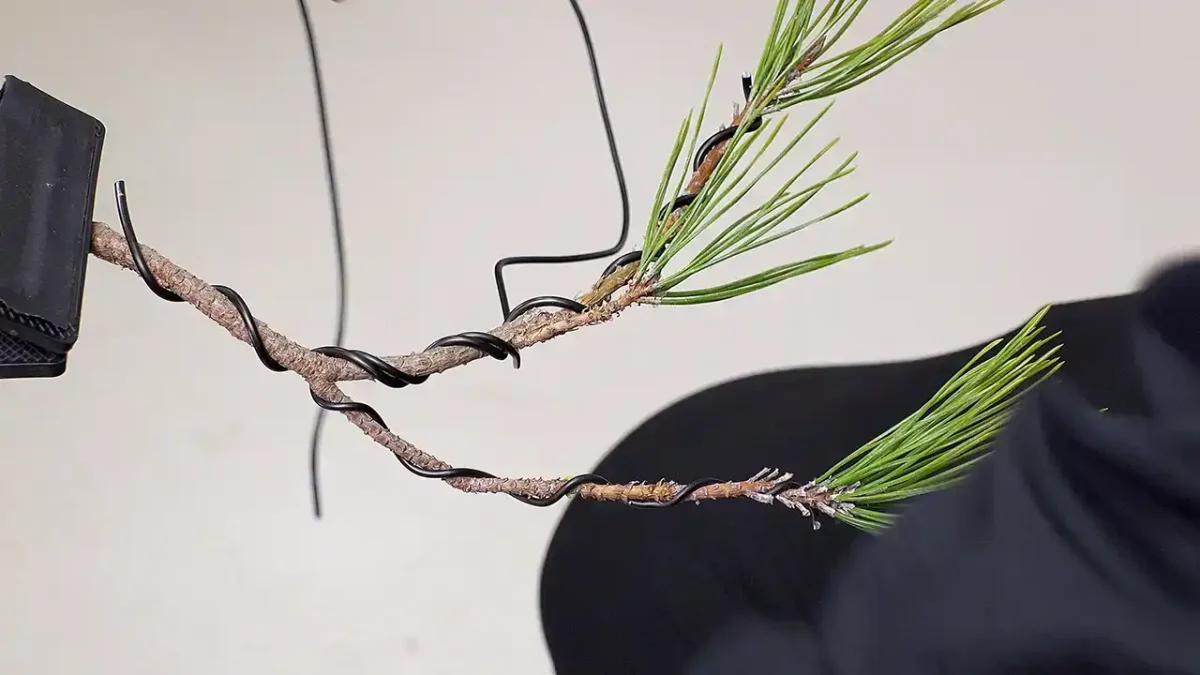
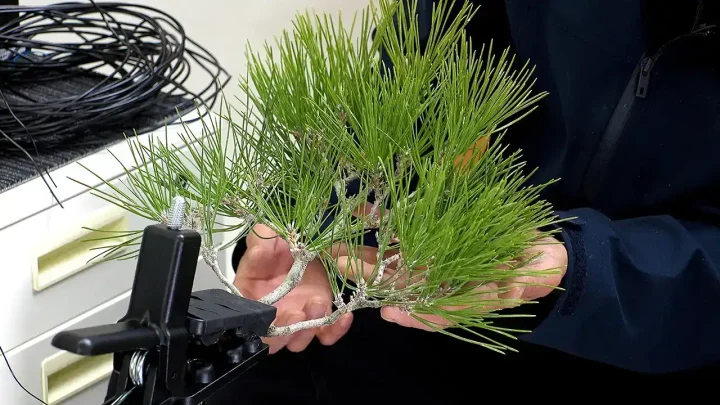
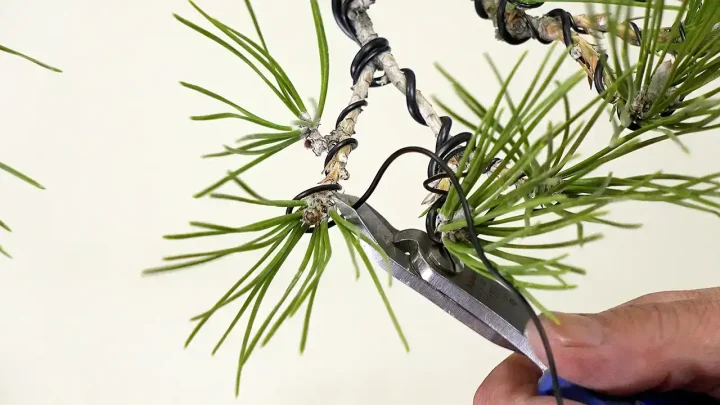
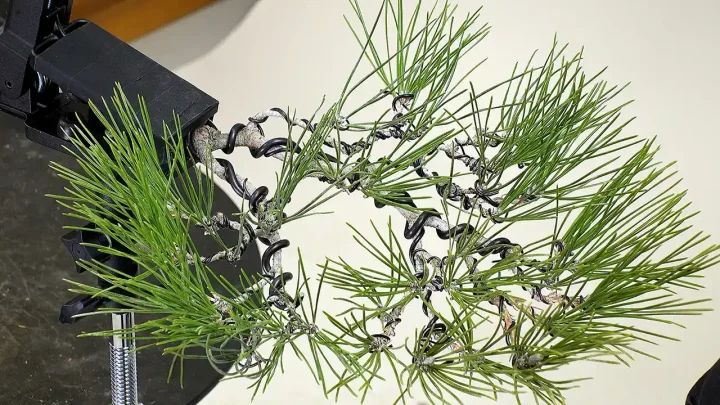
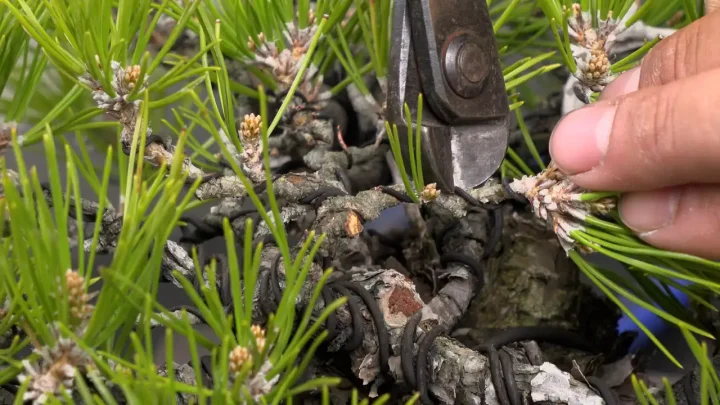
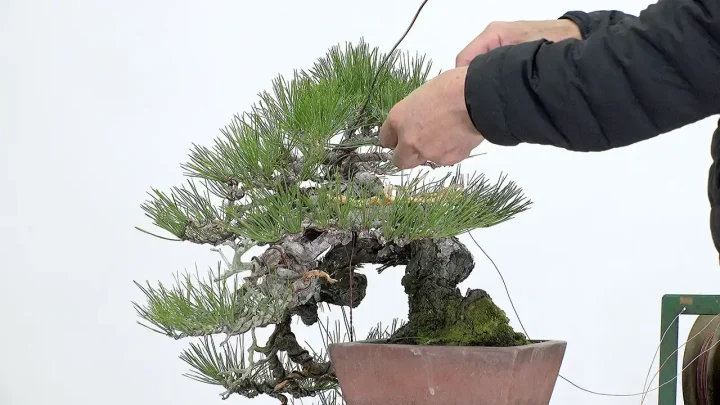
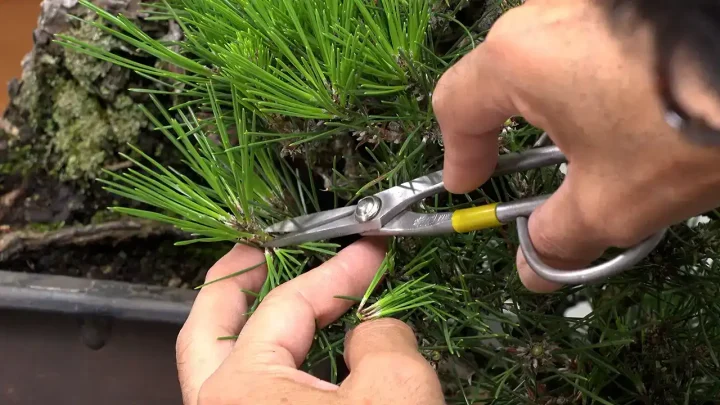
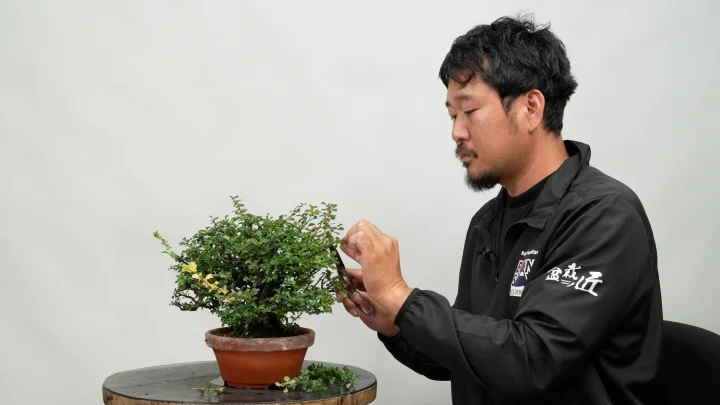
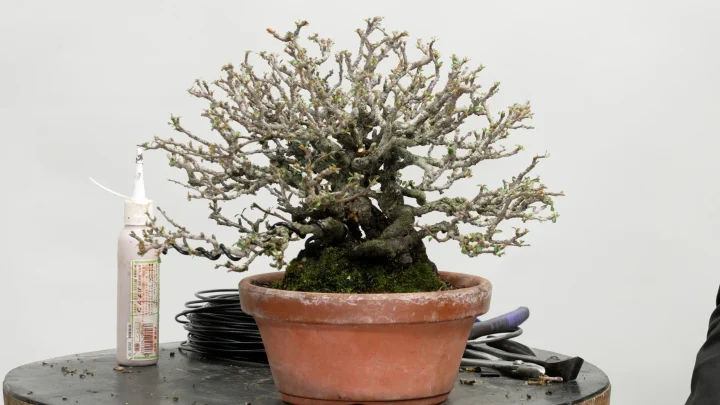
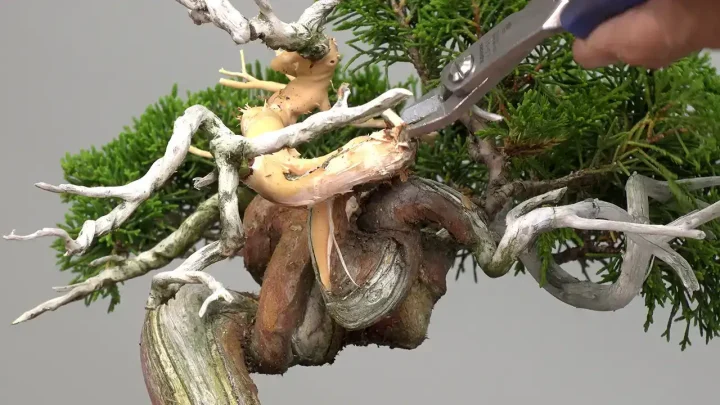
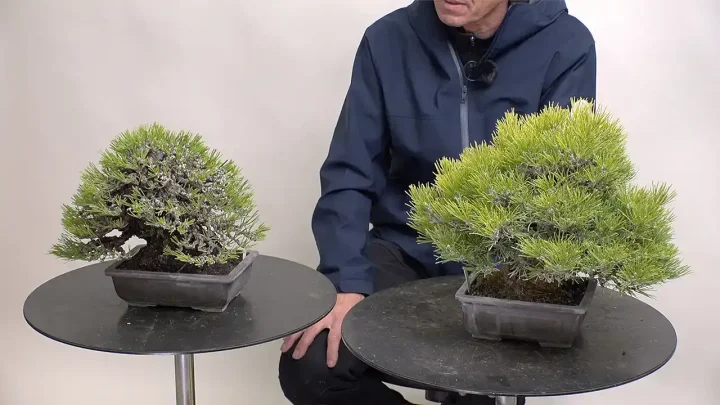
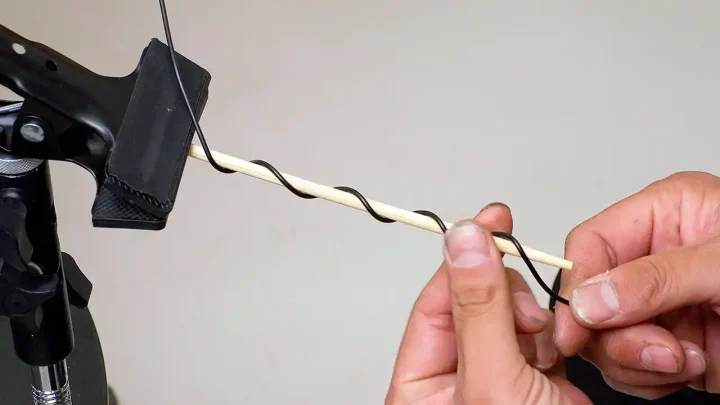
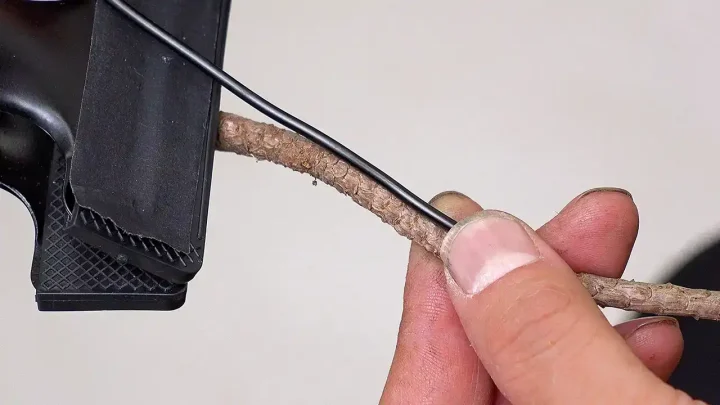
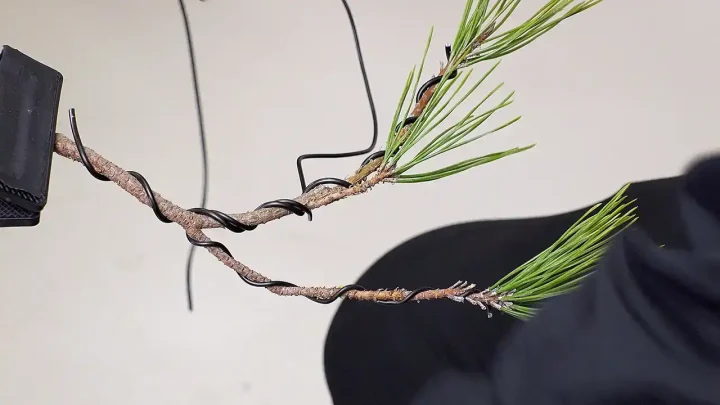
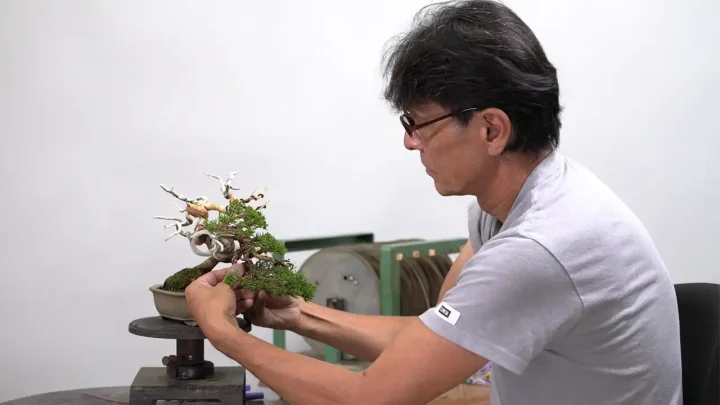
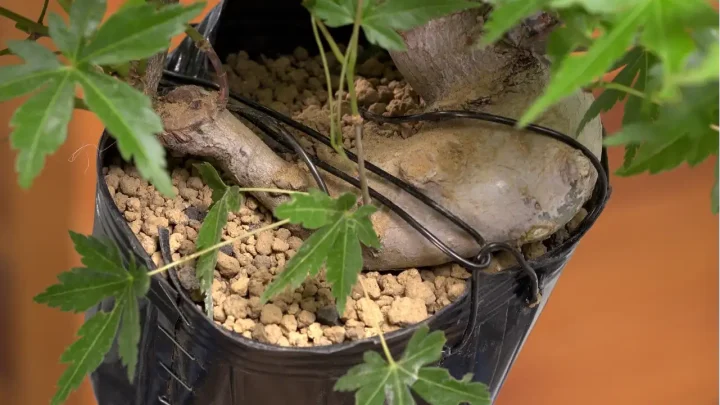
Wiring begins only after you have decided where you will bend. Wrap the Aluminum Wire at a 45-degree angle with even spacing, choosing the wire to match the thickness of the branch. Place your hand over the gaps where splitting is most likely, and let the force flow slowly through both hands — this is something not the mind, but the hands, come to remember.
Place the Aluminum Wire slowly against the branch. A 45-degree angle, even spacing. When your hands move without hesitation, what guides them is not a fixation on perfect results — it is knowing where this branch will split.
Wiring is not 'the task of wrapping a tool around something.' It is the time you spend in continuous contact with the branch, deciding where you will bend it and imagining where the force will gather.
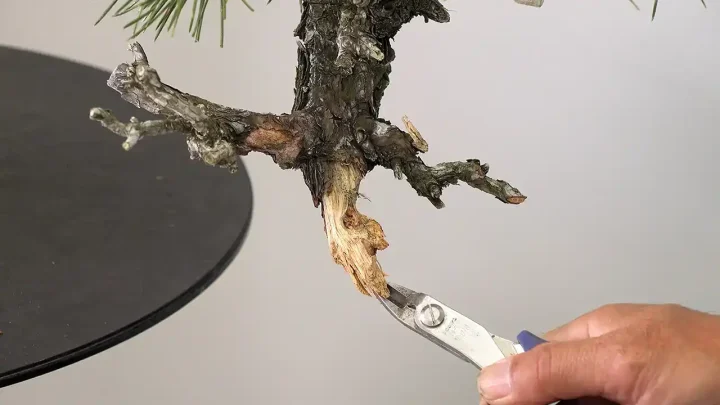
Between one wrap and the next — the gaps — are where splitting is most likely to occur. When bending, always place your hand there. If you apply force with one hand without knowing this, the branch will answer you. Silently, in an instant.
The act of wiring and the act of bending are two separate skills. Once the wire is fully wrapped, let the force flow slowly in the intended direction using both hands. Rush it and it will not respond. The more time you give, the more the branch will move for you.
Heavier Aluminum Wire for thick branches, roughly half that for thin ones. It sounds like a simple rule — yet when you stand before an actual branch, a quiet question arises: 'which one for this branch?' Too thin and it cannot hold; too heavy and it causes damage. The choice with nothing to excess and nothing lacking — as you grow accustomed, it becomes a feeling your hands already know the moment they see the branch.
Align the end of the next wire with the end of the one already wrapped. Matching the joint is unglamorous work, but if it slips, it becomes a weak point. This is where visual tidiness and functional reliability meet.
Before Wiring your bonsai, practice first on another material. The time spent letting your body absorb the very feeling of bending — that is not a detour. As with so many techniques in bonsai, between understanding with the mind and knowing with the hands, there is a quiet stretch of time called practice.
Wire is a tool for bending. But what you truly come to carry within you may be the sense of listening closely — to where force gathers in a branch, and where it is trying to escape. That only appears on the far side of repetition.
The journey of "Novice: “Ayumi”" begins with member registration.
Begin the Journey