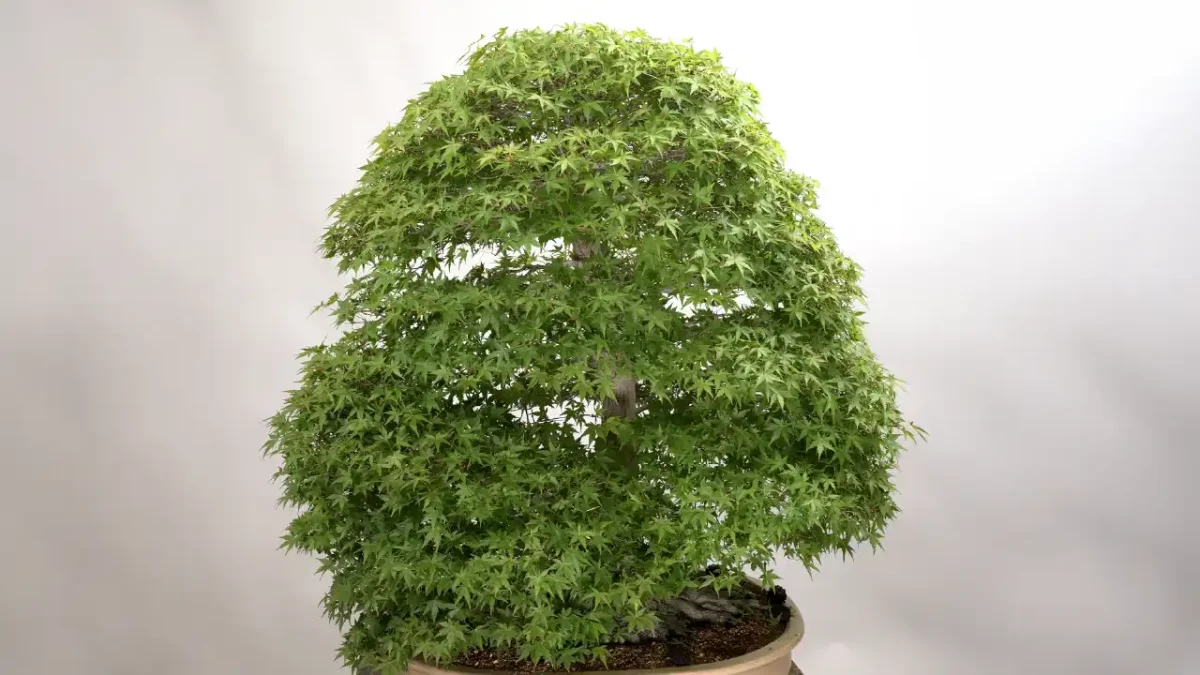
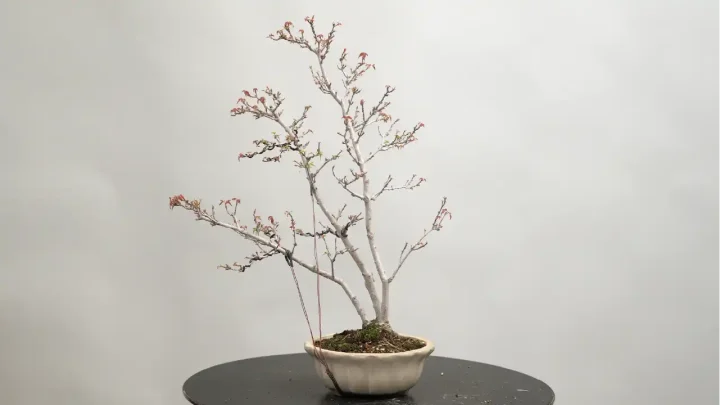
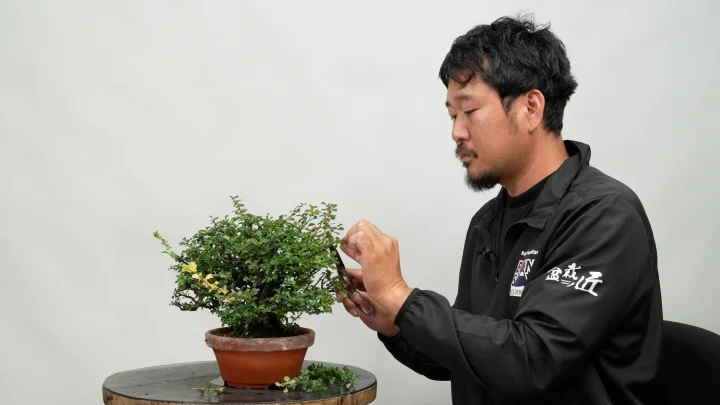
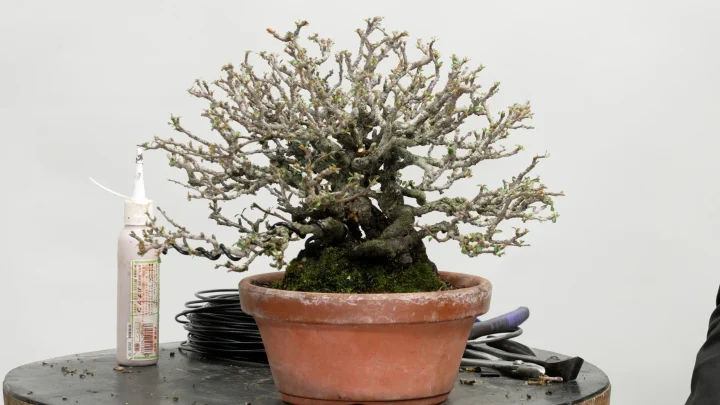
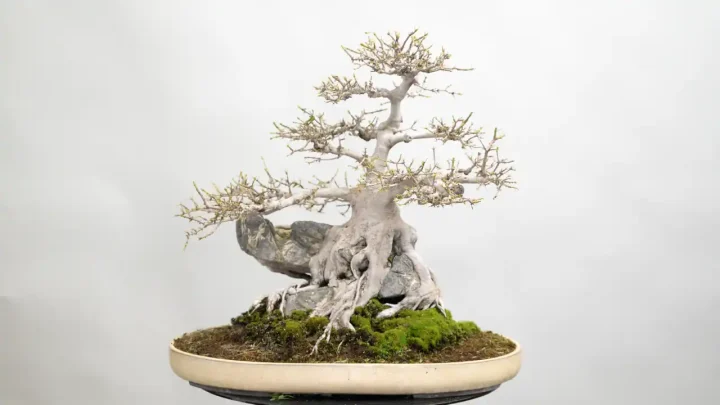
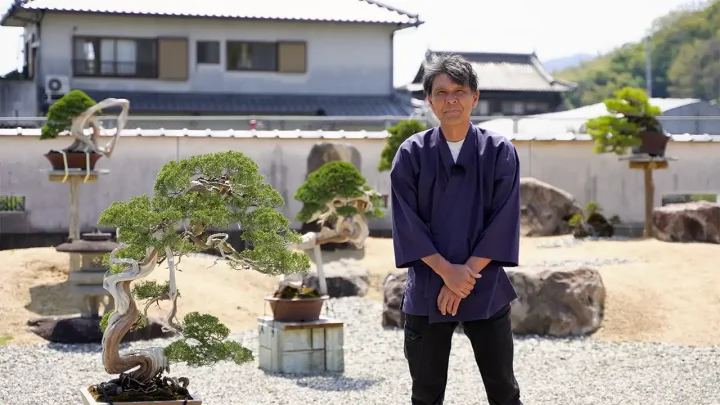
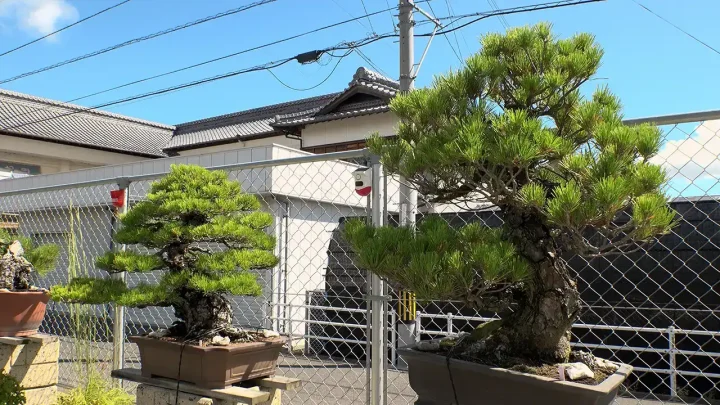
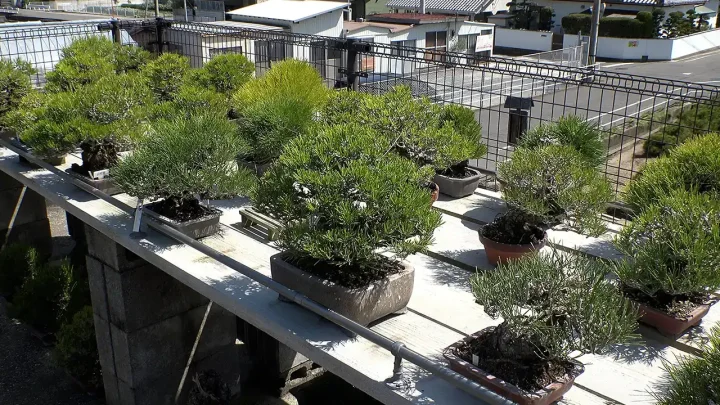
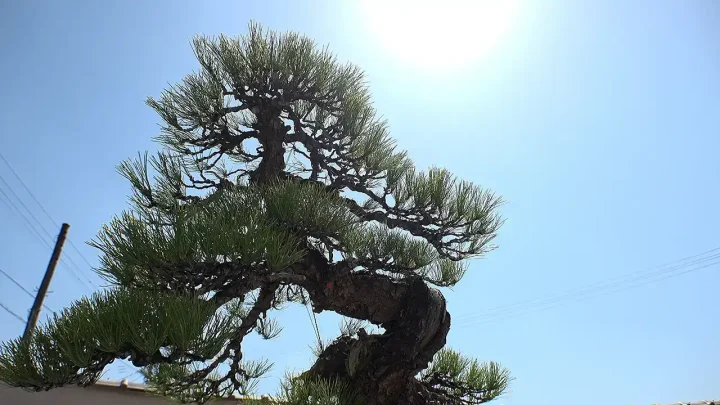
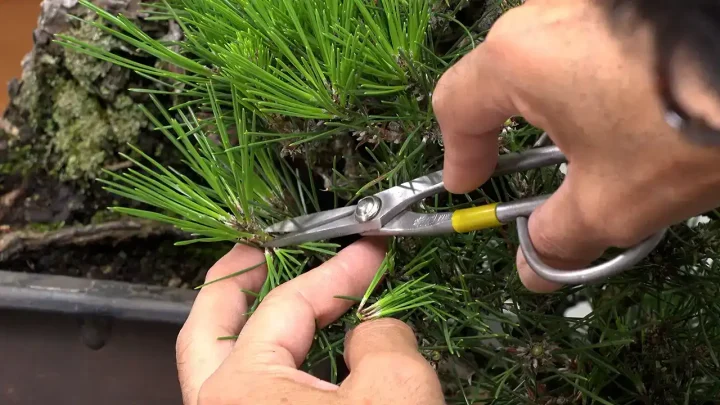
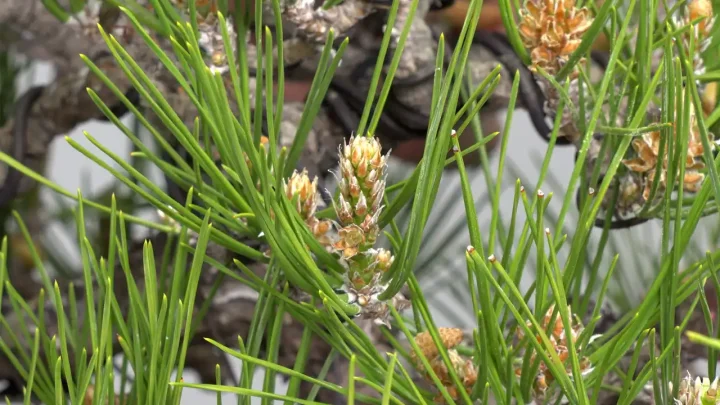
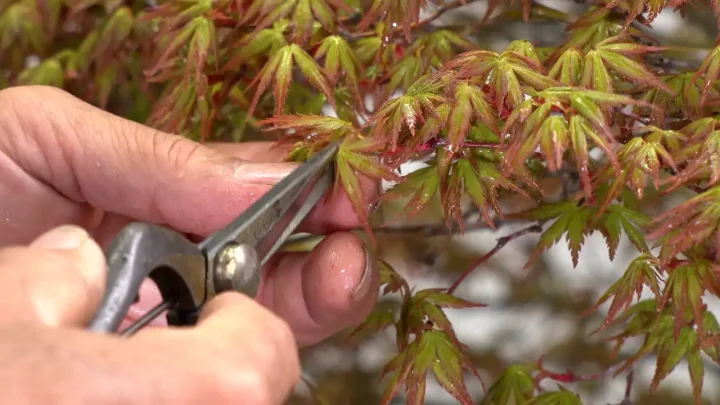
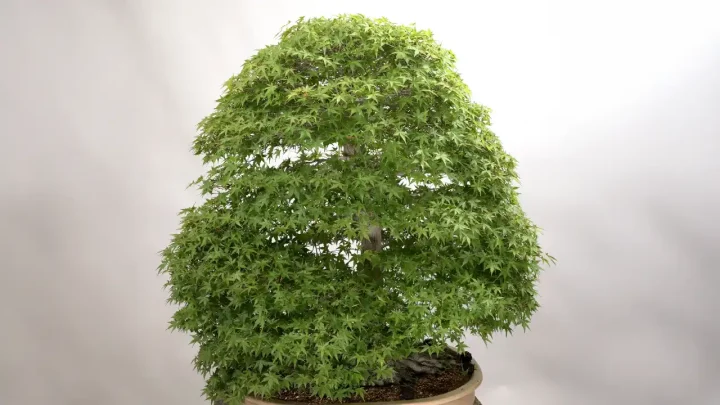
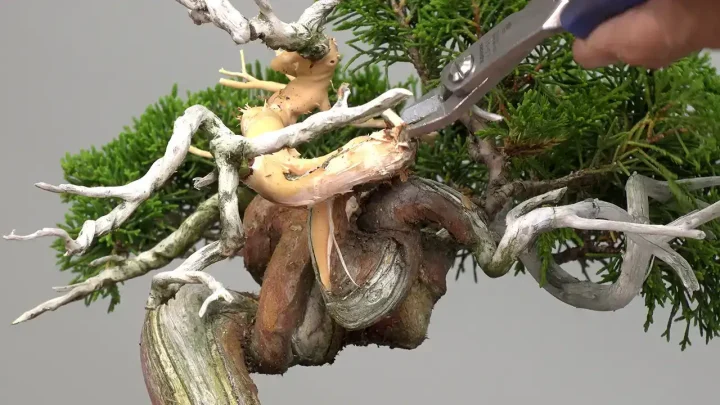
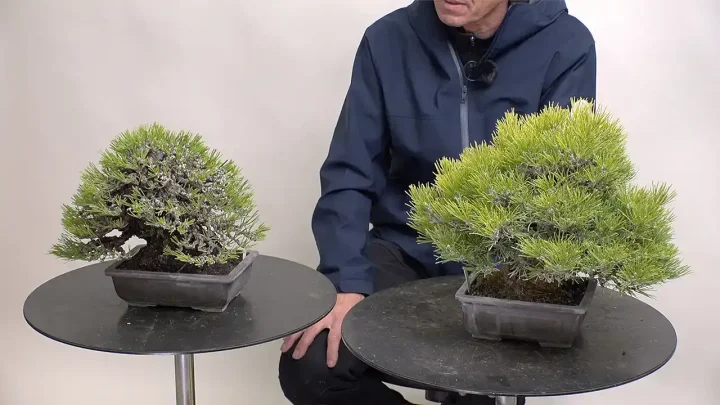
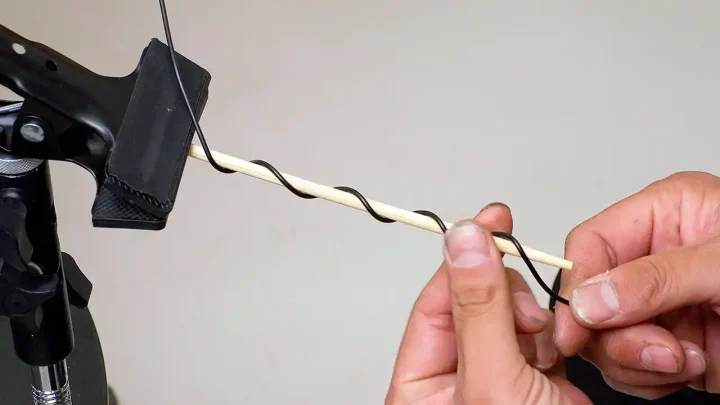
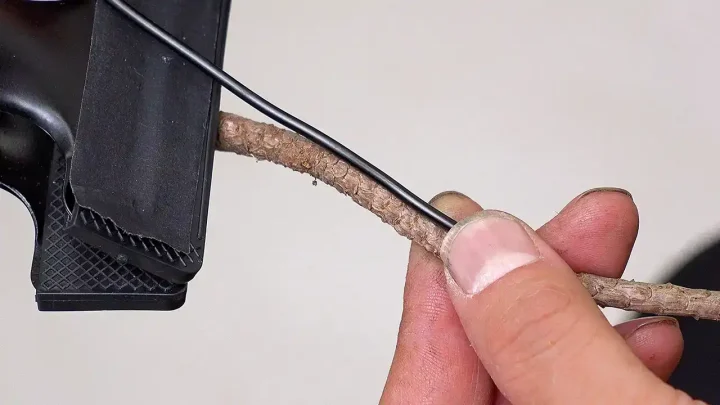
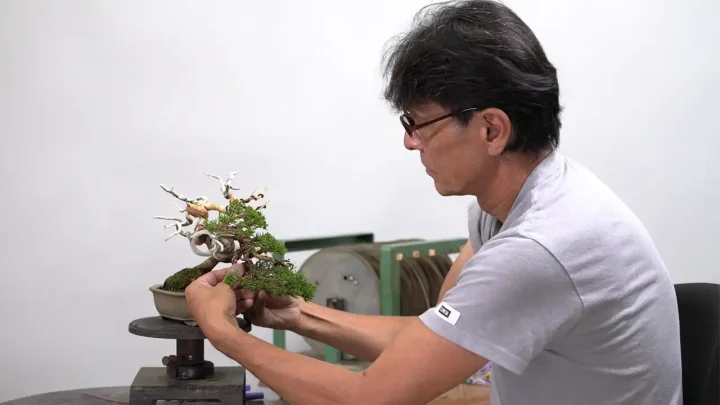
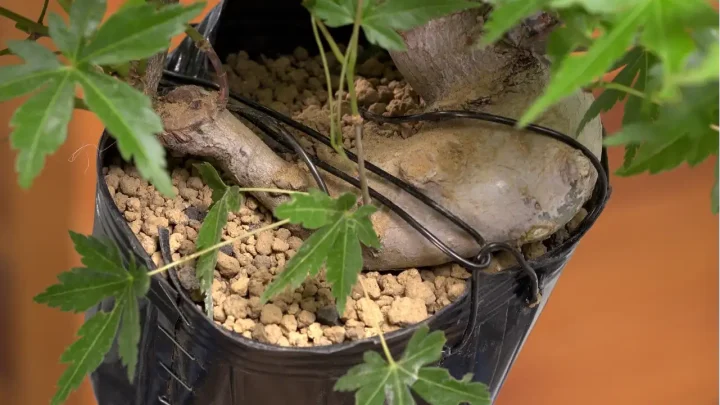
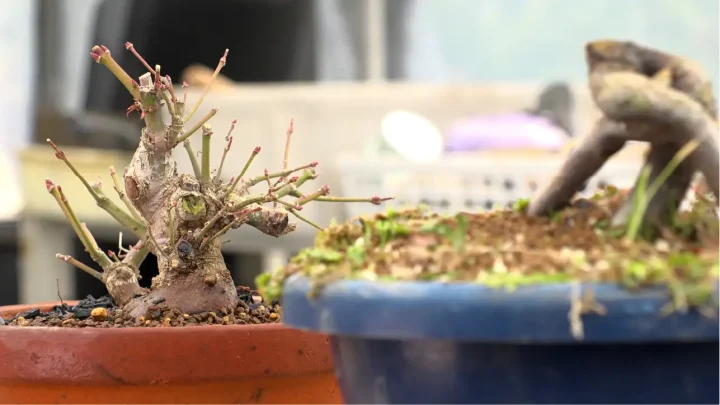
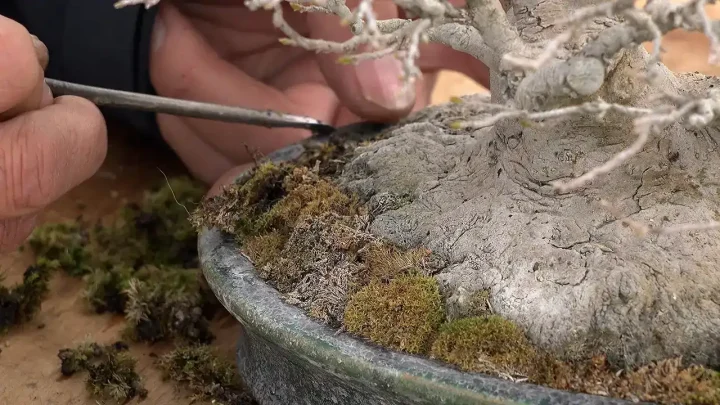
Leaf Thinning on a finished Japanese Maple in May. We select and cut one leaf from each pair, allowing light and air to reach all the way inside. The purpose is different from a tree still being developed — what a finished tree needs is not growth, but to hold its present form.
Defoliation and Leaf Thinning. The two techniques may look similar. But the question is always the same: 'What does this tree need right now?' — that is where we begin.
A finished tree calls for maintenance, not growth. A tree still in development has the goal of building more ramification. But there is no need to do the same for a finished tree. The aim is to keep its present form intact while letting light and air reach deep inside — that is the condition we are working toward. So rather than 'cutting everything back,' the thinking becomes 'thinning out.' When the purpose changes, the meaning of the work changes with it.
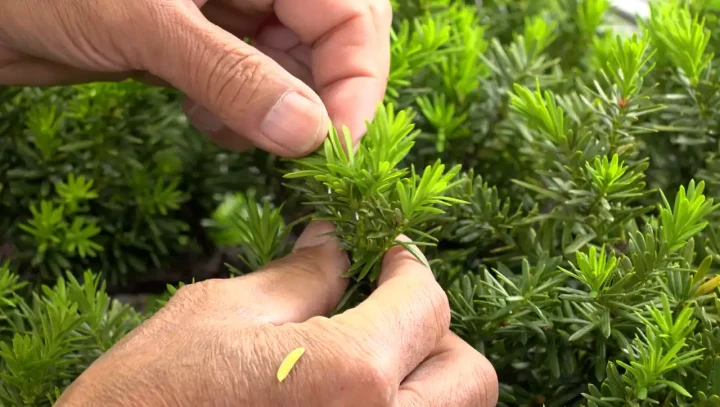
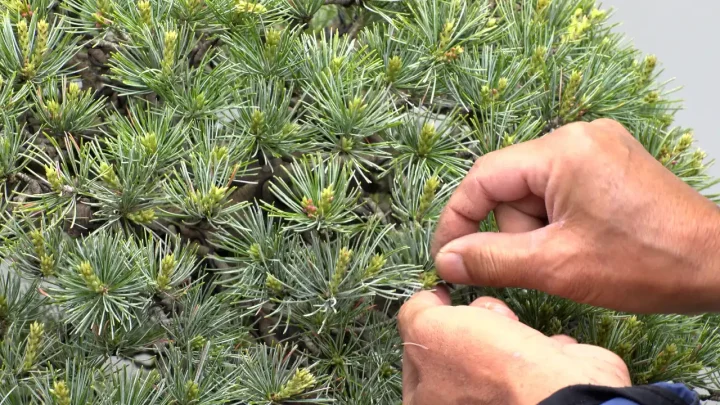
Japanese Maple leaves grow in pairs — two leaves forming a single unit. We cut just one of the two. It is a simple operation, yet across a densely packed tree, that alone opens everything up.
When there are two stems, we alternate the direction of the cut — front and back. The aim is to adjust so that when viewed from the front, leaves remain on both the left and right sides. This is not a procedure to follow; it is a judgment worked back from the finished image. Because we have already pictured the state we want to arrive at, we know where to cut. That structure runs through the entire process.
The work stays on the outer growth only. We do not touch the interior branches. Thin the outside, and light will naturally reach all the way in — that is enough.
Act where it is needed, and only as much as is needed. The restraint of not doing too much is the fundamental attitude in caring for a finished tree, and it runs quietly through every step of the work. Choosing not to act is also a judgment.
After the work is done, how does the moisture level change? With fewer leaves, the tree may dry out more quickly. During the season of new shoots, the rate of water uptake can shift. Conditions are never uniform, and a fixed routine cannot account for them. What matters is the habit of observation.
The tree holds the answers. And so, continuing to watch it becomes the work itself.
The journey of "Novice: “Ayumi”" begins with member registration.
Begin the Journey