
Oil cake is applied to Japanese Black Pine, replaced on a roughly monthly cycle from April through November. During the rainy season and after Bud Pinching, the amount is reduced — always guided by a careful reading of whether the tree is ready to receive. That steady accumulation will quietly show itself in next year's needle color.
You start talking about fertilizer, and before long you realize you are talking about the tree itself. That is the feeling that comes when you turn your full attention to fertilizing Japanese Black Pine.
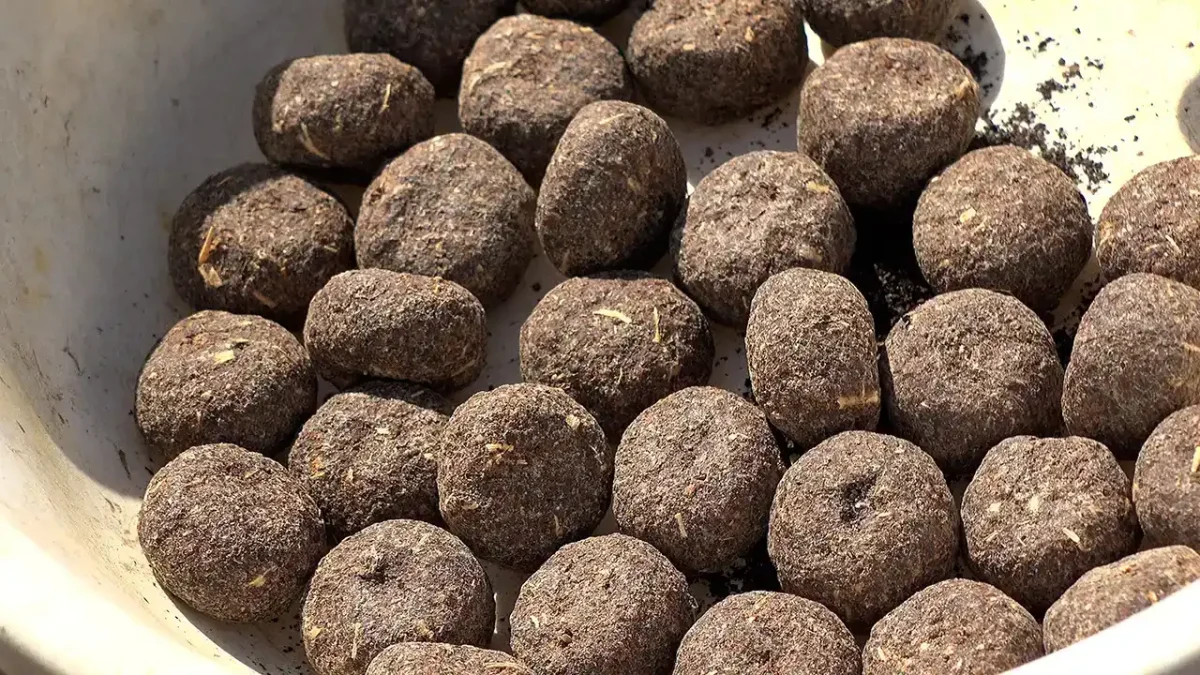
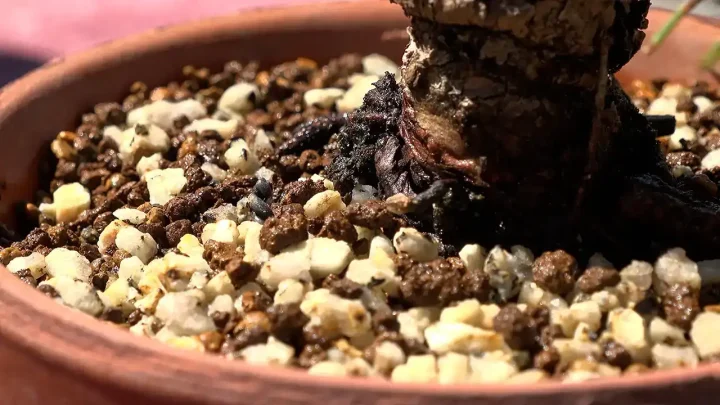
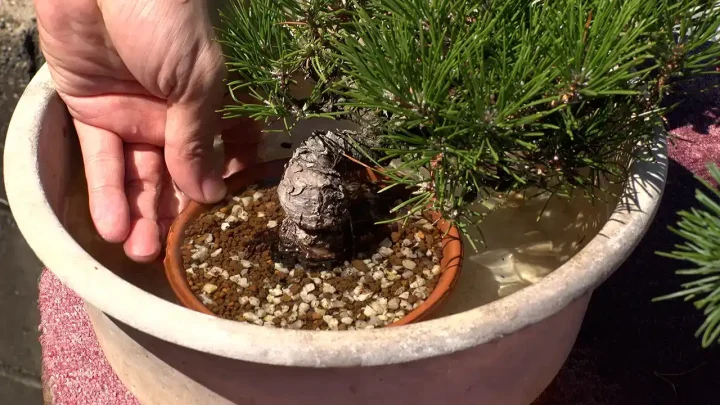
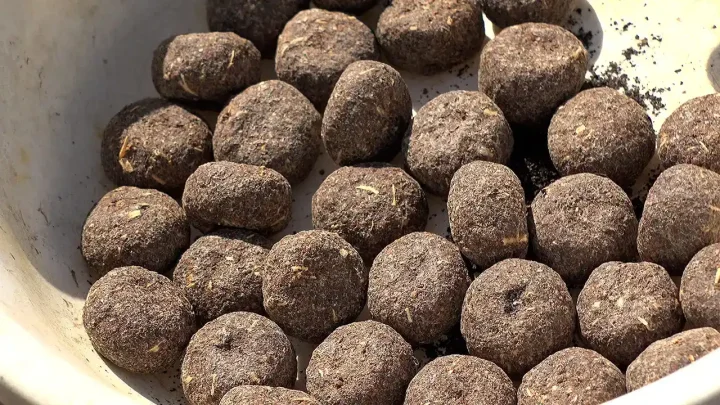
What to choose: a hard, slow-release oil cake — the kind that dissolves gradually rather than all at once. That choice is less about the fertilizer's properties and more about the nature of your relationship with the tree. Starting around April 1st, the cakes are placed out and replaced with fresh ones roughly every month, continuing through early November. Space them evenly across the pot surface at intervals of about ten centimeters, reaching around the base of the trunk as well. If Watering knocks them out of place, secure them with Aluminum Wire. That kind of quiet attentiveness becomes the framework of your year-round practice.
During the rainy season, reduce the amount by half. When the soil stays constantly moist, fertilizer becomes too available and can damage the roots. After Bud Pinching — from June onward — cut back the quantity in the same way. A Japanese Black Pine that has had its buds pinched temporarily loses some of its capacity to draw up nutrients. Continuing to give it the same amount at that point is not helping the tree.
The rainy-season reduction and the post-Bud Pinching reduction arise from different reasons, yet they lead to the same place. Whether the tree is in a condition to receive nutrients — that is always where fertilization decisions begin. Not what is convenient for the one giving, but the condition of the one receiving. Knowing when to take away may, in fact, be harder than knowing when to add.
There are times when a custom blend — oil cake mixed with other organic materials — is used, because there is an aesthetic goal in mind: the color of the pine needles. But if those particular materials are not available, standard commercial oil cake is perfectly adequate. What matters more than the materials is reading the right timing and the right amount — attend carefully to those two things, and the difference between materials turns out to be smaller than you might expect.
The results of fertilization do not appear right away. The care accumulated from this spring will quietly surface in next year's bud vigor and needle color. Only when the next season arrives, months from now, will this year's decisions be put to the test. Without rushing, without giving too much, reading the tree's condition and continuing on — fertilization, I think, is that kind of quiet dialogue.
The journey of "Novice: “Ayumi”" begins with member registration.
Begin the JourneyYou must be logged in to post a comment.







Hi all,
I’m based in Germany in a fairly low-humidity region, which makes the use of Tamahi quite impractical in my setup.
I’m considering switching to Biogold as a fertilizer. Would this be a suitable alternative for Juniperus and Pinus parviflora, particularly in terms of growth balance and overall tree health?
I’d be grateful to hear about your experiences or any potential drawbacks I should be aware of. Thanks in advance.
Thanks for your question.
I checked with Hiramatsu, and here’s what he said:
“Biogold works just fine. The only thing to keep in mind is that it acts faster than Tamahi, so make sure to follow the recommended dosage on the package.”
So for both Juniperus and Pinus parviflora, Biogold should work well in terms of growth balance and overall tree health. The key difference from Tamahi is that you can’t be as generous with the amount — with Tamahi you have some leeway to add a bit extra, but with Biogold the effect comes through more quickly, so sticking to the package guidelines is important.
Given your low-humidity environment, Biogold may actually be easier to manage than Tamahi.
Thank you very much for your reply.
I had previously used KIORYOKU Tamahi, but it did not work properly in my environment because of the low humidity. Now I have started using Joy Agris Tamahi, and it works perfectly. After just a few days, the beneficial white mold already started to develop, which made me very happy.
I am very satisfied with this fertilizer and currently do not use Biogold.