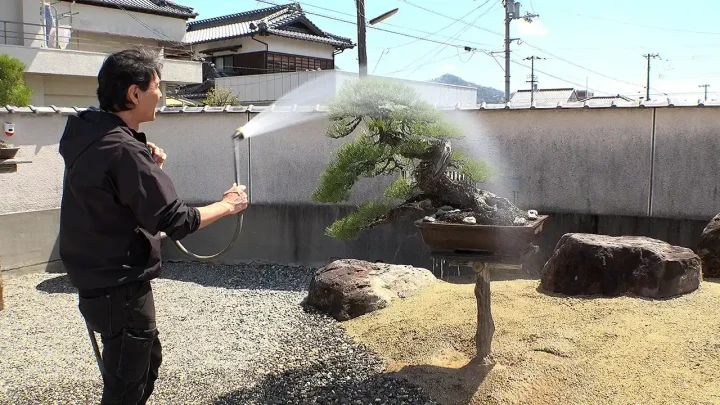
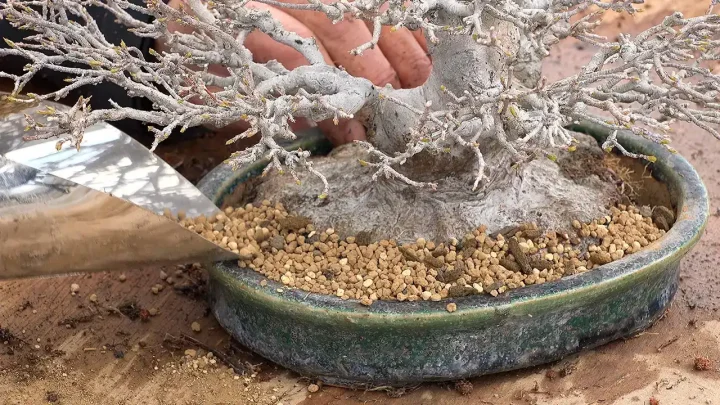
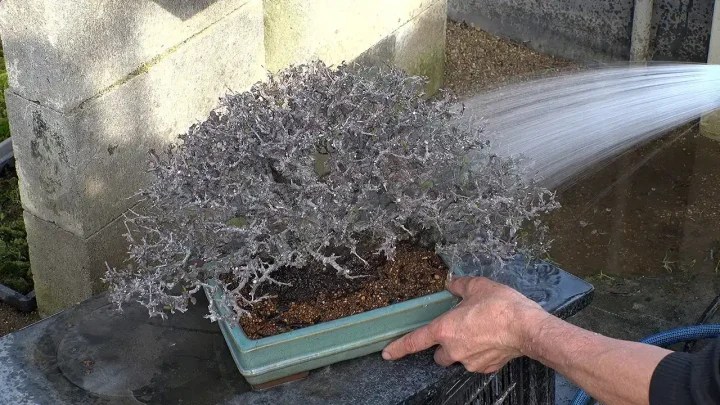
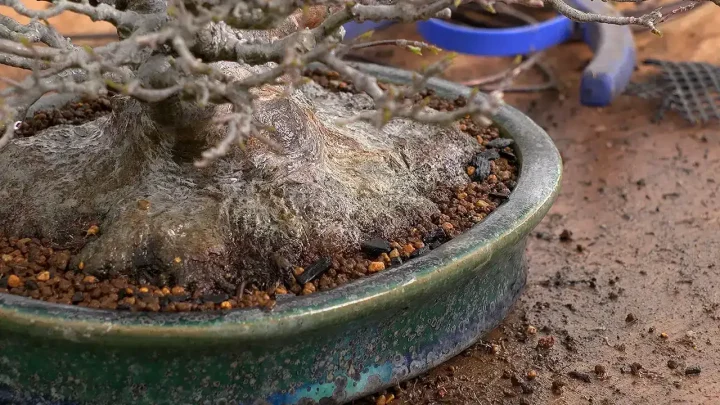
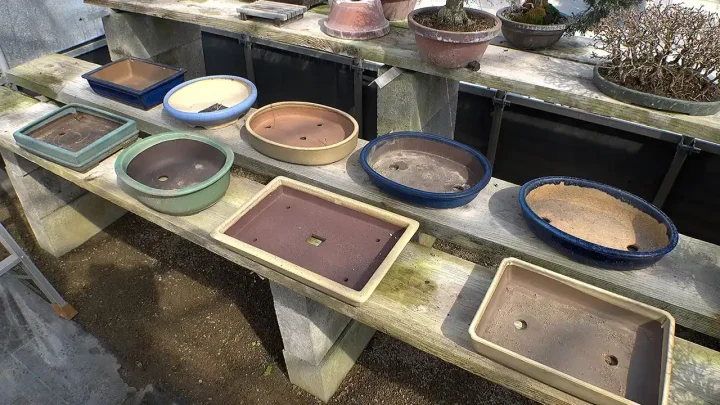
Watering bonsai begins with a single phrase: 'water when dry.' In practice, though, it draws you into touching the soil, sensing the temperature, noticing the wind that day. Unlike houseplants, bonsai live outdoors — and facing the tree each day is where watering truly begins.
Among the everyday tasks of bonsai care, watering may be the most unglamorous. Wiring carries its own particular tension, and so does every pruning decision. But watering — it can sound like something you simply repeat each day, nothing more.
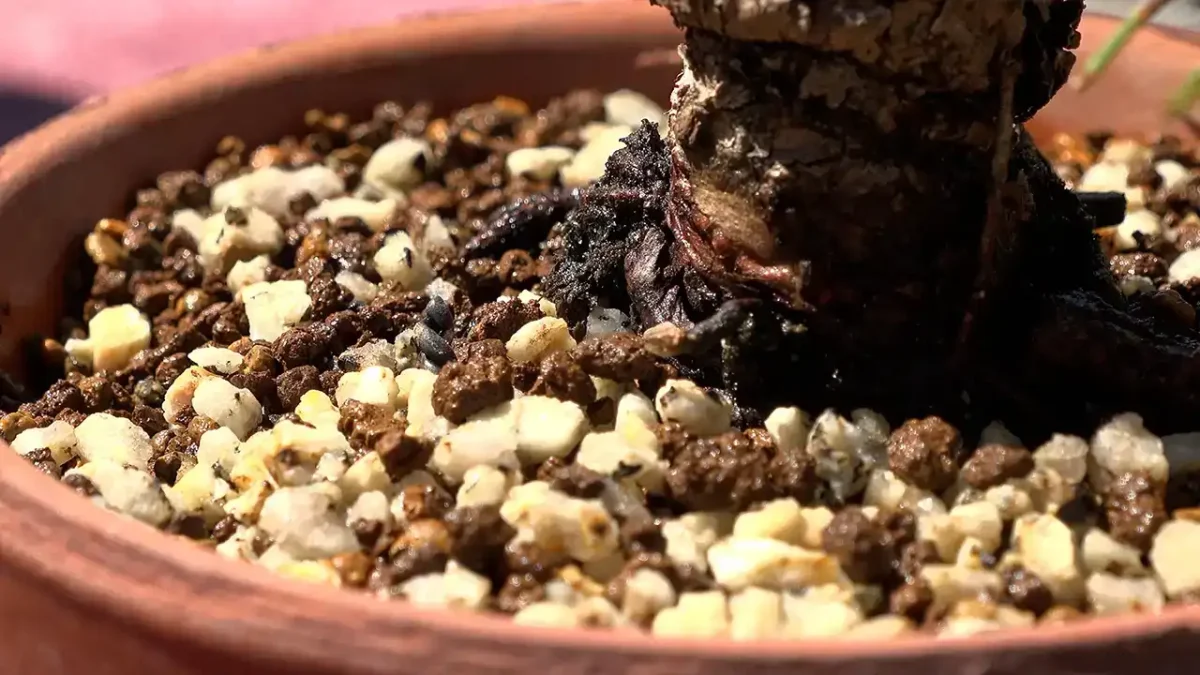
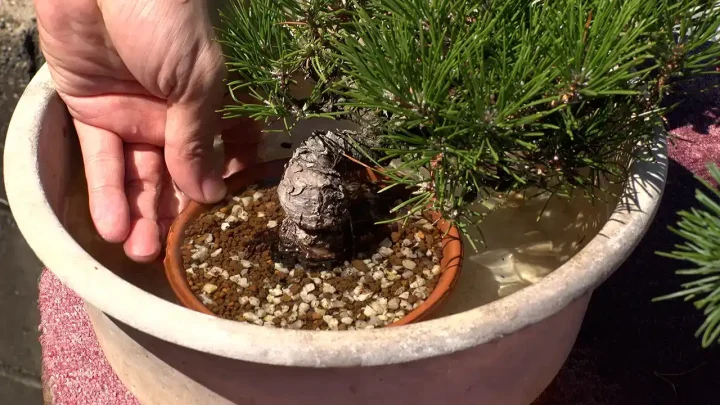
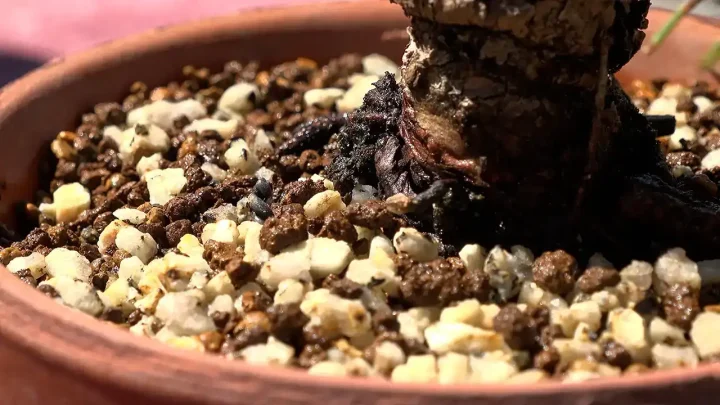
'Water when dry' seems straightforward at first glance. Yet the moment you try to put it into practice, you realize it is anything but simple. To know whether the soil is dry, you look at it, touch it, consider today's temperature, feel how the wind is moving. Within that brief check, judgment is already at work.
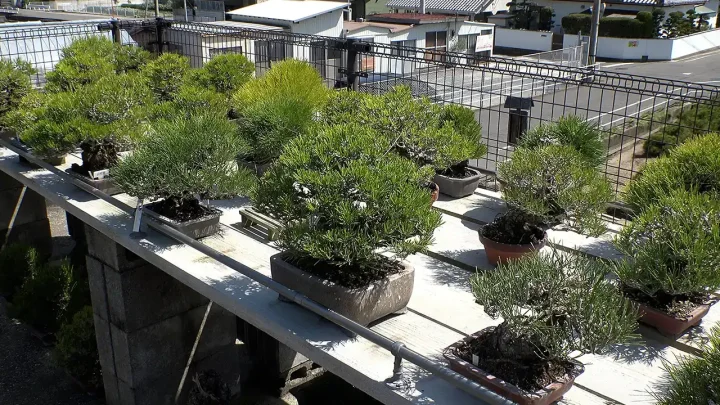
In summer, three times a day can become a rough guide. But three times is not automatically enough. Shohin Bonsai dry out quickly, and the rate of drying differs entirely between a south-facing apartment balcony and a shaded garden corner. The number changes depending on where you grow your trees.
'How many times' is a result, not a starting point. The starting point is confirming the condition of each pot today, with your own eyes and hands. Keep doing that every day, and your own personal guideline will gradually take shape. Only then does the number carry any meaning.
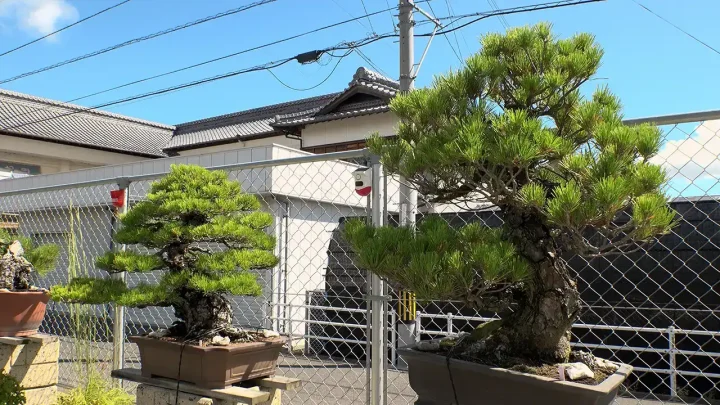
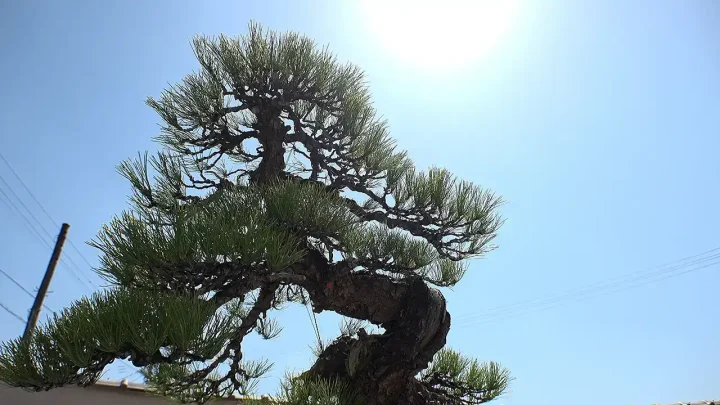
Unlike houseplants, bonsai are grown outdoors. Rain changes how the soil dries; the fierce summer sun pulls moisture away. Each day, the tree lives directly inside whatever weather that day brings. When you go to water it, you are present for that tree's day.
Watering may be less about 'doing a task' and more about 'going to check.' By touching the soil in the pot, you come to know the tree's condition. That accumulation becomes a conversation with the tree.
Learning a procedure and learning to read a tree's condition are two different things. Between understanding the words 'water when dry' and actually being able to judge the degree of dryness, there is time.
The only thing that fills that time is continuing to touch the pot every single day. Out of that accumulated experience, the eye that can judge begins to grow. A relationship with bonsai starts from within that quiet, unassuming continuity.
The journey of "Novice: “Ayumi”" begins with member registration.
Begin the Journey