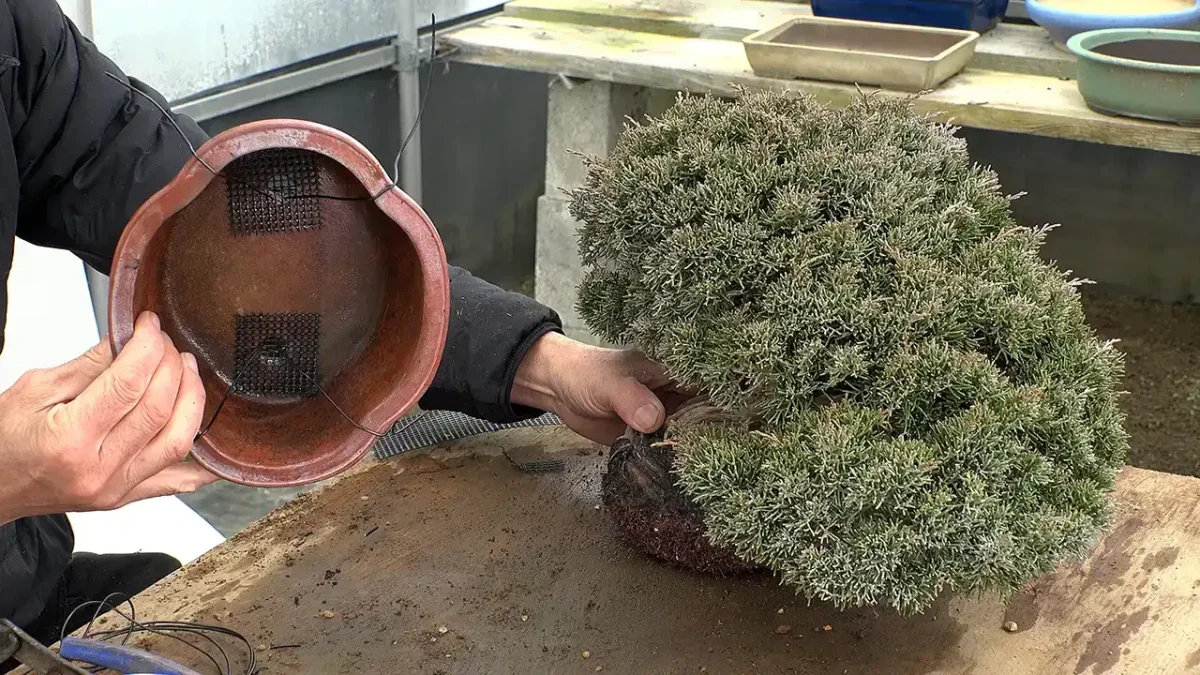
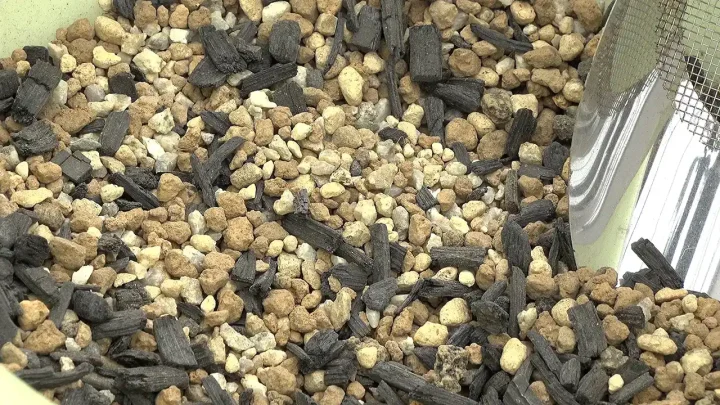
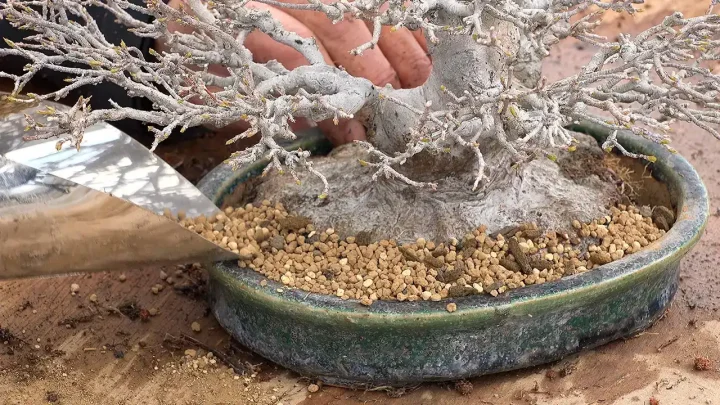
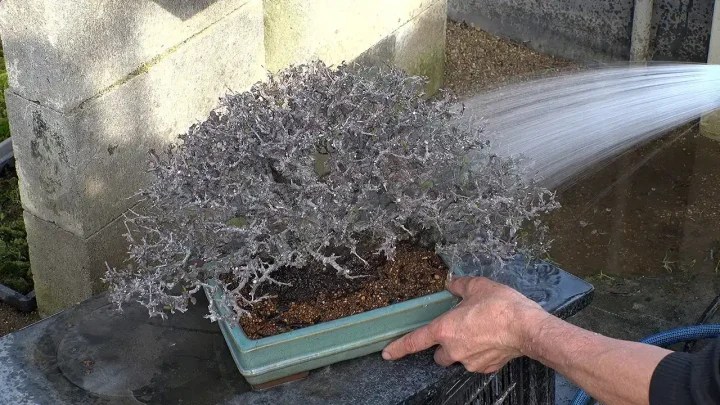
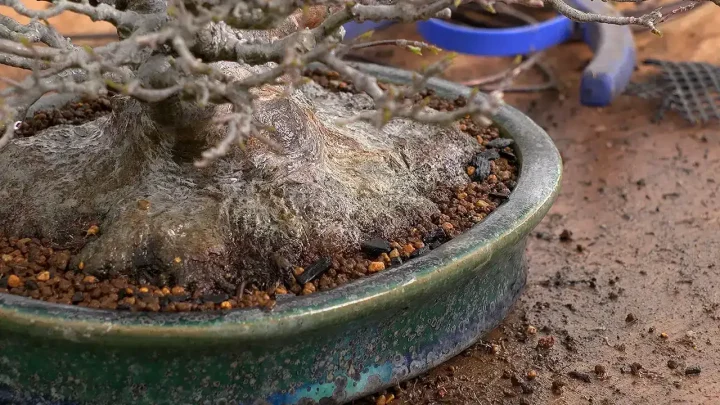
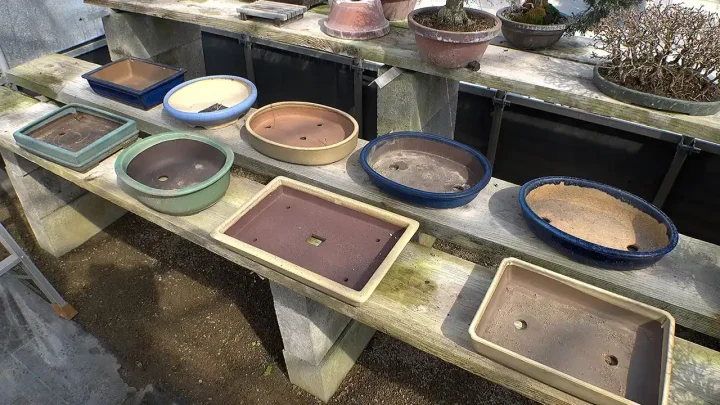
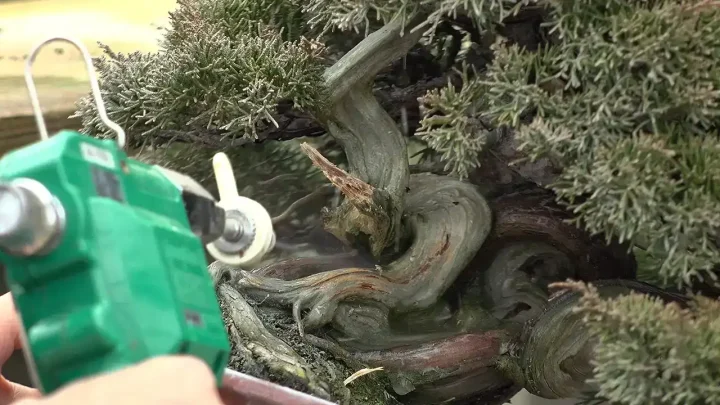
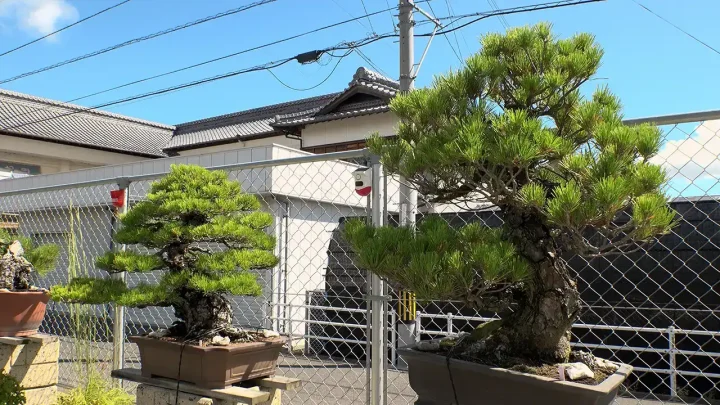
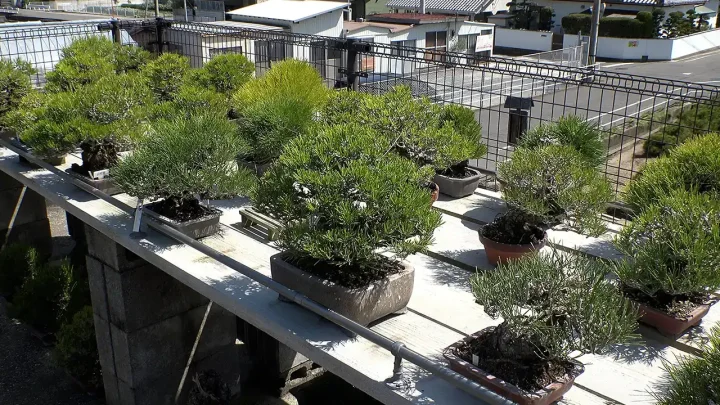
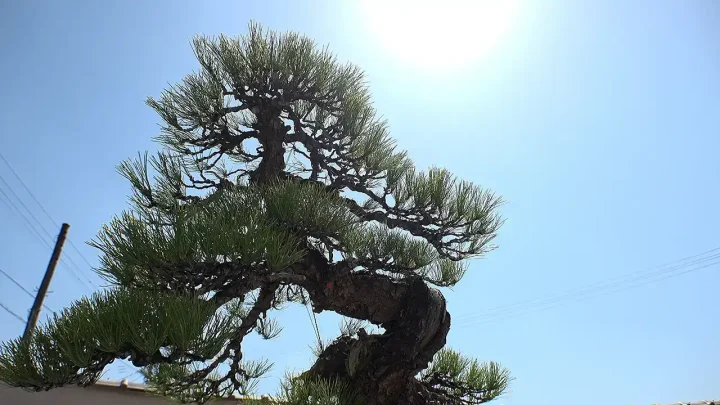
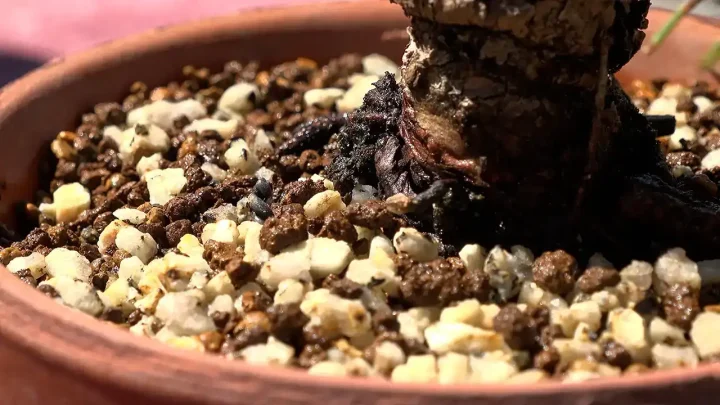
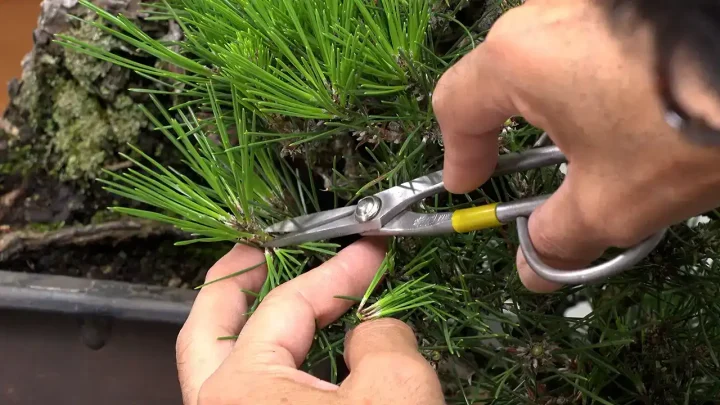
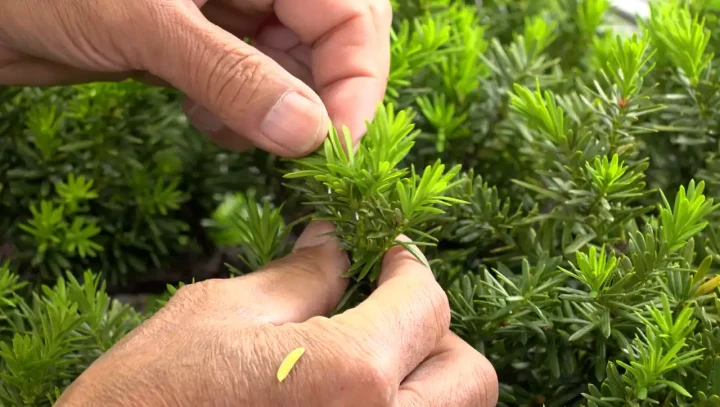
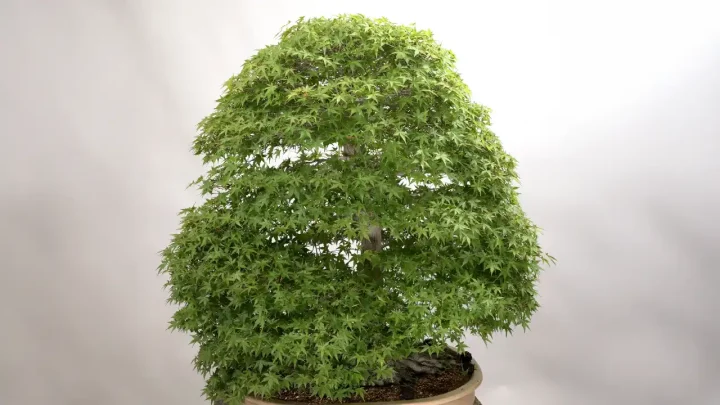
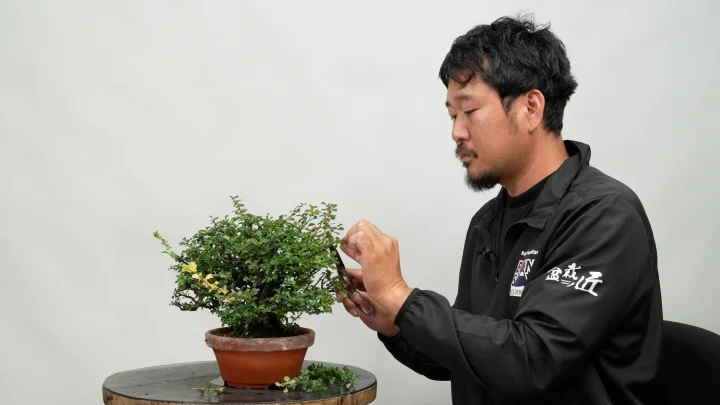
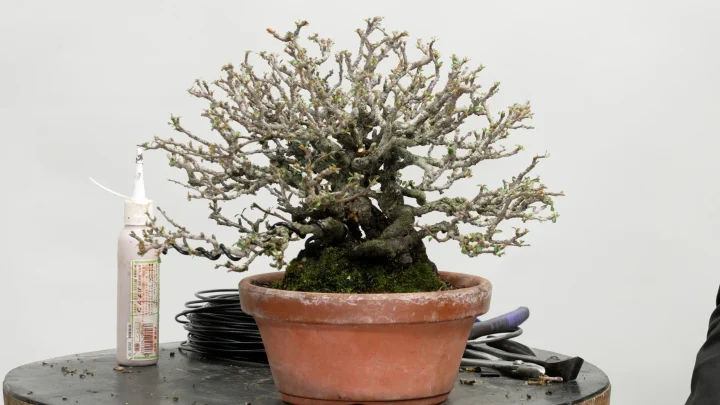
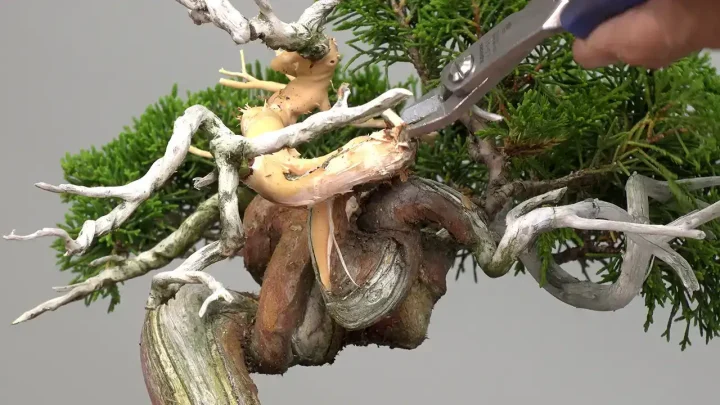
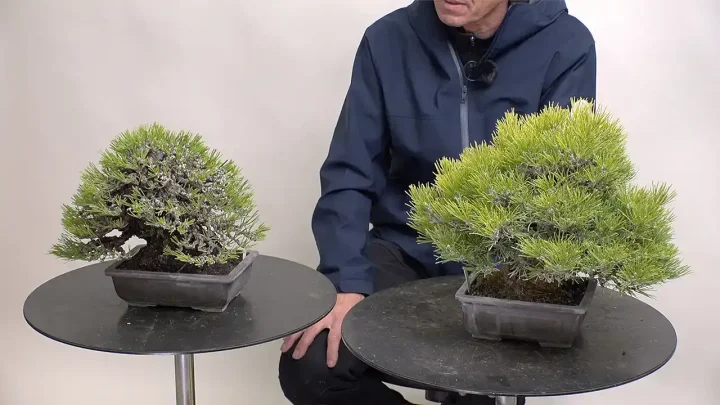
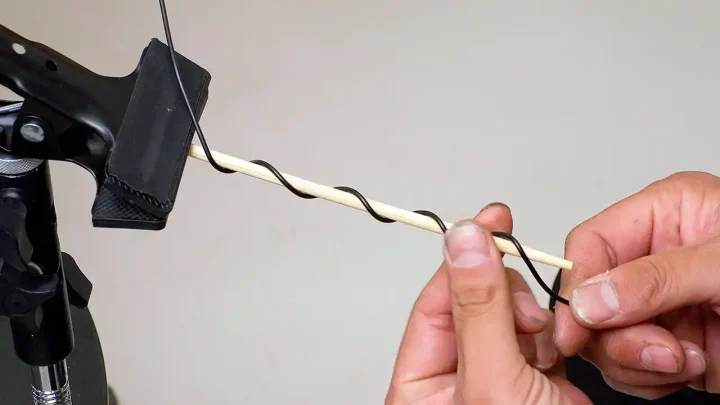
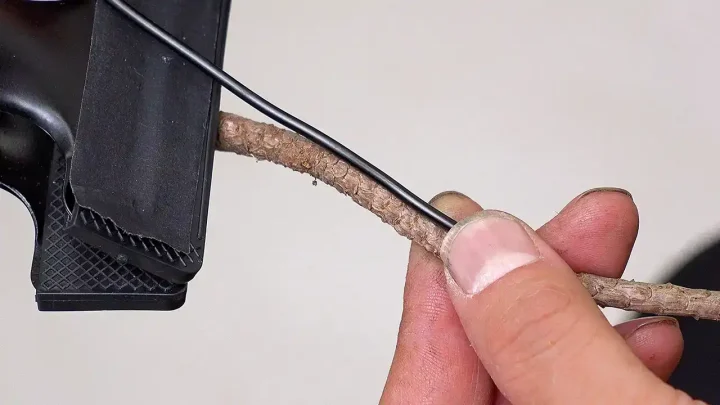
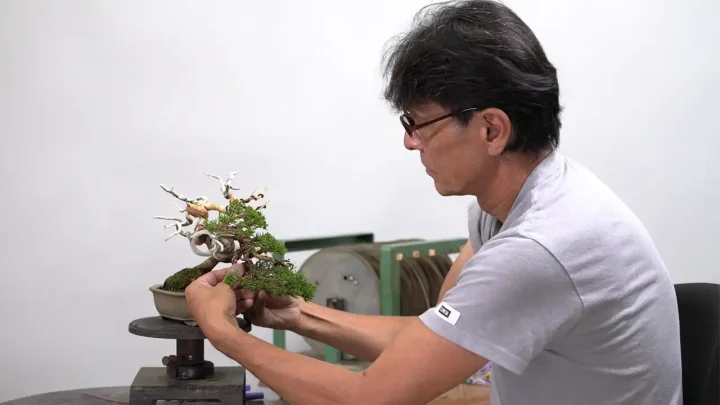
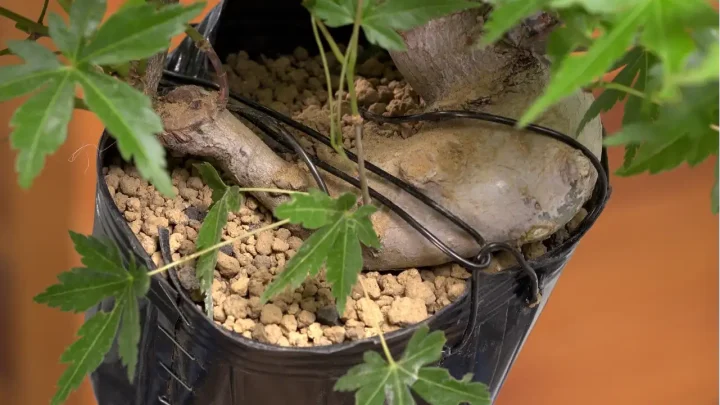
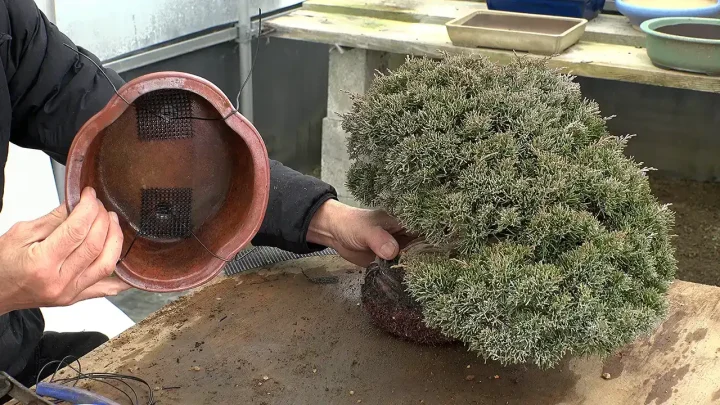
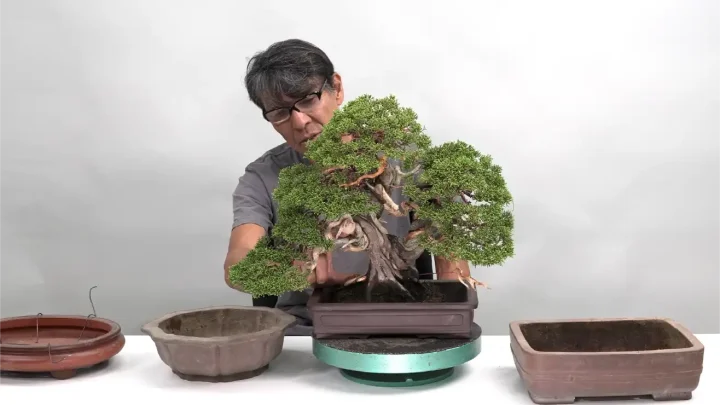
In preparation for repotting a Shimpaku Juniper, Drainage Mesh and securing wire are set in place. The length of the wire, the method of anchoring — between Deciduous Trees (Zoki-rui) and Shimpaku Juniper, the approach changes simply because the center of gravity differs. Where does the tree carry its weight? That question lives in every small gesture of preparation.
Before the repotting itself begins, there is the matter of preparing the pot. Drainage Mesh is placed over the drainage holes of a clean pot, and the wire for securing the tree is set in place. It may look like a mundane step, but judgment is already required here.
Always cut the wire longer than you think you need. If you set it too short, you will run out at the critical moment of planting. It seems like a small thing, yet it reveals something essential about repotting as a practice — in a sequence where mistakes cannot easily be undone, preparation is the one place where you can still read ahead. The ease you build here carries through every step that follows.
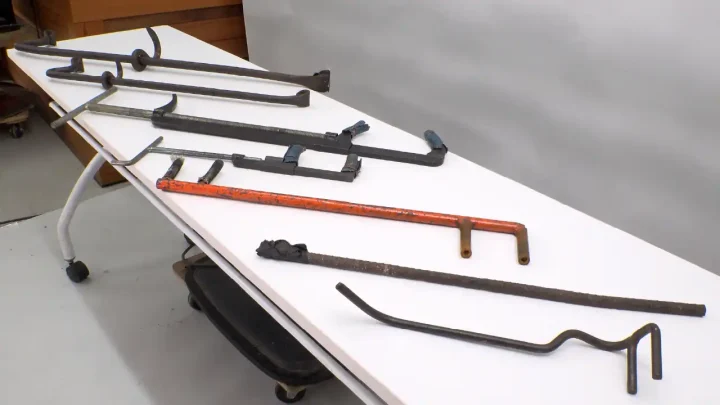
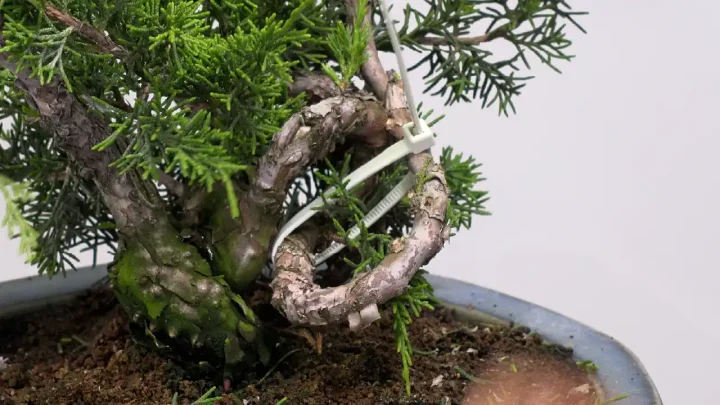
The way wire is anchored depends on the tree. For Deciduous Trees (Zoki-rui), a hook is fastened to the wire passed up through the drainage holes. For Shimpaku Juniper, however, the approach is different — the wire passed up from below is tied off at the top.
Why? Shimpaku Juniper carries considerable volume in its upper portions. The amount of soil that fits in the pot is relatively small, and the center of gravity tends to sit high. A simple hook is not enough to hold against that weight. Only by firmly tying the wire at the top can you truly receive the weight of the tree.
This is not about memorizing 'do it this way for Shimpaku Juniper.' Where does this tree carry its weight? The method is chosen by working backwards from that observation. Even within the same act of 'pot preparation,' what you do changes depending on whether or not you are truly reading the tree in front of you.
The preparation stage is not a 'preliminary' to repotting. Studying the tree's form, imagining its center of gravity, thinking through how to secure it — the repotting has already begun here.
Placing the Drainage Mesh, threading the wire, checking the length. In each of those small gestures lives the question: 'how shall I work with this tree?'
Memorizing procedure and reading a tree are two different skills. The former comes with repetition. The latter grows slowly, shaped by how much time you have spent standing before trees. Repotting preparation is the quiet place where both meet.
The journey of "Novice: “Ayumi”" begins with member registration.
Begin the Journey