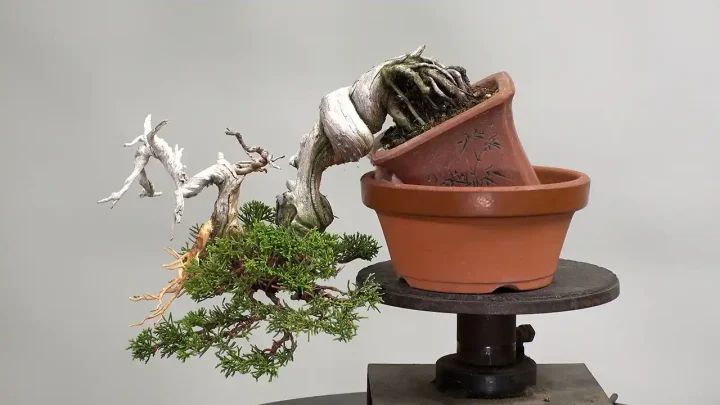
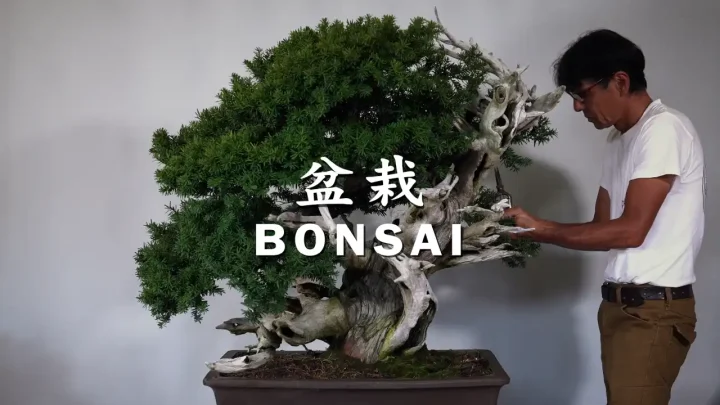
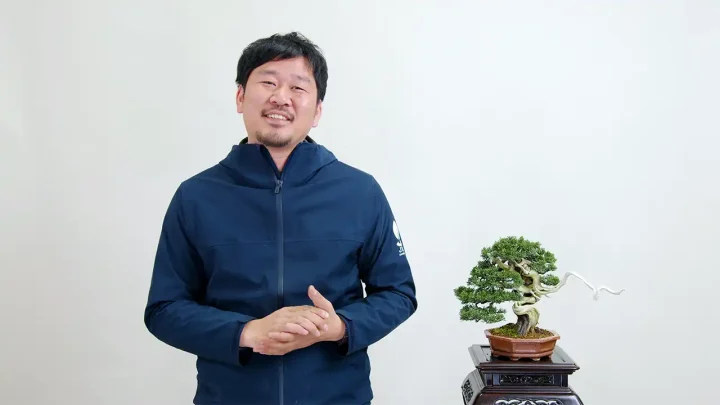
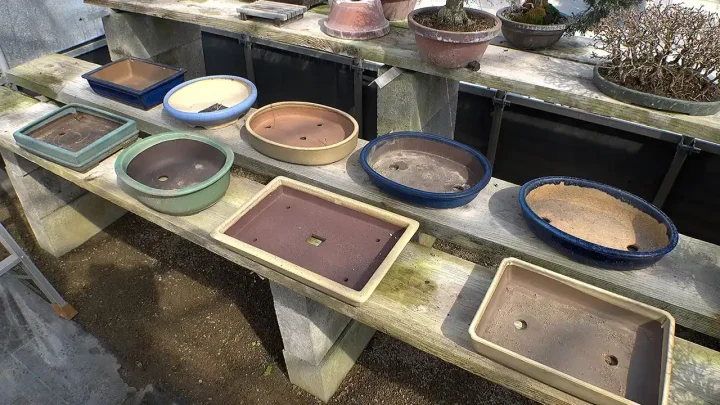
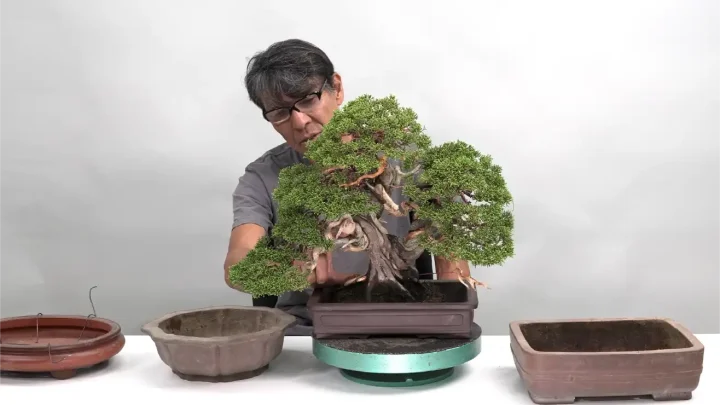
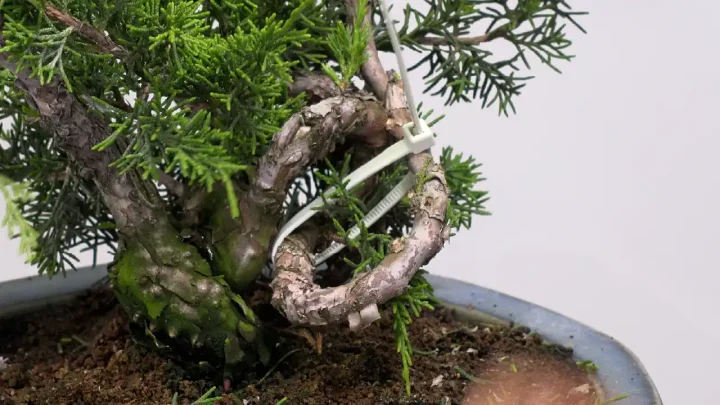
Which pot suits a Twin Trunk Style Shimpaku Juniper after Styling / Shaping? The strength carried by a pot's shape, the difference in impression made by the presence or absence of corners, the quiet presence that comes with thinness — four pots are lined up and held to the tree, and the choice is narrowed by subtraction. We trace together what it means to match a pot to a twin trunk form.
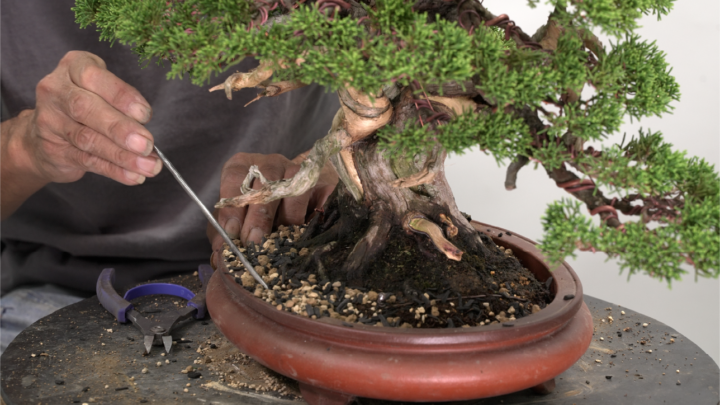
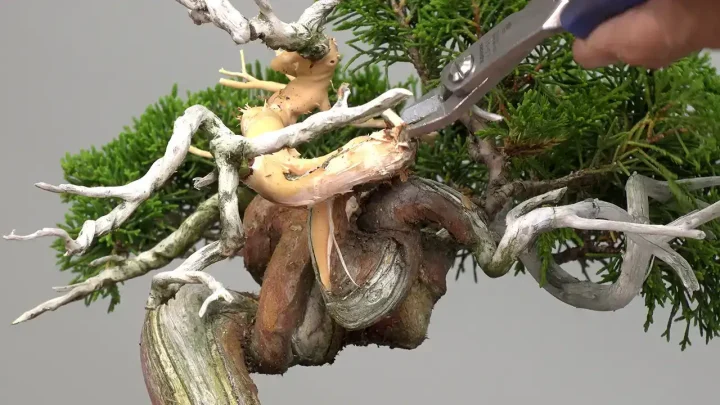
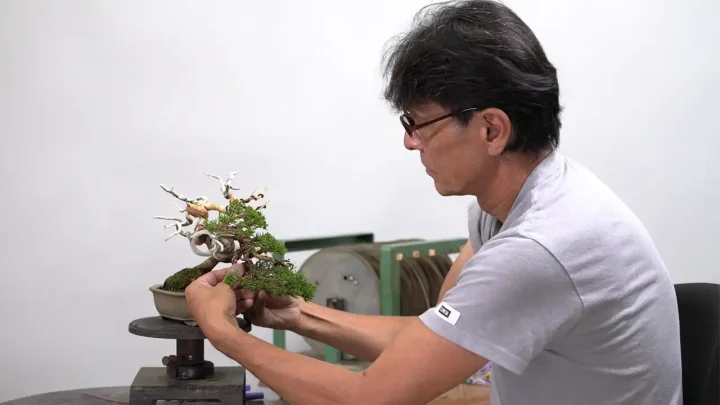
The Shimpaku Juniper, after Styling / Shaping, had tightened in its branches and foliage — there was something composed about it. But that also meant the balance with its pot had shifted. When a tree tightens, the pot begins to look larger. The original pot no longer fit.
Bonsai is never finished. Each time you refine the tree, the relationship with the pot is called into question again. That is the true nature of Pot Matching.
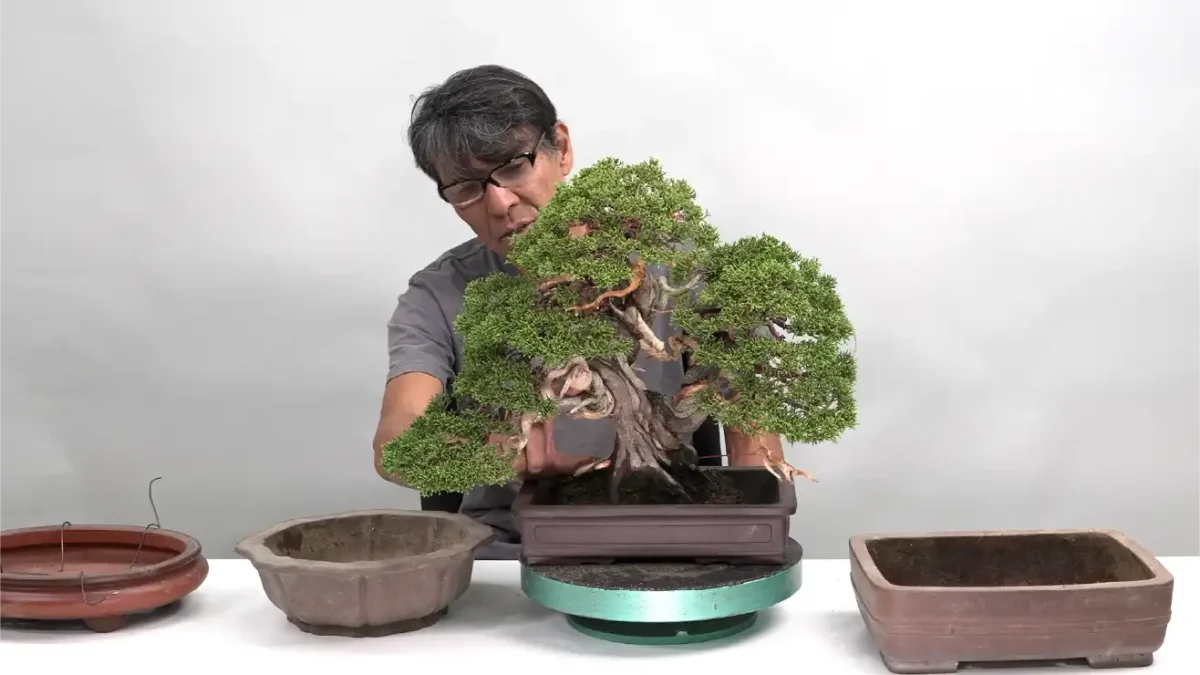
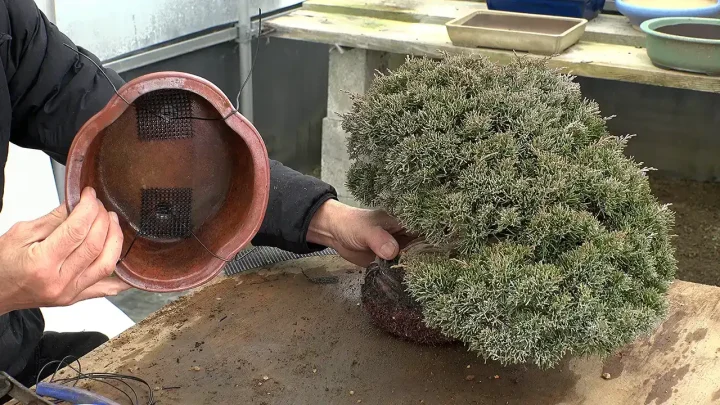
Four pots were lined up as candidates. The first one tried — an octagonal shape — settled in well. But the words 'the pot is too strong' were enough to set it aside.
What 'strong' refers to here is neither size nor material. It is the statement made by the octagonal form itself — a presence that steps forward in front of the Twin Trunk Style, high-trunked Shimpaku Juniper. A pot is a vessel that brings out the tree; it should not compete with it.
A Twin Trunk Style calls for different criteria than an Informal Upright Style. Having two trunks already gives the tree its own sense of strength. If the pot also asserts itself, the whole becomes too heavy. That is why, for a high-trunked twin trunk, keeping the pot understated matters.
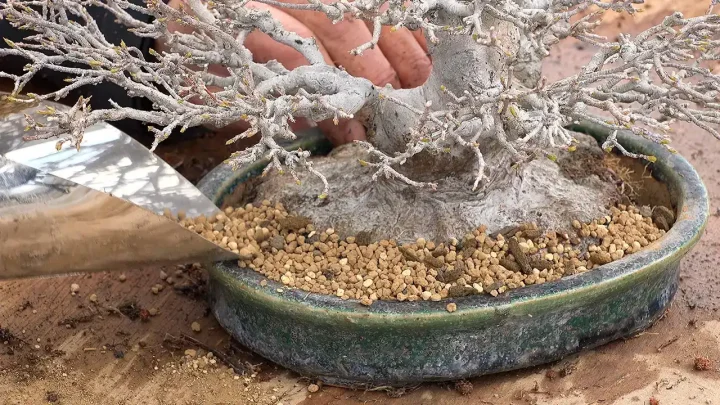
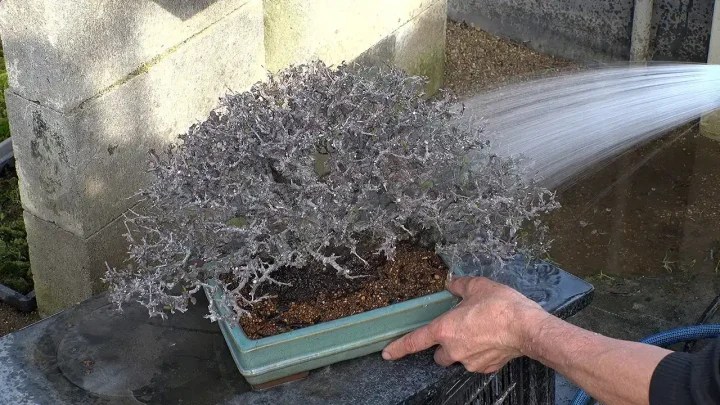
What remained in the final selection was a thin Rectangular Pot and an oval bag-style pot. Both were thin and unassuming. Held up to the tree side by side, the balance was nearly equal.
The deciding factor was the corners. The rectangular pot had four of them. The bag-style oval had none. That small difference produced a gap in impression — 'gentleness' or 'strength'. 'The pot has gentleness' — what those words point to is something that cannot be fully explained by numbers or logic. And yet, the effort to put that feeling into words — perhaps that is where the depth of Pot Matching lies.
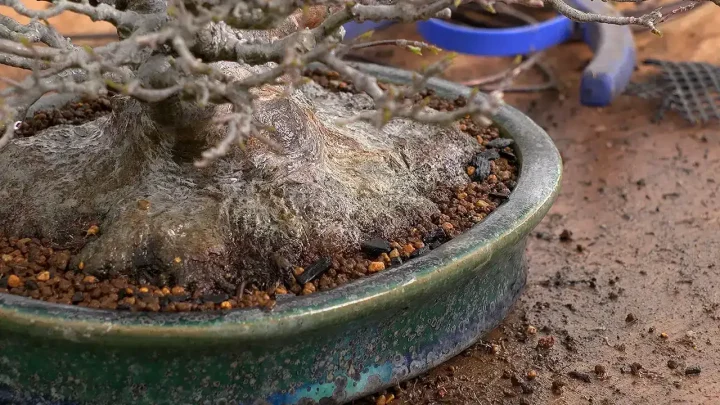
Not 'finding the right pot,' but 'eliminating the pots that assert themselves.' Strip away the strength, strip away the corners, pare down the presence — and what remained was the bag-style oval pot.
When the tree changes, its relationship with the pot changes too. Each time, you pause and choose again. Pot Matching is not something settled once and done — it may be a discipline of the eye, one that keeps walking alongside the tree as it changes.
The journey of "Novice: “Ayumi”" begins with member registration.
Begin the Journey