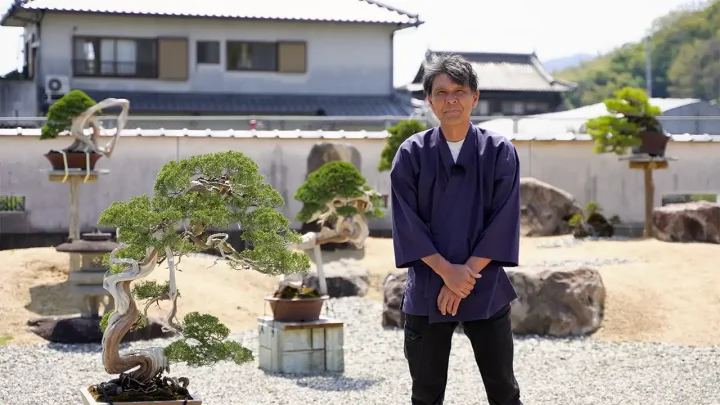
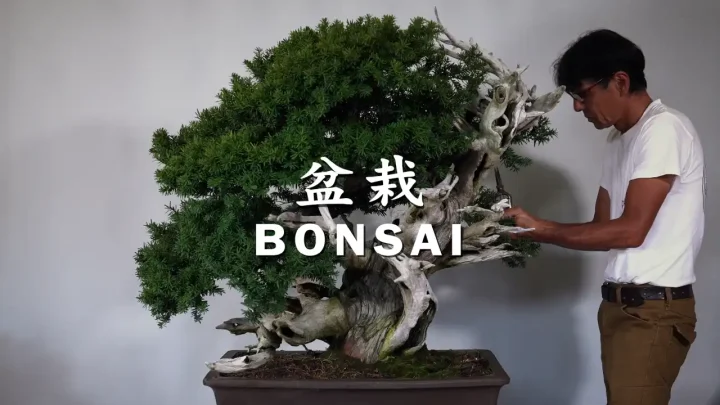
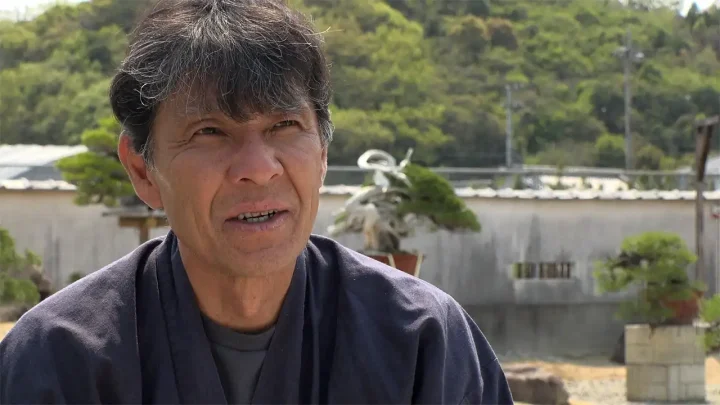
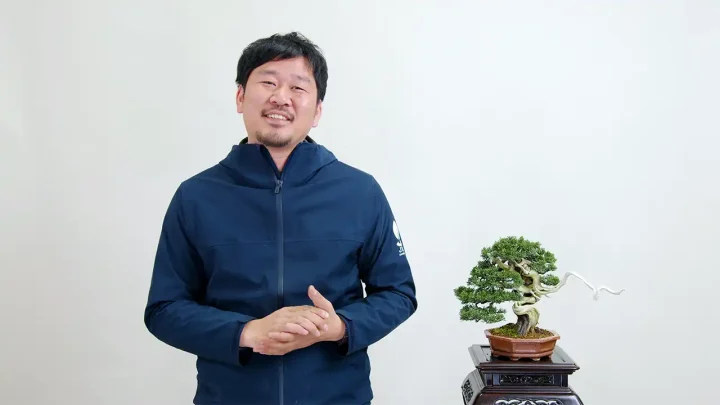
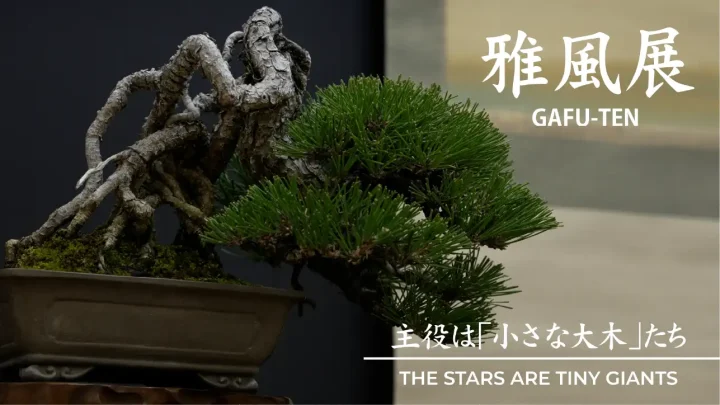
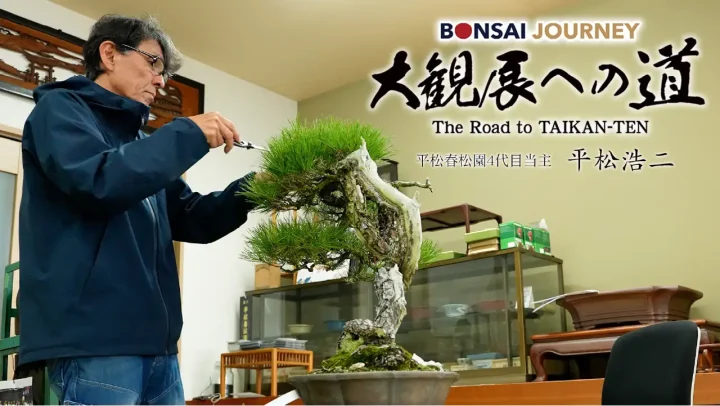
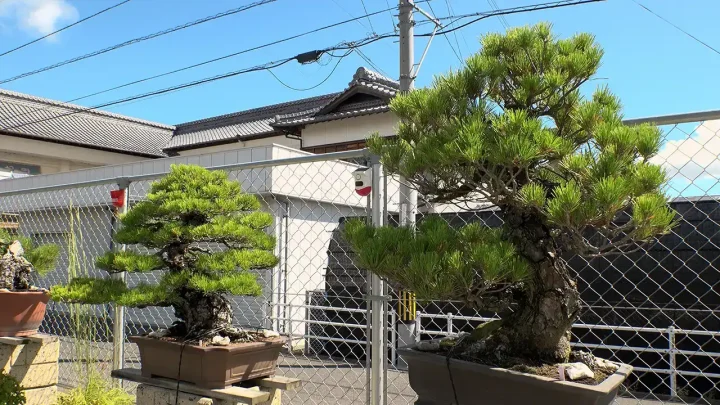
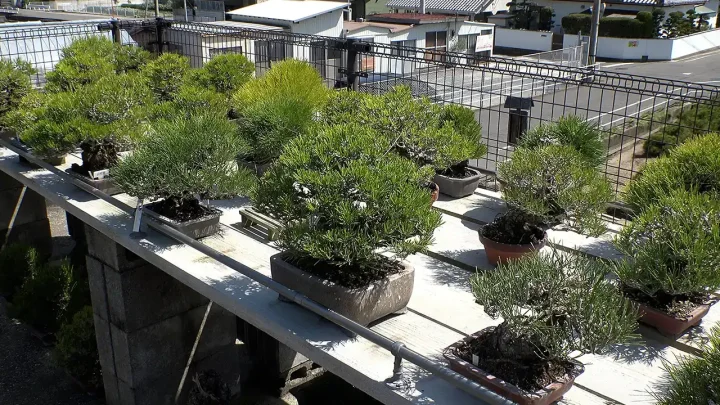
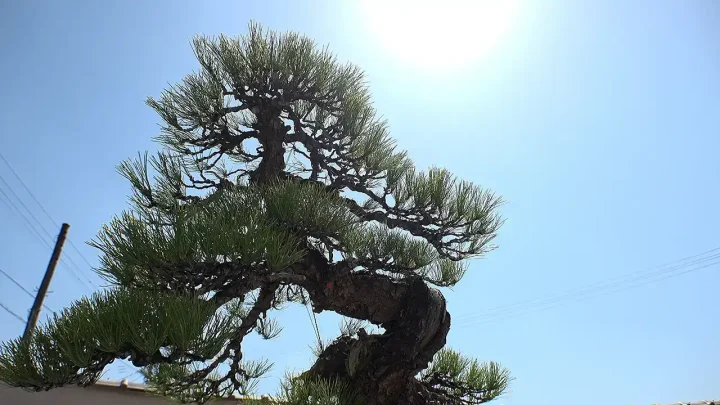
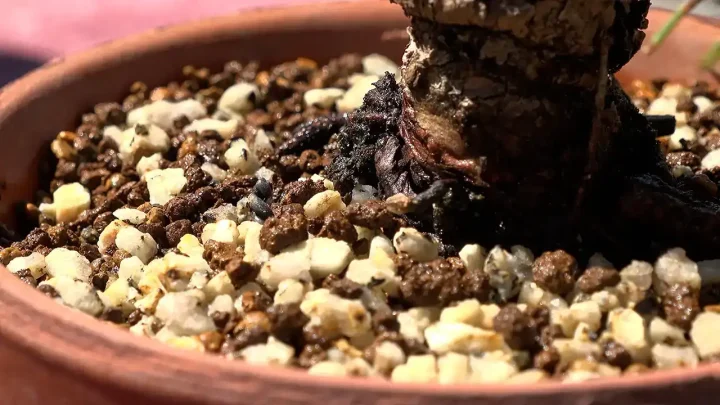
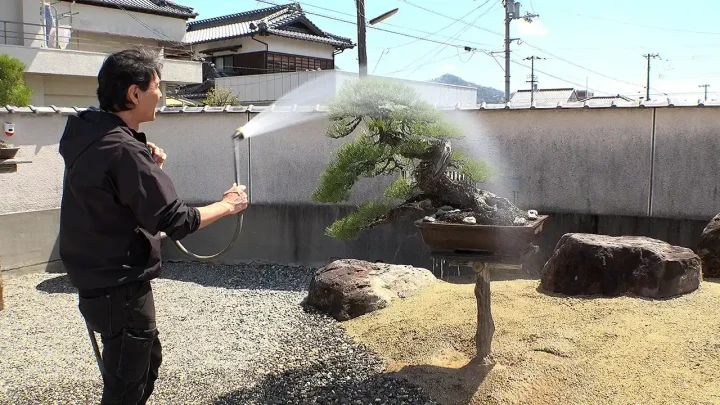
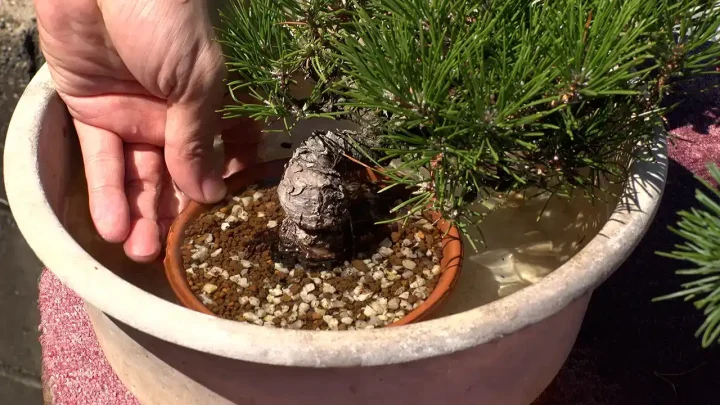
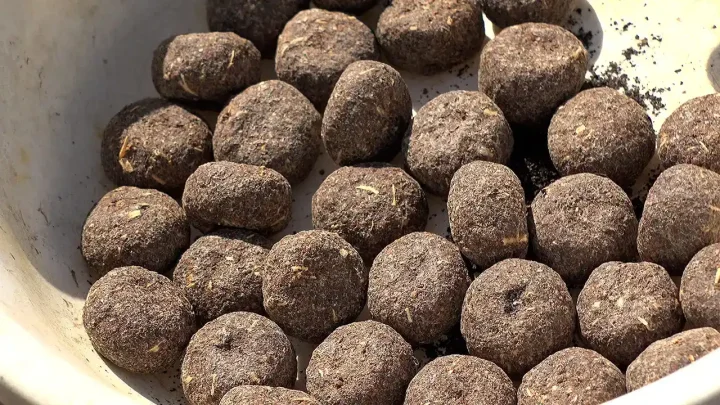
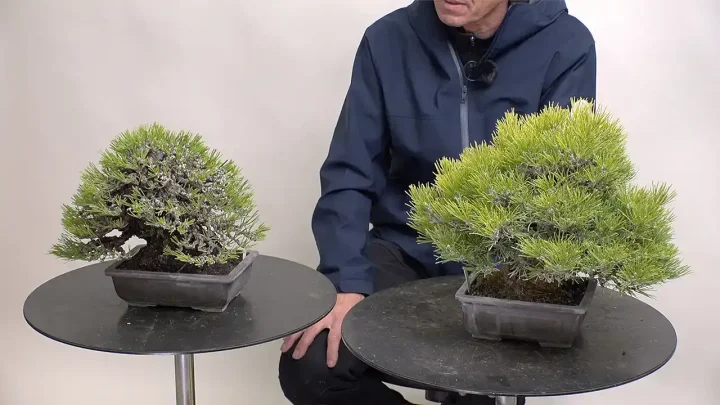
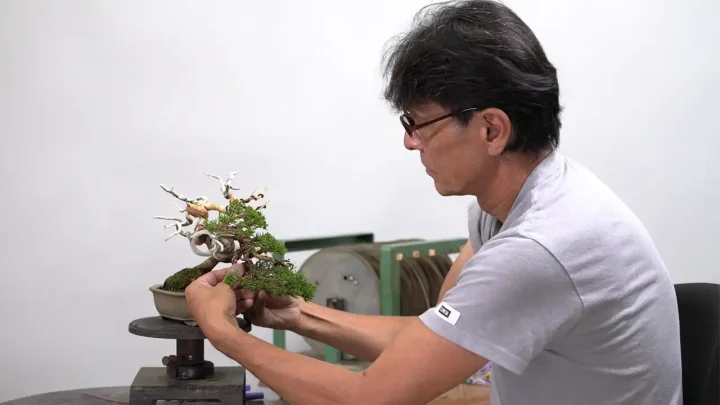
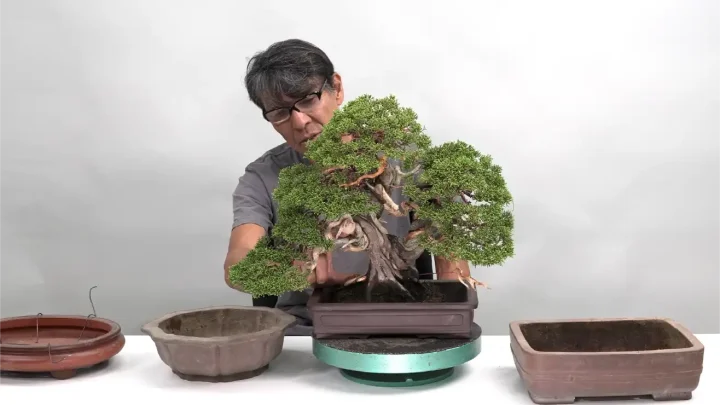
Spring for the Japanese Black Pine is the season of bringing the tree into order ahead of the June Bud Pinching. What Koji Hiramatsu shows us through a single tree is a quiet and careful practice — bud-breaking, pollen removal, fertilization, keeping a steady eye on pests — judgment upon judgment, quietly layered. What you choose to do this spring is what shapes the tree come summer.
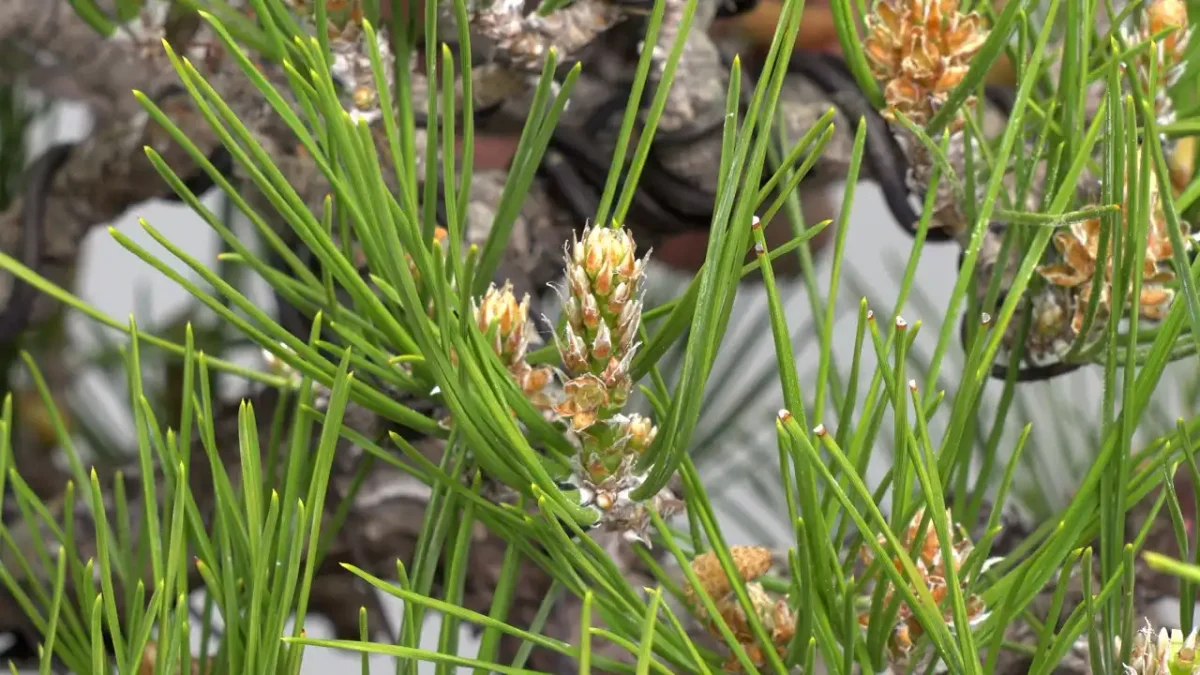
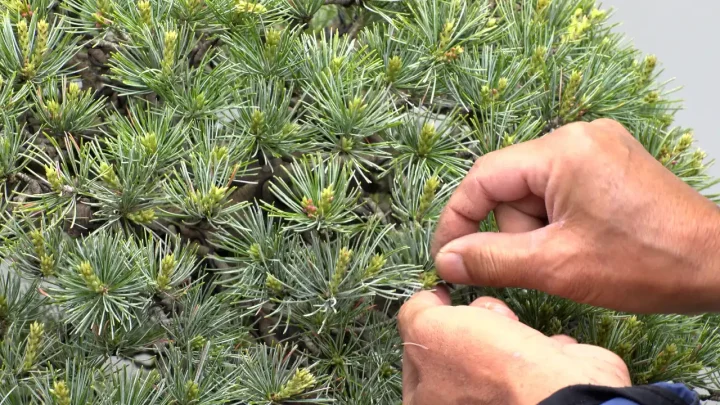
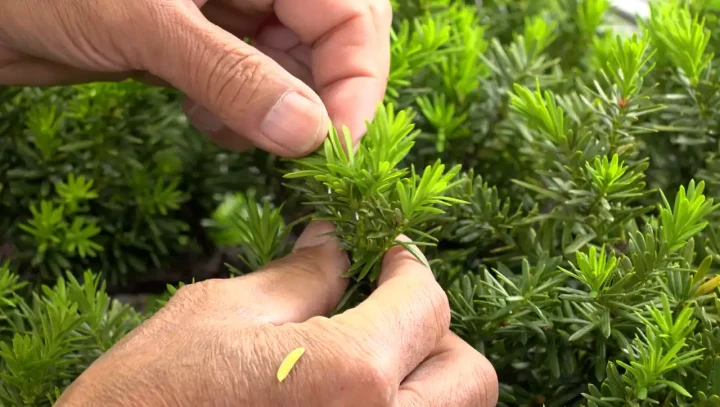
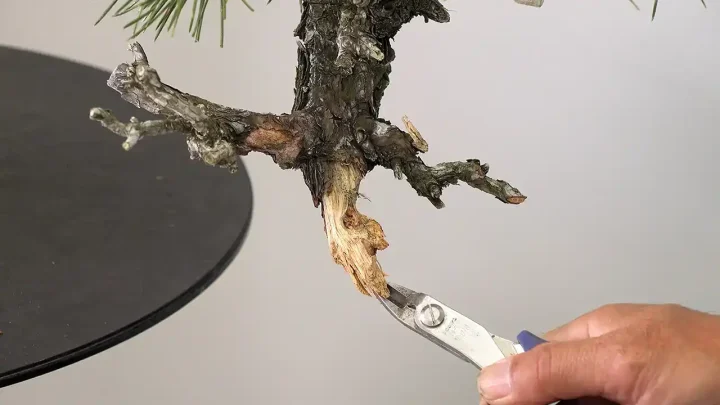
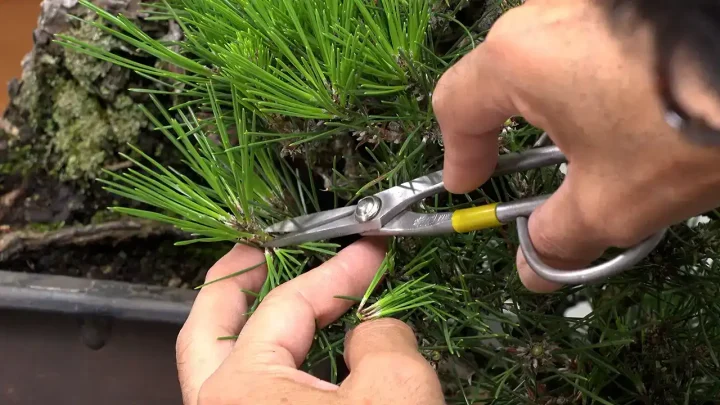
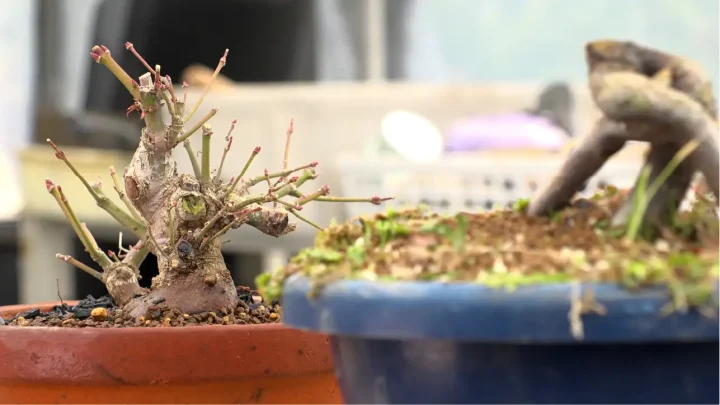
When spring arrives, the buds of the Japanese Black Pine begin to push out with vigor. Watching that energy, it is easy to think — just let them grow. But the first thing Koji Hiramatsu reaches for is the tip of a bud that has extended too far. Not from the base, but partway along — he breaks it.
What this gesture carries is something more than simple adjustment. By holding back the strong parts, energy is redirected to the weaker ones. Rather than looking at the tree branch by branch, he is reading the flow of energy through the whole. Reducing strength in one place is also a way of giving life to a bud somewhere else. Once you see it that way, bud-breaking becomes an entirely different kind of work.
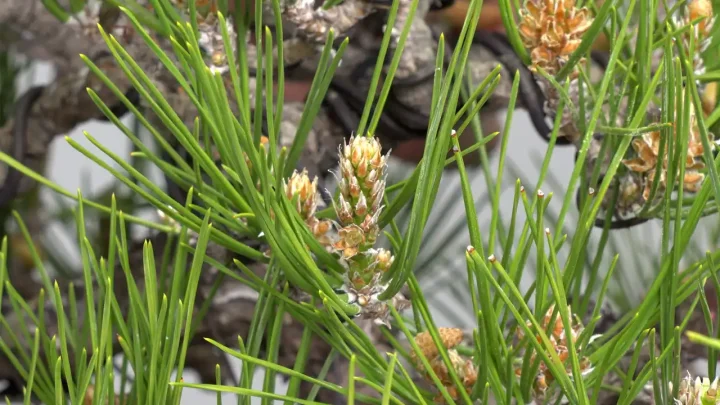
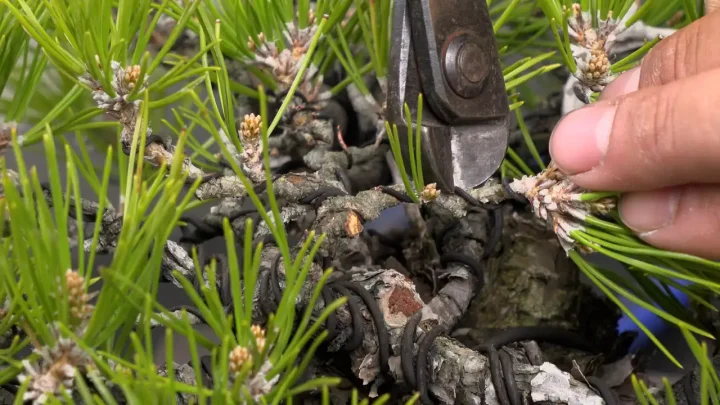
During the season when the male flowers emerge, pollen scatters each time you touch the Japanese Black Pine. Removing it entirely is one of spring's tasks. When the flowers are still firm, they are difficult to take off — and you risk snapping a neighboring bud in the process. Wait until they have softened, then work carefully, leaving none behind.
Neither rushing nor putting it off. Reading the condition of the tree and choosing the right moment — Japanese Black Pine care is built from exactly that kind of layered judgment.
Fertilization, pest checks — everything connects forward to the Bud Pinching in June. Within Japanese Black Pine management, Bud Pinching is one of the most demanding periods of the year. The precision of that work depends on how well the tree has been brought into order during this spring.
Looking ahead to choose what to do now. Unhurried, yet never negligent — spring care holds a quiet kind of foresight.
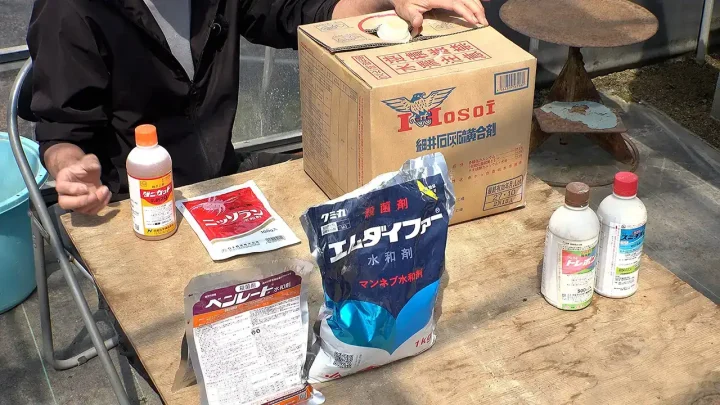
Responding to pests is not something you scramble to do after they appear. Checking for aphids, preparing for mites. Turning your attention to these things as a natural part of the spring routine. When you look at each needle one by one, what you are practicing is less about pest control and more about the habit of observation.
Look closely, and you notice change. Notice change, and you have choices. Pine mites cause the needles to yellow, affecting the tree's overall growth for that entire year. That is why you look in spring — so that autumn does not become a struggle, and so that today is walked with care.
As spring draws to a close, Sensei's eyes are already turned toward the June Bud Pinching. The time spent with the tree always seems to live in two seasons at once — the one just ahead, and the quiet work of now.
The journey of "Novice: “Ayumi”" begins with member registration.
Begin the Journey