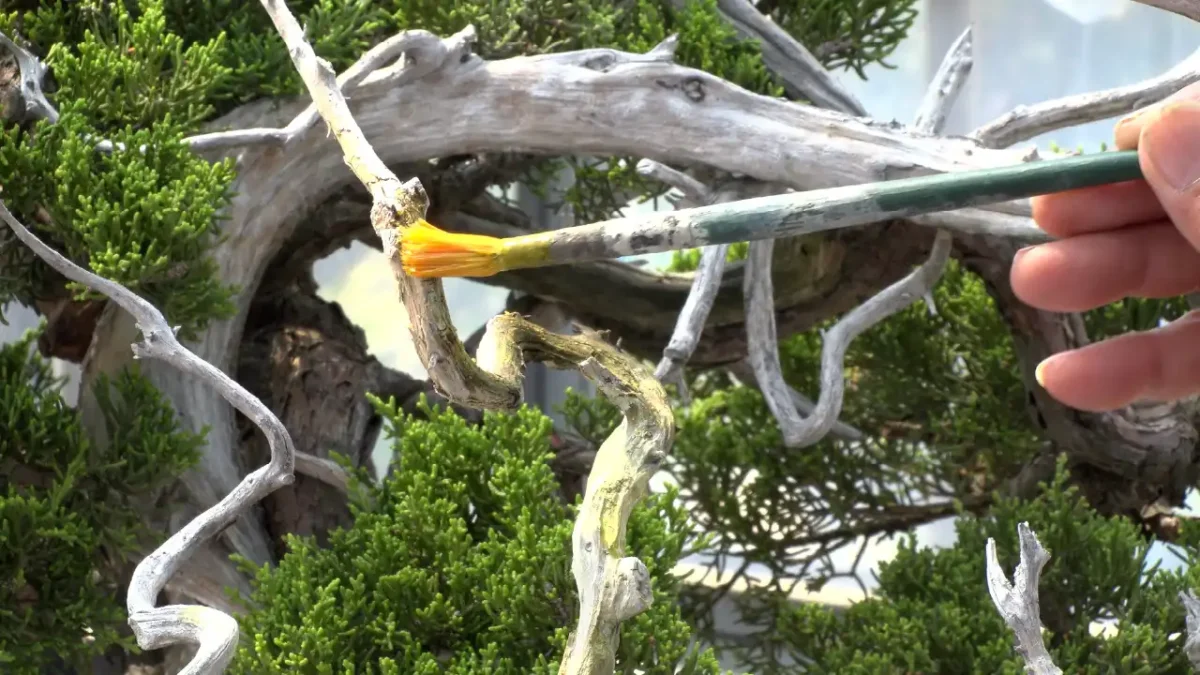
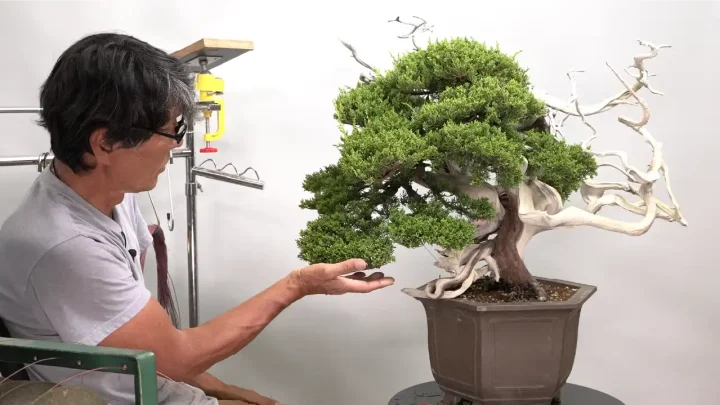
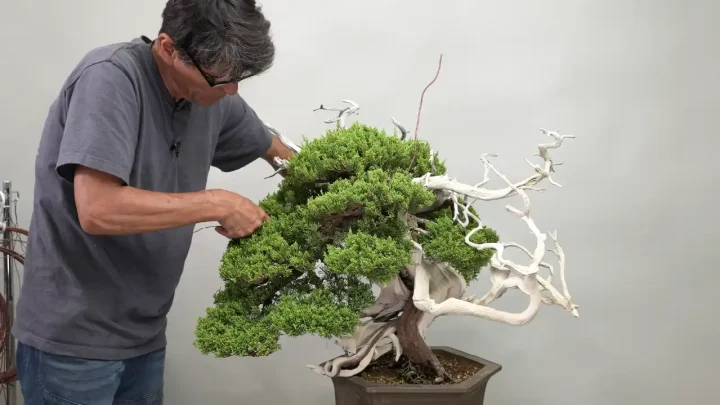
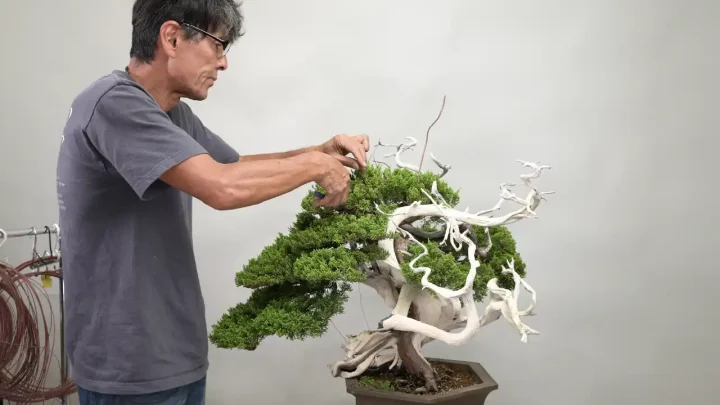
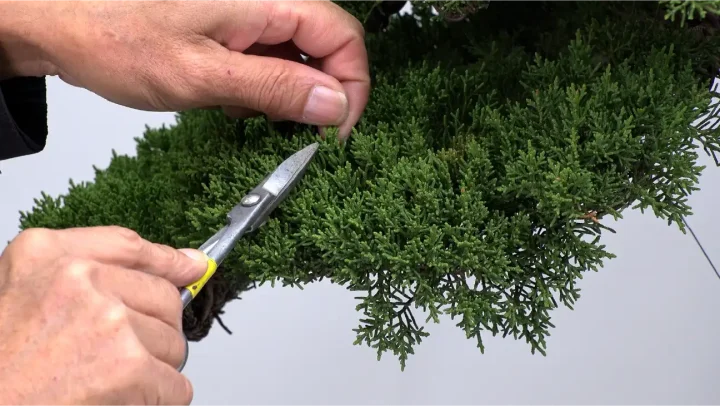
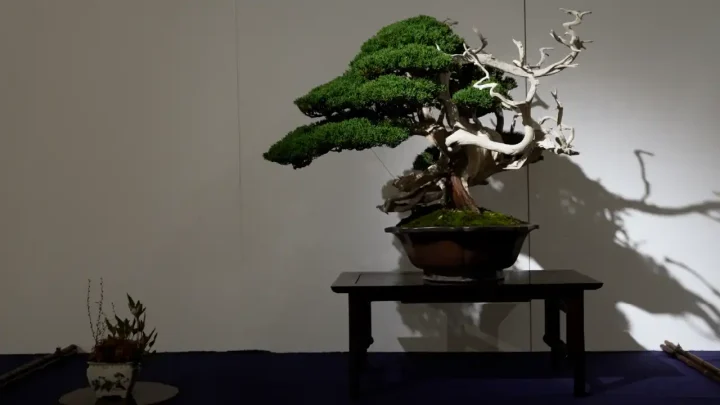
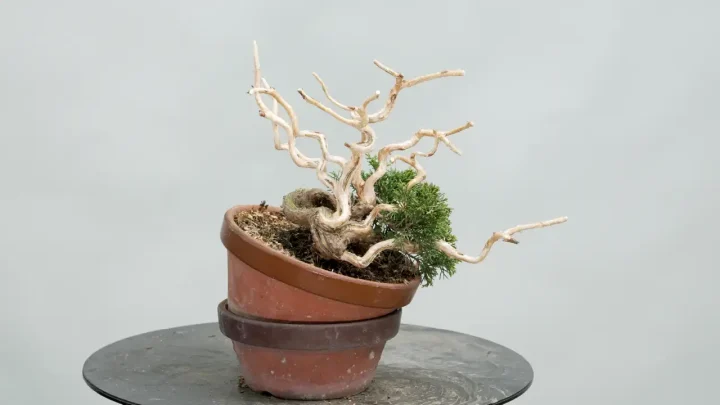
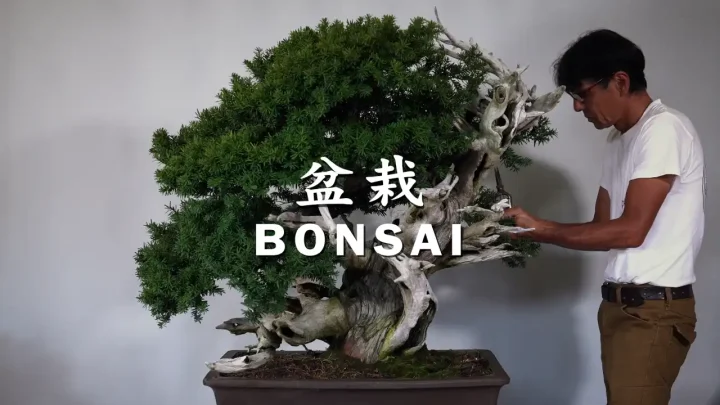
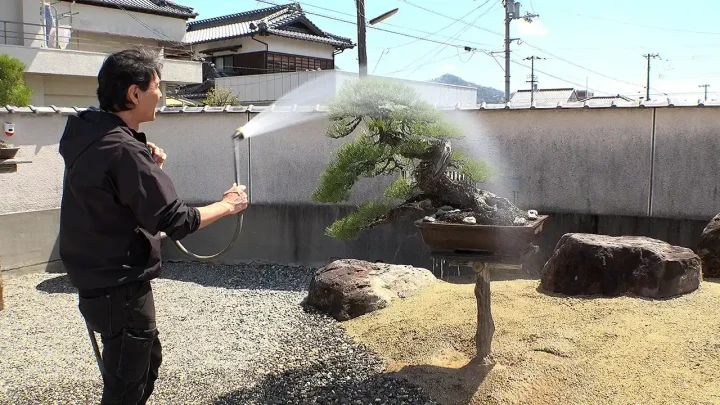
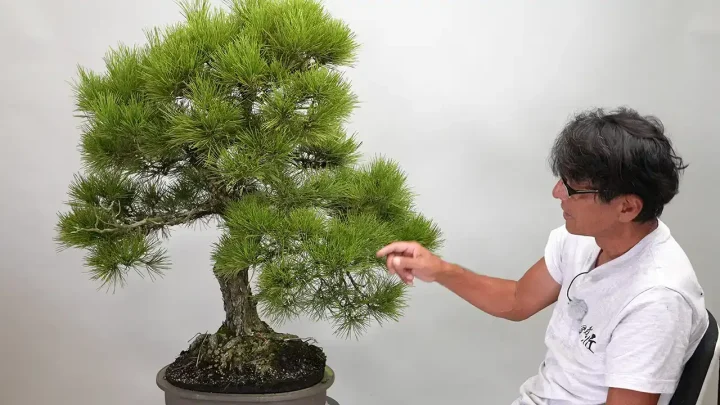
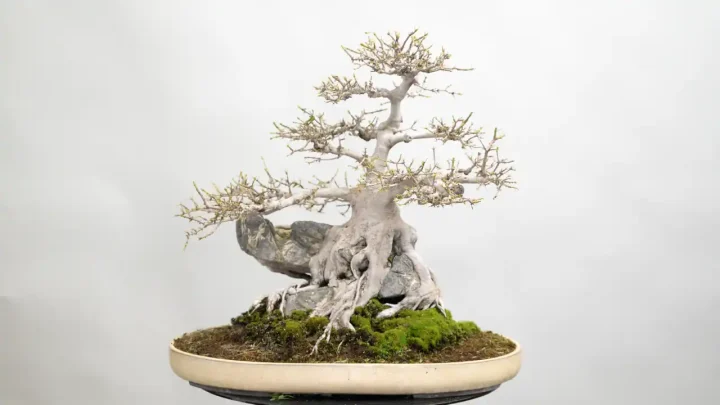
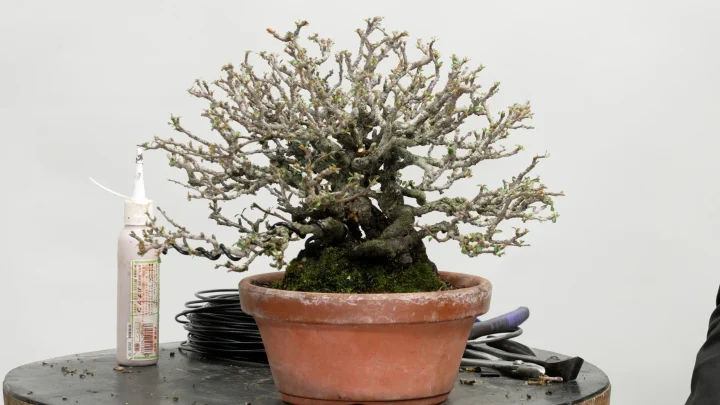
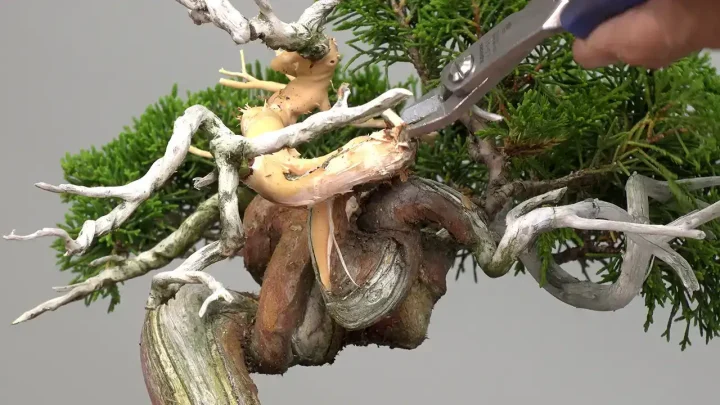
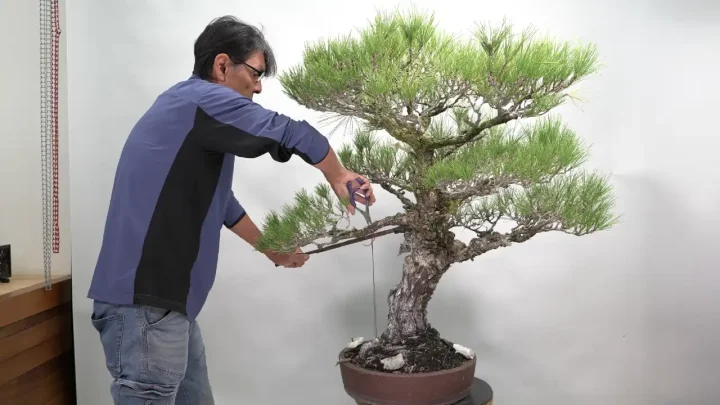
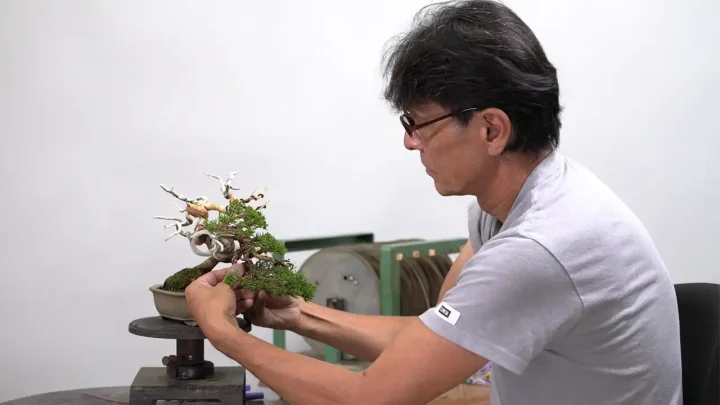
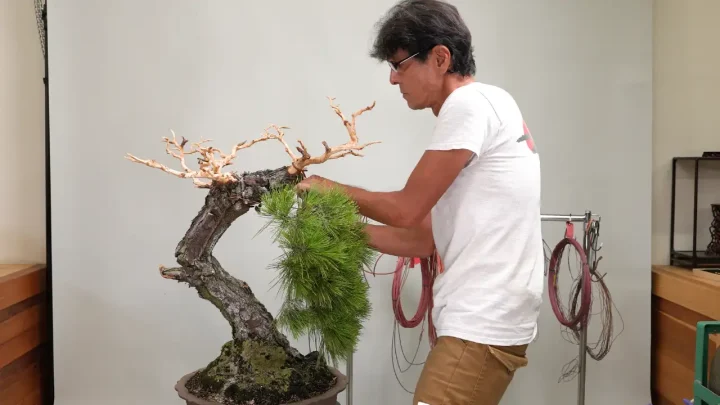
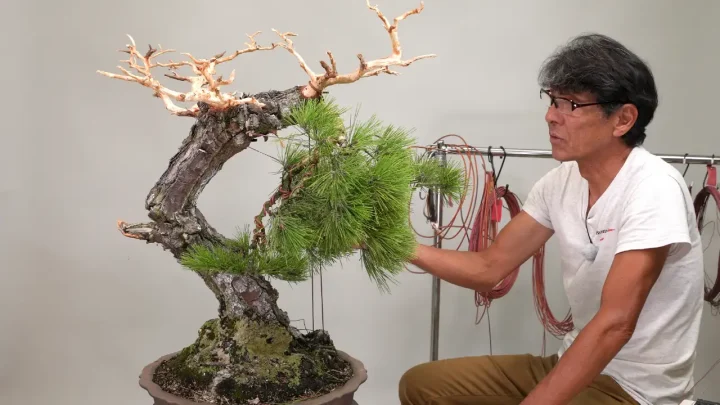
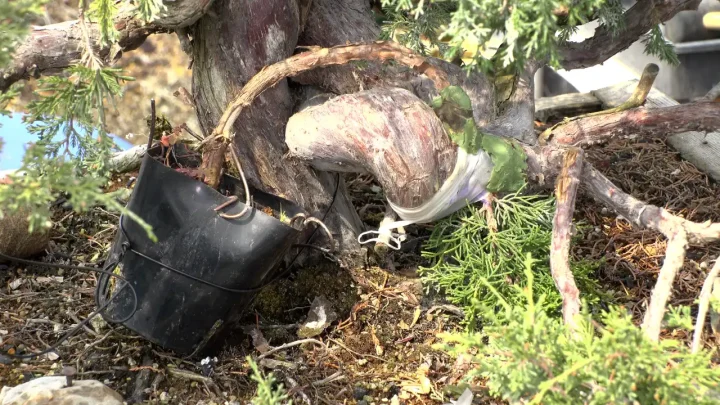
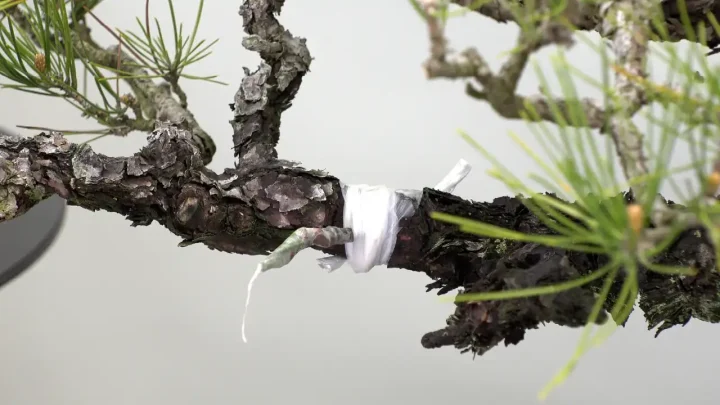
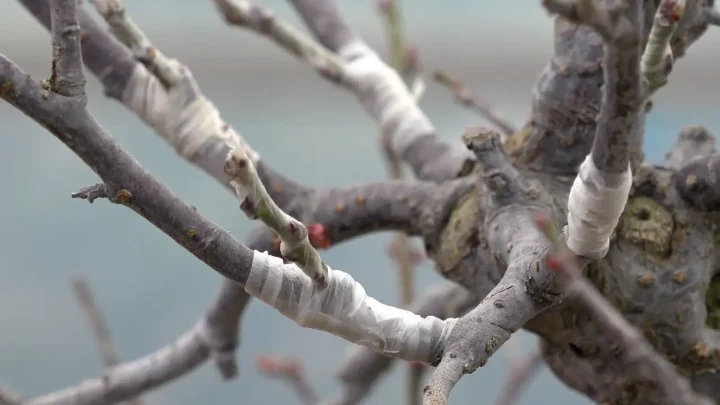
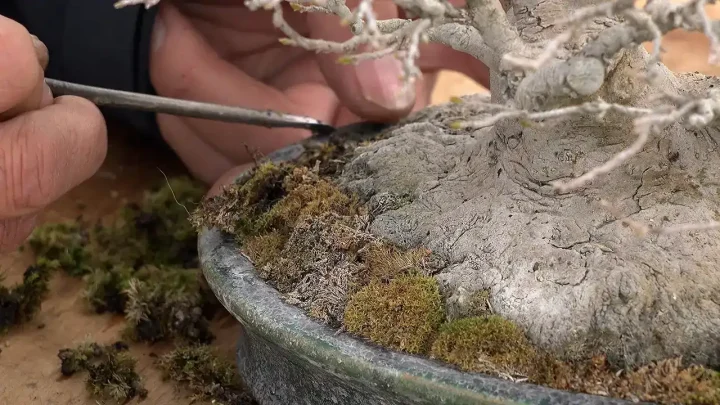
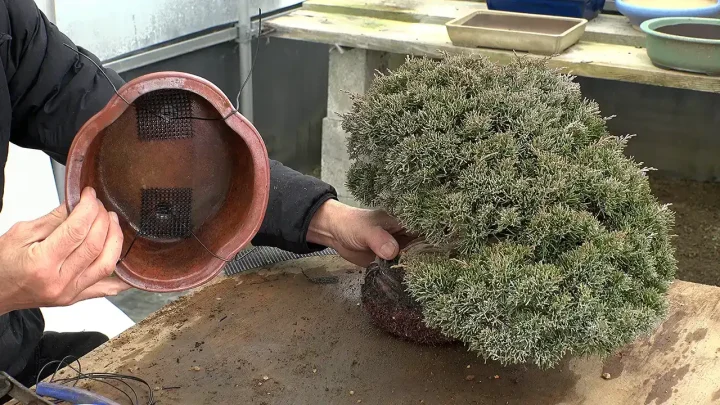
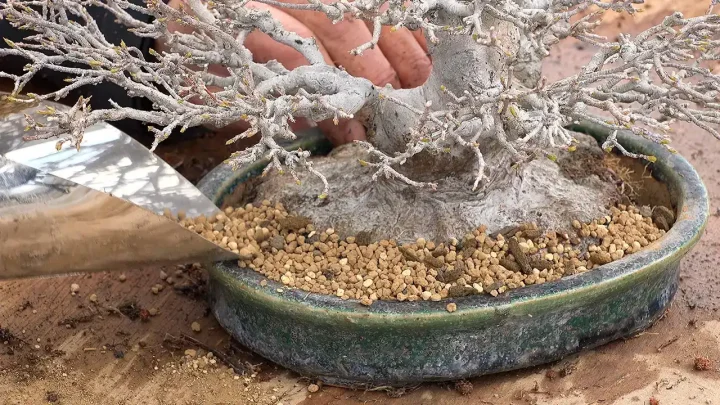
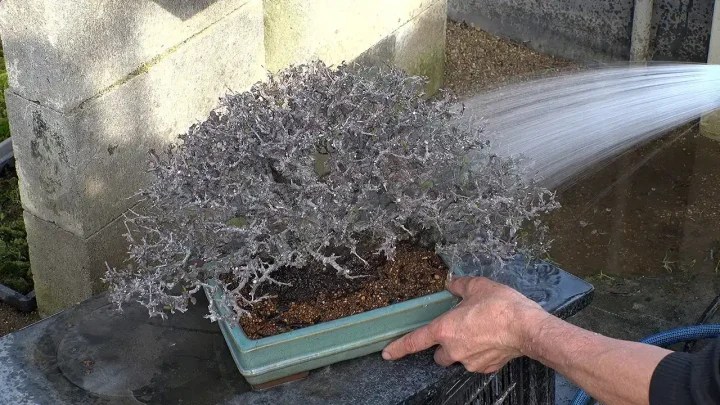
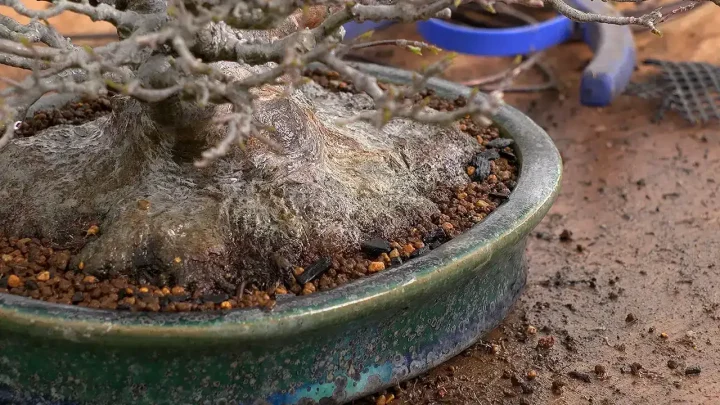
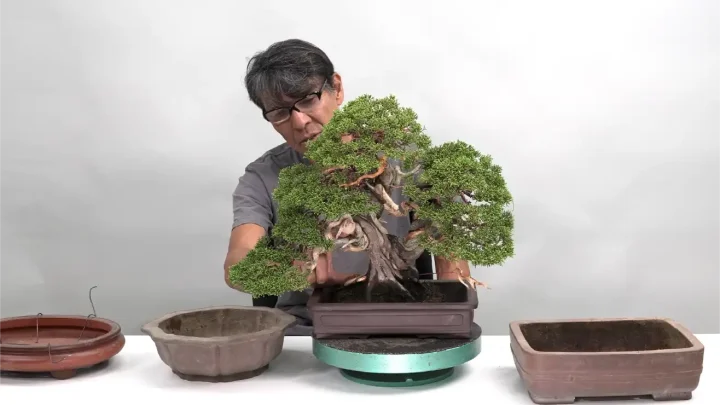
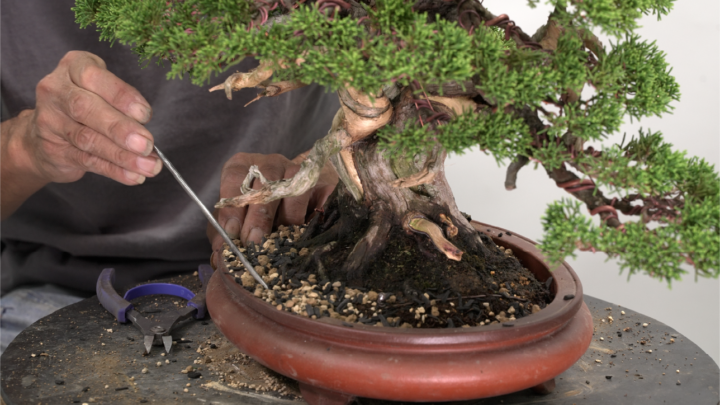
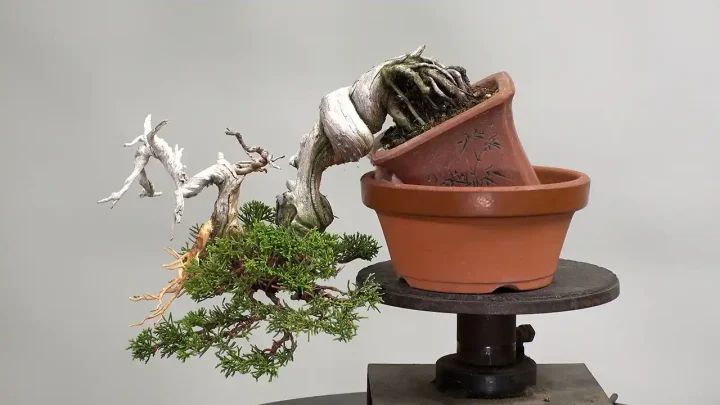
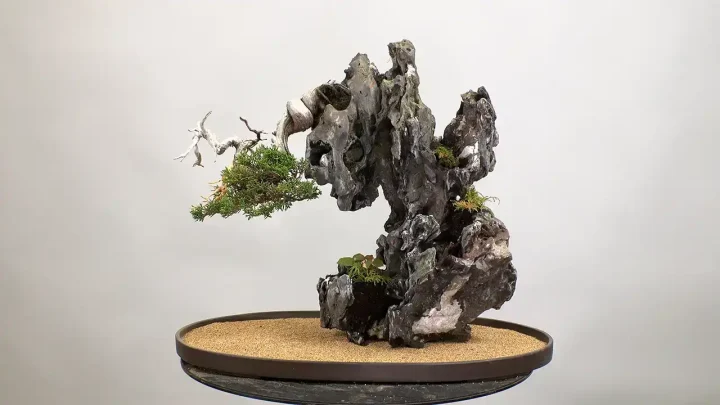
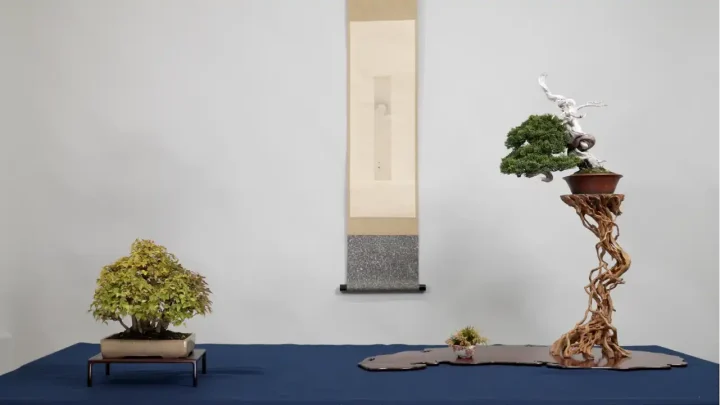
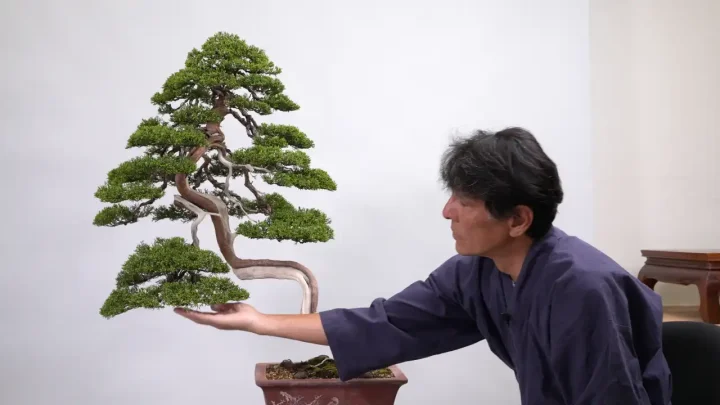
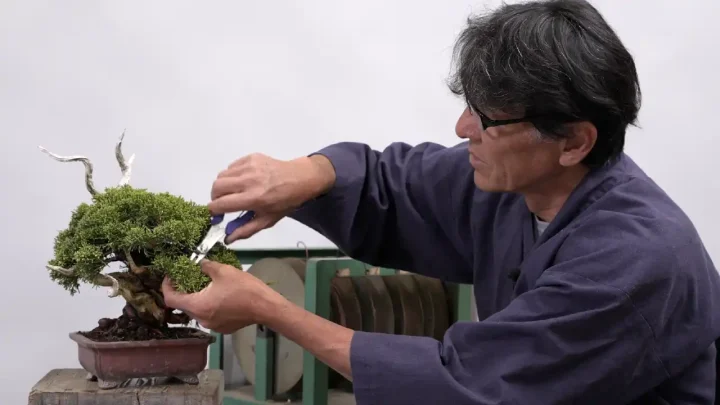
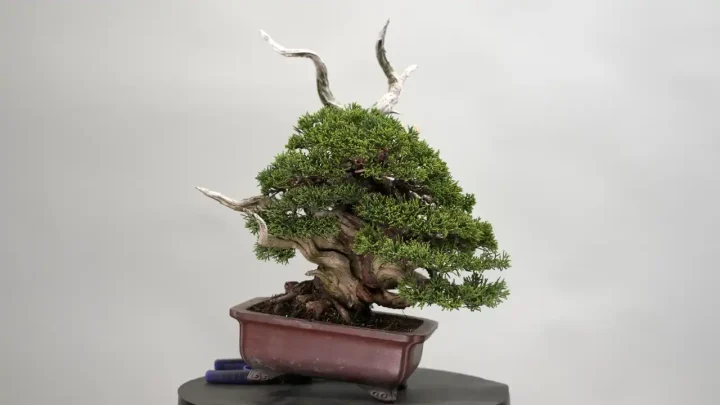
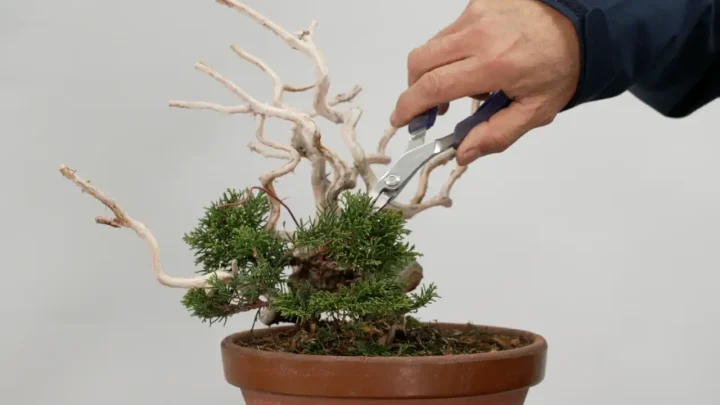
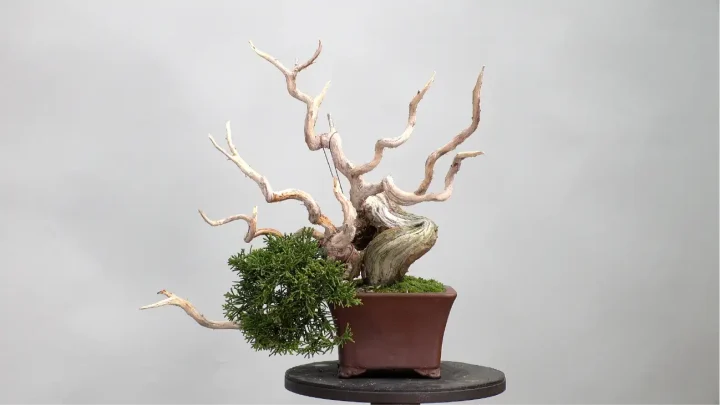
A two-hundred-year-old Shimpaku Juniper is prepared for the Kokufu-ten. Water stains are carefully removed with a high-pressure spray gun, and Lime Sulfur Solution is applied to bring whiteness to the wood. But not right before the show — in early autumn, so there is time for the color to settle naturally. That patience is the heart of how this tree is approached.
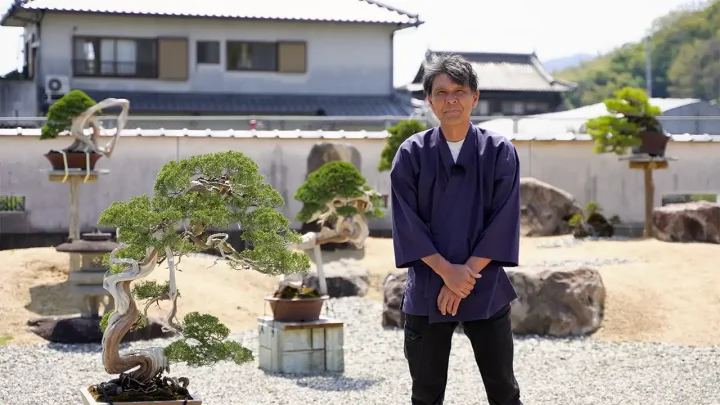
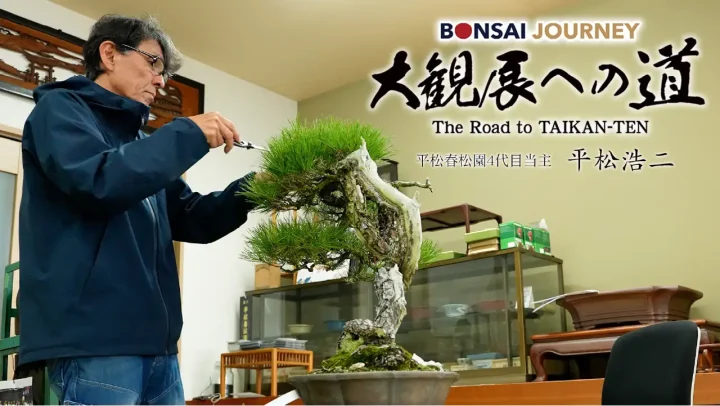
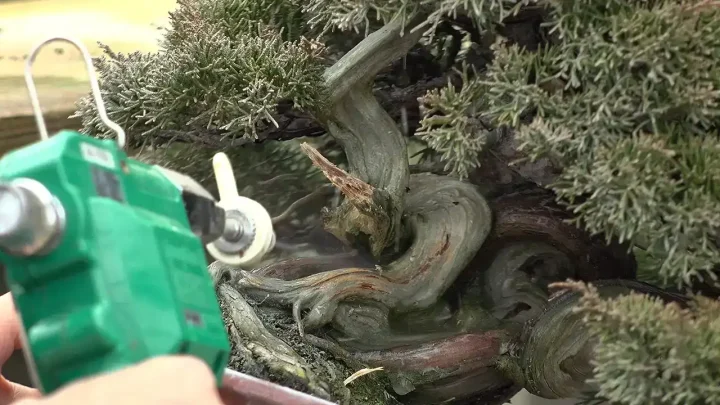
A Shimpaku Juniper, two hundred years old. A collected ancient tree whose trunk — shaped by Jin and Shari and Deadwood — has gathered water stains and the weight of years. With this tree already accepted for the following February's Kokufu-ten, Koji Hiramatsu first turns the spray gun nozzle toward the back of his own hand. Checking the water pressure — that is the first task.
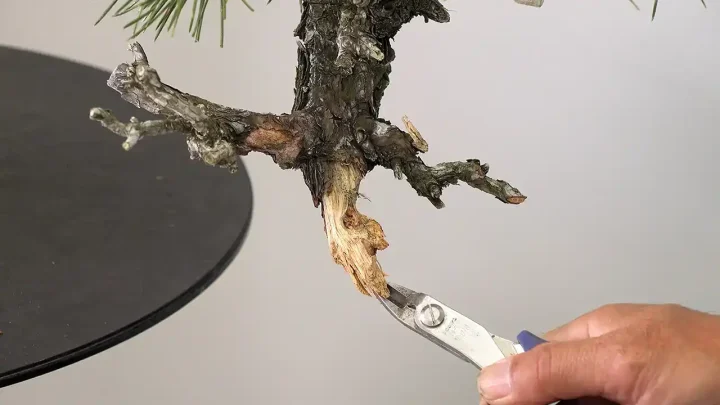
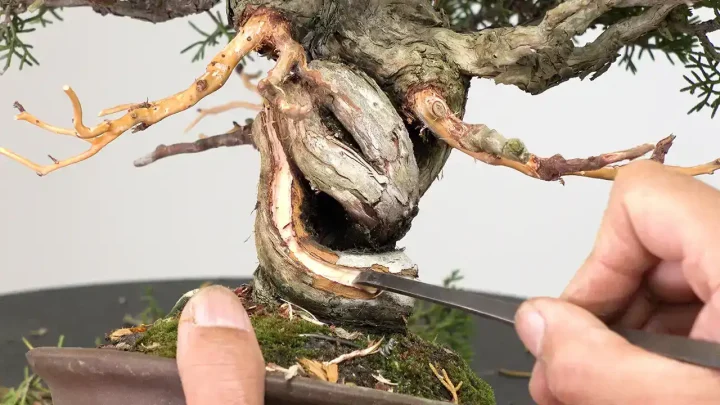
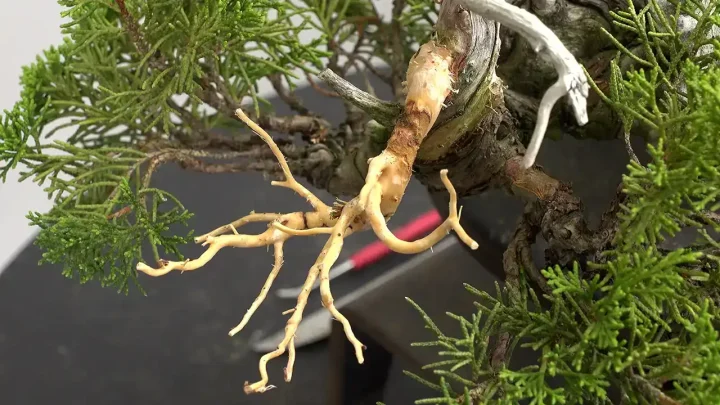
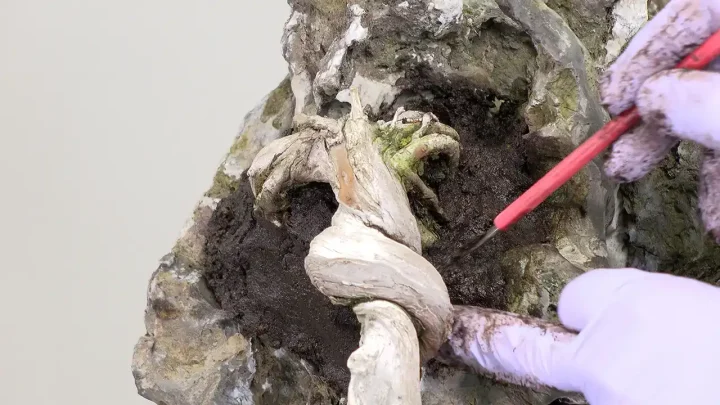
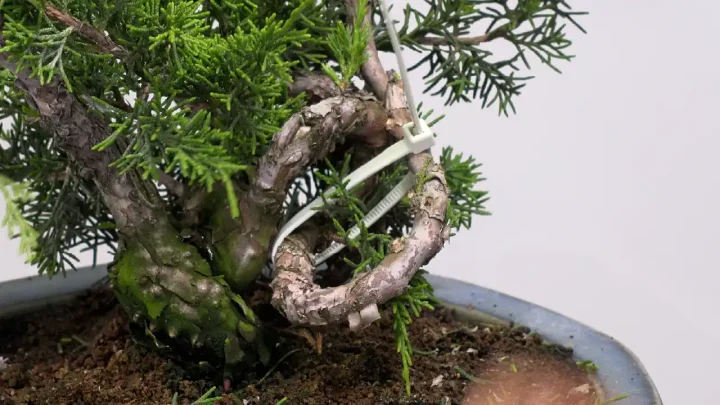
Along the Live Vein, work from a distance, with gentle pressure. Where rot has begun to set in, stronger. Loose bark that is already coming away gets removed in the process too. Each decision about pressure will shape where this tree stands a few years from now. Trunk washing looks unremarkable from the outside — but in practice, it is the work of reading an old tree's condition.
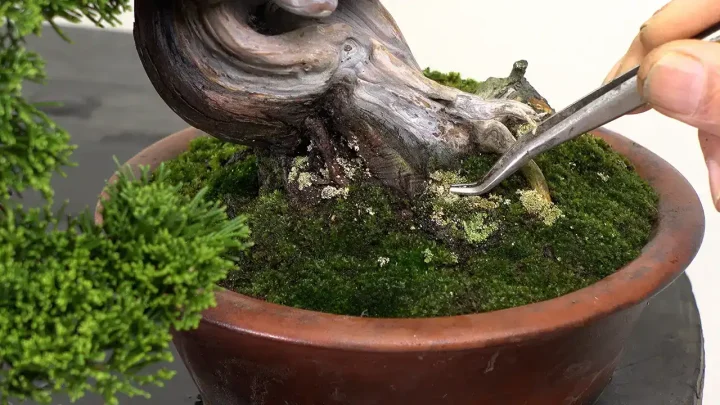
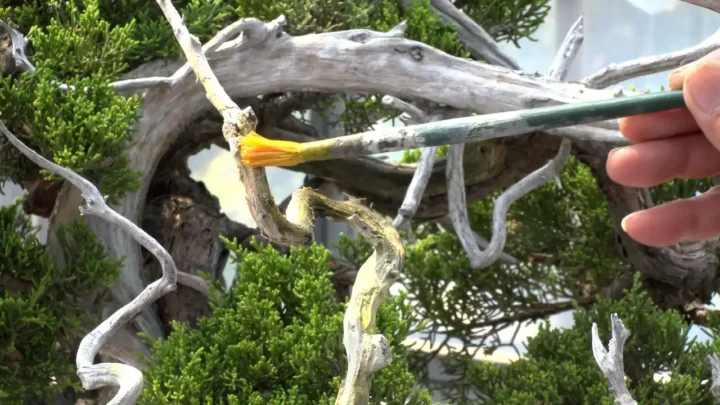
After the trunk washing is done, Lime Sulfur Solution is applied. Applied right before a show, the Jin will shine a vivid white. But Sensei does not make that choice. He applies it in early autumn — and then waits, over the course of several months, for the color to settle naturally in time for the February Kokufu-ten.
'Rather than emphasizing the whiteness too strongly, it is enough to let the color of the Jin find its place.'
Trusting time over appearances. Not wanting to paint over and erase the color this tree has gathered across two hundred years — there is a quiet resolve in that choice.
On the question of how to polish the Live Vein, Sensei speaks openly. There was a time when bringing out the redness was the prevailing approach. Now, the tendency is to leave some bark and let the age show — he says.
The answer changes. And yet, you can still choose, grounded in the reasoning of the moment. To keep asking what is beautiful, to keep moving your hands while updating your answer. Not the absence of doubt — but choosing, with reason, even through doubt.
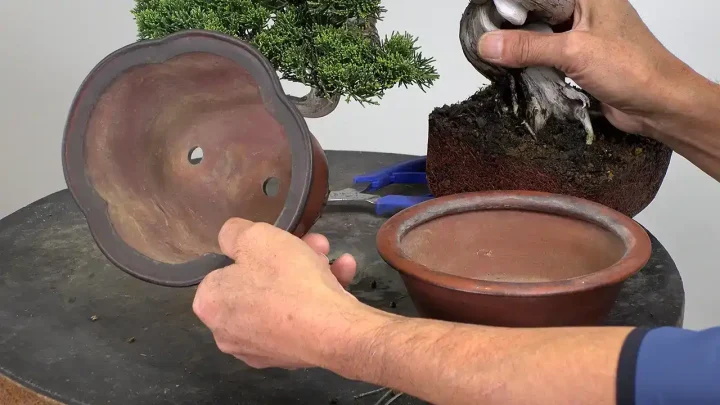
Sensei says at the outset that this work comes 'a little later than ideal.' May is not the perfect time. And yet — showing that constraint honestly, and choosing the best that can be done within it — that too is a way of setting an example.
Standing before a tree that has grown for two hundred years, what can a person really decide? It is in the place where that humility and the resolve to keep tending intersect that the true nature of show preparation lives.
The journey of "Master: “Fune”" begins with member registration.
Begin the Journey