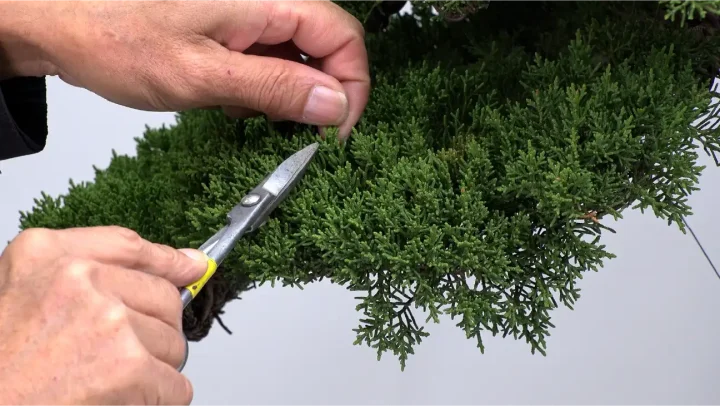
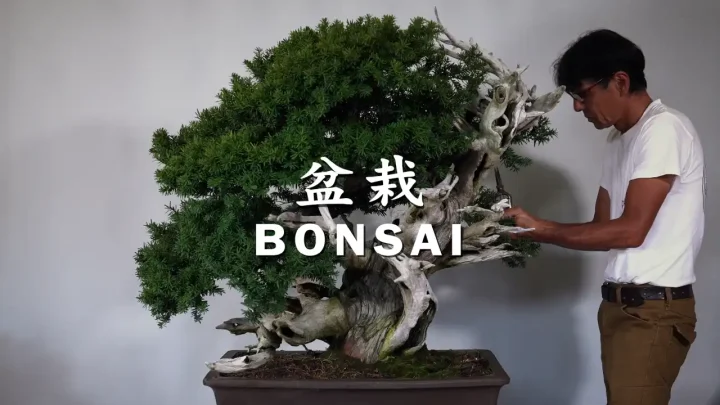
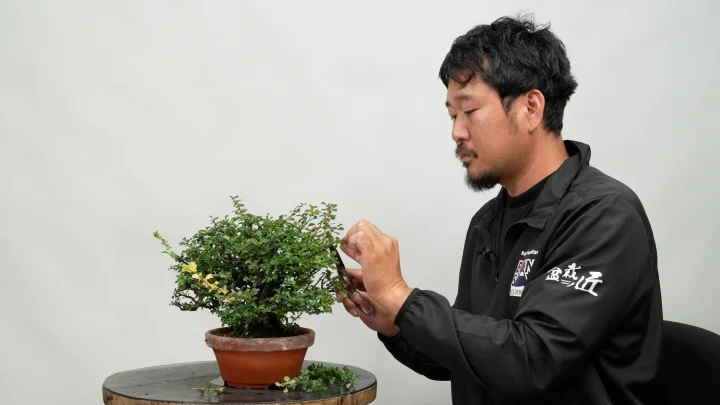
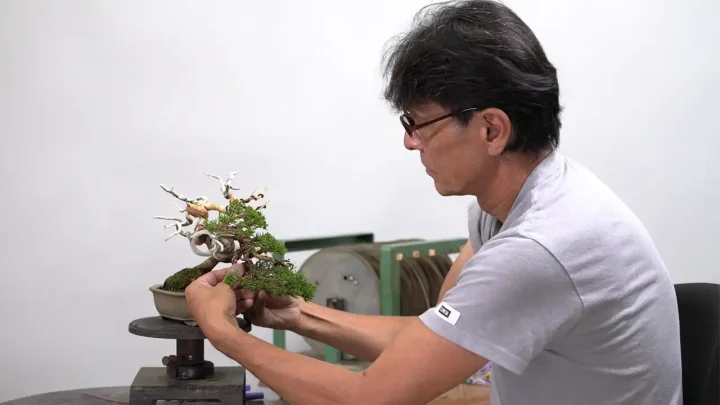
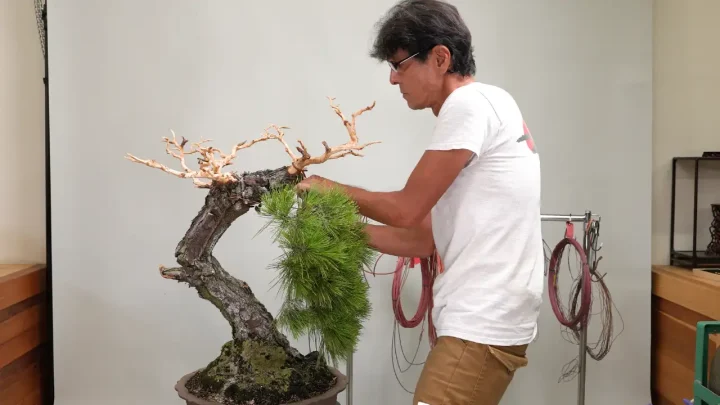
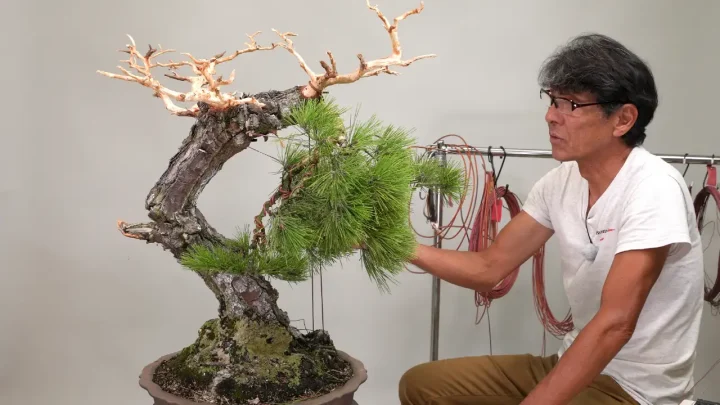
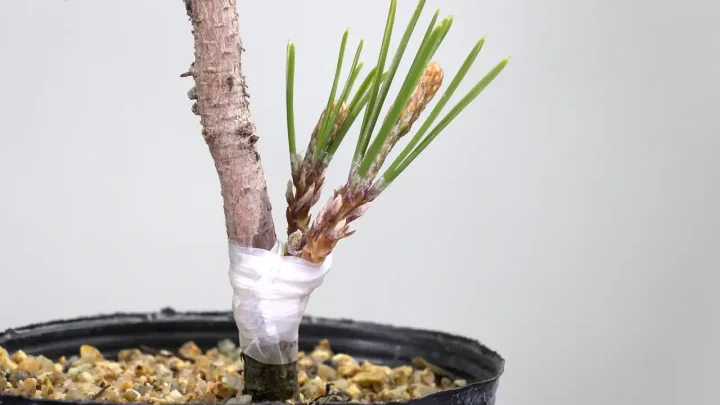
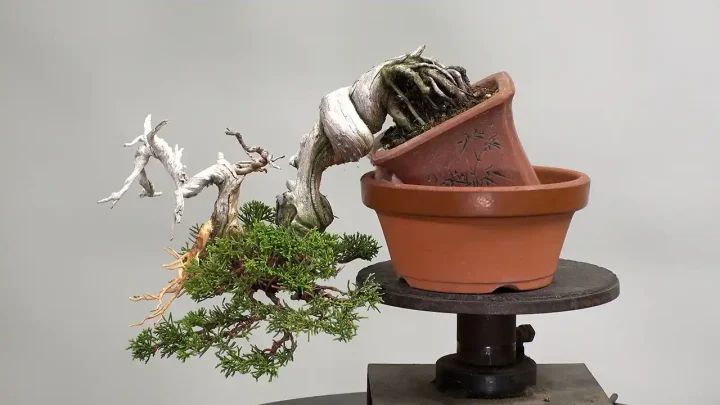
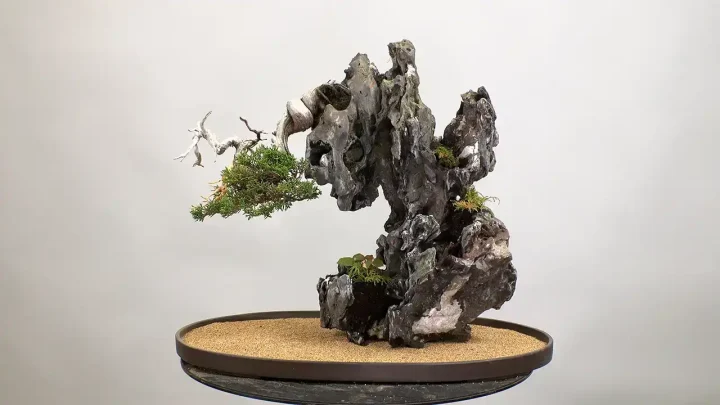
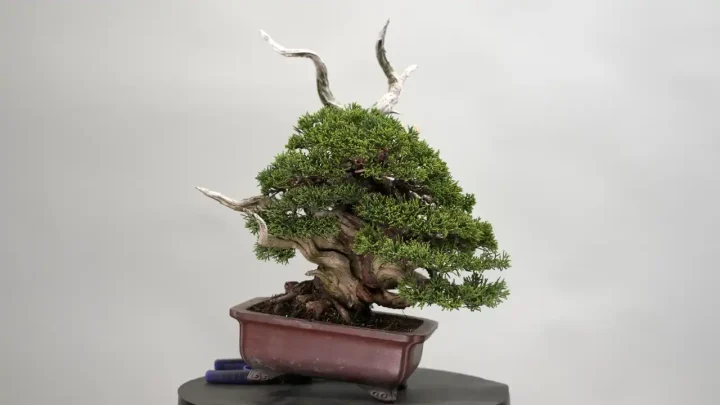
Shaping the first form from shimpaku stock. Cutting sacrifice branches, creating jin, selecting the front—within this sequence of work lies a chain of decisions that cannot be undone. Because you know there is more than one answer, the time spent facing the material only deepens.
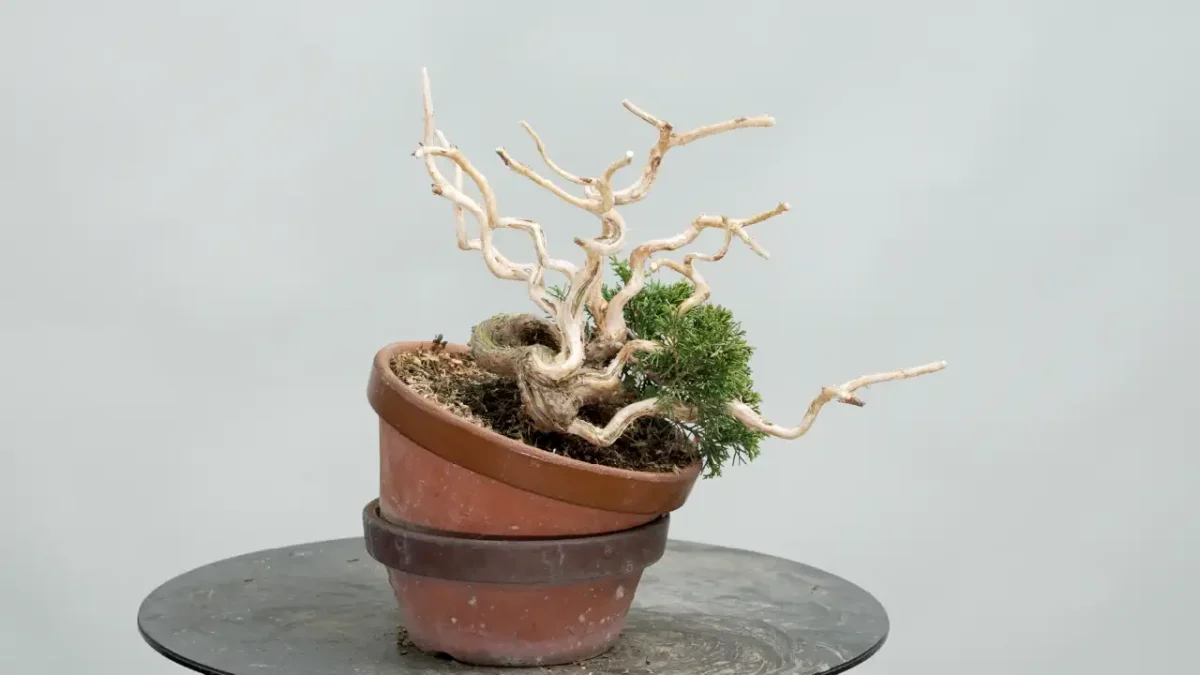
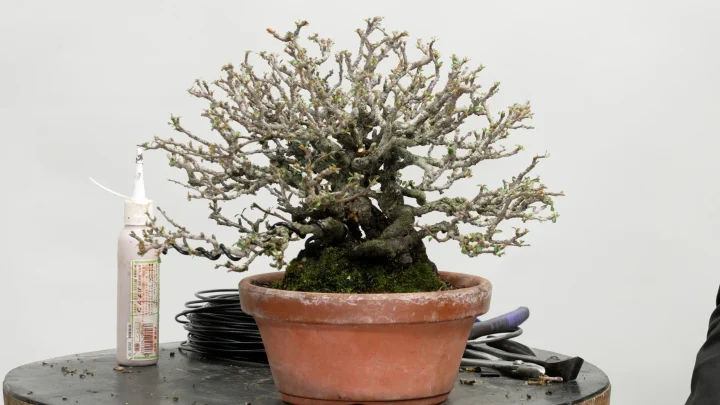
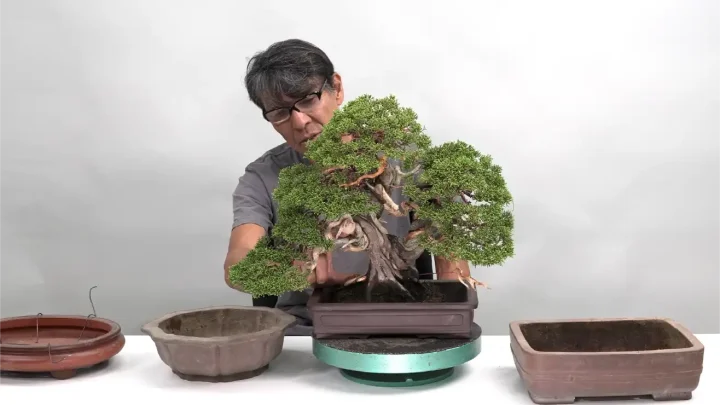
The shimpaku sitting on the pot is not yet a «work.» Branches remain, no front has been chosen, and no one knows what form this tree will take—the work begins from that state of unknowing.
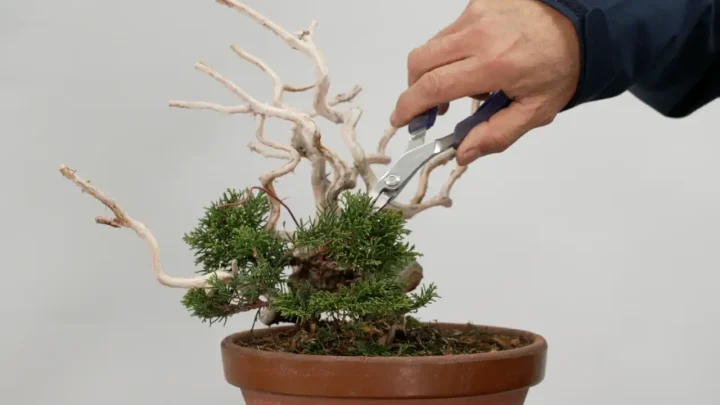
«Once you cut it short, there is no going back.»—That single truth is the premise of everything that follows. Because this work cannot be undone, you begin with margin to spare. Haste only narrows what the material might become.
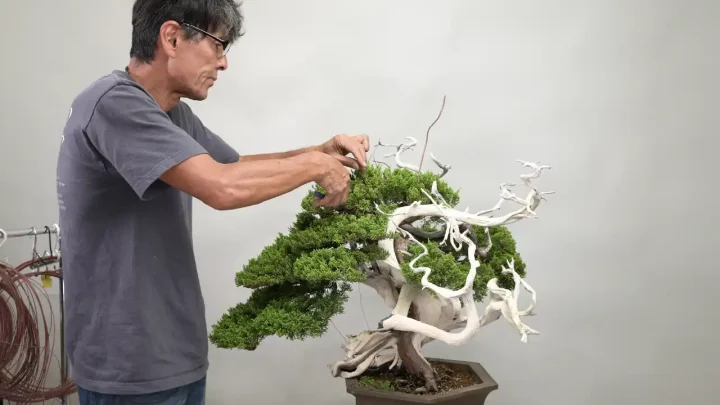
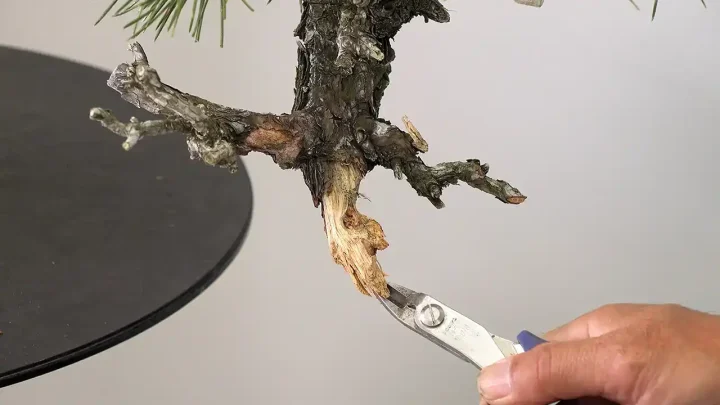
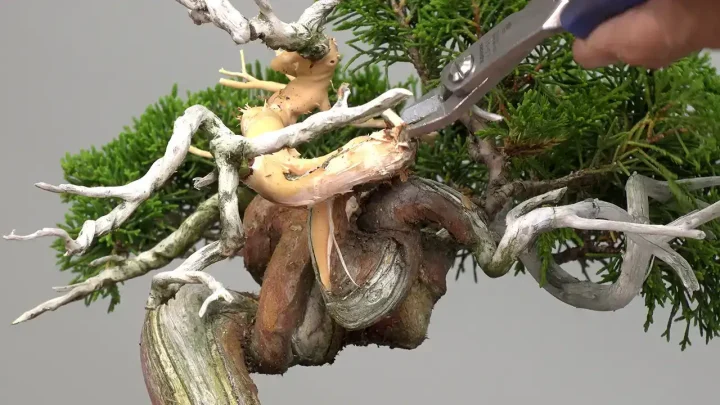
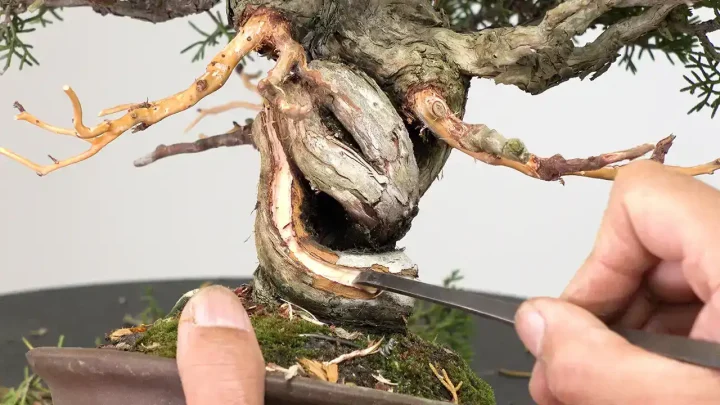
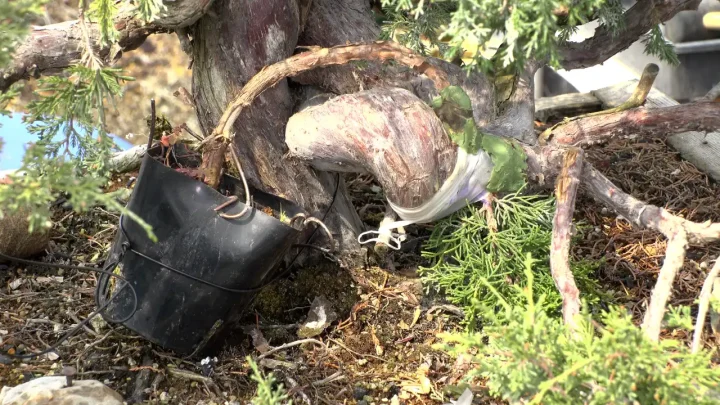
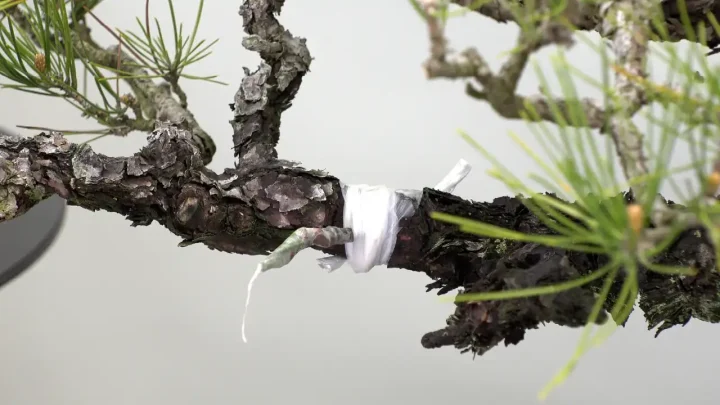
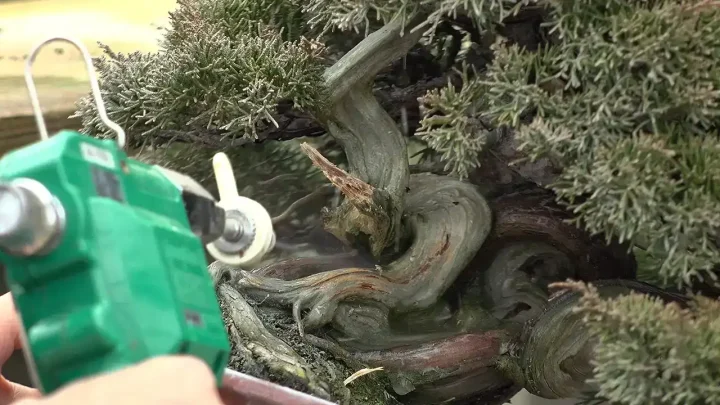
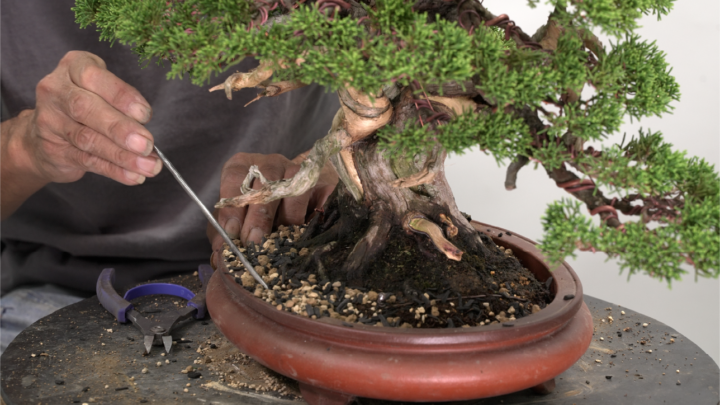
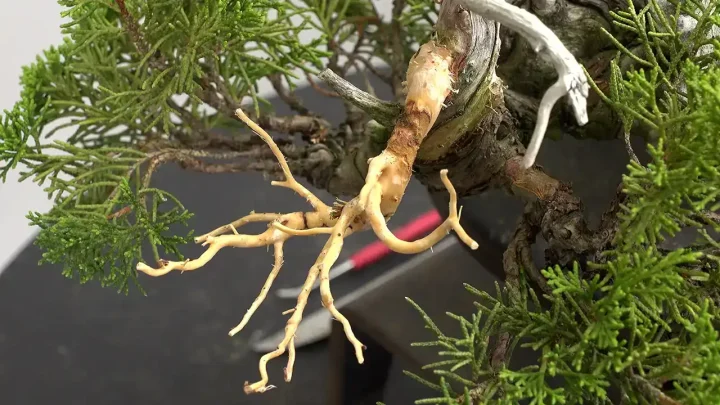
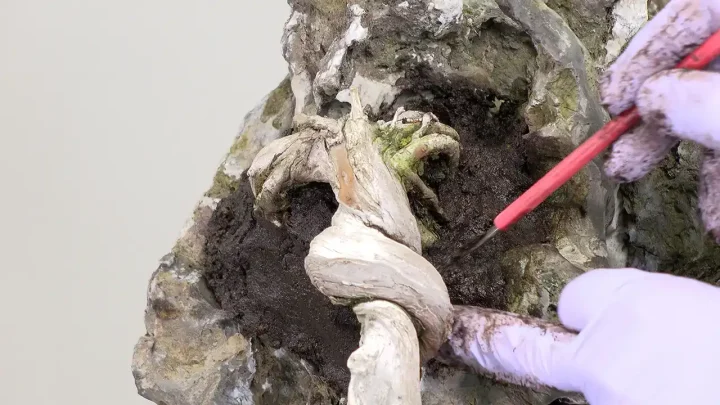
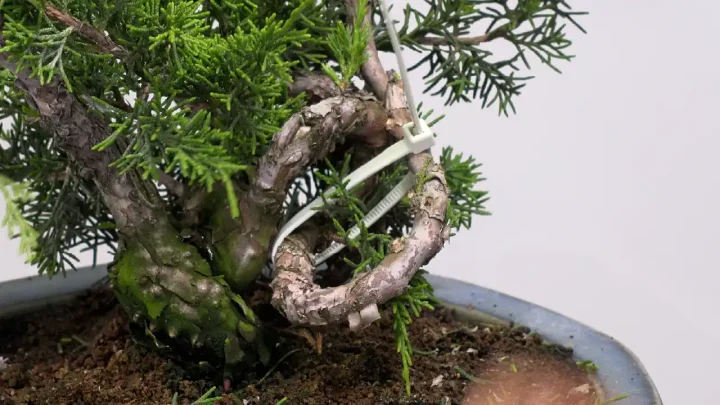
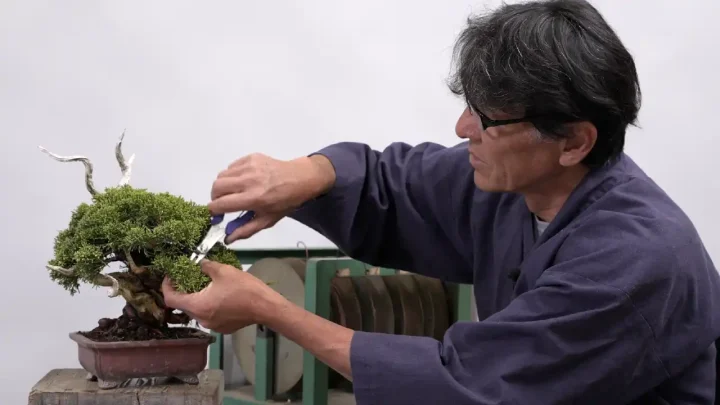
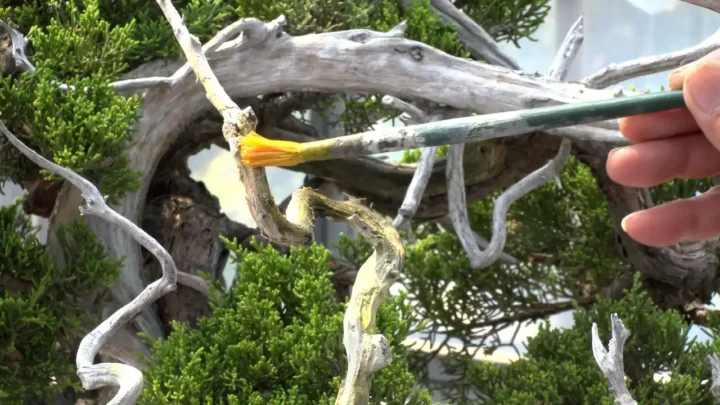
When creating jin, the first thing to check is the path of the live veins. Shimpaku grows in spirals. Finishing the jin while protecting two live veins along that natural flow—that is why it looks natural, and why the tree continues to live.
By connecting the jin to the shari of the trunk, traces of «human-made» work fade away. Whether the jin appears abrupt, or seems to extend the natural flow of the trunk—
With two candidates before you, there is time to study them again and again, shifting the angle each time. The technically «correct» line reveals itself naturally. And yet, there is also the choice to deliberately pass it by.
«There is always the option to keep it simple. But this time, I want to take on the challenge of using this trunk's movement.»
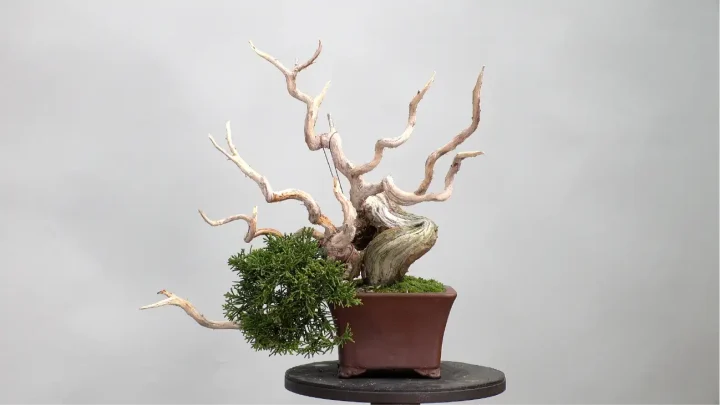
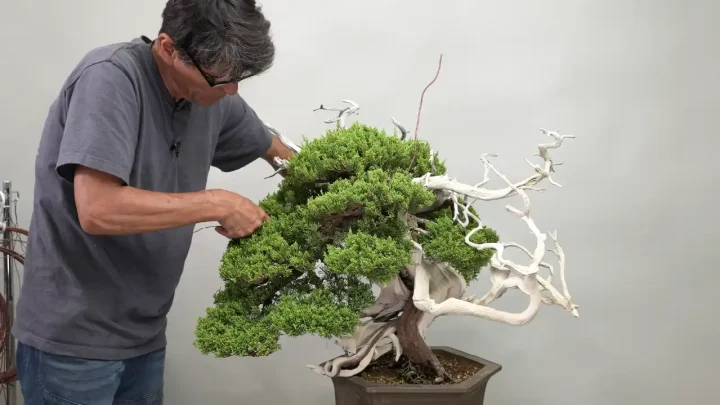
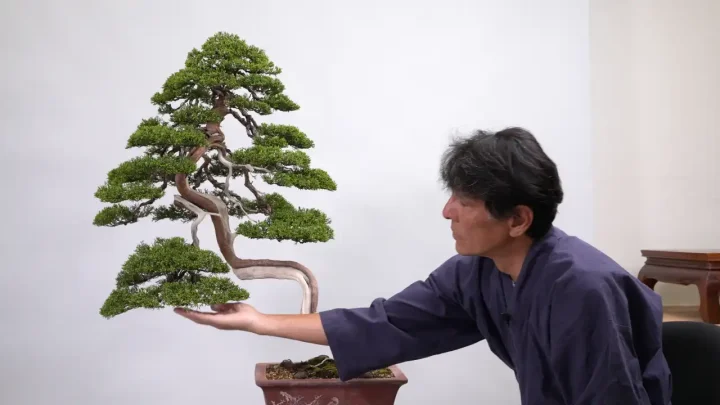
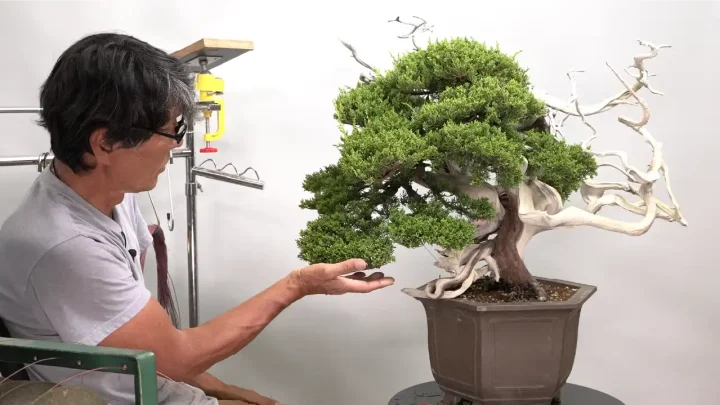
Toward the face that captures the trunk's distinctive movement, rising from back to front. Because you know there is more than one answer, you can choose with your own eyes. If the trunk appears parallel, tilt it and create movement. Selecting the front is the first question that decides this tree's future expression.
To bring the silhouette into a compact form, nearly all the upper branches were turned into jin. It looks like a bold decision, but the reasoning is simple: branches grow, so volume can be added later. Letting go of what is excess now supports the beauty that will come.
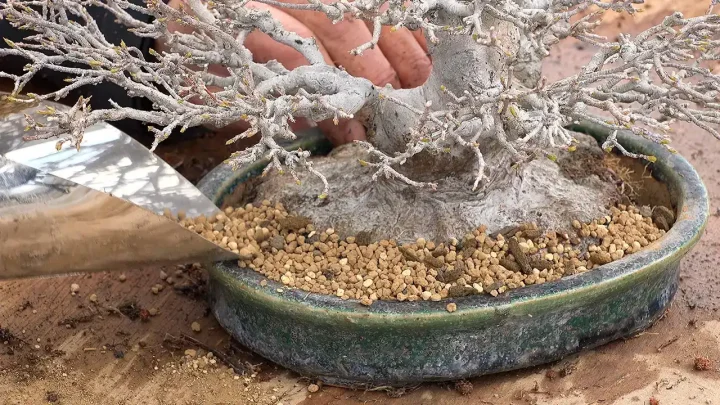
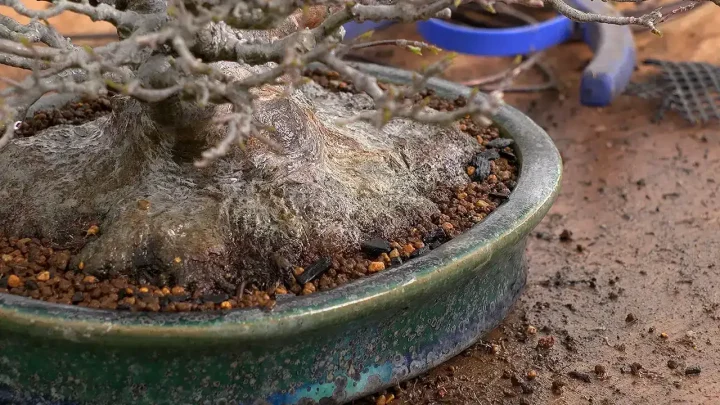
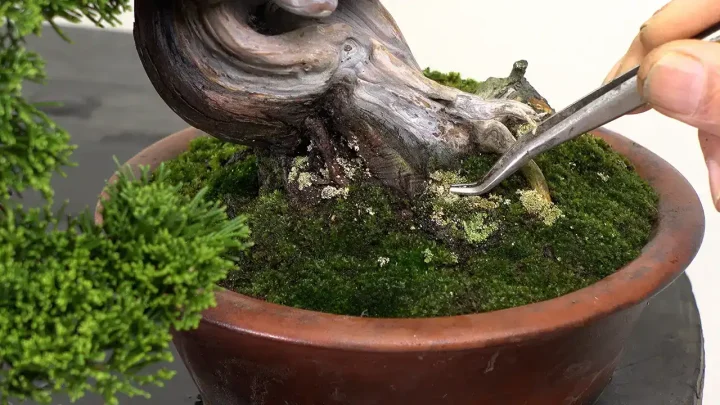
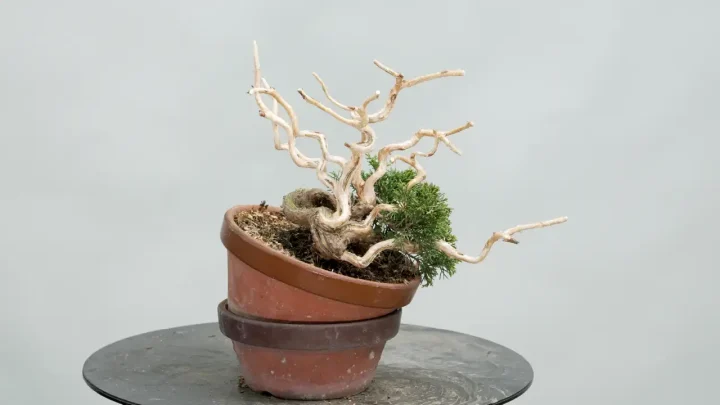
The shari at the base of the trunk was not created on this day. The gradual, patient work of widening it as the tree grew over time—that accumulation is what gives today's material its value. Today's work, too, will become value years from now.
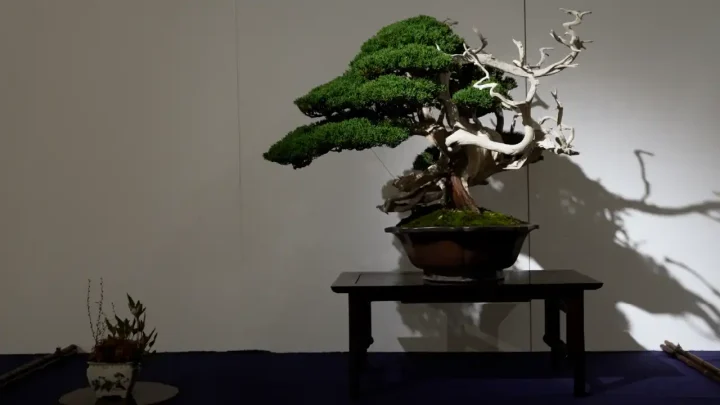
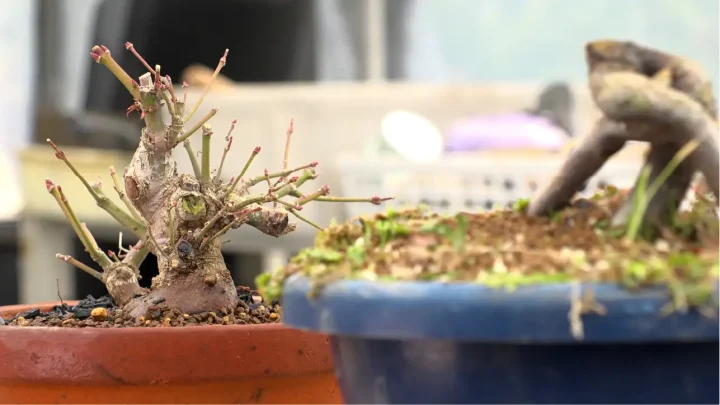
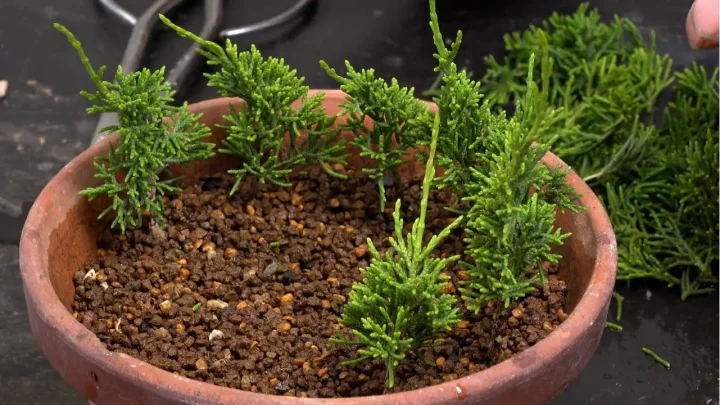
From here, the tree's form will be built with the four slender branches that remain. What shape this tree will take—no one knows yet. And it is within that «not yet» that the deepest reward of working with raw material resides.
The journey of "Master: “Fune”" begins with member registration.
Begin the Journey