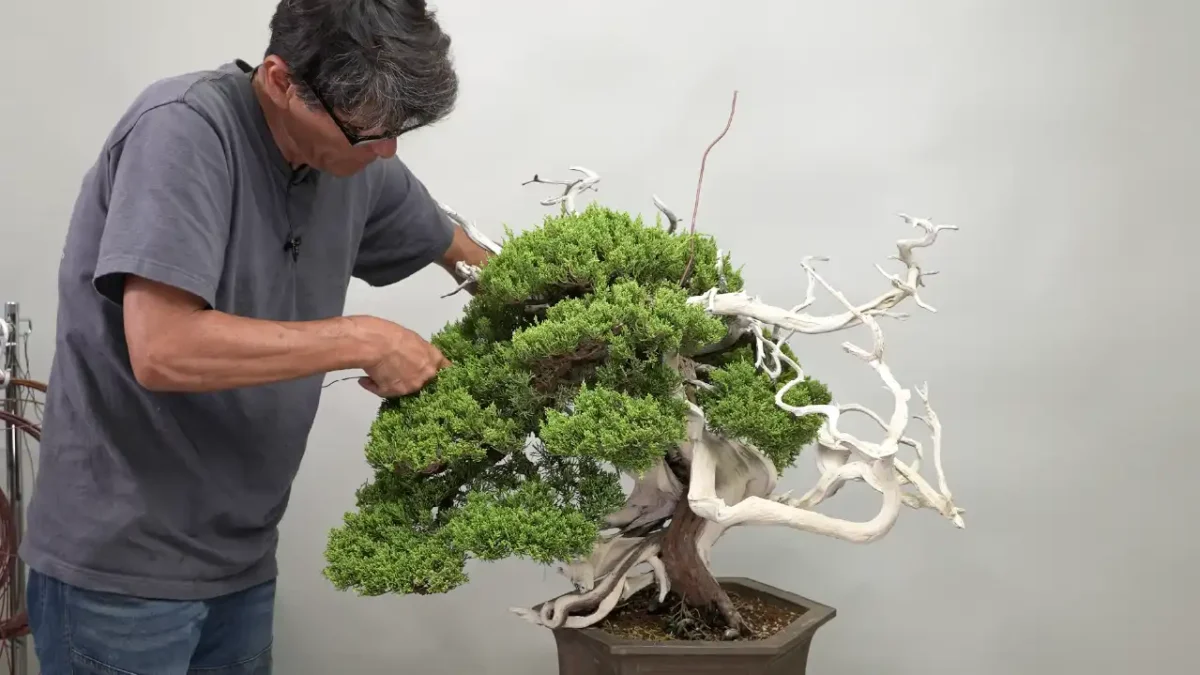
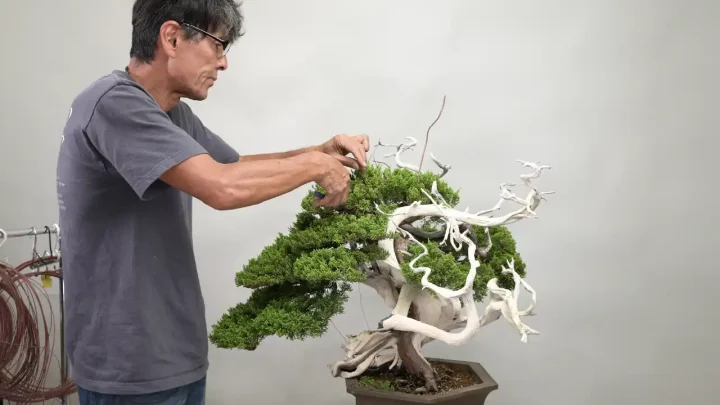
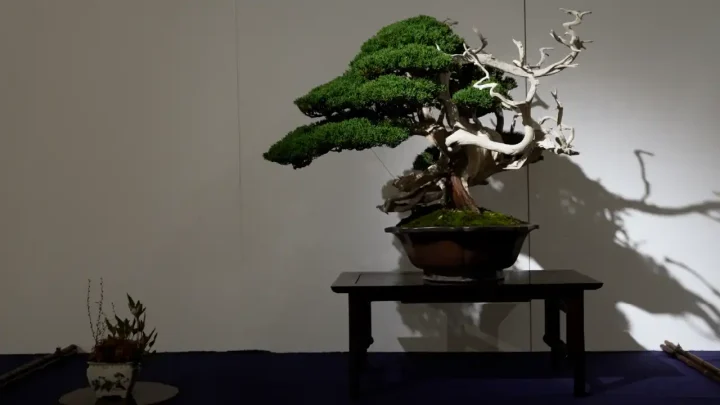
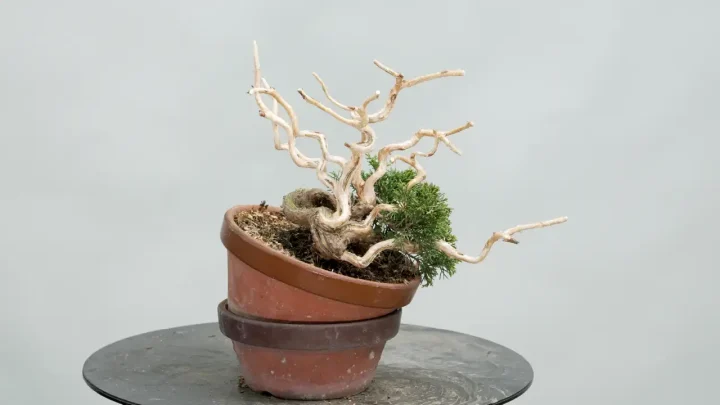
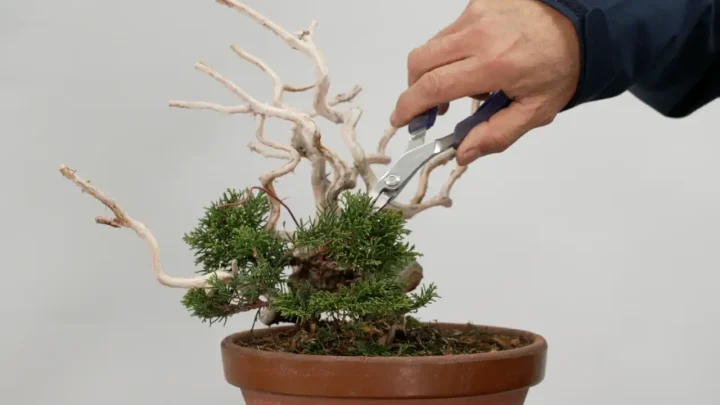
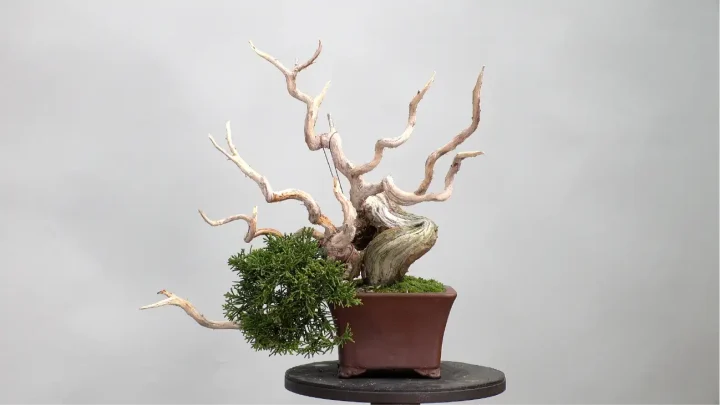
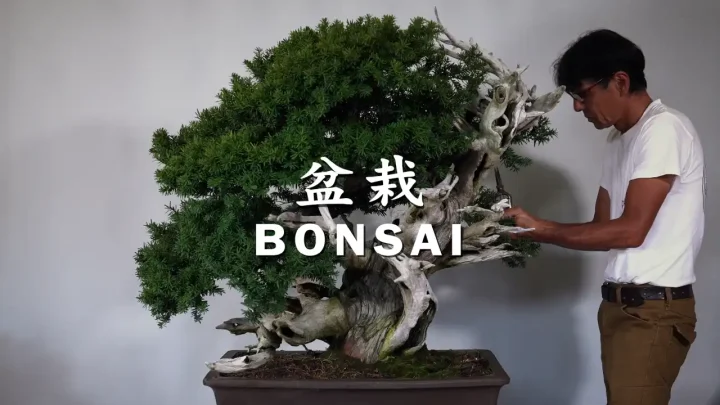
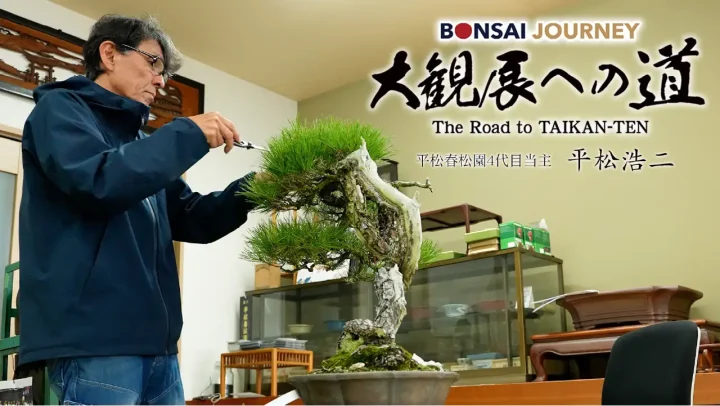
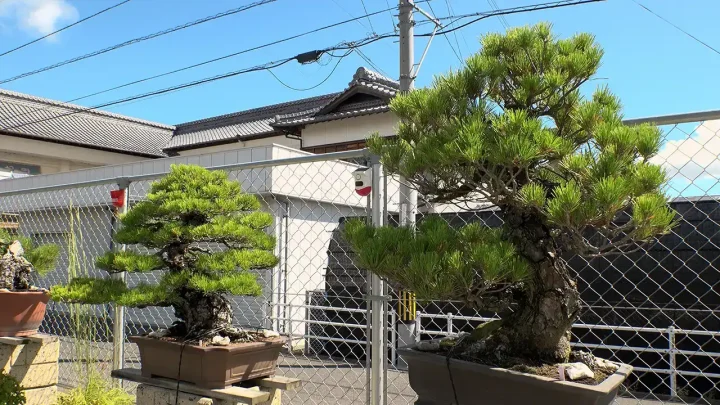
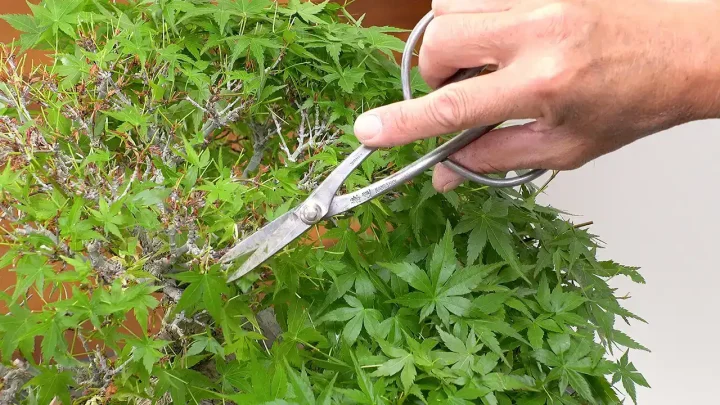
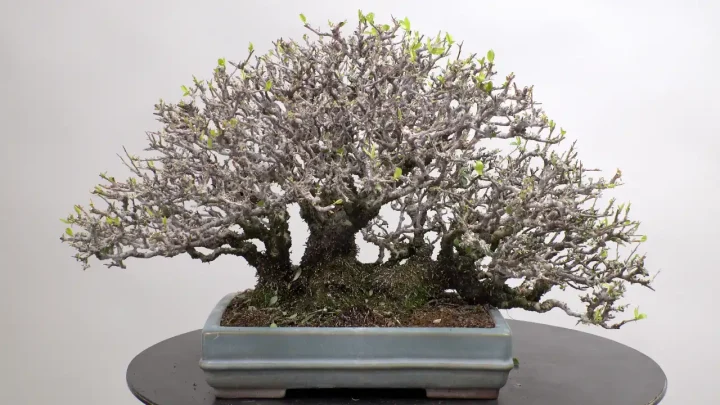
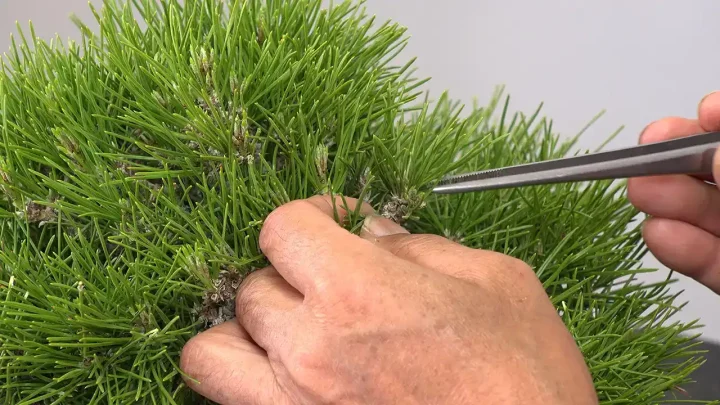
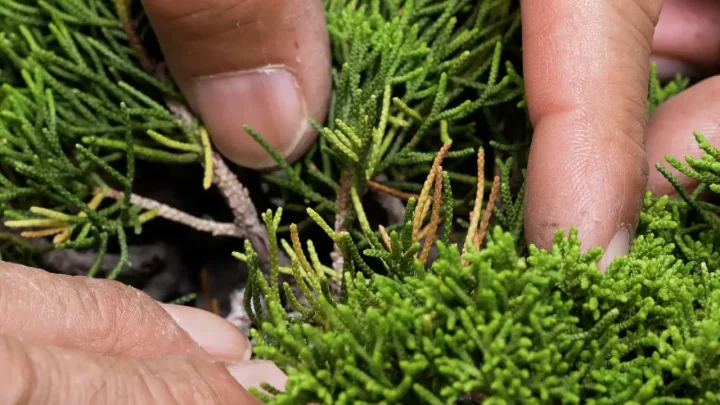
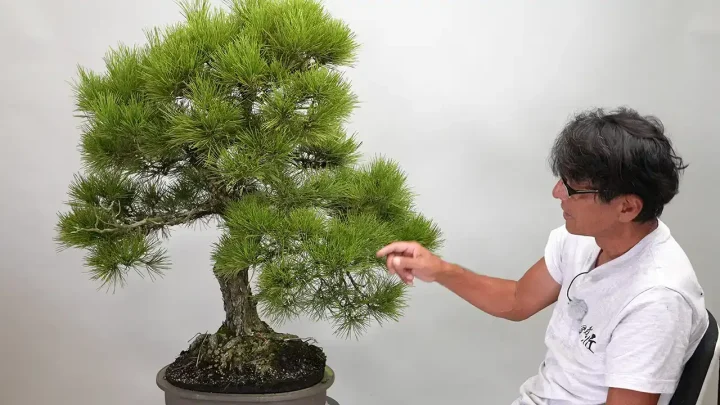
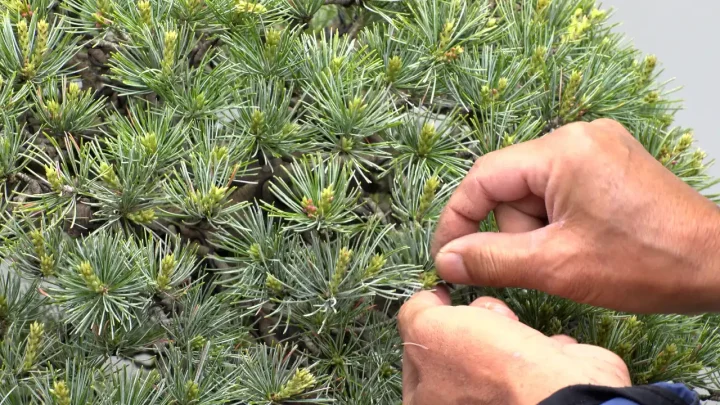
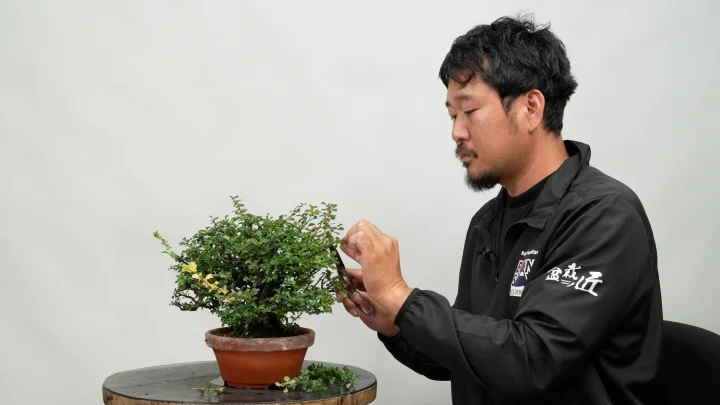
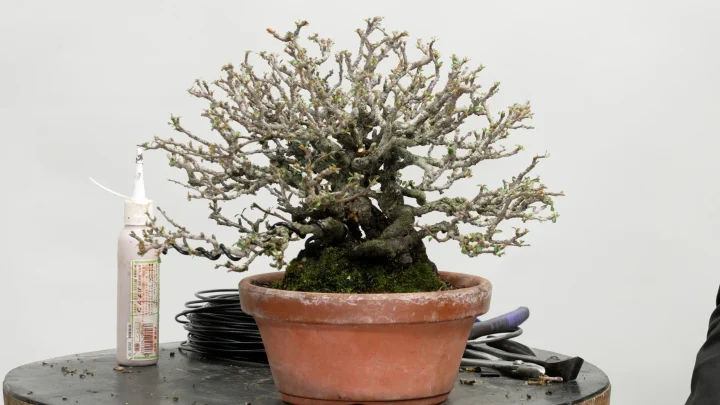
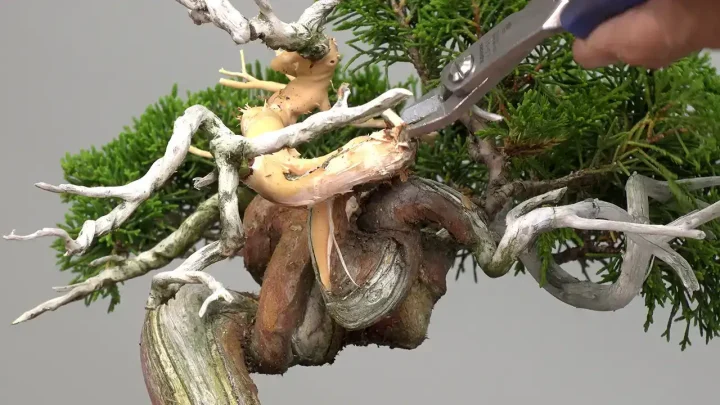
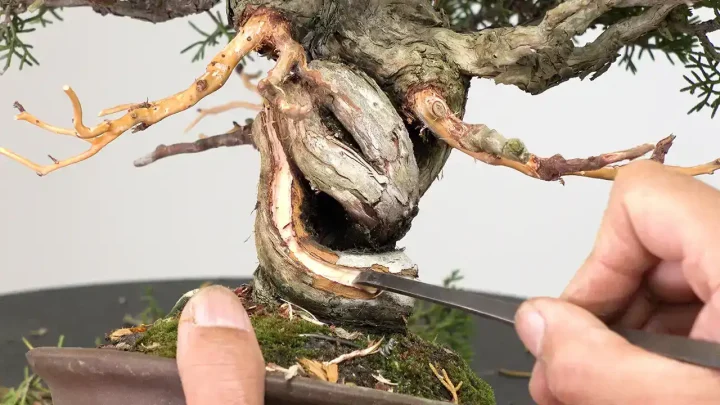
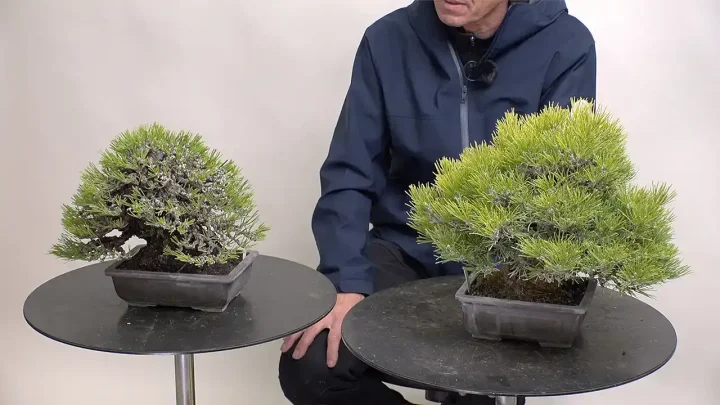
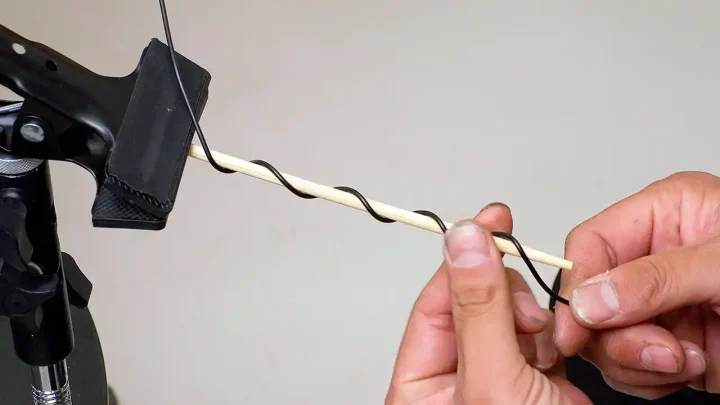
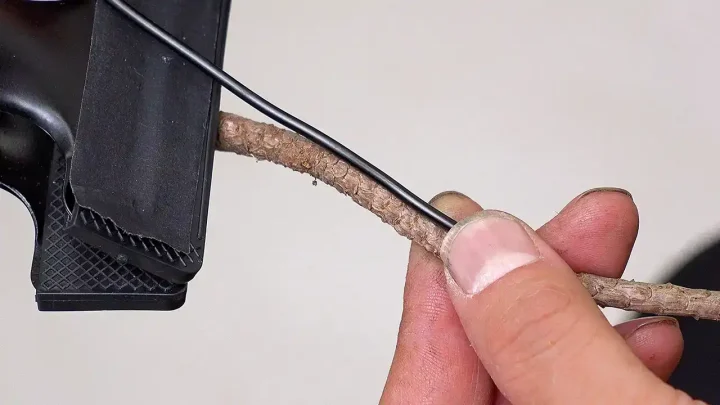
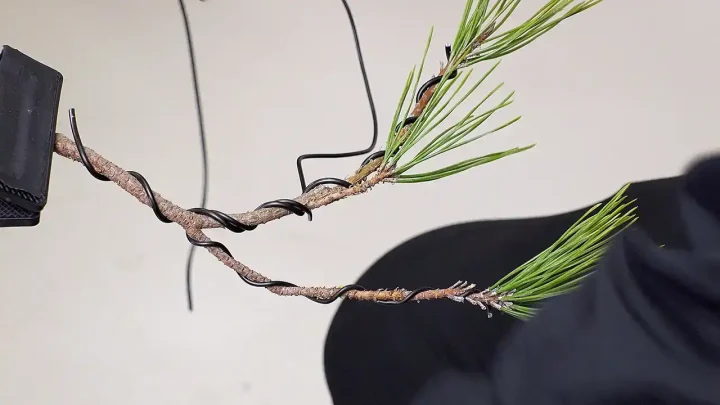
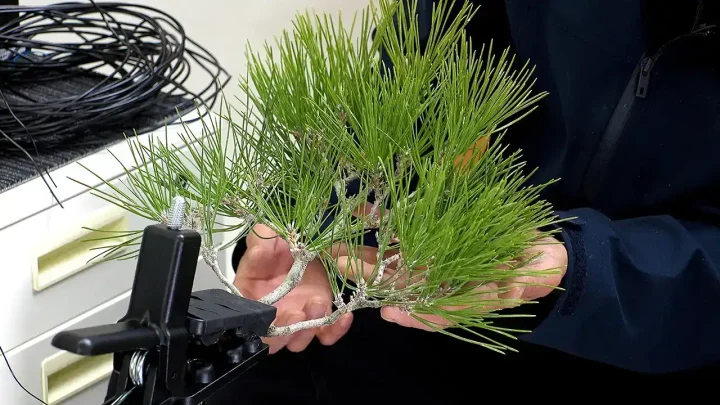
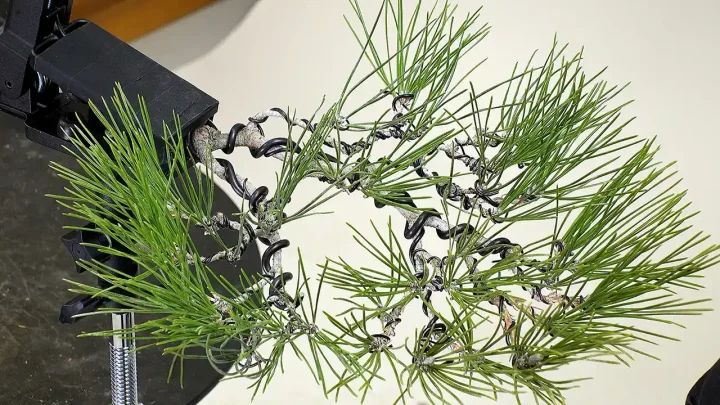
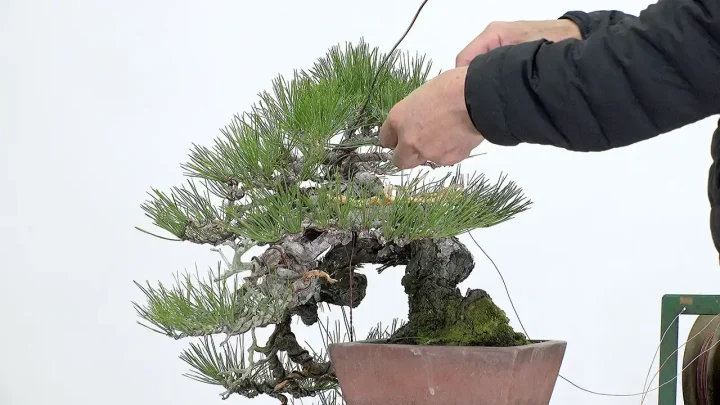
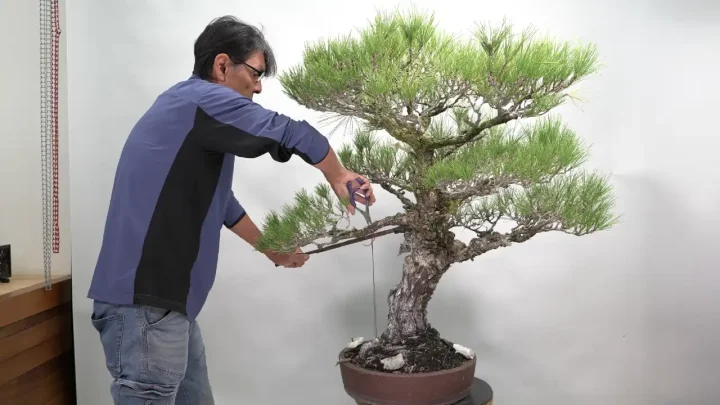
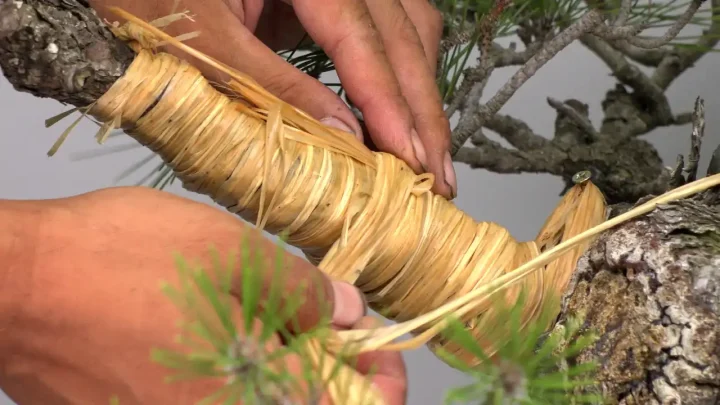
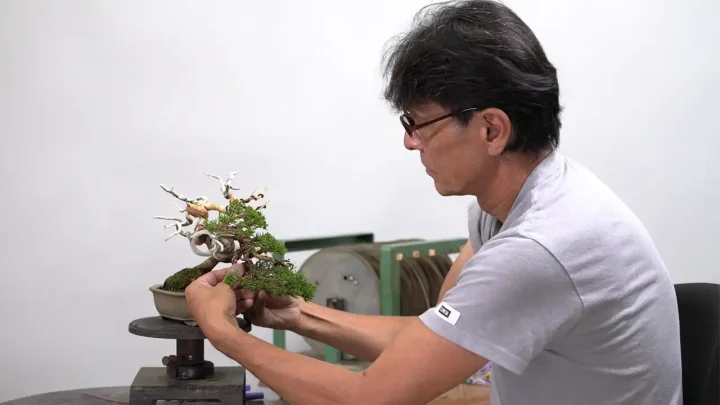
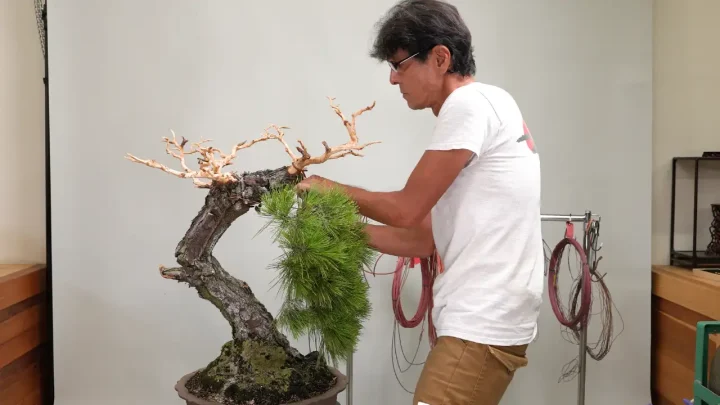
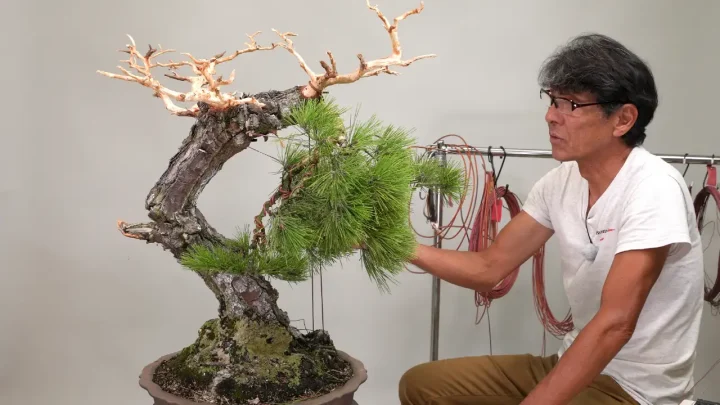
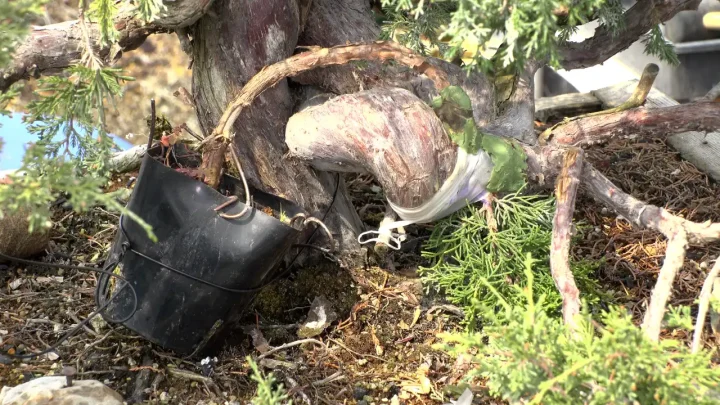
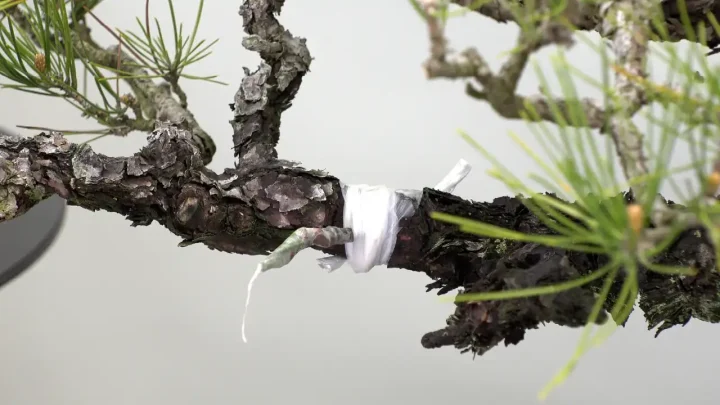
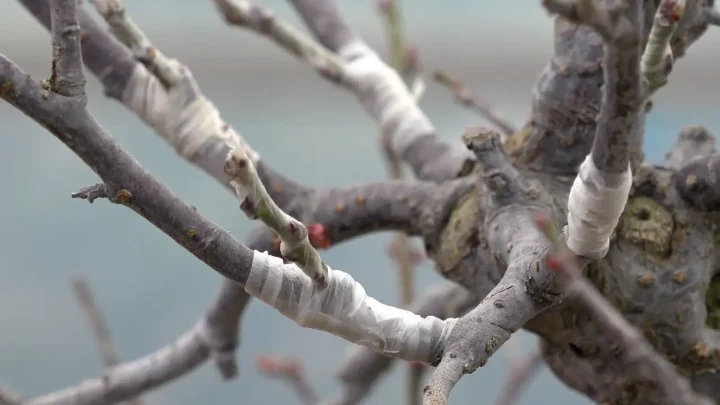
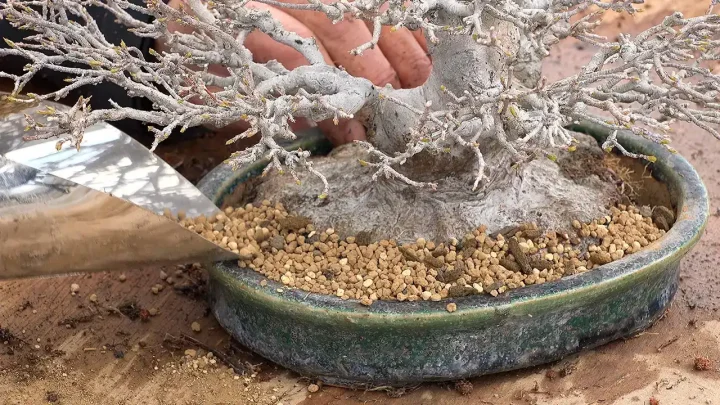
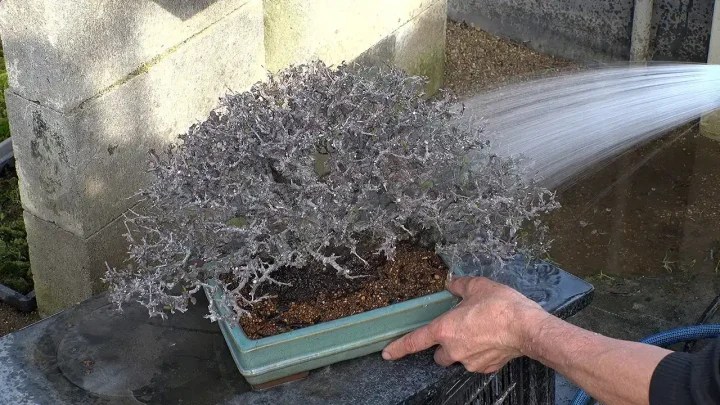
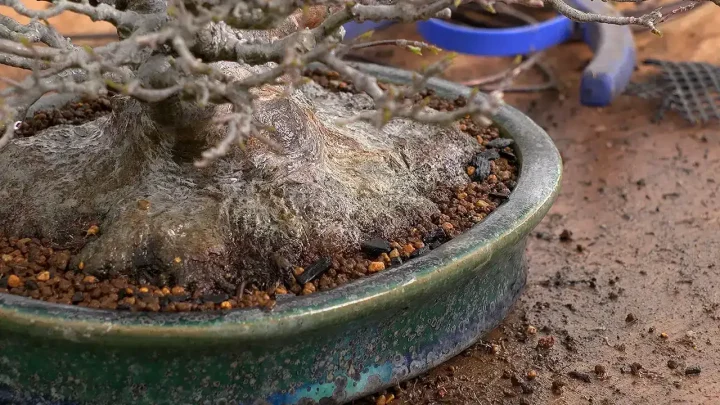
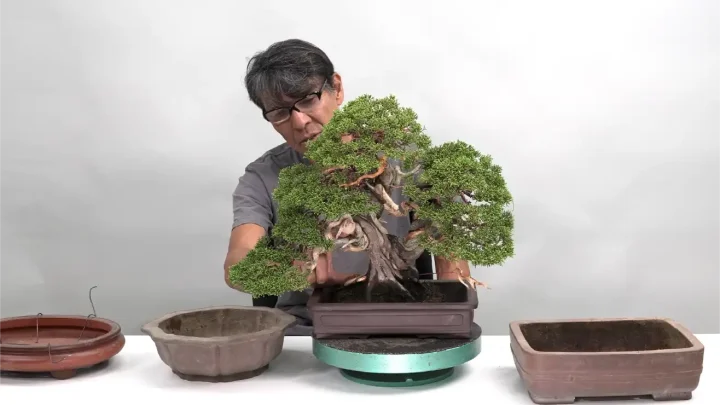
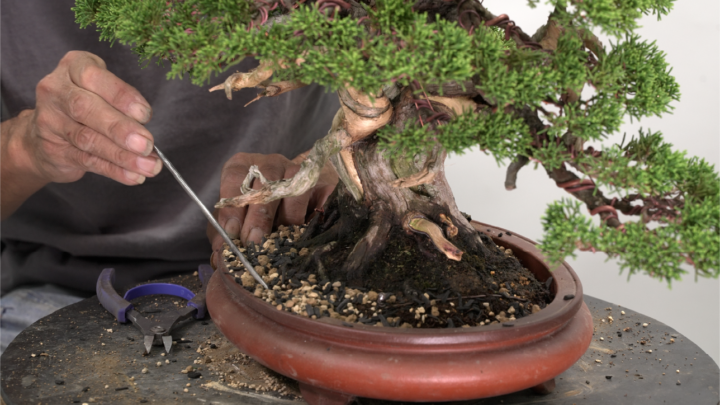
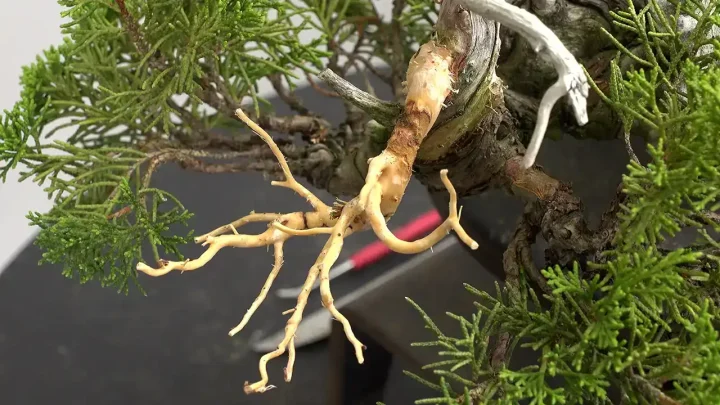
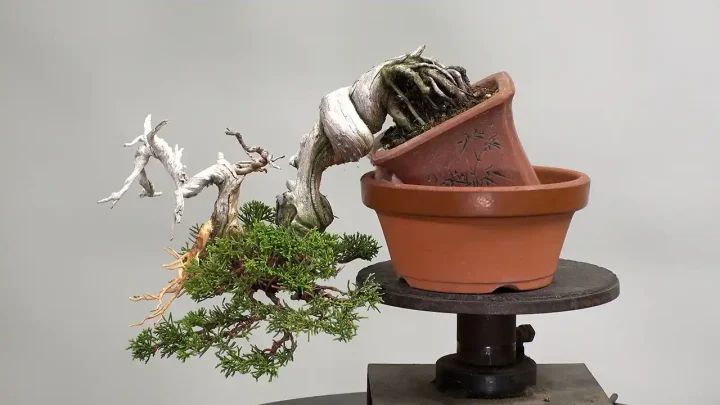
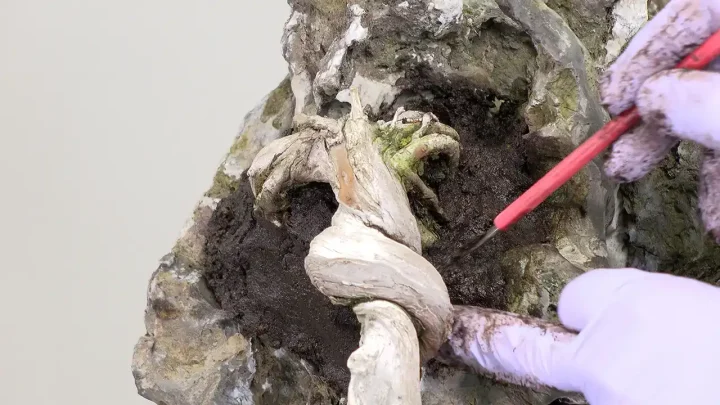
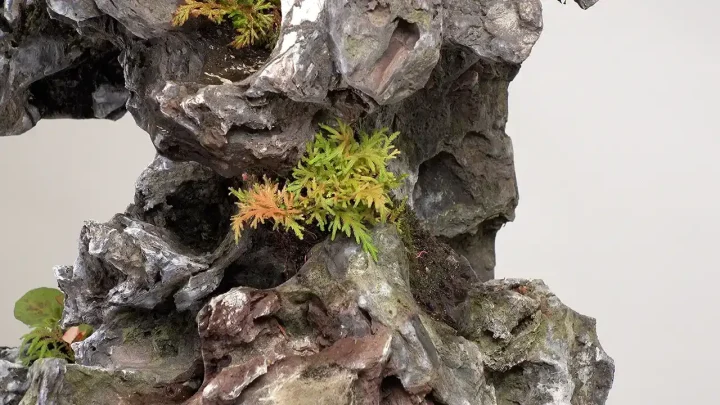
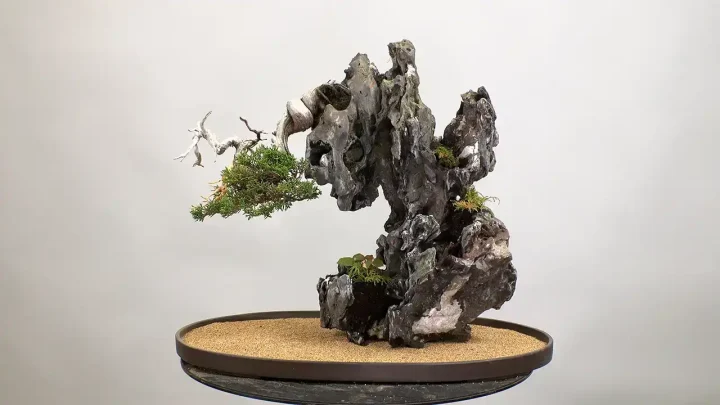
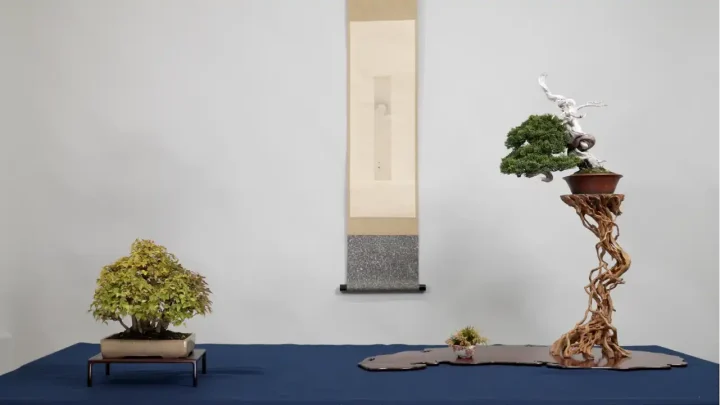
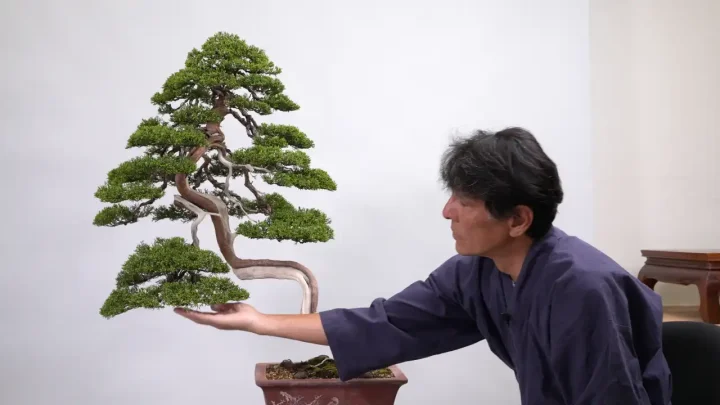
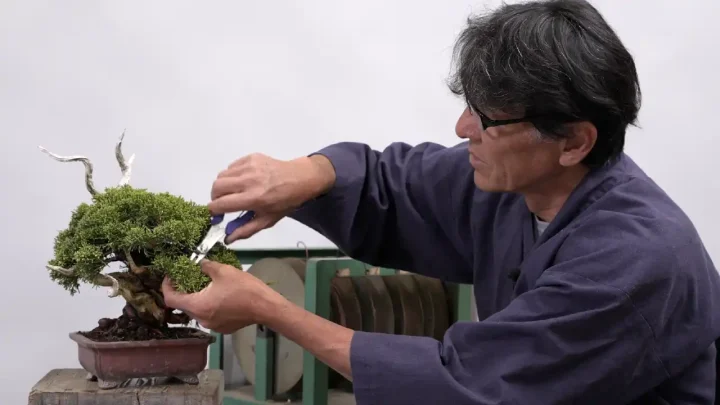
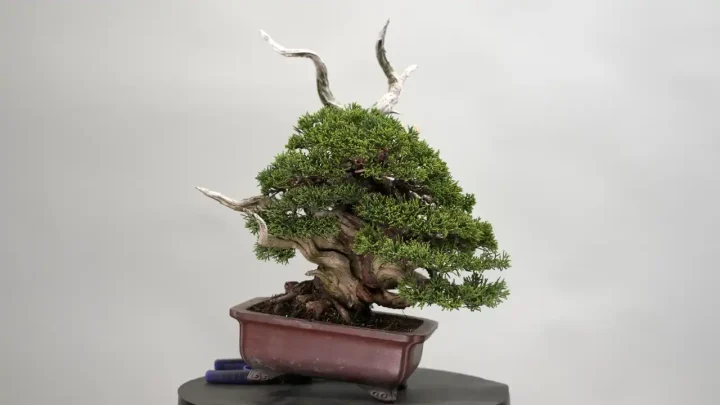
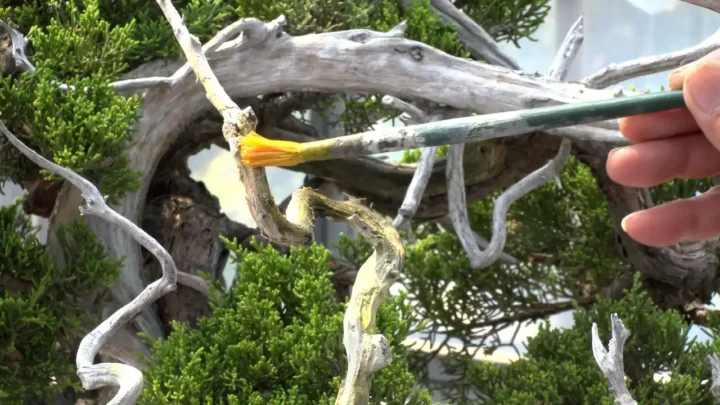
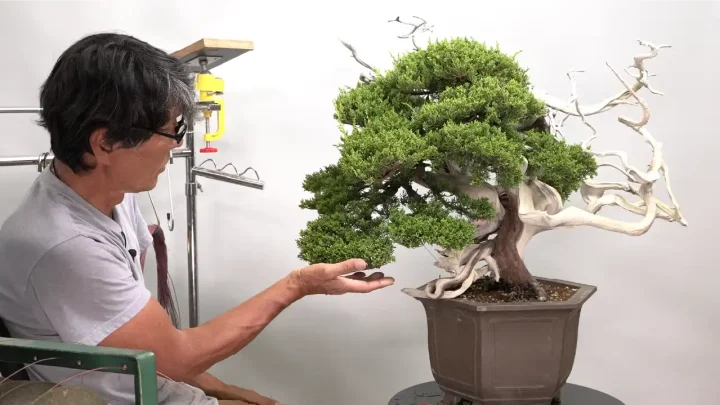
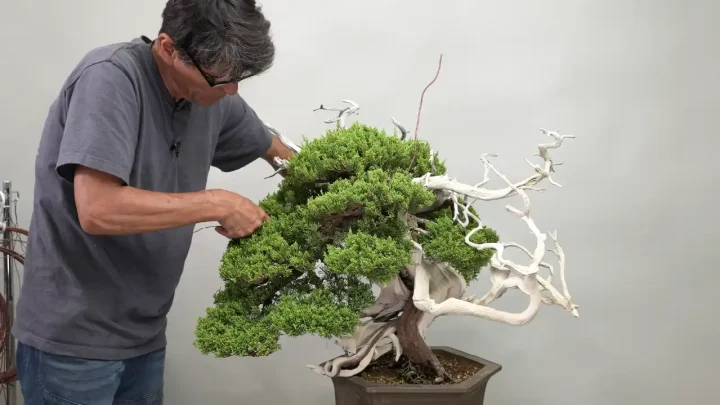
Copper Wire is wound onto a Shimpaku Juniper preparing for the Kokufu-ten. Reading the old wire scars, the wire is wrapped in the opposite direction; Guy Wire Anchors bring the Branch Pad line into order. Tips are pinched back to let the interior foliage fill out — the goal of exhibition and the slower time of six months' growth are folded into a single session of work.
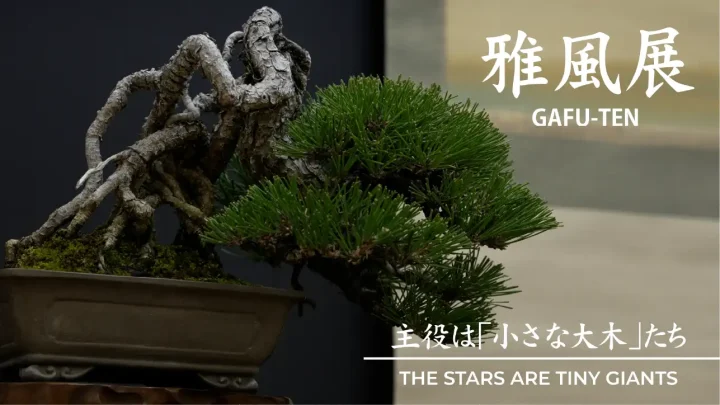
Once a tree is accepted for the Kokufu-ten, the meaning of each task shifts. Choosing thinner gauge wire over heavier — that is not a technical compromise, but a judgment born from the context of display: keeping the wire from drawing the eye when the tree is viewed from the front. When you ask what is best for a tree meant to be seen, the argument of «bend more reliably» quietly steps back.
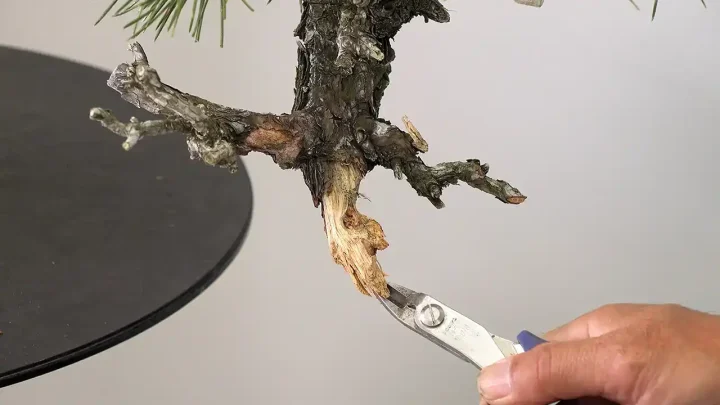
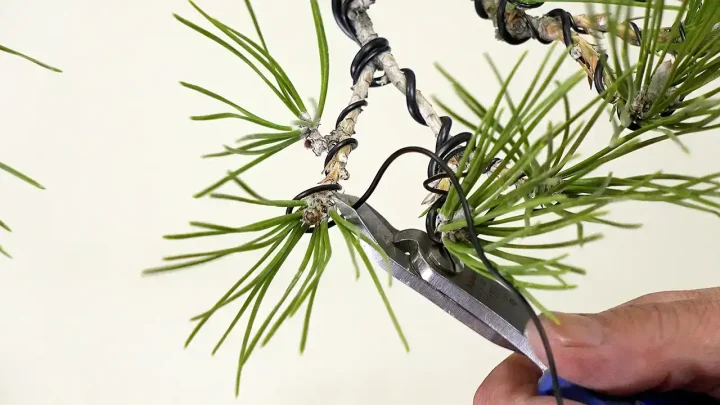
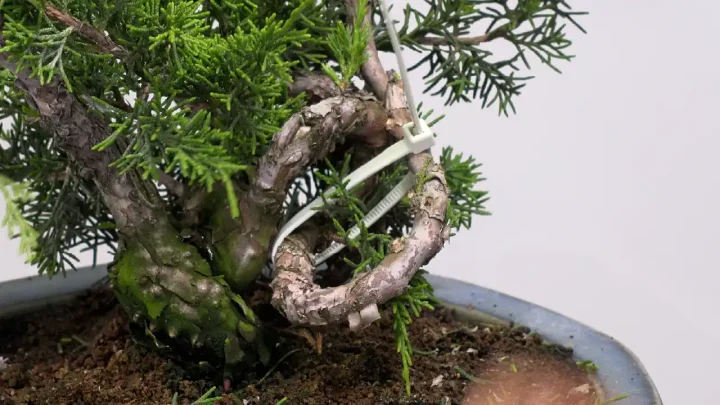
A handful of scars remain from the last wiring. Reading those marks carefully, the Copper Wire is now wound in the opposite direction. Wrapping the same way would only deepen the damage — the traces of past work are guiding today's choices.
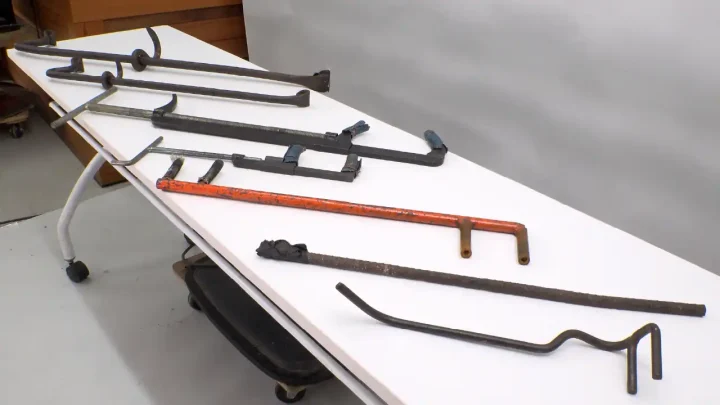
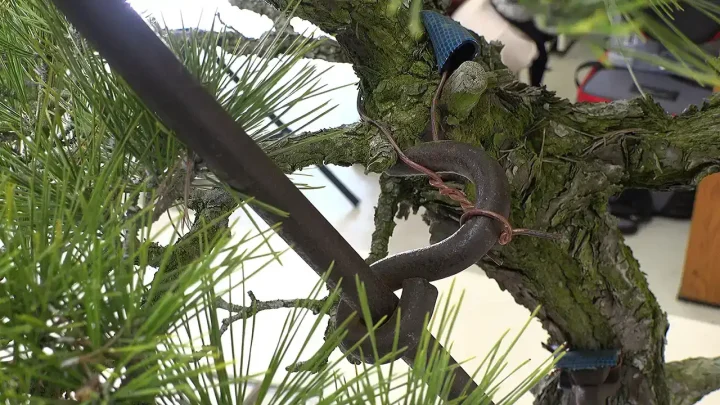
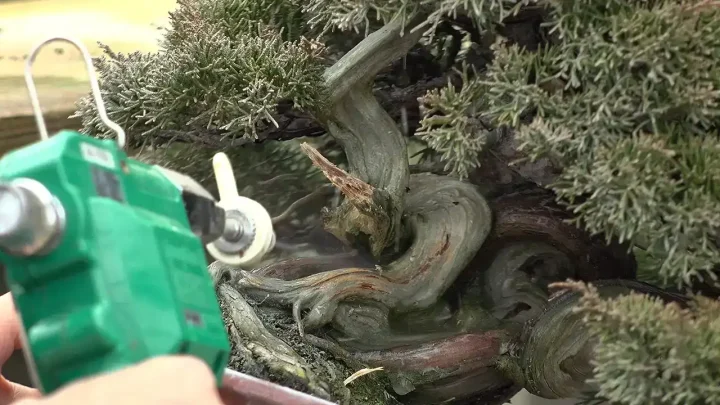
Moving cautiously around the Jin, threading between small branches, a Guy Wire Anchor is placed at the branch base. Brought down at the base, lifted at the tip — where you place the anchor changes how the branch moves. The way the wire is applied changes both the final result and the stress placed on the branch.
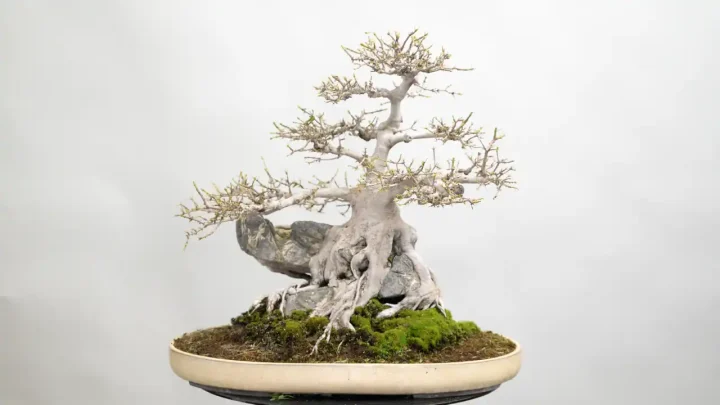
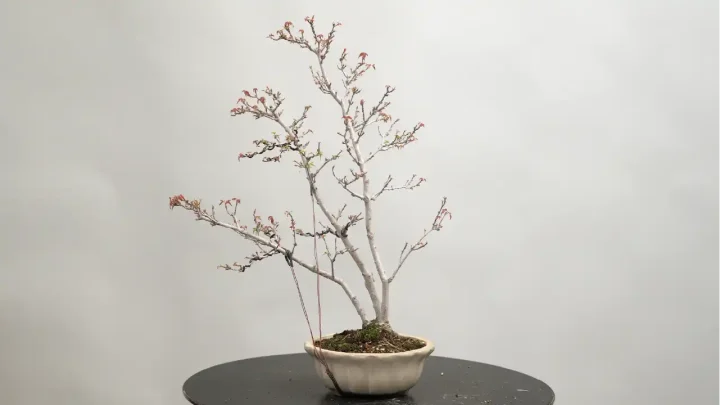
Decide the highest point and the furthest-reaching point first. Once those reference points are fixed, the line of the entire Branch Pad follows naturally. Setting the Back Branch slightly higher than the front branch is what creates depth. Level them out and the composition falls flat. Within the difference in height, volume and depth come alive.
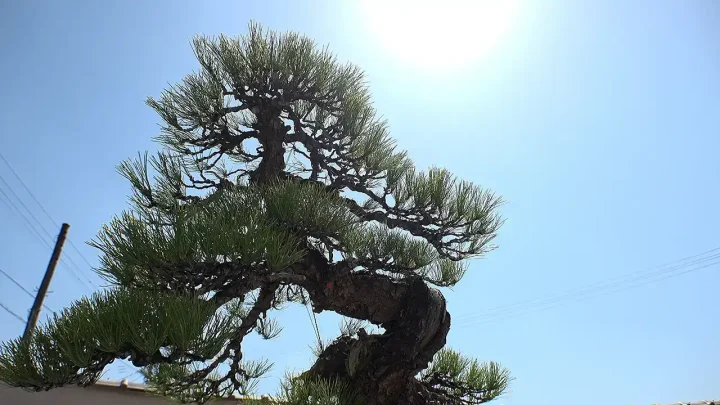
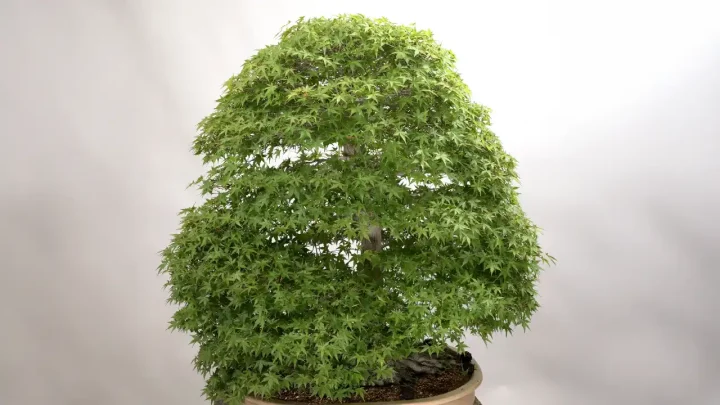
Rather than refining each branch in isolation, the eye looks for mass — the whole before the parts. It is from that perspective that each individual decision begins. Anything that breaks out beyond the silhouette is carefully removed, because the integrity of the line is what determines the beauty of the Branch Pad.
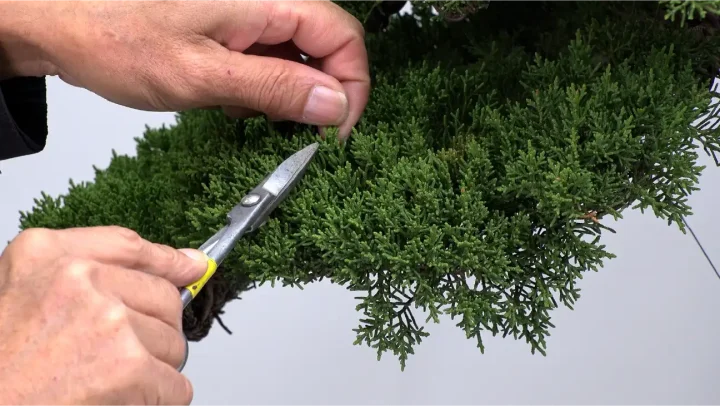
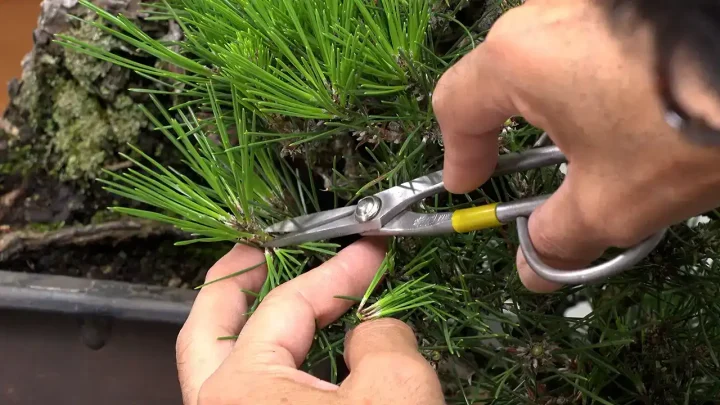
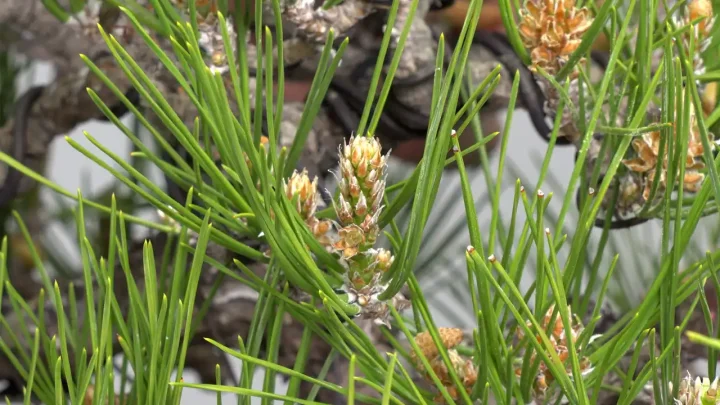
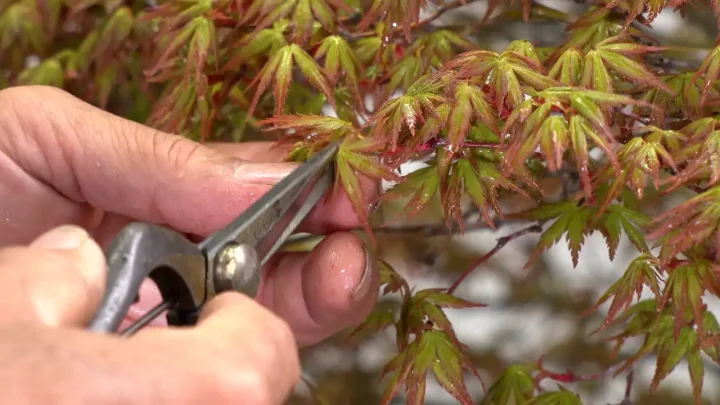
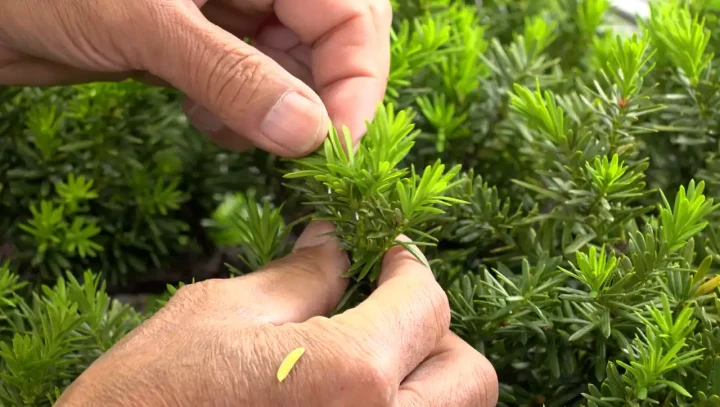
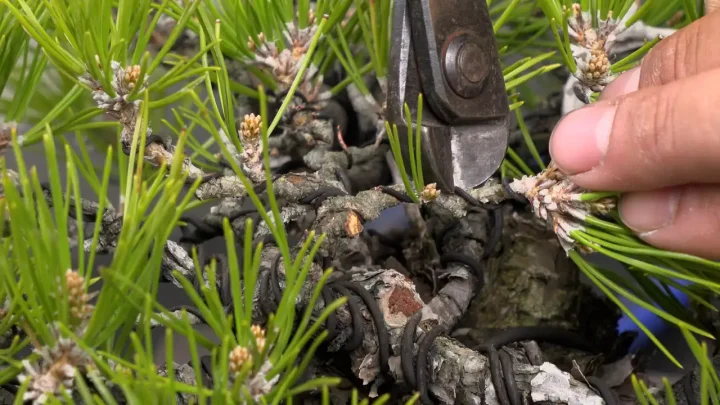
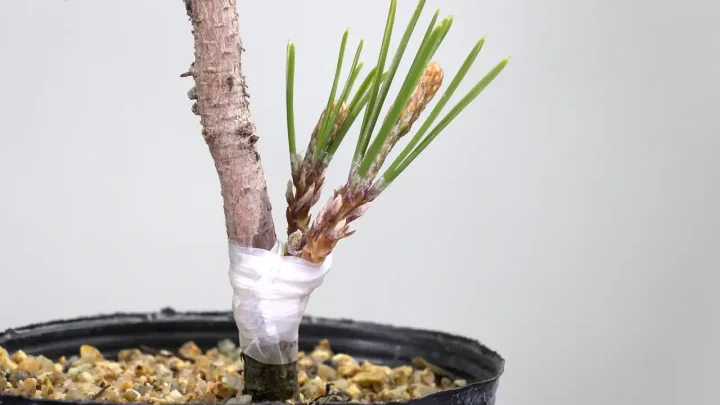
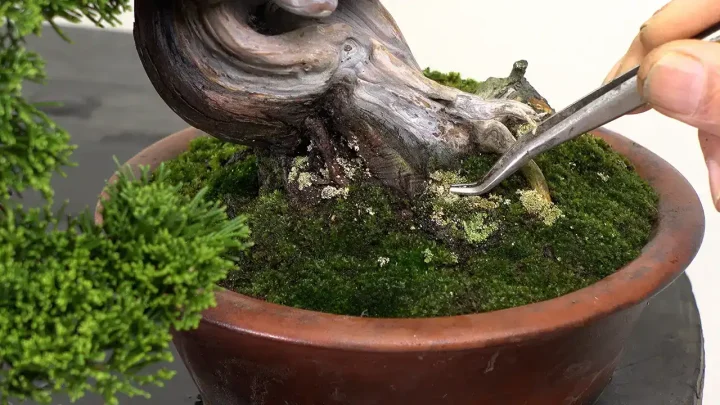
Cut back the leader, refine the outline. When the tips are held in check, the foliage close to the branch base fills out — the place where the hand works and the place that grows in response exist together within a single tree.
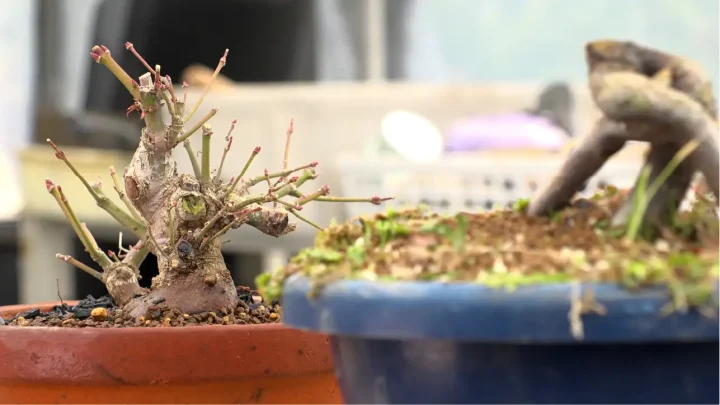
From now through autumn, buds will push again. Each time something extends beyond the line, it is pinched back, and the line is kept. With the near goal of exhibition in mind, the fullness of branch and leaf builds slowly over half a year.
There is no rush toward completion. The tree is in its finishing stage, and yet at the same time it is waiting for growth. Waiting, too, may be part of the work this tree asks of us.
The journey of "Master: “Fune”" begins with member registration.
Begin the Journey