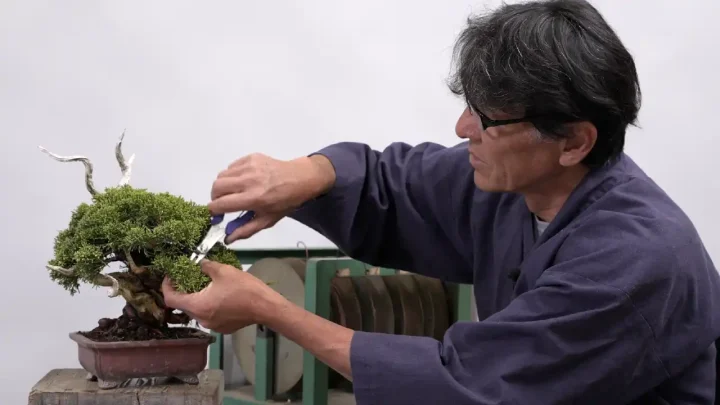
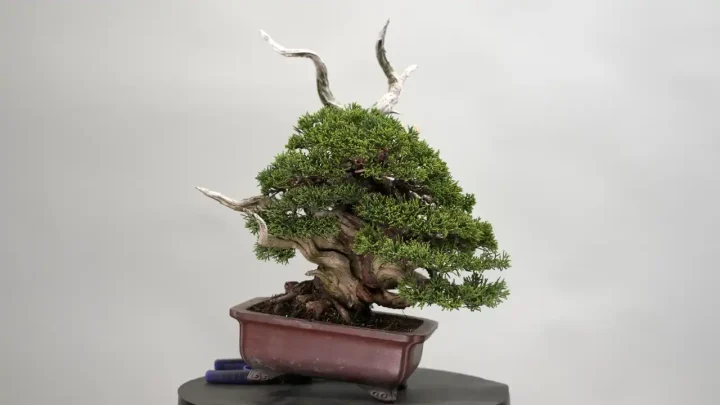
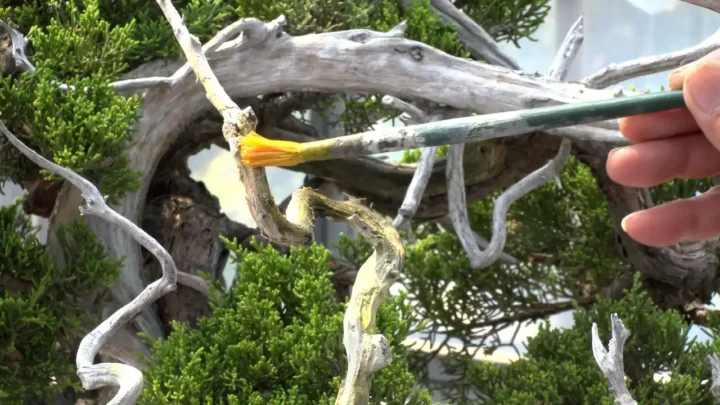
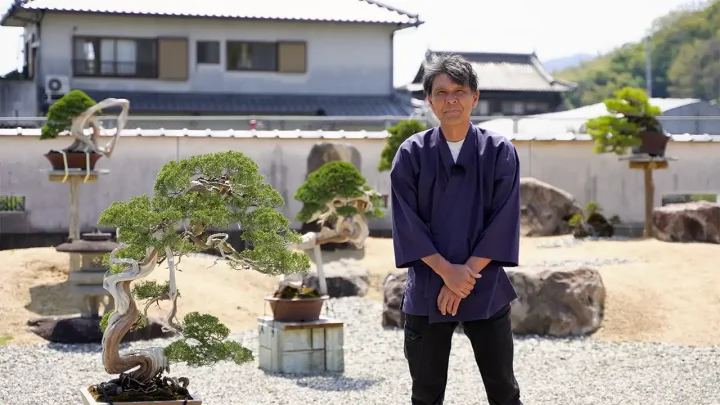
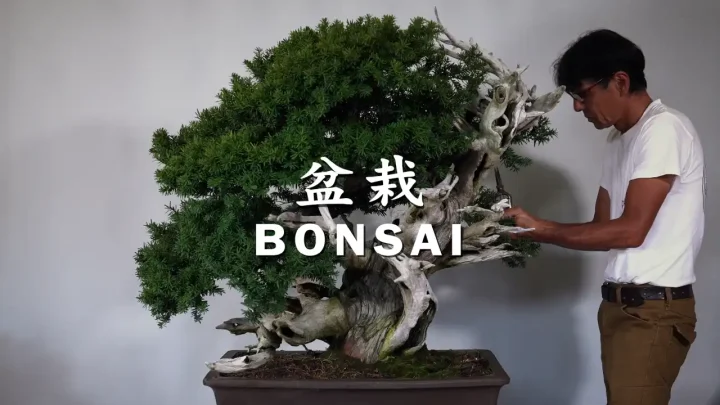
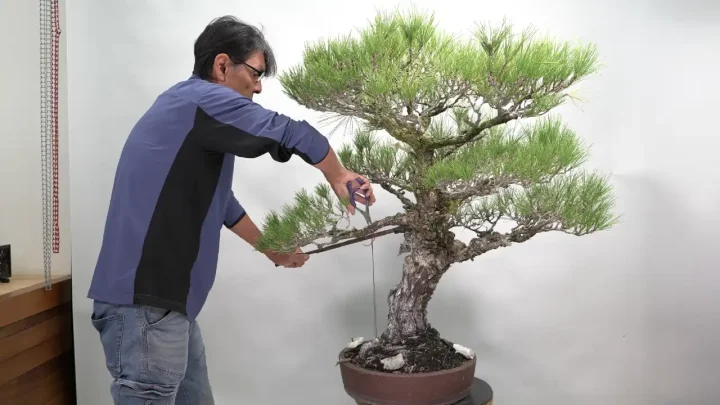
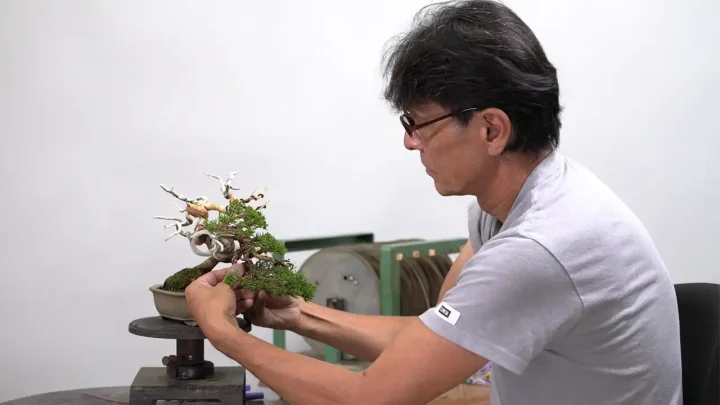
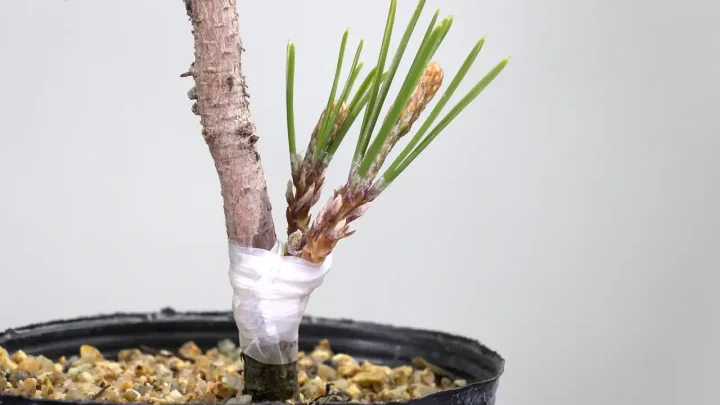
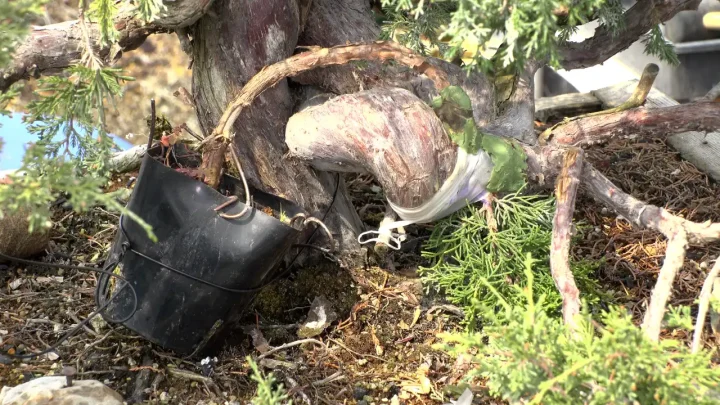
Cutting Propagation with Shimpaku Juniper — taking small branches from pruning as scions, and starting the work of creating a new bonsai. From preparing the scion and shaping the V-cut, to using Rooting Hormone and keeping the cuttings sheltered from wind and drought, every step has a reason behind it. Knowing that success is never guaranteed, you set the conditions and wait half a year — join Toshibumi Sato as we trace the proper approach to Cutting Propagation together.
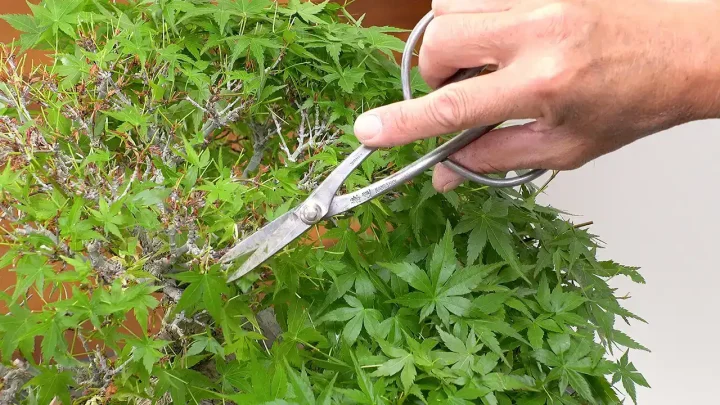
Branches cut away to shape a tree are usually discarded without a second thought. But what if you leave one in water for a while — trim the leaves, prepare the cut end, and push it into soil? Six months later, roots appear, and a new bonsai begins.
Cutting Propagation with Shimpaku Juniper turns the idea of pruning «leftovers» on its head. Every time you pick up the scissors, the possibility of a new life is born — once you see it that way, pruning looks a little different.
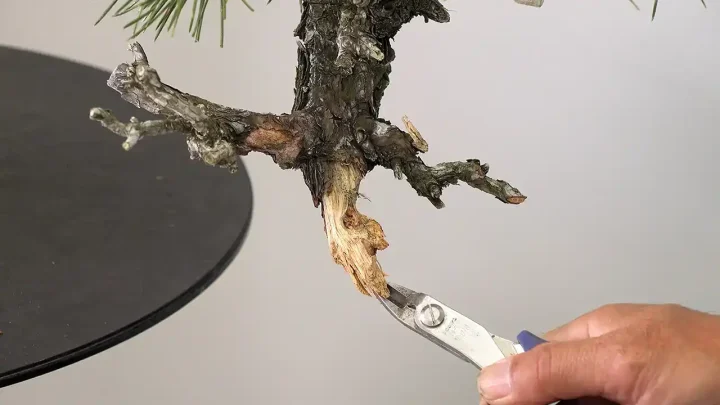
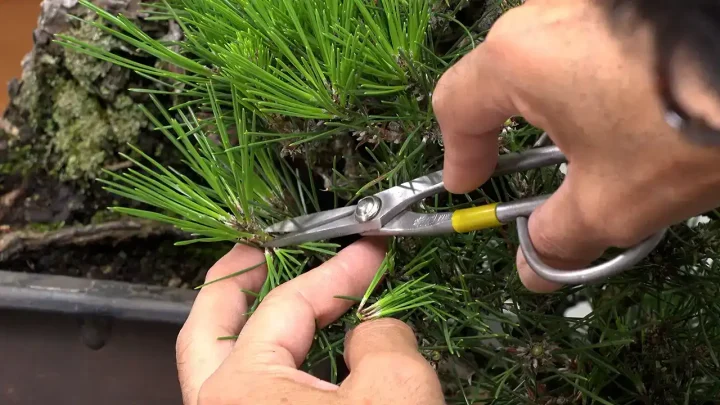
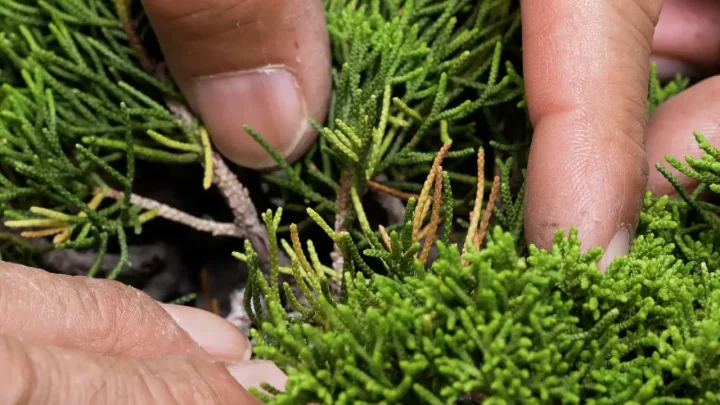
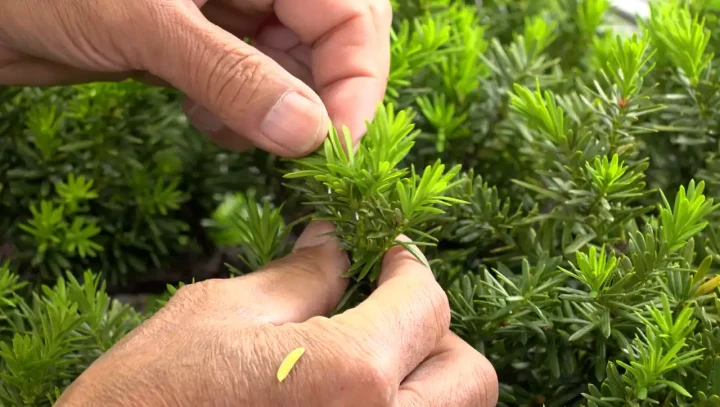
Removing the lower leaves from the Scion is necessary because too many leaves on a rootless cutting throws the balance between top and bottom off. Shaping the cut end into a V increases the surface area in contact with the soil. Avoiding overly large scions keeps the tree's energy focused on forming roots.
Each step exists for a reason — and every reason comes from imagining the state of a tree that is trying to send out roots. Perhaps cultivating that imagination matters more than memorizing the steps; it may be closer to the true heart of Cutting Propagation.
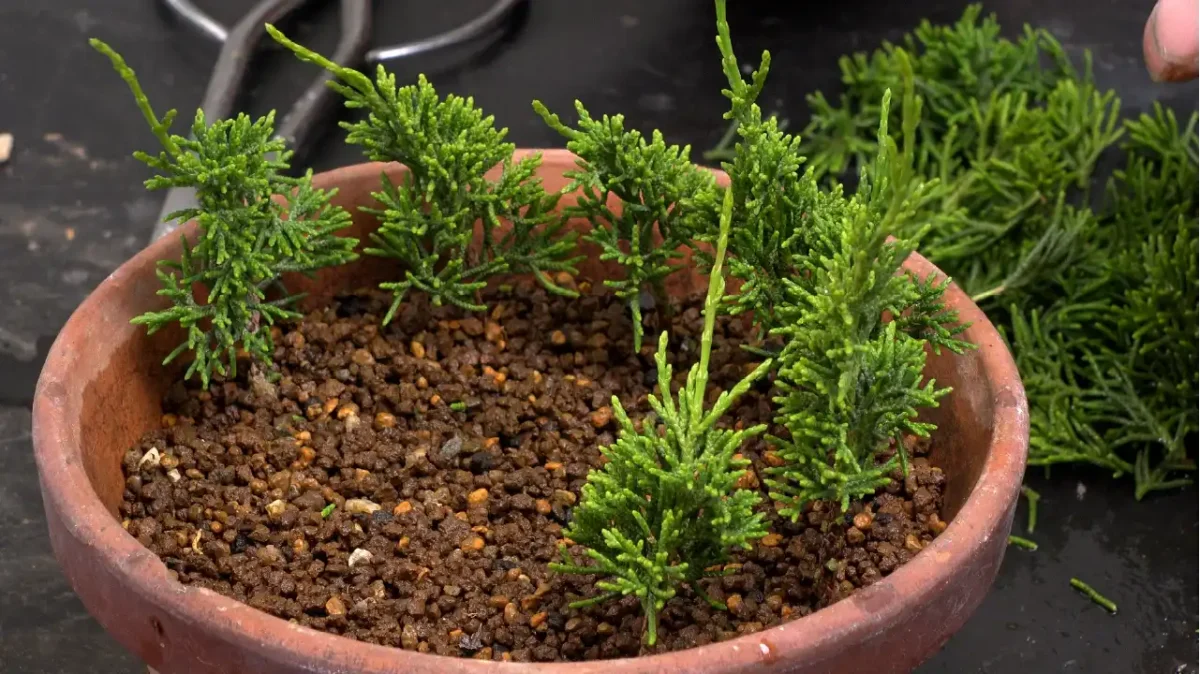
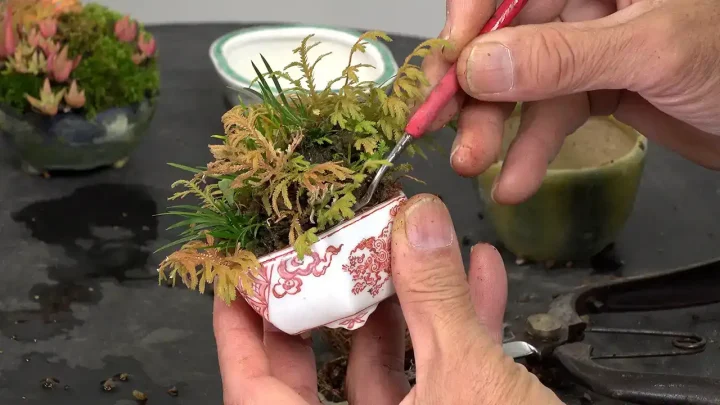
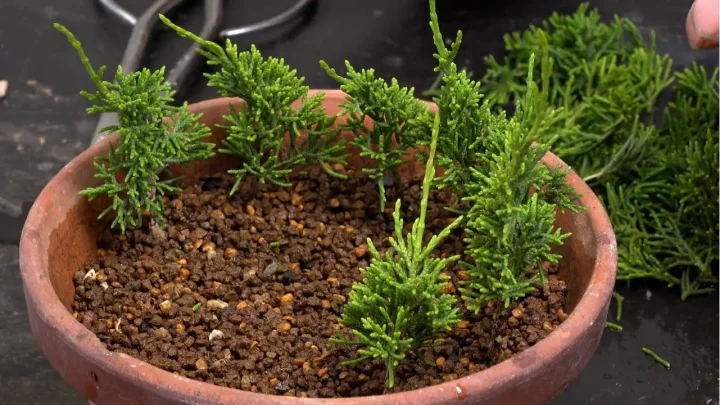
Apply a thin coat of Rooting Hormone, then insert the cuttings one by one starting from the edge of the pot. Choosing the edge is a way to reduce swaying in the wind — protecting the moment roots are trying to extend from being disturbed. Small acts of consideration like this quietly support the rate of Establishment.
Once the cuttings are in, place them in bright shade and keep the soil from drying out. No direct sun, no strong wind — neither is needed. After that, leave it to the tree.
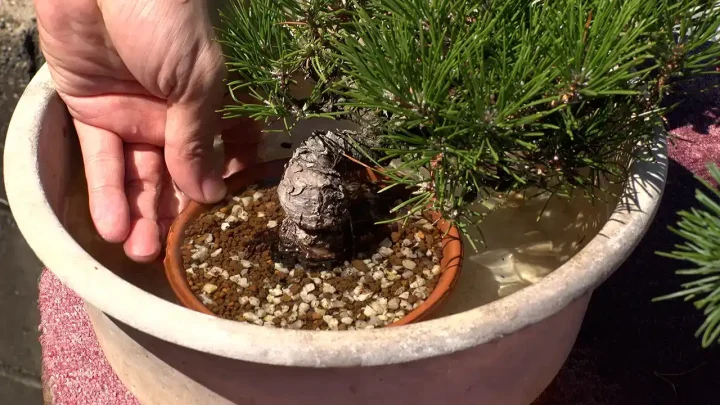
The urge to check is understandable. But while roots are quietly reaching outward, there is no place for a person to step in. If you simply must know, a gentle tug to feel the resistance of the soil is enough — that is all. In the work of living things, there is always a time that must not be rushed.
Perhaps seven or eight in ten will take root — but never all of them. That is why you insert several cuttings at once. Not promising certainty, but setting the conditions and waiting on nature's own strength — that is the proper approach to the work of Cutting Propagation.
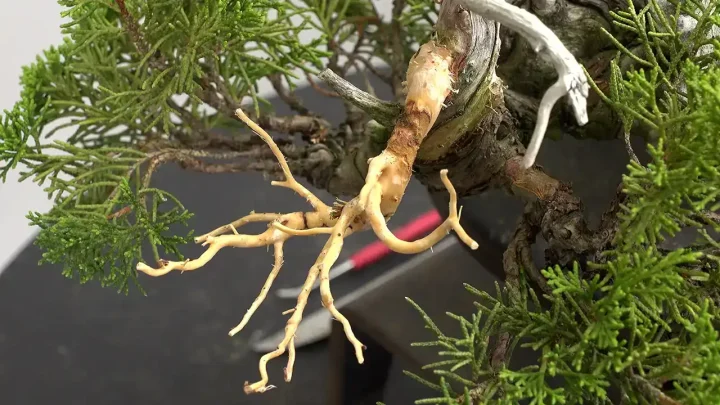
Half a year on, give one a gentle pull. If you feel the soil holding back — roots have formed there. A branch that was meant to be discarded has quietly become the beginning of a new life.
The journey of "Adept: “Uma”" begins with member registration.
Begin the Journey