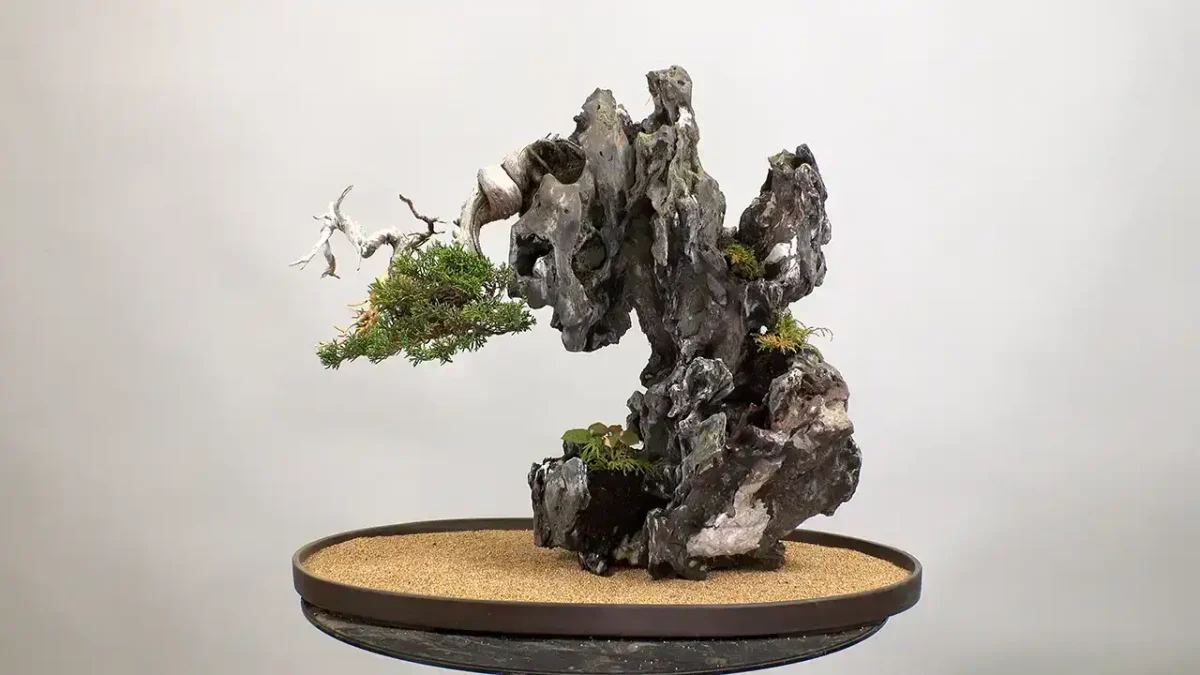
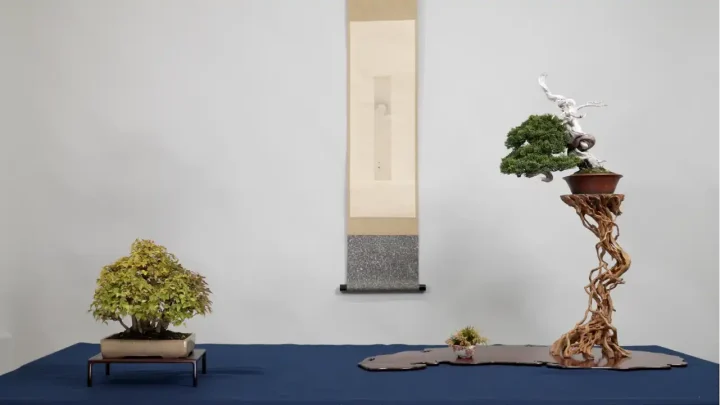
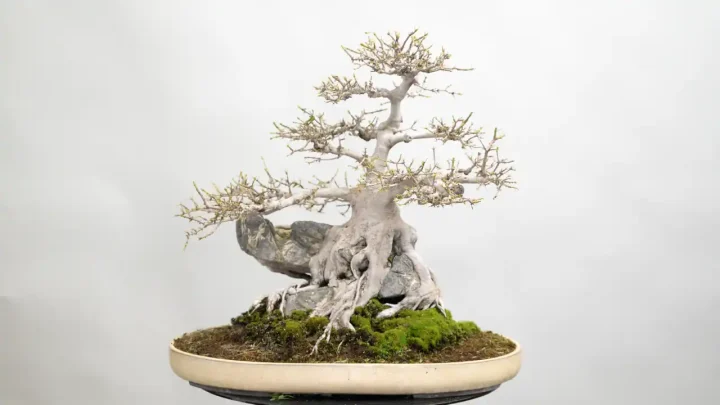
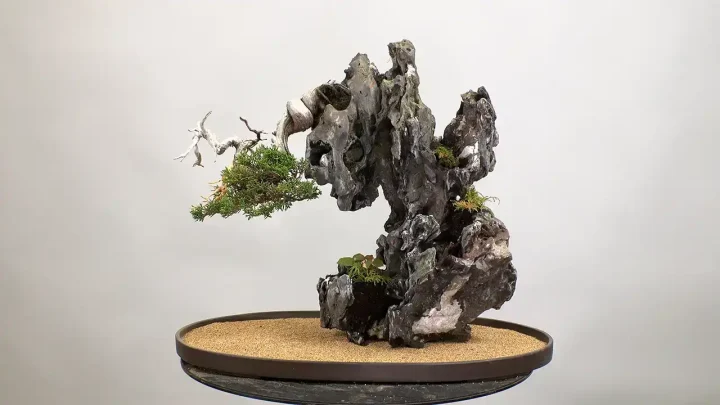
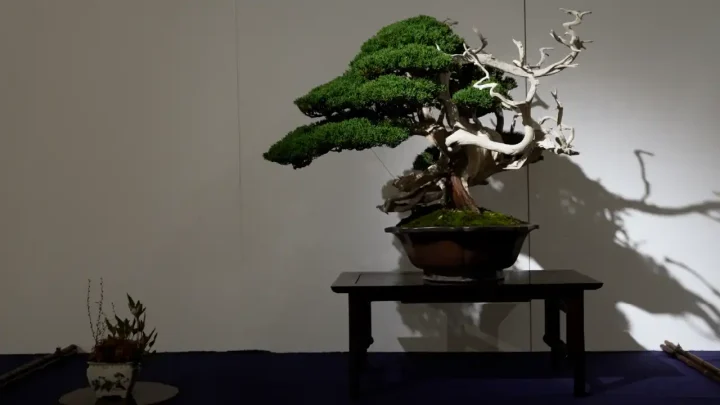
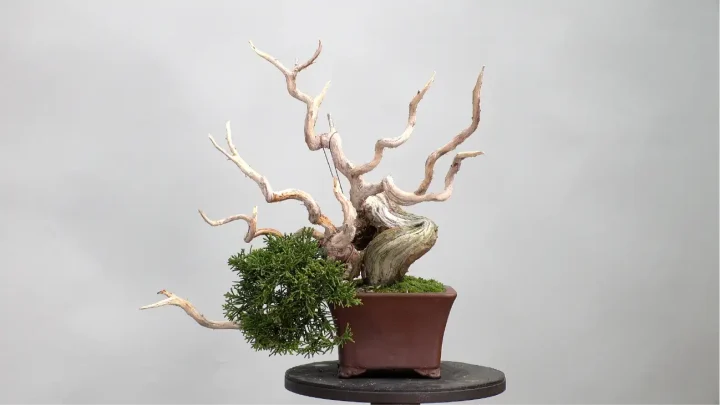
How does one display a finished Rock Planting bonsai? Fine-grained sand is laid in a copper Suiban, and the placement is decided by reading the 'flow' of the stone — the fineness of the sand, the way space is apportioned: each of these choices brings a quiet natural landscape to life on the small stage of the Suiban.
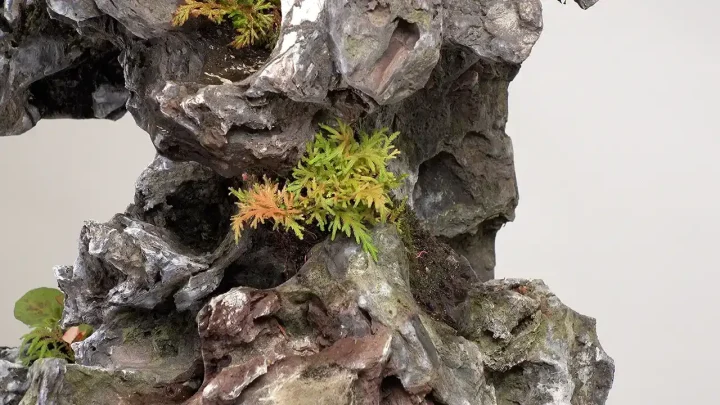
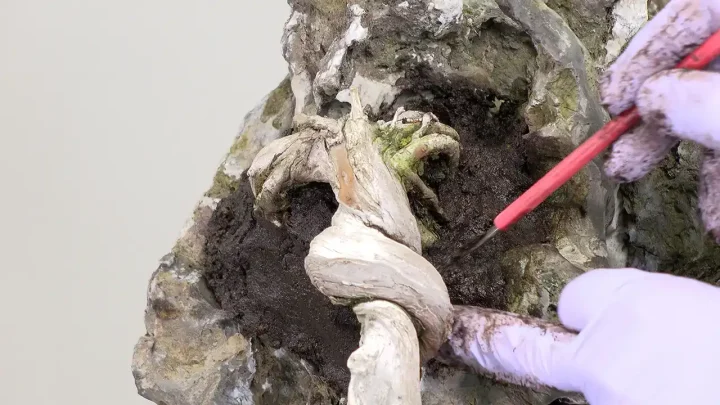
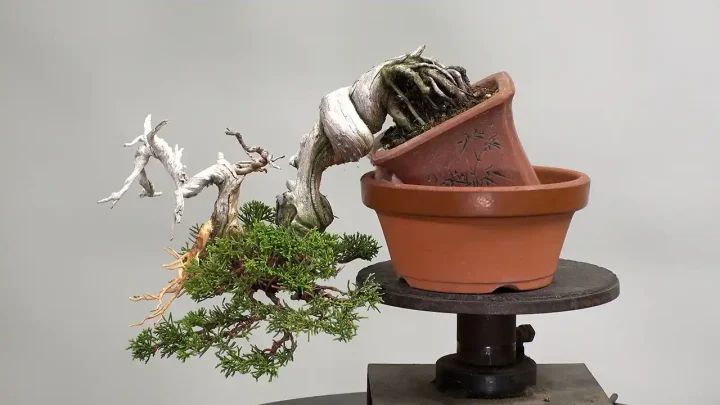
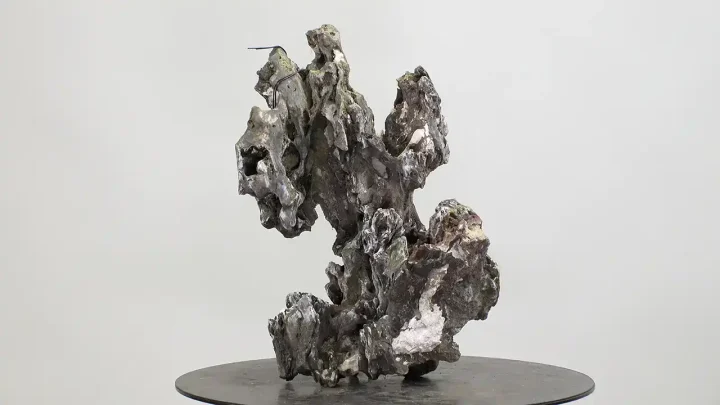
A tree has been planted on stone. The roots are cradled by the rock, and a small natural landscape has taken shape. But this is not the end.
You pick up the finished Rock Planting and set it in the Suiban — and in that moment, a different kind of eye is needed than the one that made it. How to show it. Where to place it. Creating and displaying are continuous, and one might even say that a Rock Planting is not truly finished until you know how to display it.
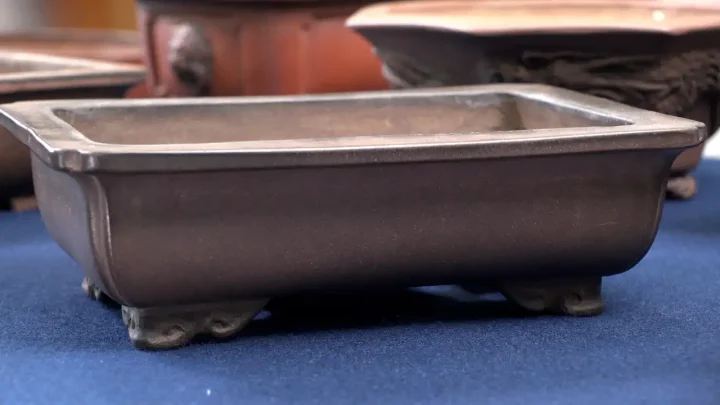
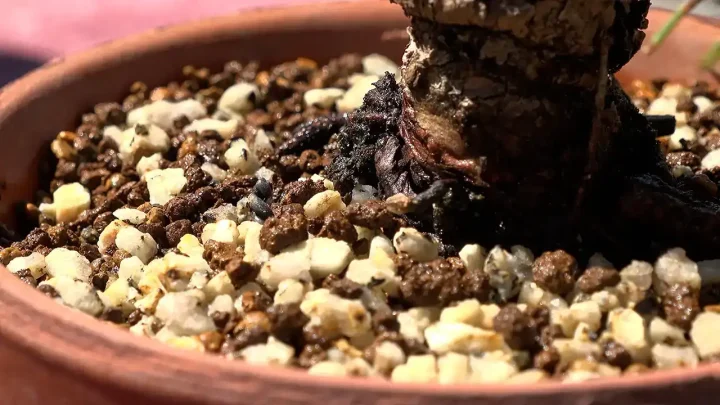
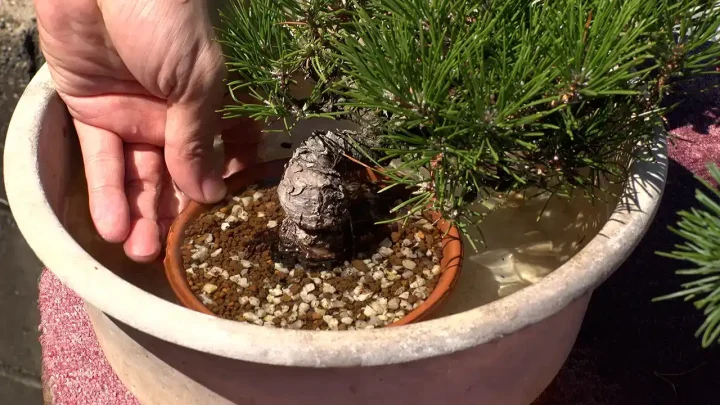
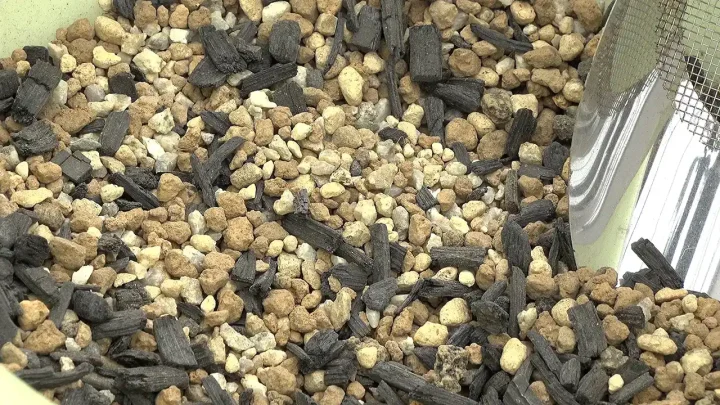
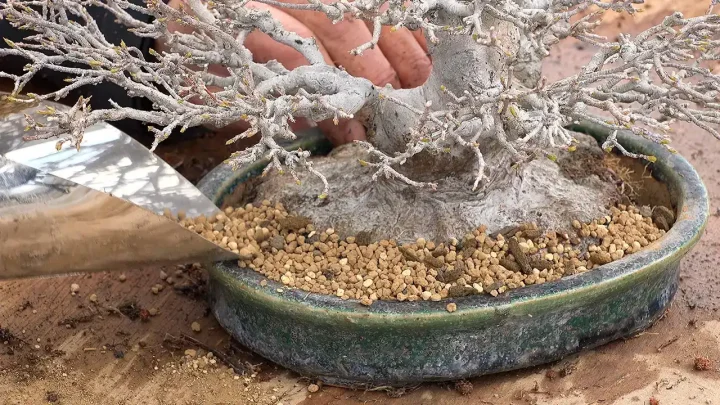
Sand is laid in a copper Suiban. It seems like a simple step, yet the fineness of the sand's grain has a direct bearing on the dignity of the display.
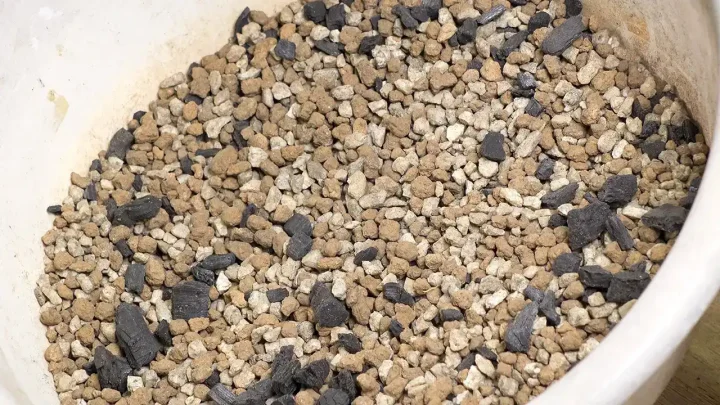
Coarse sand will not do. The fine-grained sand used in the world of viewing stones — that is what is chosen for Rock Planting display as well. The fineness and the warm, tea-brown tone of the sand create a contrast with the stone, allowing the work to emerge as a 'miniature of nature.' A single choice of material shifts the whole context of the bonsai display. Small decisions connect directly to the overall quality of the work.
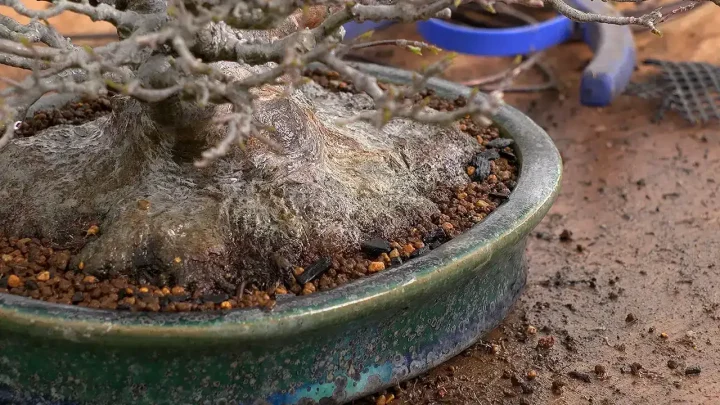
A Rock Planting is not set in the middle of the Suiban. If the work flows to the left, the space on the left is kept wide, and the right is kept narrow.
This off-center placement is not simply a matter of aesthetic taste. By leaving open space in the direction the flow moves toward, the viewer's eye and imagination are drawn out into it. The work does not close in on itself within the Suiban — it is open toward the space around it. The idea of 'ma' — negative space, interval — flows quietly beneath this arrangement.
Reading the 'flow' of the stone and allocating space accordingly: the accumulation of those judgments breathes the pulse of a vast natural world into the small stage of the Suiban.
A Rock Planting is not finished until you know how to display it.
Coaxing roots across stone, refining the tree's form, building the work patiently over time — how it finally appears is the work of 'display.' The choice of sand, the off-center placement, the pairing with the Suiban: these are not decorative afterthoughts, but an extension of the making itself.
The moment a Rock Planting is set in the Suiban, a small landscape is born within the stone. And that landscape spreads quietly outward into the surrounding space. What completes the work may be, in the end, the 'eye' turned toward it.
The journey of "Master: “Fune”" begins with member registration.
Begin the Journey