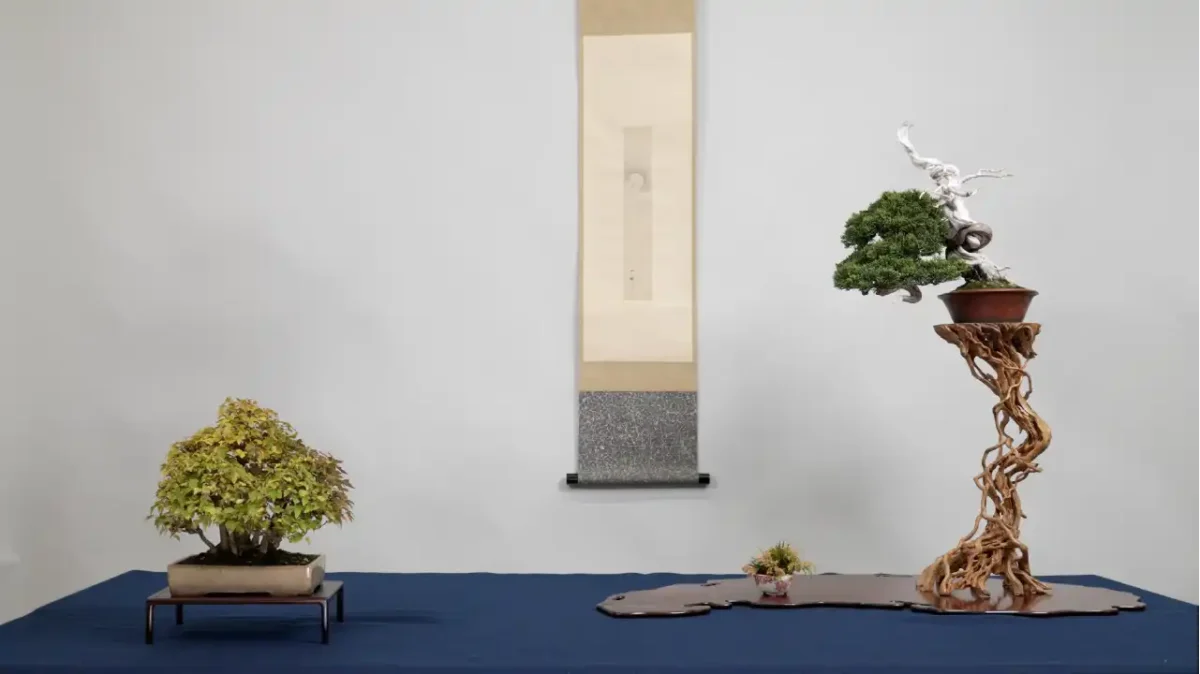
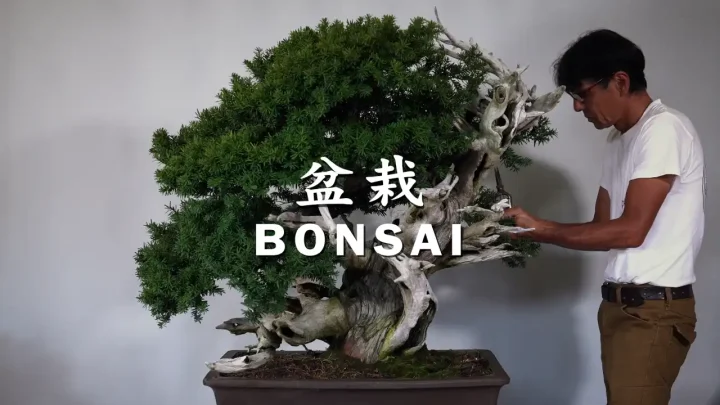
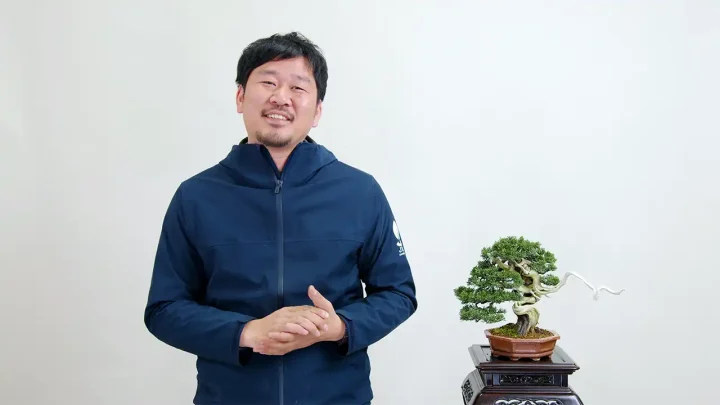
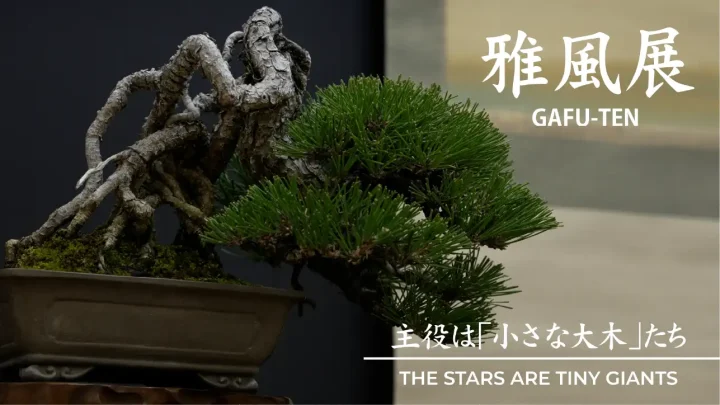
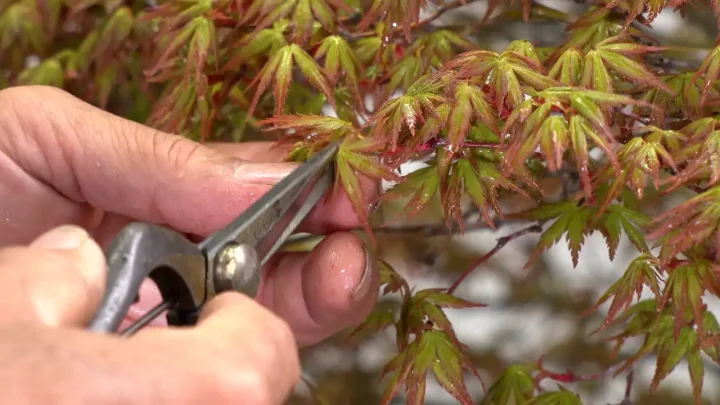
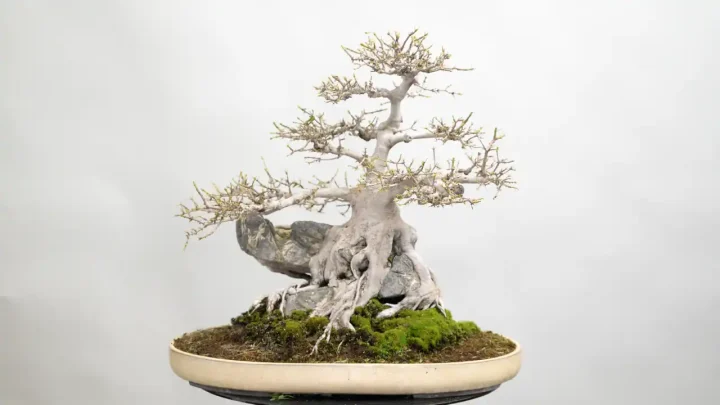
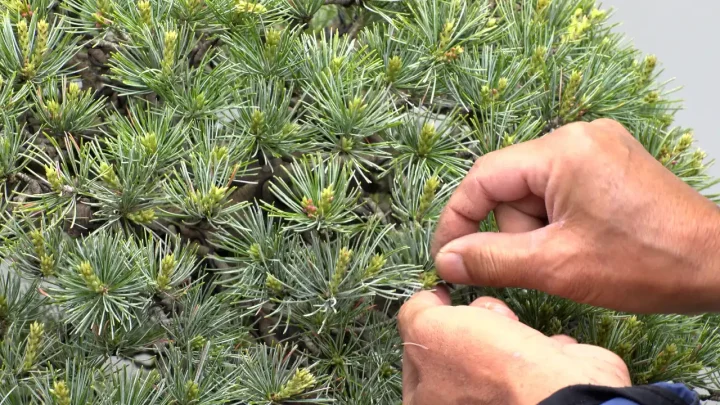
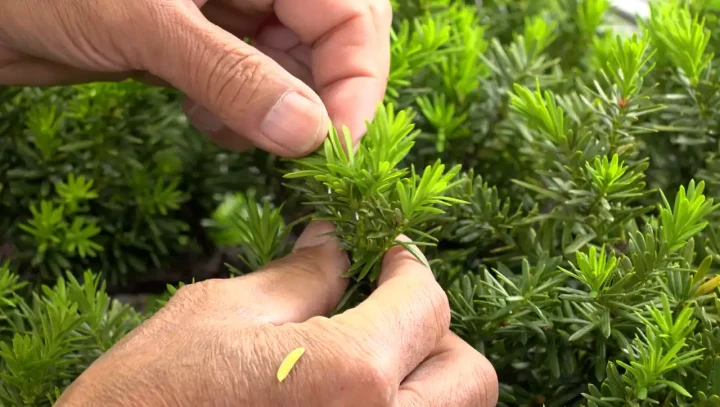
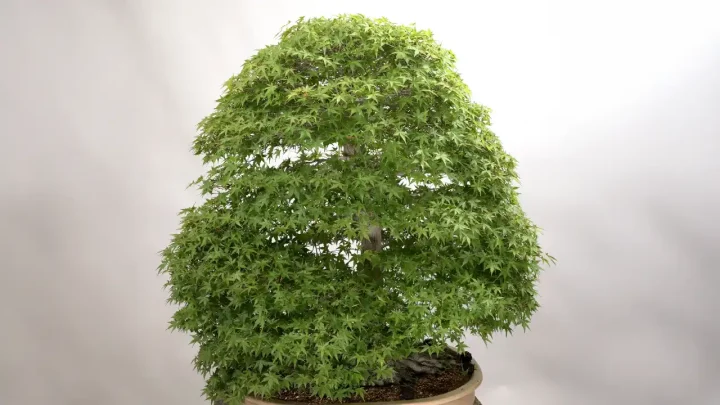
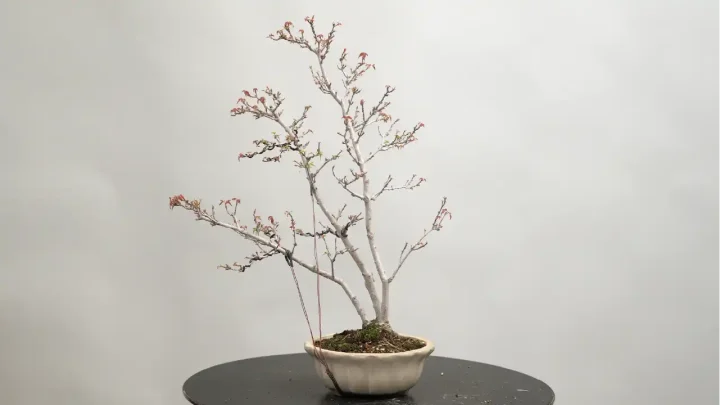
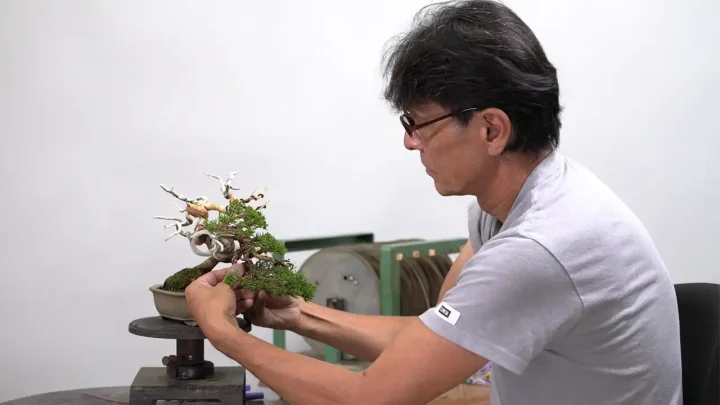
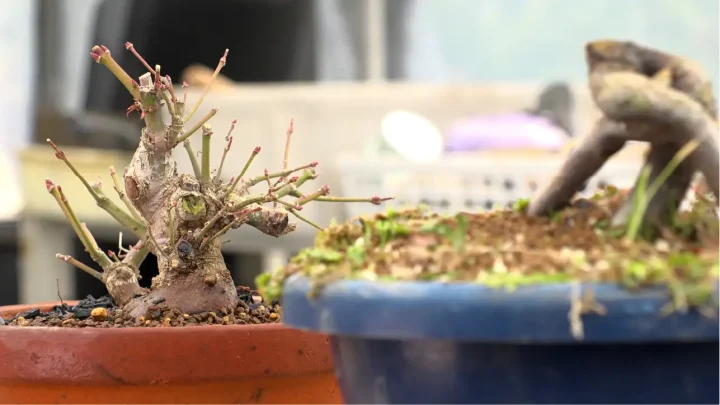
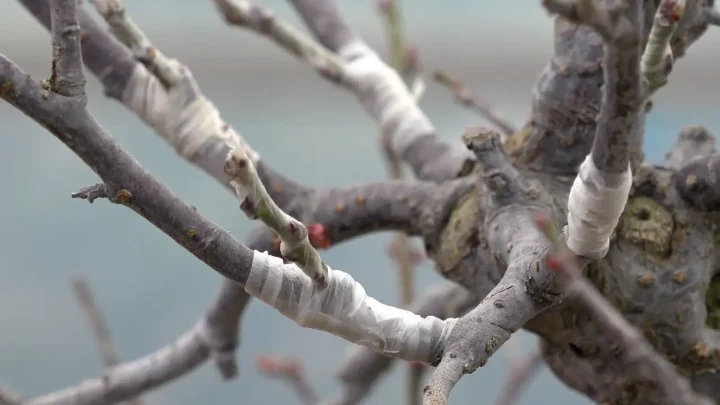
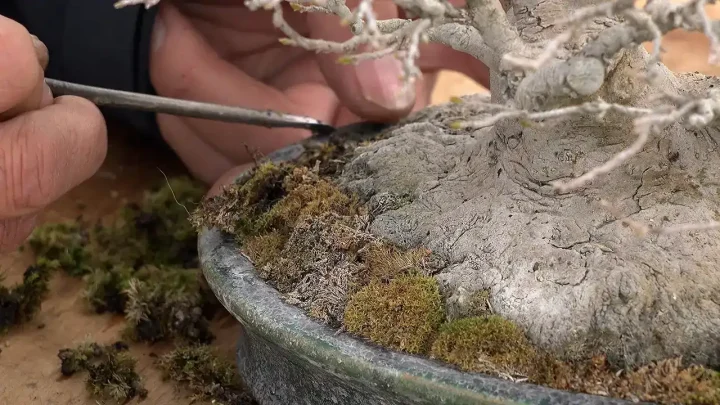
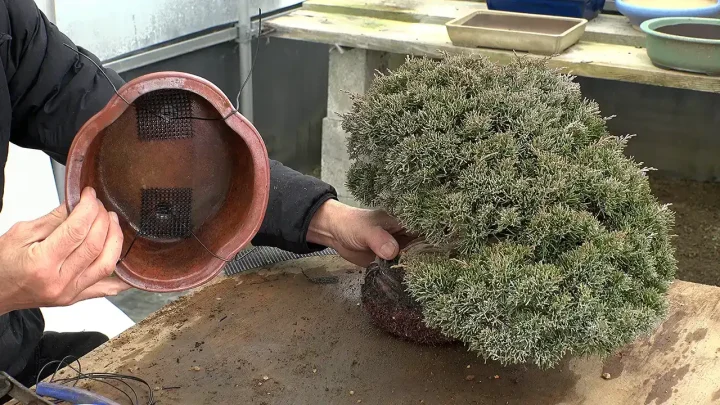
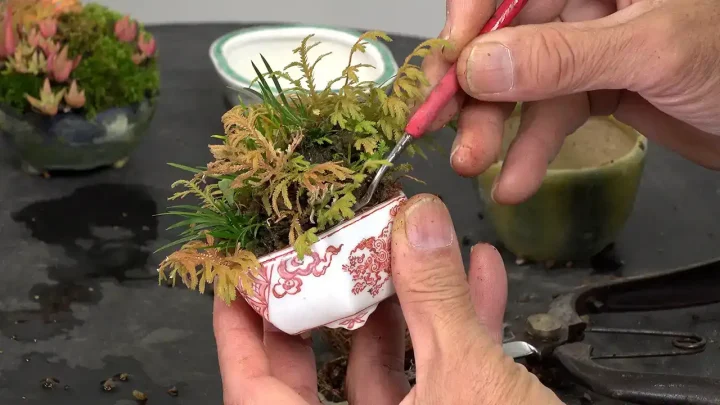
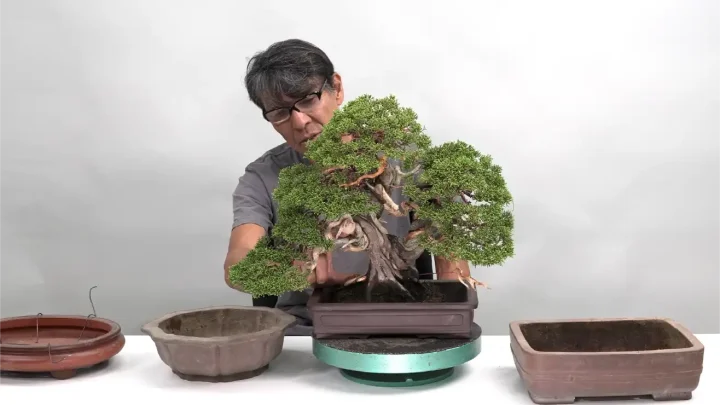
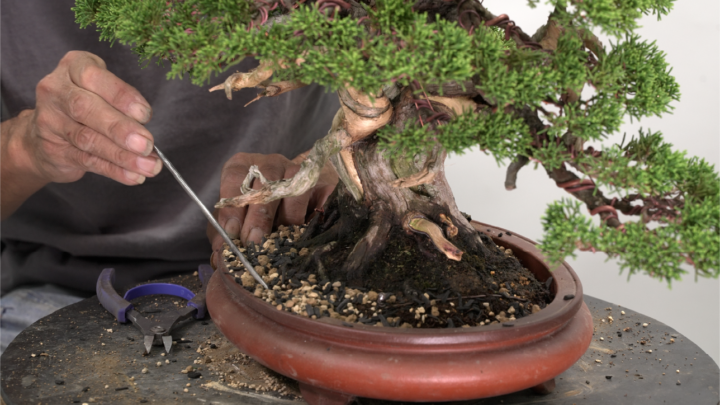
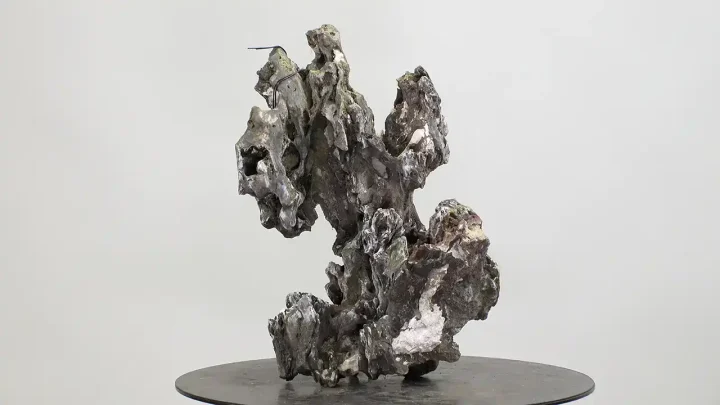
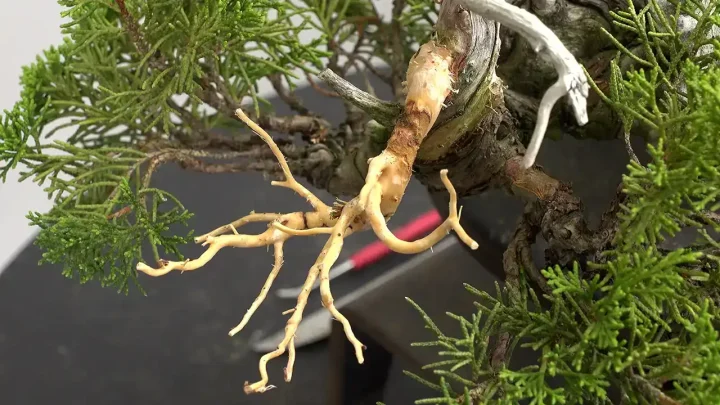
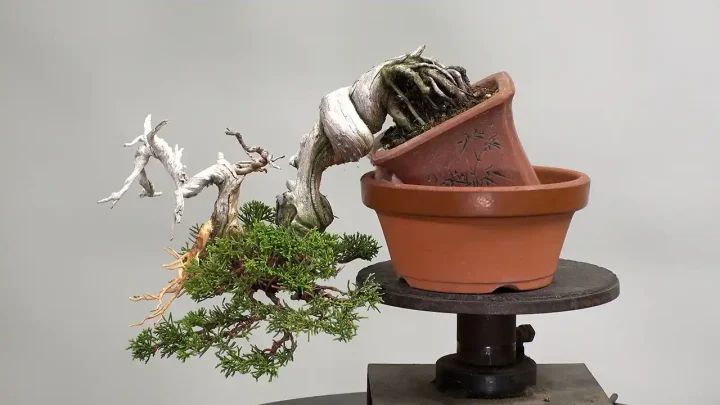
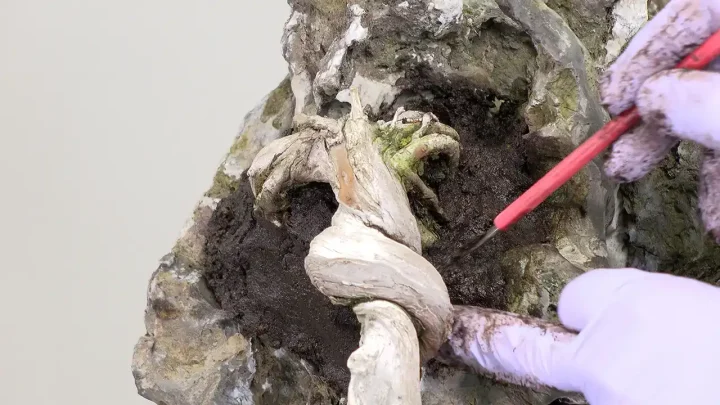
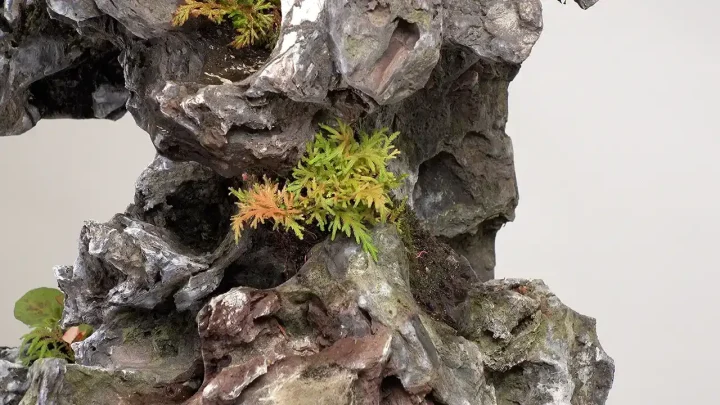
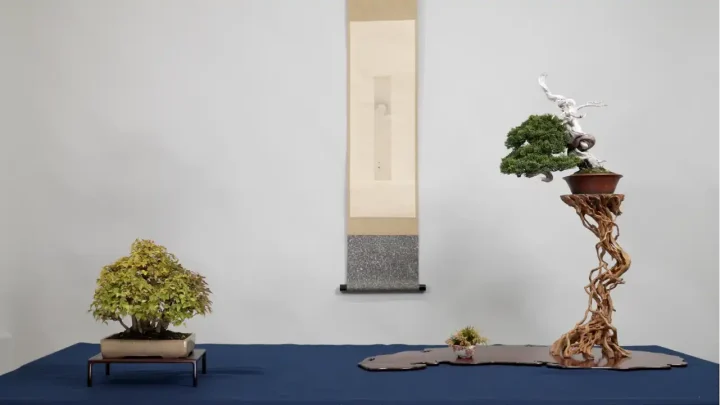
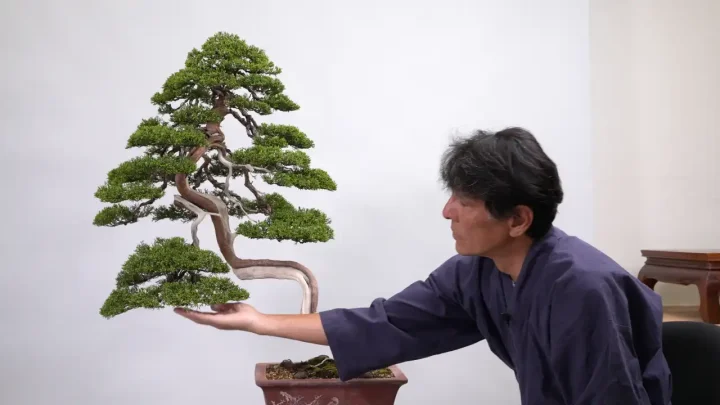
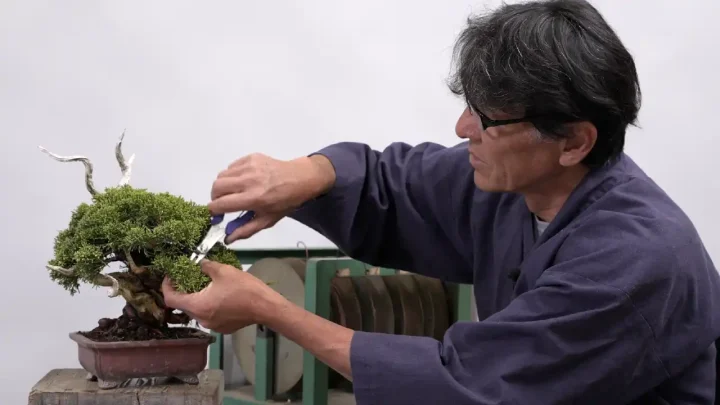
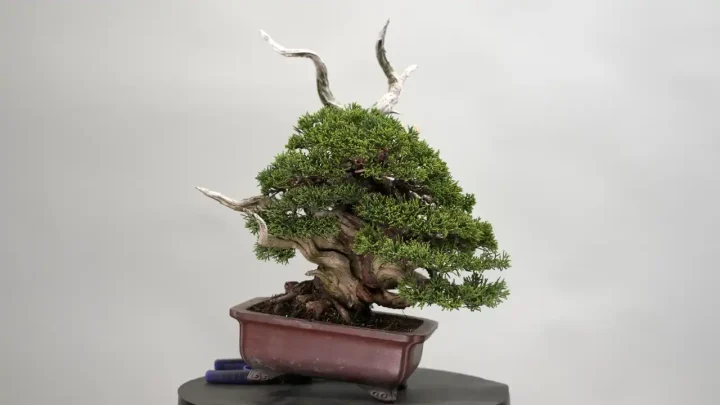
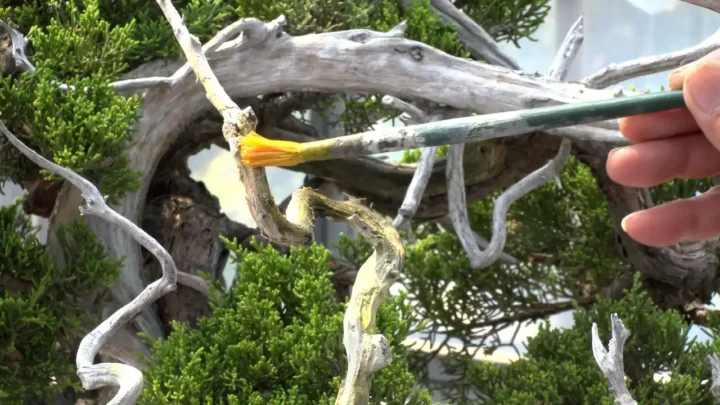
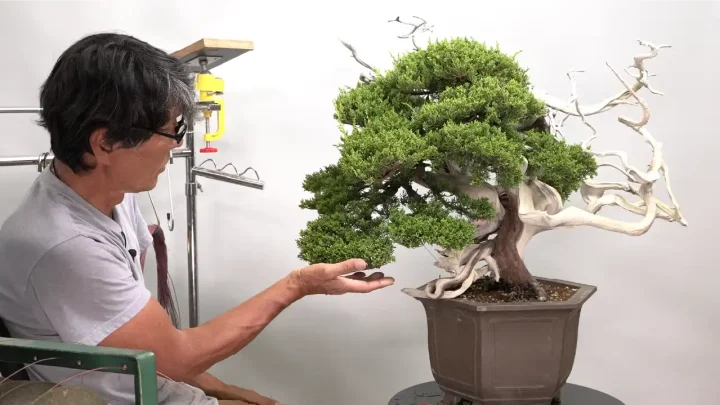
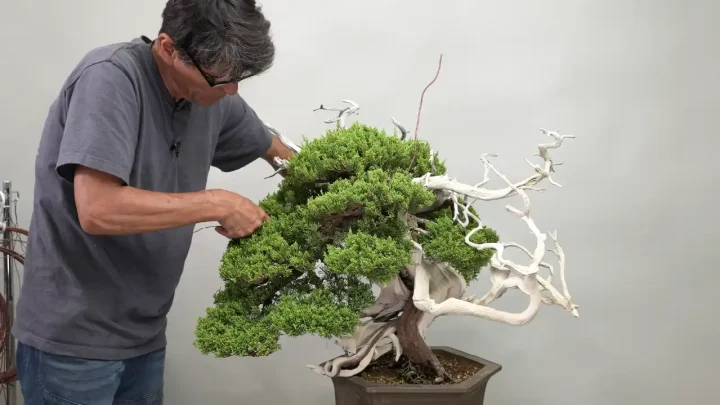
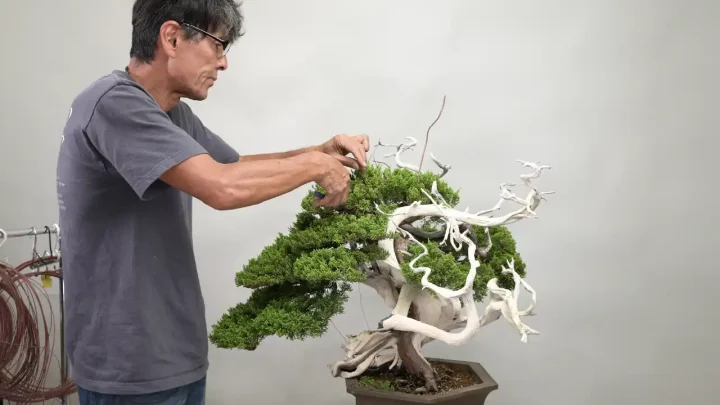
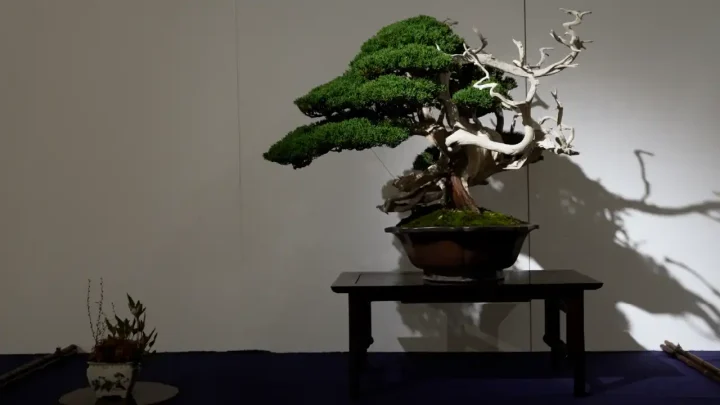
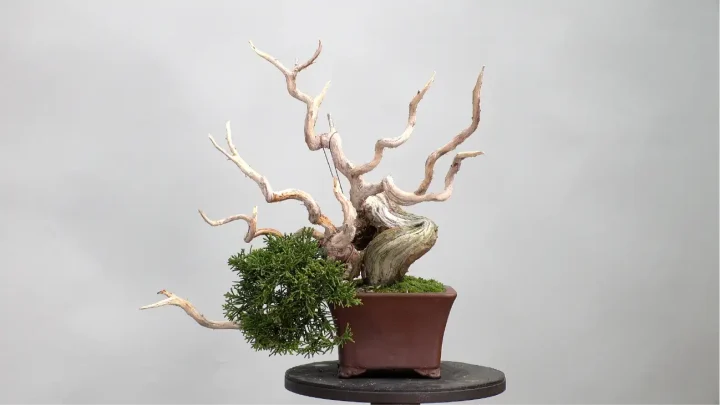
We put together a Three-point Display centered on a Semi-cascade Style Shimpaku Juniper as the Main Display Tree, accompanied by a Maple, an Accent Plant (Kusamono), and a hanging scroll. From choosing the Tall Display Stand (Takakazari), Root Stand (Nejitaku), and Display Board, to the scalene triangle composition and fine-tuning the position of the scroll — and finally, applying Lime Sulfur Solution to the Shimpaku Juniper's Jin to bring its color into harmony with the display.
One tatami mat. That is the stage for a display. Into that limited space, you place the Main Display Tree, the Accent / Companion, the Accent Plant (Kusamono), and a hanging scroll. Each has been grown separately, chosen carefully, and brought together here. But the display is only complete when they become 'one world.'
You set the Semi-cascade Style Shimpaku Juniper in place temporarily and read its Flow / Direction. You bring the Maple close as an Accent / Companion and study the rhythm of high and low. You choose the Root Stand (Nejitaku), choose the Display Board, combine them and pull them apart. There is no finishing point in this work, no moment of 'that's enough.' Is there ease? Does it feel uncluttered? Is the rhythm of high and low alive? — what is being asked of you is the quality of presence that meets the eye.
There is a compositional principle called the scalene triangle. The Main Display Tree, the Accent / Companion, and the Accent Plant (Kusamono) are arranged so their differences in height trace a triangle. That is a reliable skeleton. And yet the reason the hanging scroll was shifted slightly off center was simply: 'it felt harmonious to me.'
Not 'following' the principle, but 'sensing' it. If knowledge stays outside the body, it becomes nothing more than a constraint. Only when the skeleton has soaked so deeply into you that it disappears from conscious thought can you move by feeling alone.
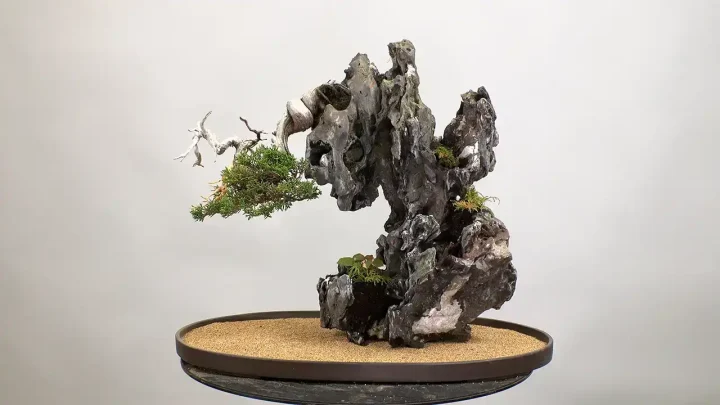
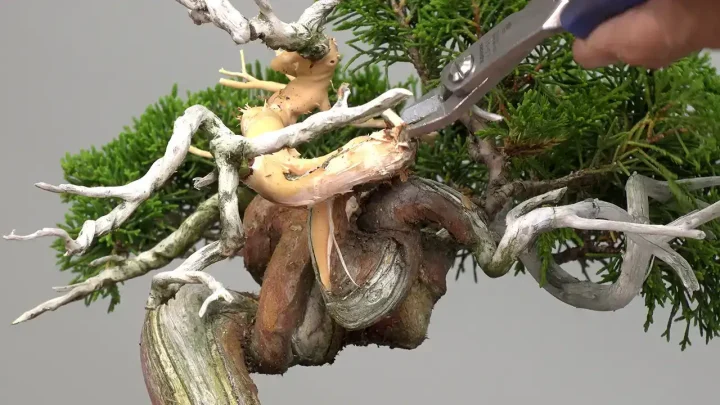
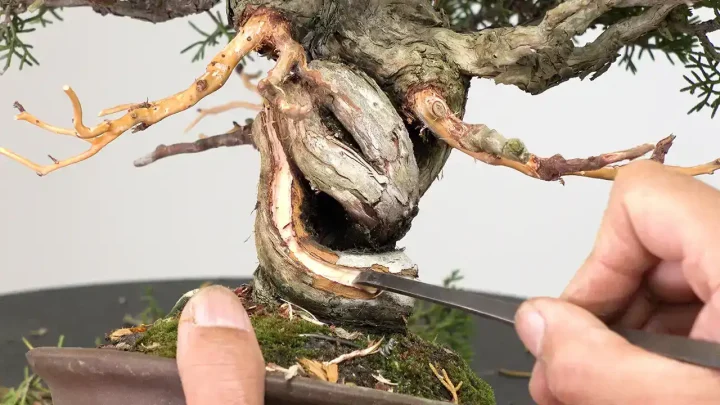
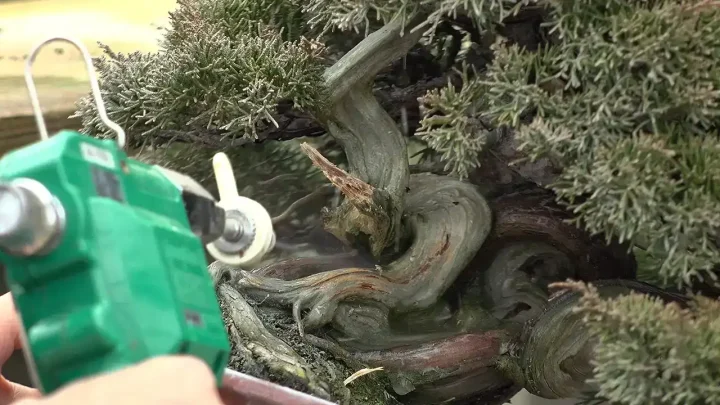
Before the exhibition, Lime Sulfur Solution is applied to the Jin of the Shimpaku Juniper. Parts that have turned brown are brought back to white, so the tree's overall tone does not float awkwardly within the display. This is not repair. It is the act of preparing the tree as 'part of the display.'
The Main Display Tree does not need to be beautiful on its own. It shines within the whole space — with the Accent / Companion beside it, the Accent Plant (Kusamono) present, the hanging scroll on the wall behind. Only by releasing the need for self-contained completeness does a tree become part of a display.
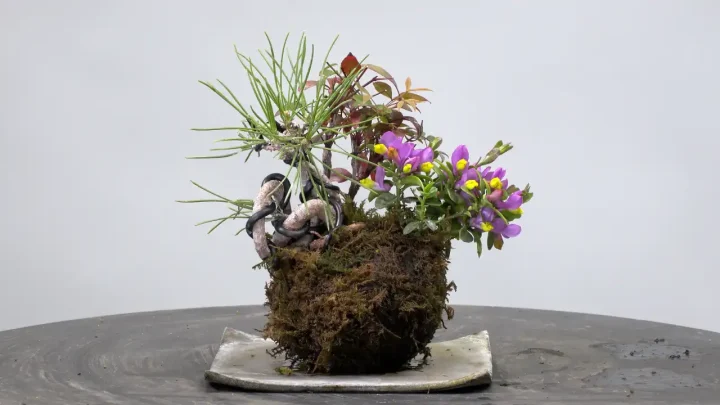
The Accent Plant (Kusamono) is placed toward the Main Display Tree side, leaving space at the center. The width of the stand is chosen to give a sense of room when the bonsai sits on it. The composition of a display lives not in what is placed, but in 'what is left unplaced.'
A display that is too crowded gives the viewer no room to breathe. How much silence can be preserved on the tatami — that is the unspoken question of the one who arranges the display. With the stage of an exhibition before you, the trees, the objects, and the space are all asking. How will you answer?
The journey of "Master: “Fune”" begins with member registration.
Begin the Journey