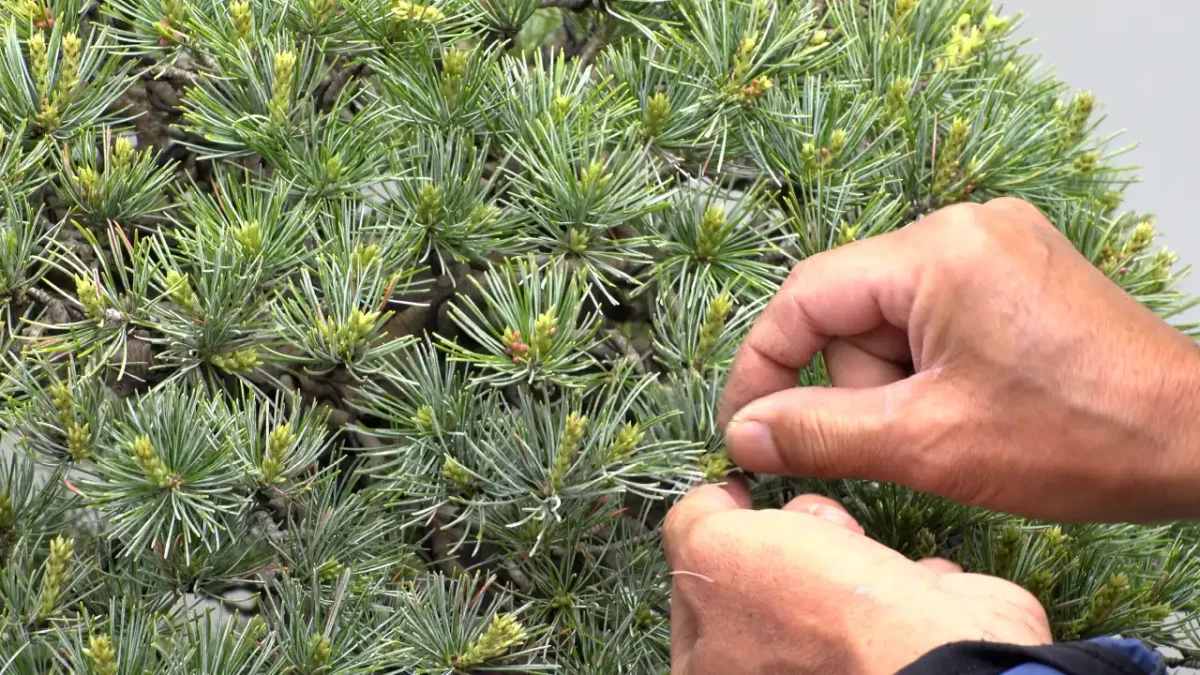
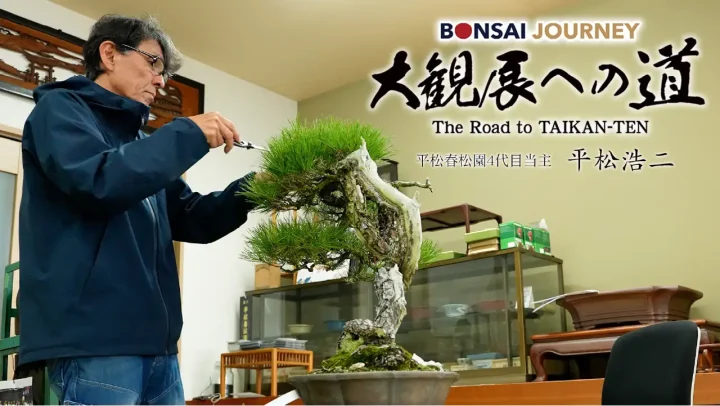
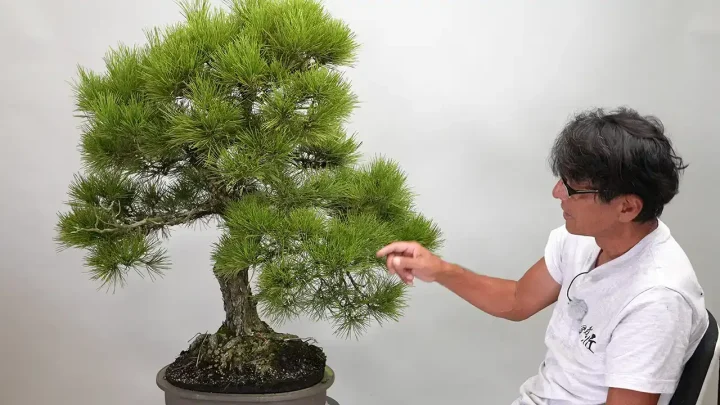
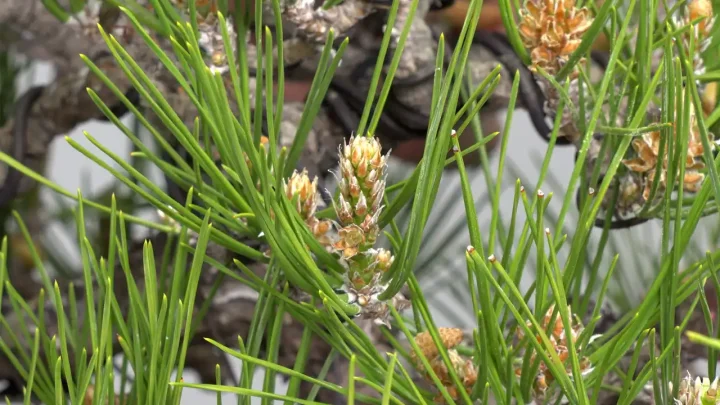
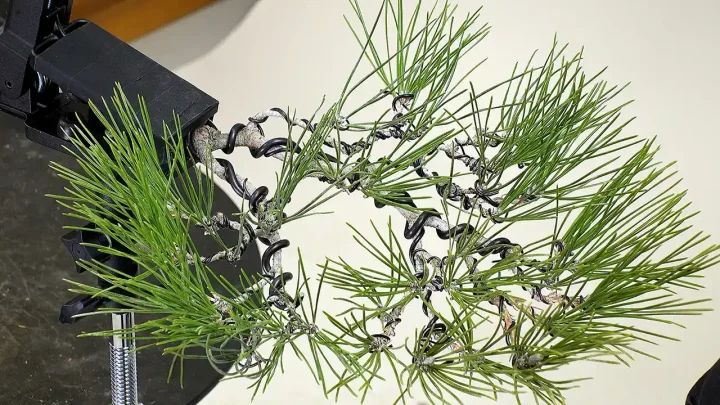
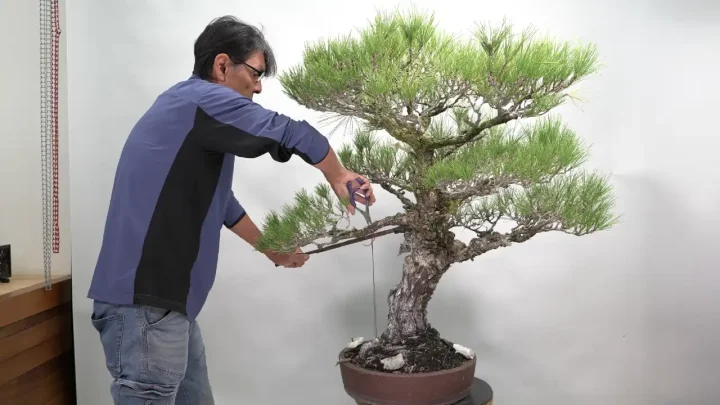
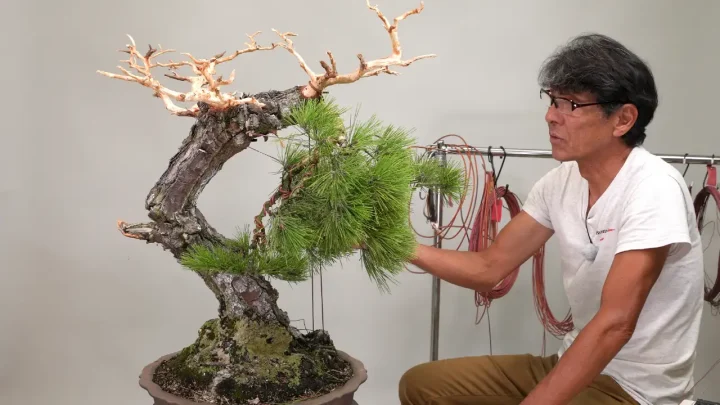
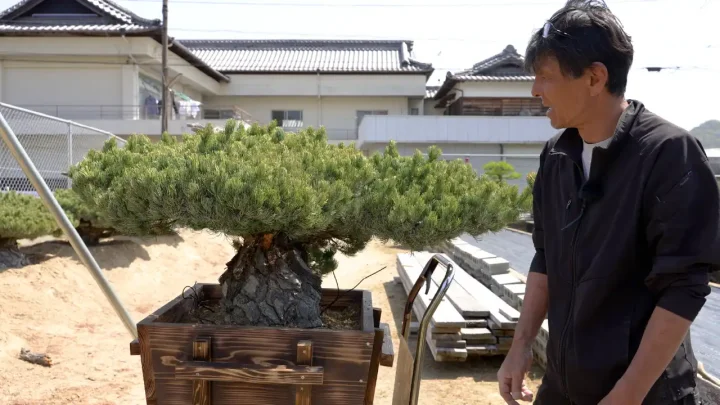
In April, as the buds of Seedling Japanese White Pine gather strength, you use last year's needle length as your benchmark — catching any New Shoot that reaches beyond it between your fingers and snapping it off. This is Candle Pinching: a spring gesture that needs no tools. Behind that quiet movement lies a year's worth of careful tuning in water and fertilizer.
Care
Midoritsumi
Pruning
★★
Japanese White Pine
Spring
Last Year's Needles Become This Year's Benchmark
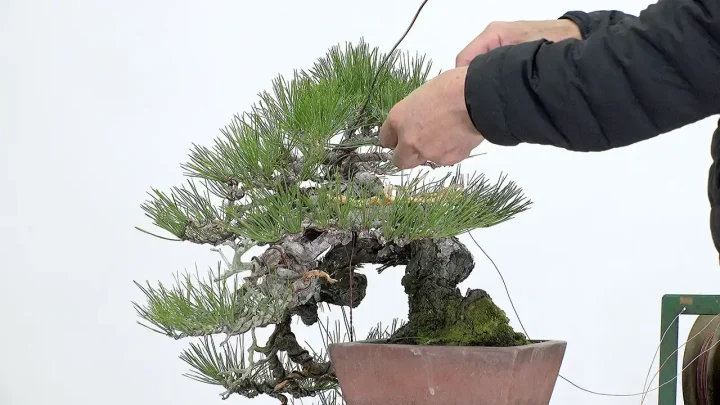
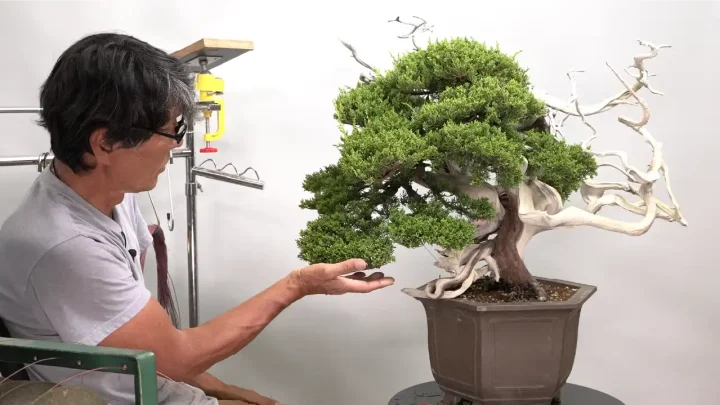
When you step up to the pot, you begin by simply looking. How far have the buds extended? How long did last year's needles settle at? Candle Pinching begins with that observation.
Koji Hiramatsu's benchmark doesn't come from outside the tree. 'The length of last year's needles is the ideal for this tree' — he reads the condition the tree itself built up over an entire year, and lets that become this year's measure. He gauges with his eye rather than a ruler, checks against memory rather than a scale. That accumulated observation is the most important work of all — before a single hand is raised.
The Gesture of Pinching, and a Year's Worth of Tuning
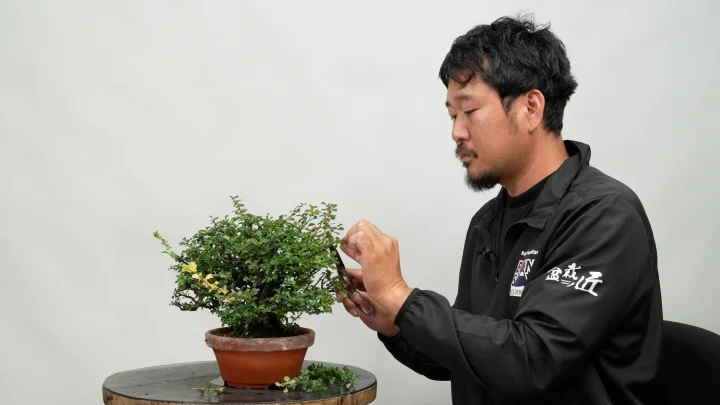
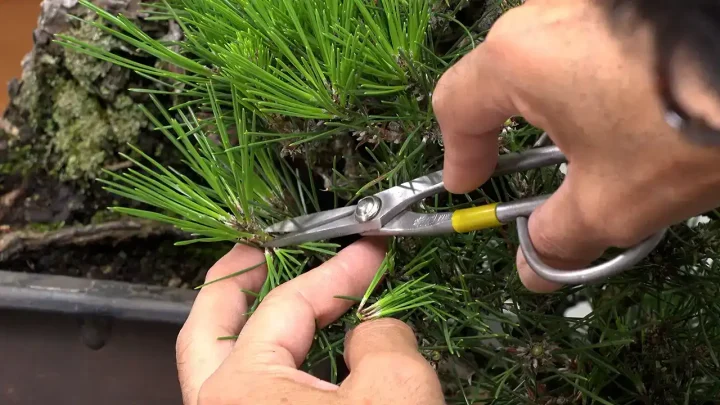
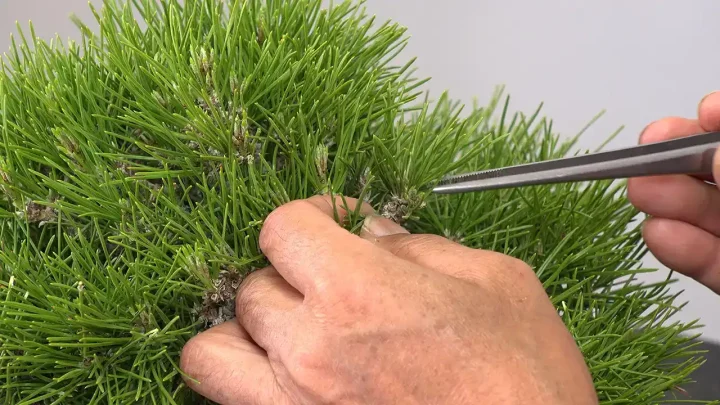
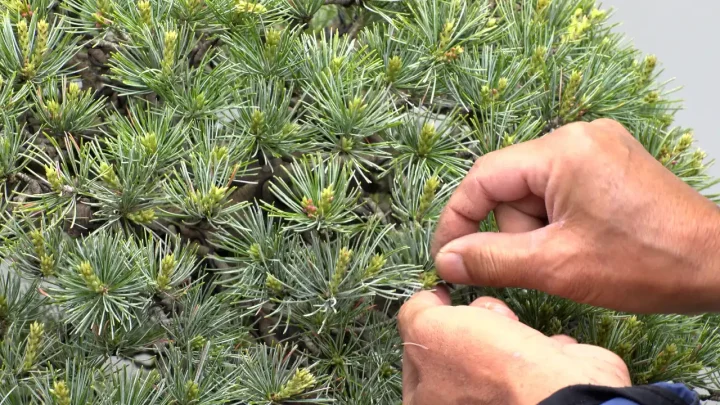
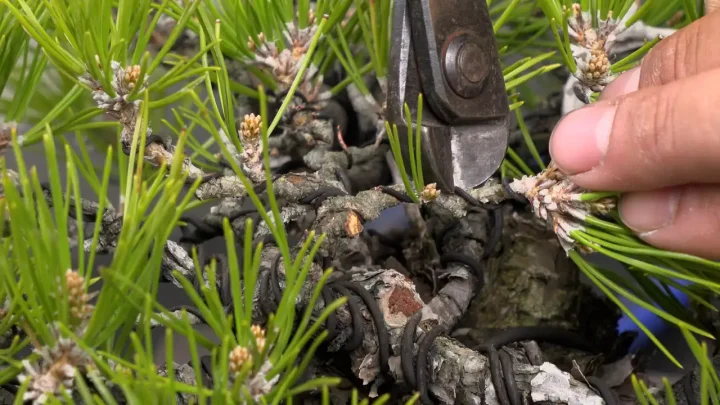
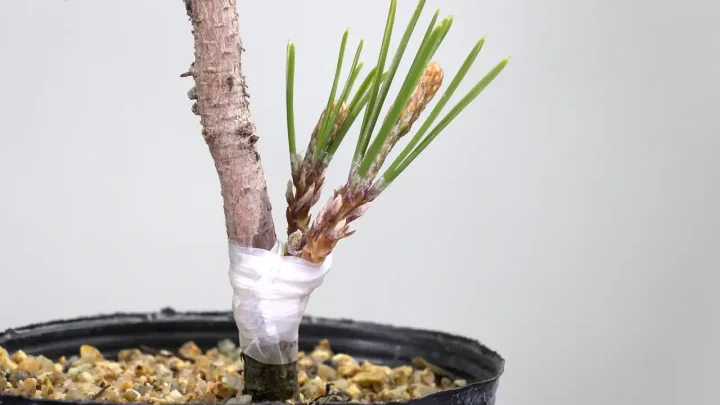
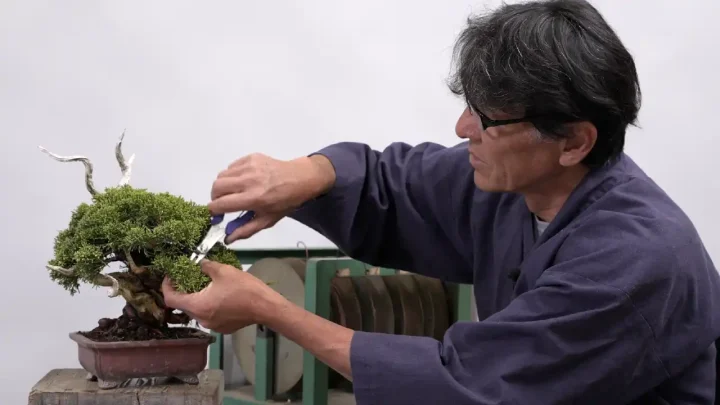
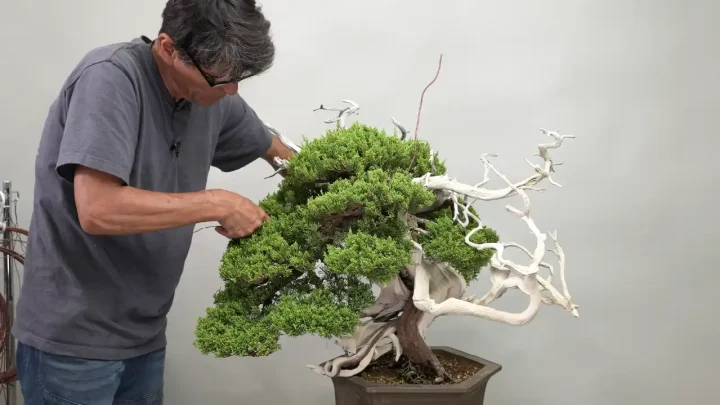
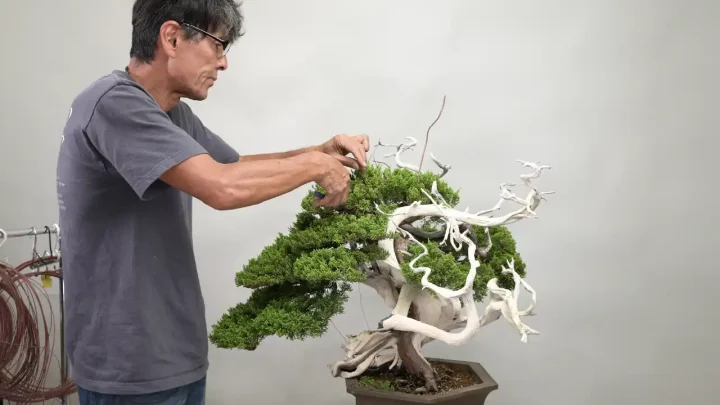
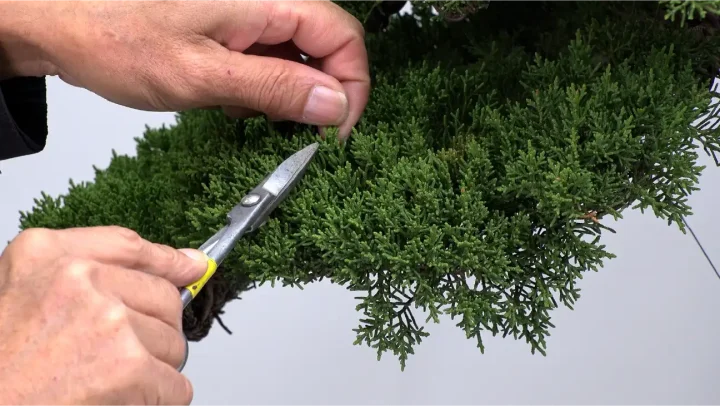
When you find a New Shoot that has grown beyond the outline of last year's needles, you catch it between your fingers while it is still soft and snap it off. No tools needed. It really is that simple a gesture.
And yet, behind that quiet movement lies an unbroken thread of water and fertilizer management running through the whole year. Holding back water in early spring keeps needle extension in check; tightening fertilizer slows the pace of growth. Once growth settles toward the end of summer, you shift the other way — building Tree Vigor ahead of autumn. Candle Pinching is one passage in the spring season of that year-long tuning.
Coming to Know This Tree
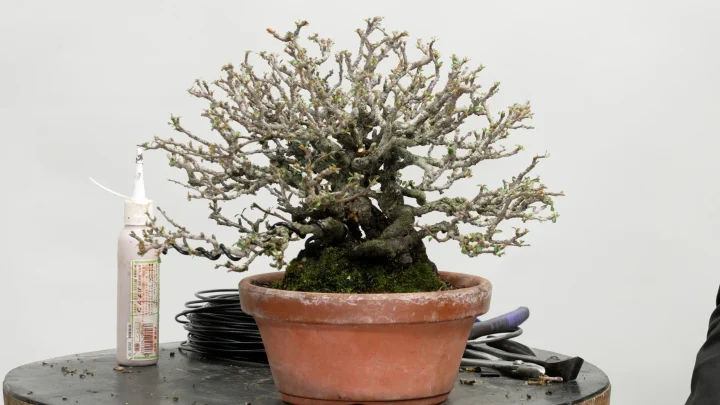
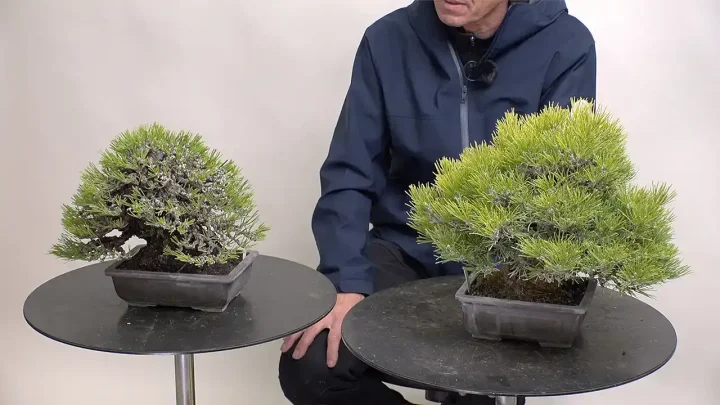
Japanese White Pine and Japanese Black Pine are both pines, yet their management approaches differ at the root. There is a technique of removing all buds in autumn, but that is a choice that can only be made for a tree with sufficient Tree Vigor. Which path you take depends entirely on how well you can read that particular tree's condition.
Every year you watch the buds break, you put your fingers in, and then you wait for the following year. Through that repetition, a conversation with the tree gradually deepens.
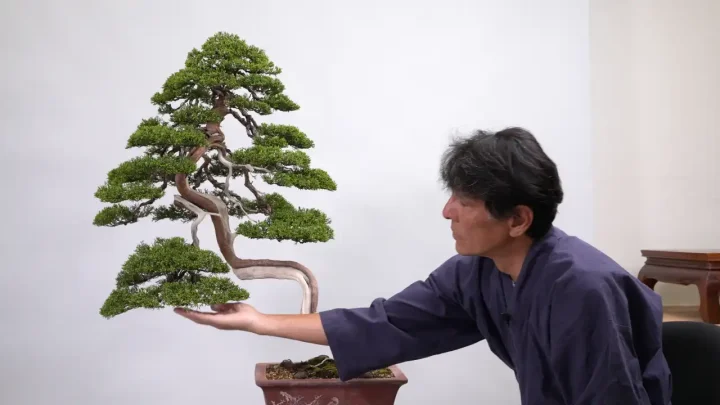
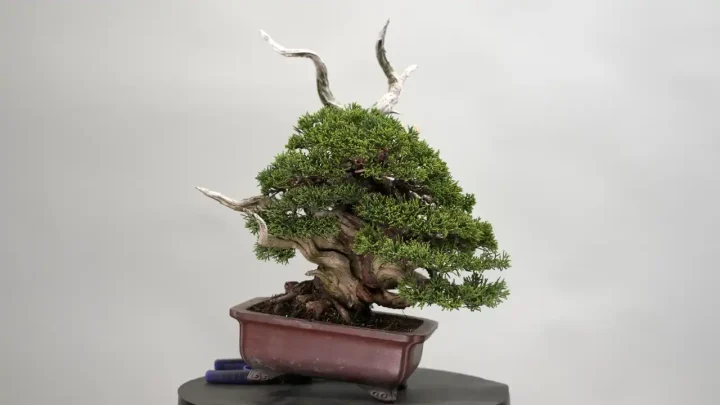
A Seedling Japanese White Pine is a tree raised from seed. Each one carries its own distinct history. Rather than becoming someone who can 'do' Candle Pinching, coming to know this tree — that may, in truth, be what matters most.




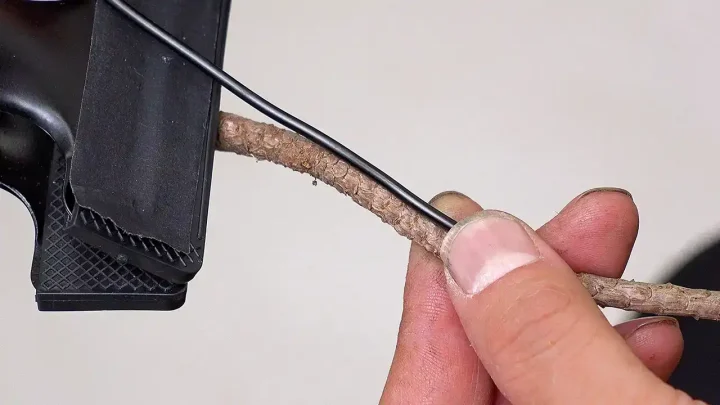
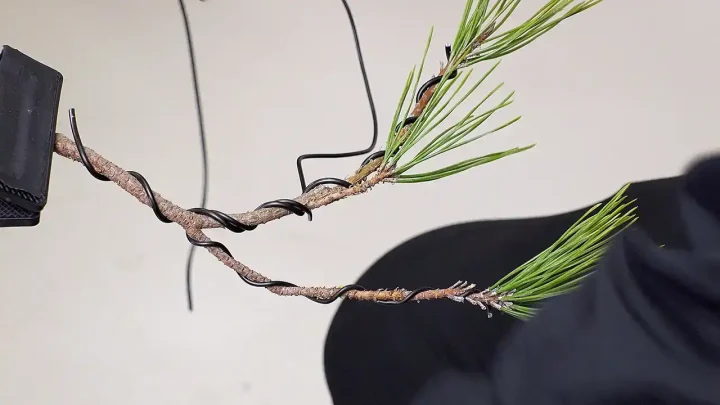
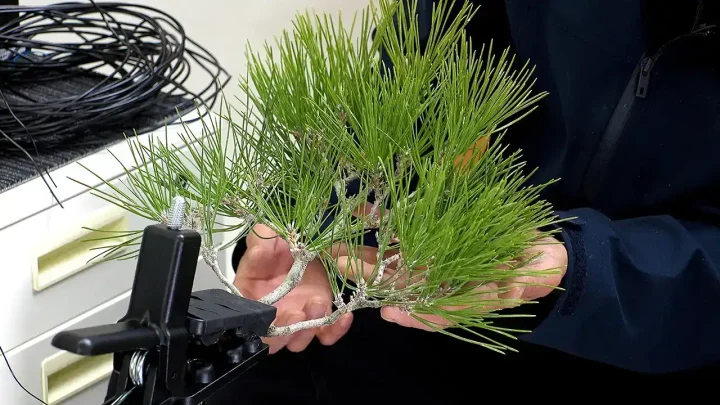
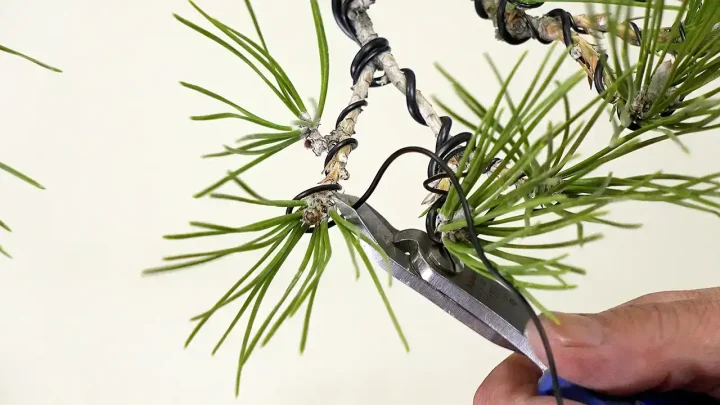



Could you please explain to me in English what exactly it means to cut off all the buds on a tree? Why would someone do that?
Thank you for your question. First, as a premise: the current length of the old leaves (last year’s leaves) is in optimal balance with the size of this tree.
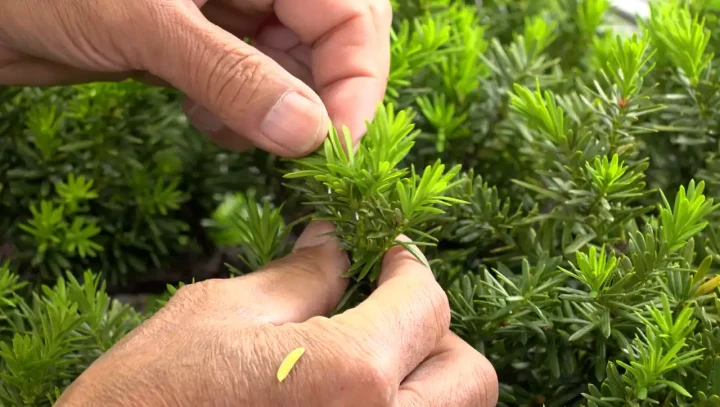
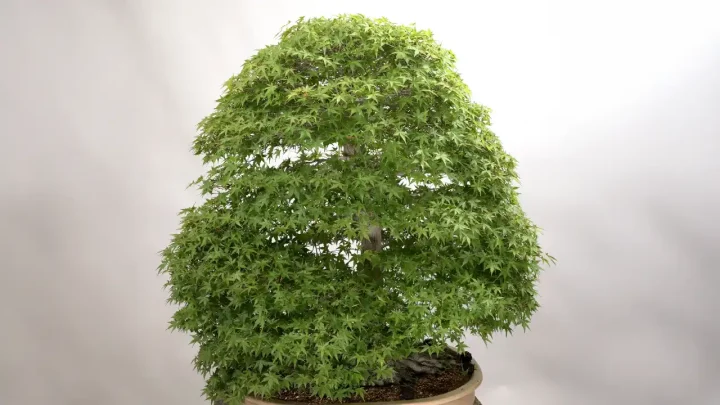
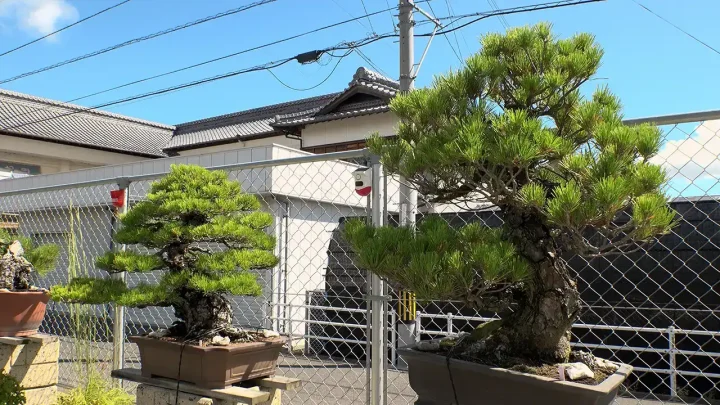
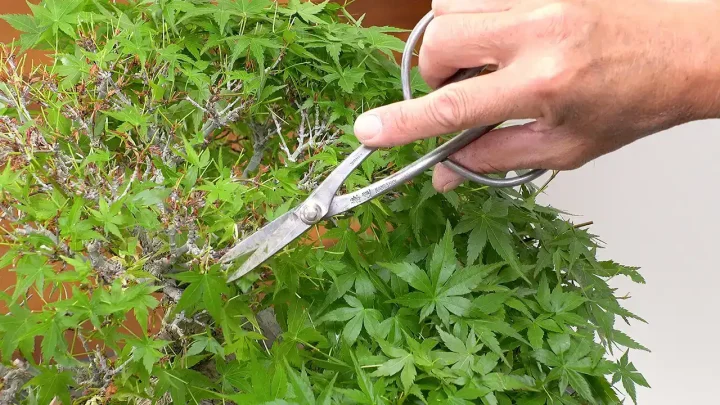
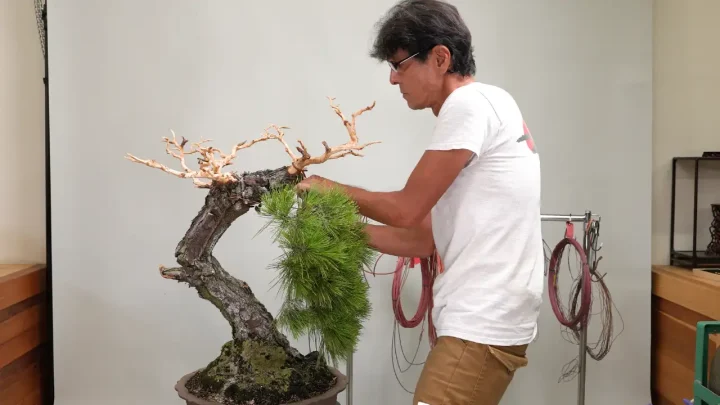
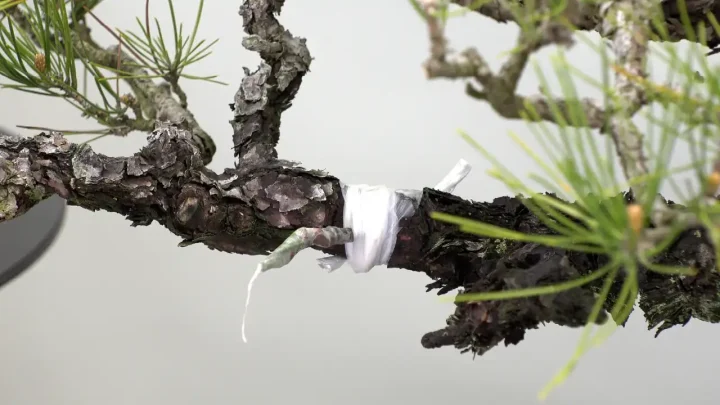
So, among the new shoots that grew out in spring, we pinch back the parts that extend beyond the outline of the old leaves, trimming them to match the length of the old leaves. This is called “midori-tsumi” (candle/bud pinching), and it allows us to maintain the silhouette of the tree. Small buds are left alone — the work is done while observing the overall condition of the tree.
The reason for doing this is a technique called “Tanyo-ho” (short-leaf method). Bonsai need to be cultivated in a compact form, and the smaller the leaves, the more the tree gives an impression of a mature, ancient tree. In addition, without bud pinching, branches tend to elongate and the strength between branches becomes uneven, making it difficult to maintain the tree’s form. Equalizing the vigor of each branch is another key purpose.
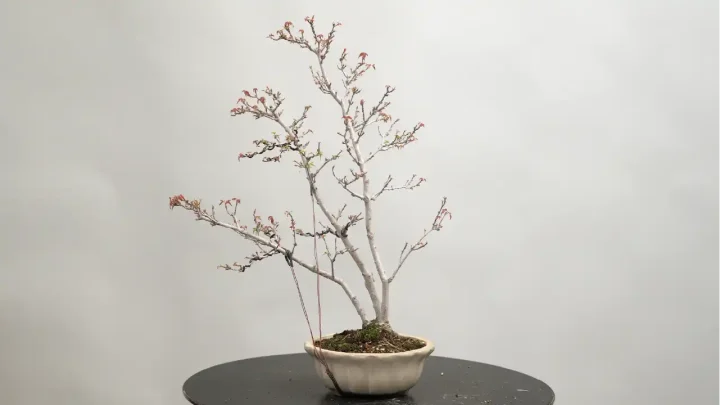
One small clarification: “cutting off all the buds in autumn” is a slight misunderstanding. By autumn, the buds have already developed into leaves. That said, for shoots that have grown too strong, we may remove them — similar to the bud-cutting technique used on Japanese black pine (kuromatsu no mekiri). But we don’t remove all of them.
Thank you very much for the clear and vivid explanation. I now understand the overall concept much better. I’m truly glad and grateful to have you as my teacher and for your great support.
Was bedeutet genau im
Herbst alle Knospen abzuschneiden?