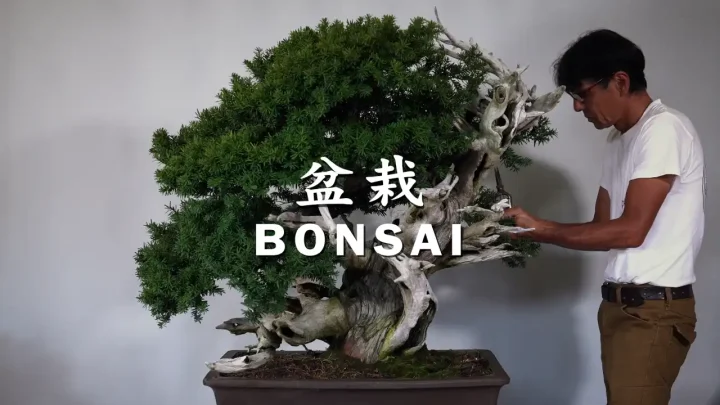
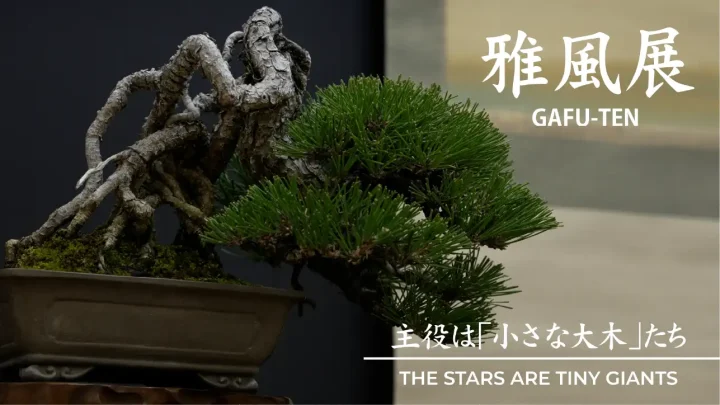
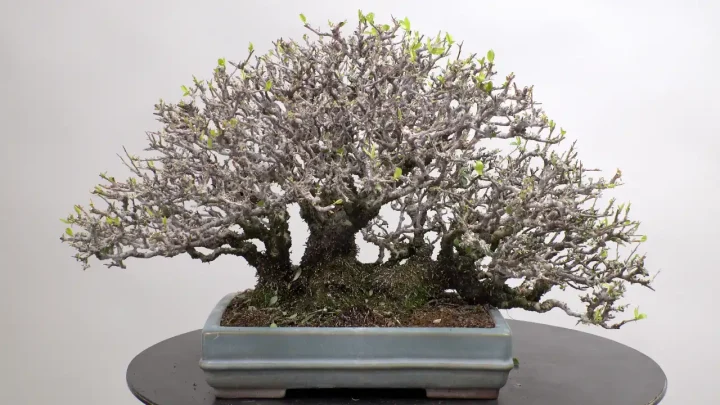
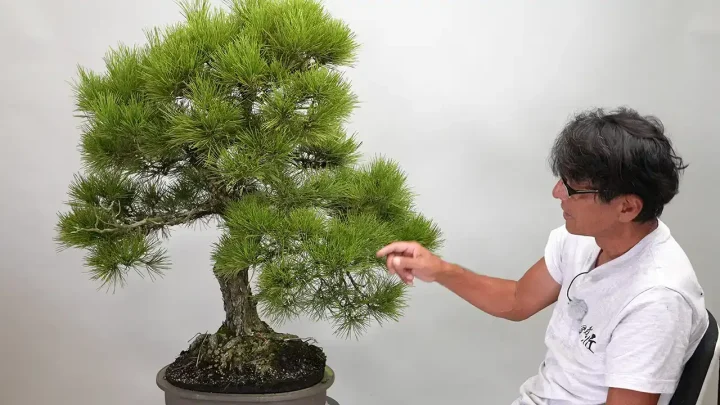
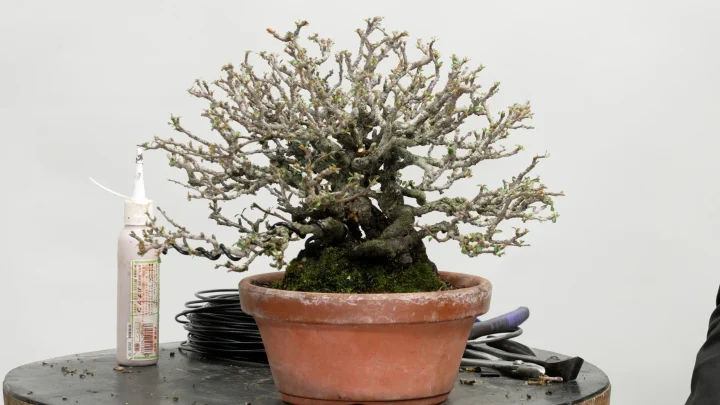
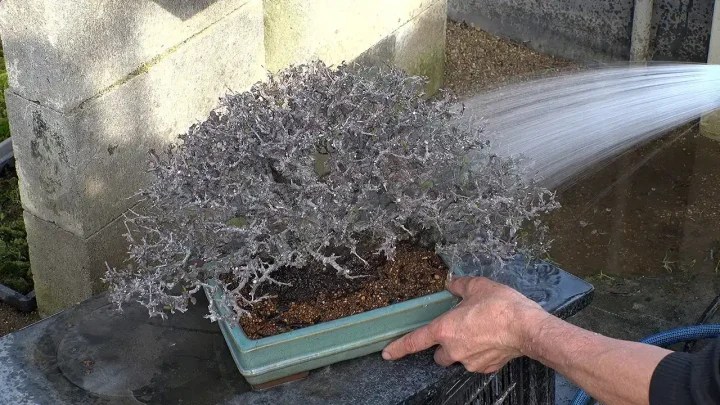
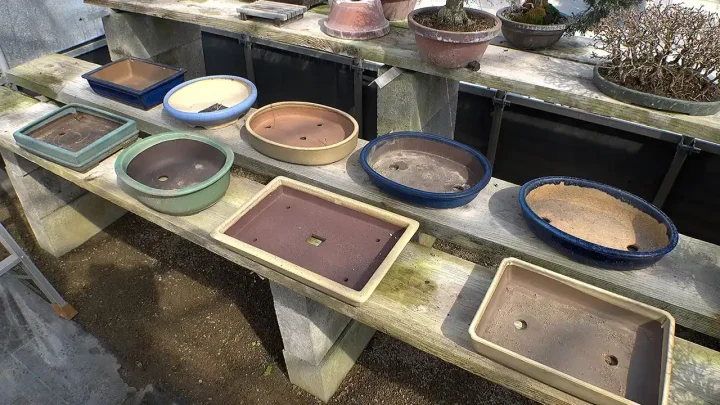
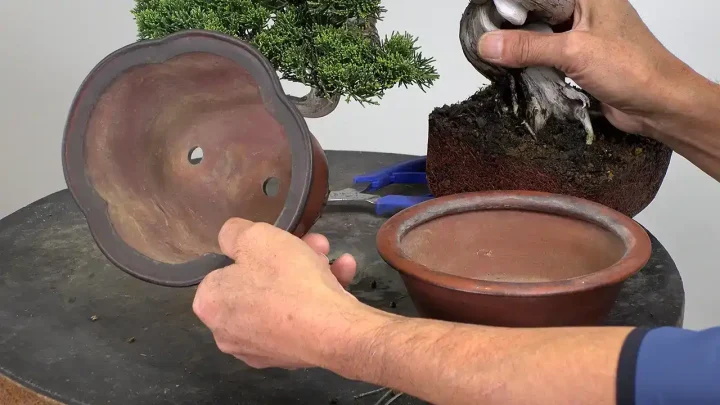
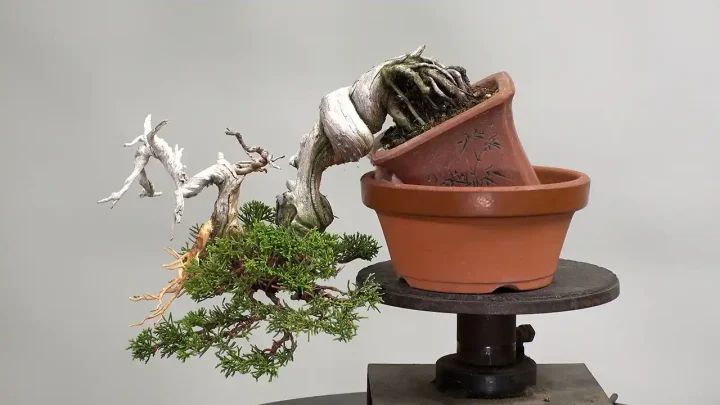
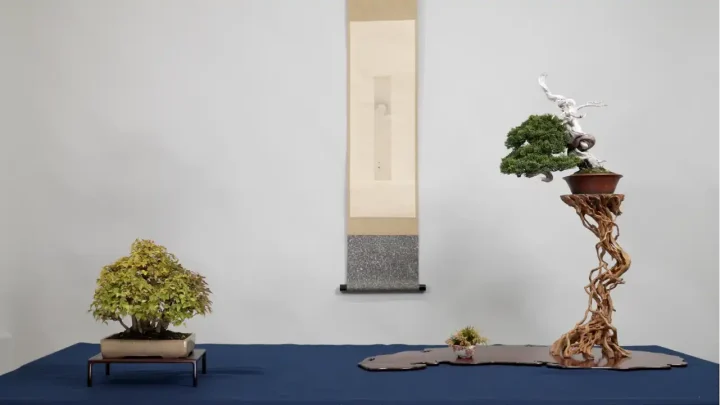
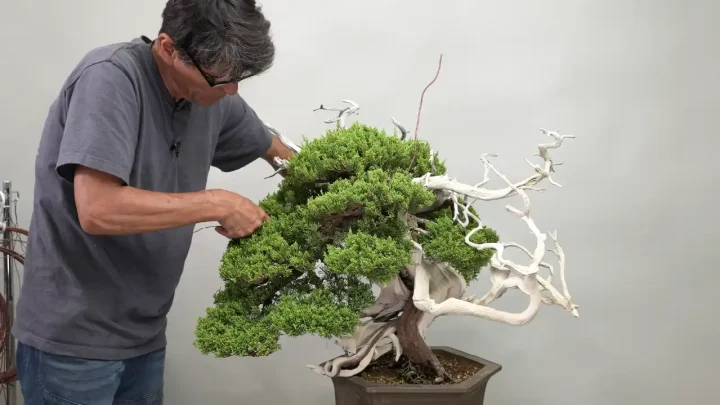
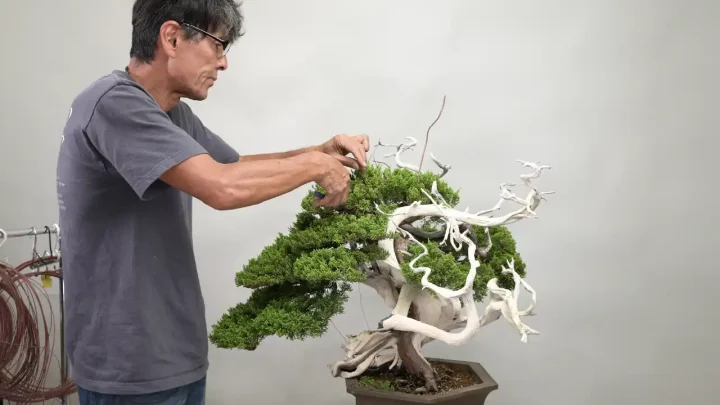
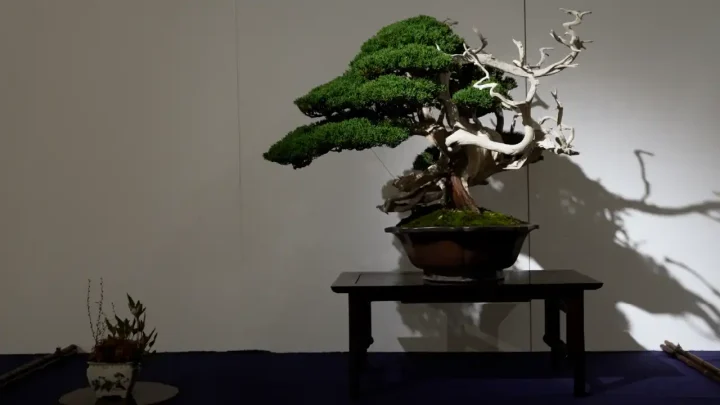
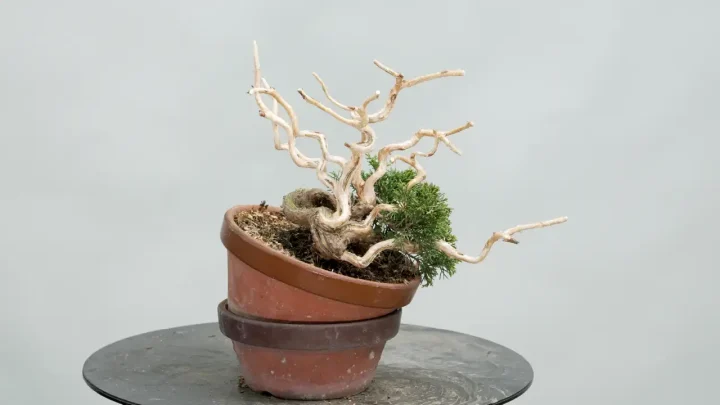
In preparation for next year's Gafu-ten, a Shimpaku Juniper is repotted into its display pot. Why move forward in December, an unfavorable time of year. Whether to choose a round pot or a Mokko-shaped Pot. The eye that settles on the angle. Before a single tree goes on display — what does it mean to face that fully?
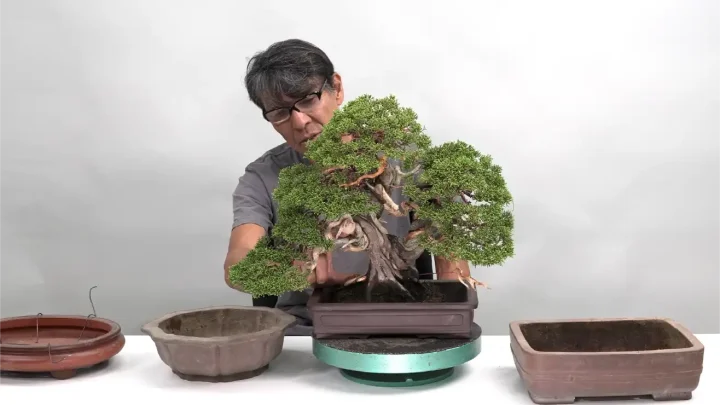
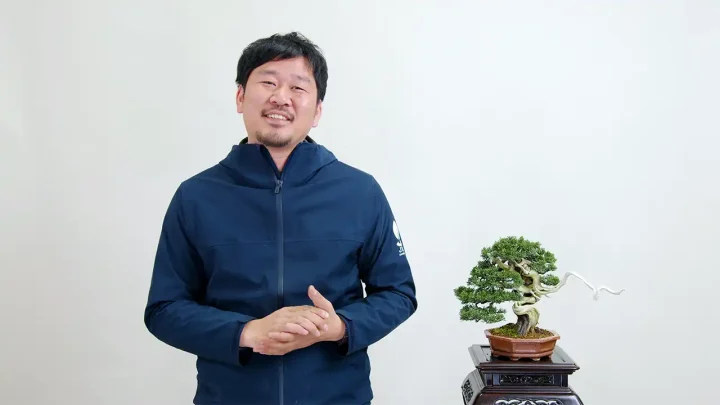
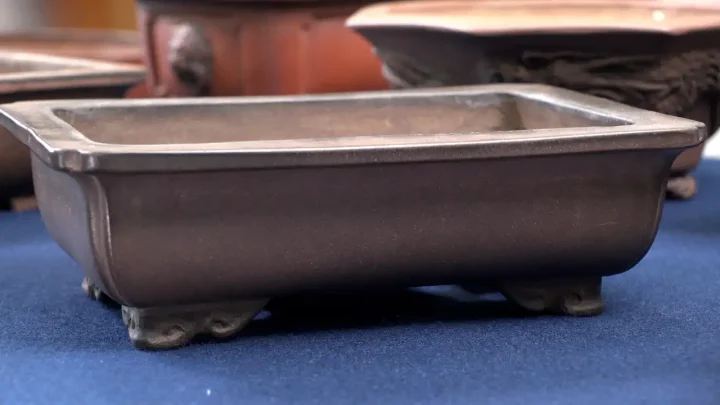
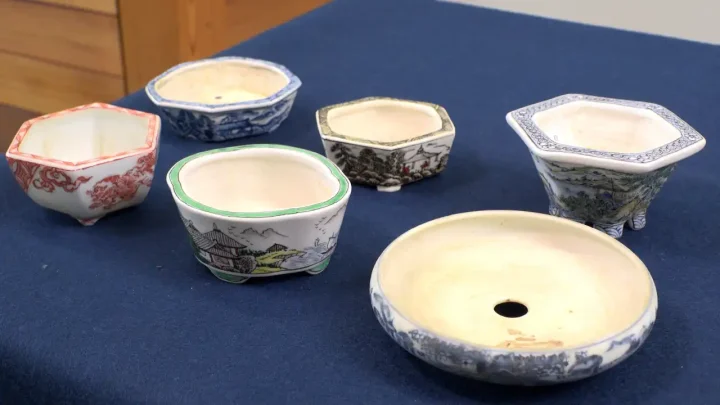
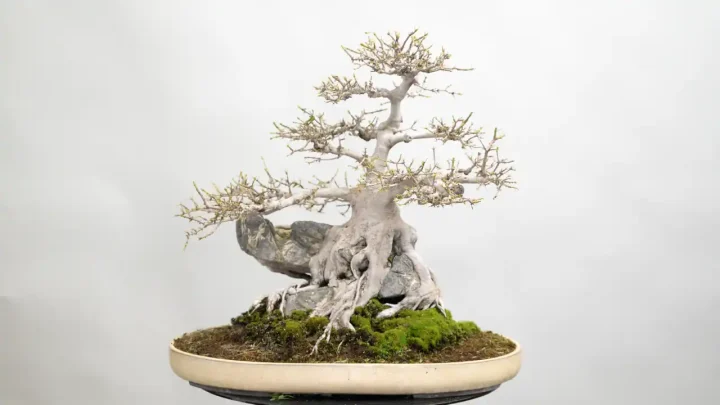
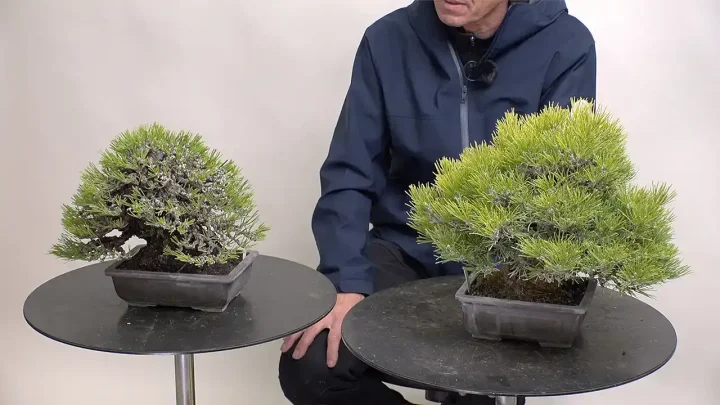
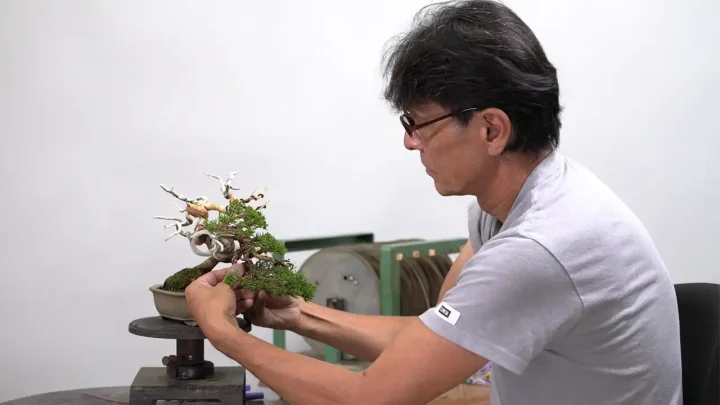
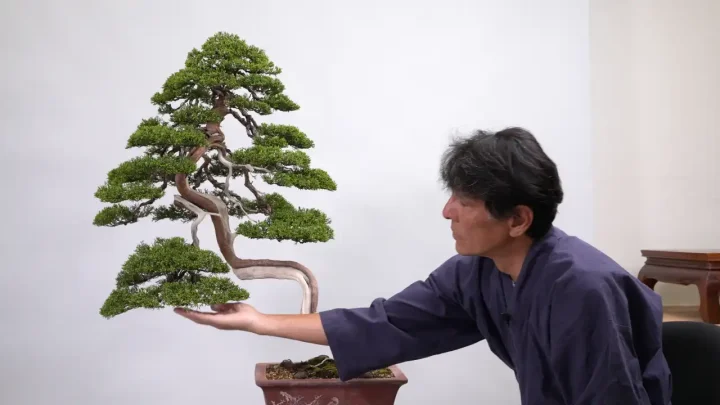
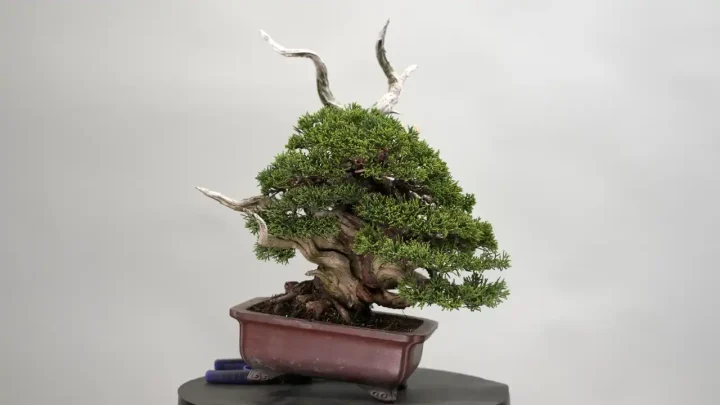
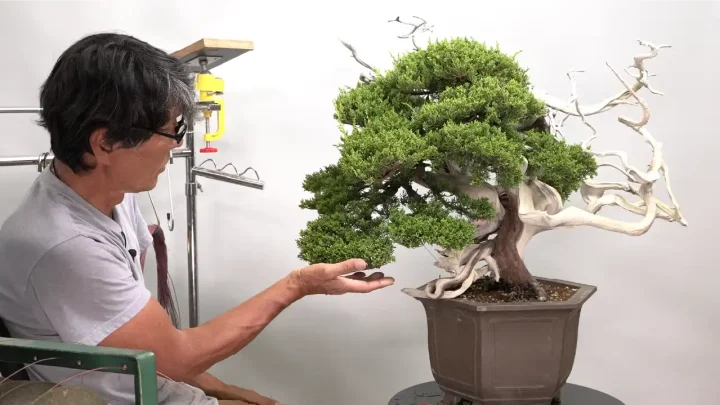
When a Mokko-shaped Pot was paired with the Shimpaku Juniper, the tree somehow looked smaller. Switching to a round pot, the same tree appeared a full size larger — standing with real presence. Choosing a pot means deciding how to draw out what a tree has to offer. That brief moment of comparison makes this unmistakably clear.
Repotting in December is something you would normally want to avoid. Disturbing the roots places stress on the tree. And yet, when the Gafu-ten sets a deadline, staying still is not an option.
But this cannot simply be dismissed as «unavoidable.» Injure the roots as little as possible. Shelter the tree in the greenhouse after the display. Build recovery time into the plan from the very beginning — rather than bending the tree to outside demands, meet the deadline while still honoring the tree's own rhythm. That is the resolve at the heart of this work.
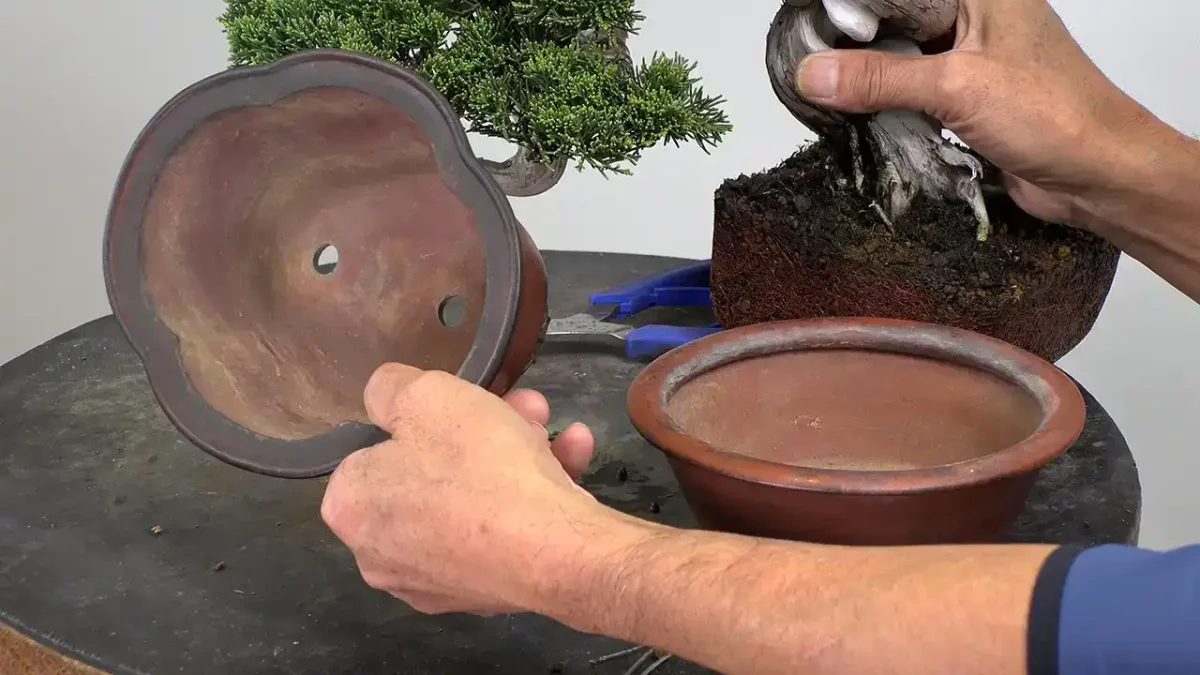
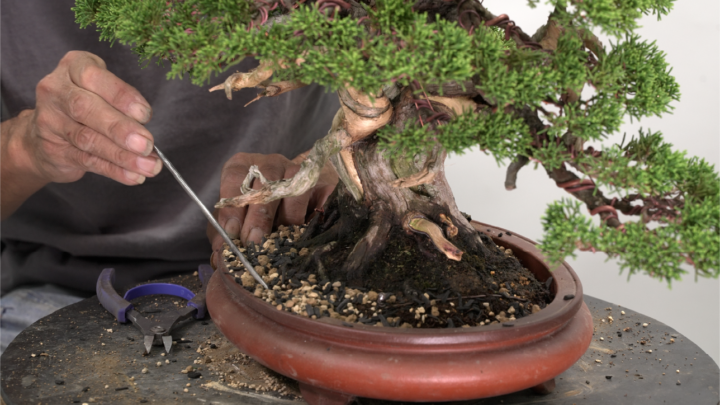
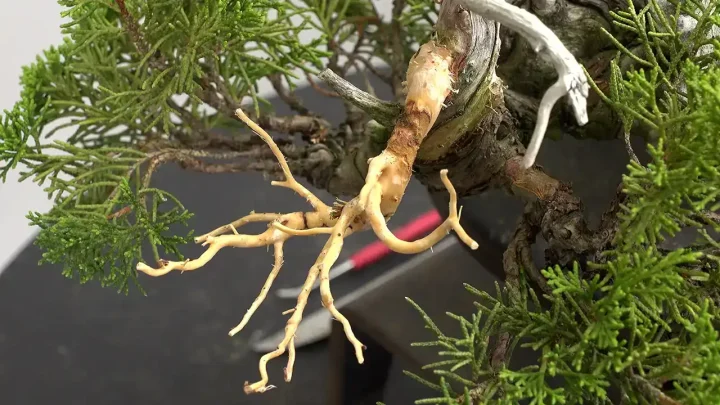
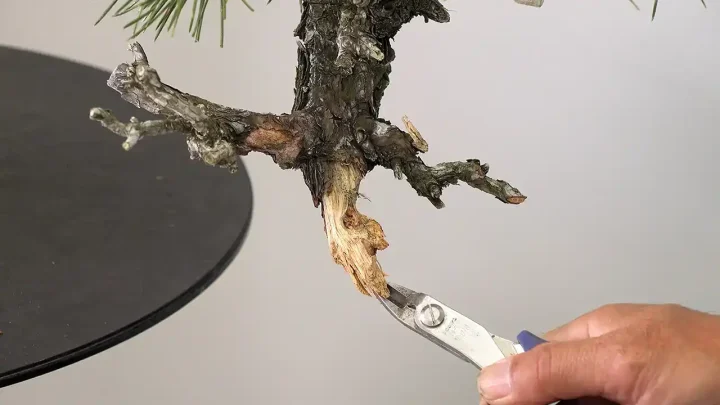
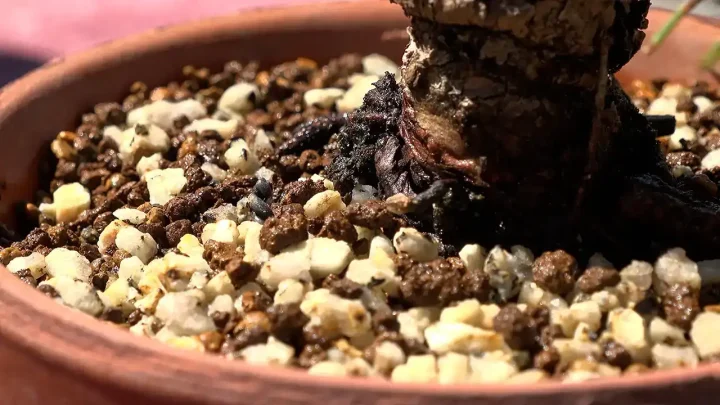
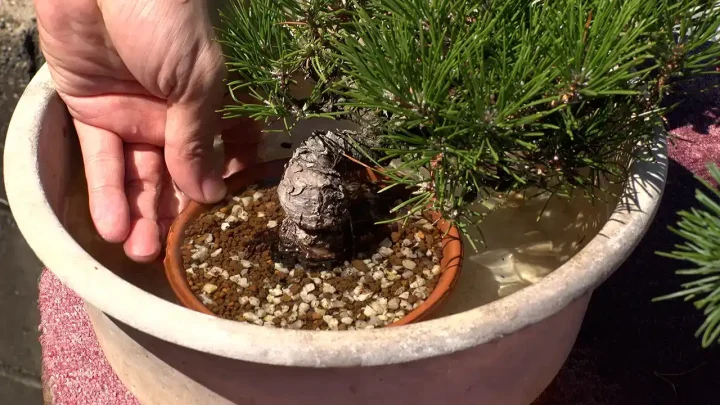
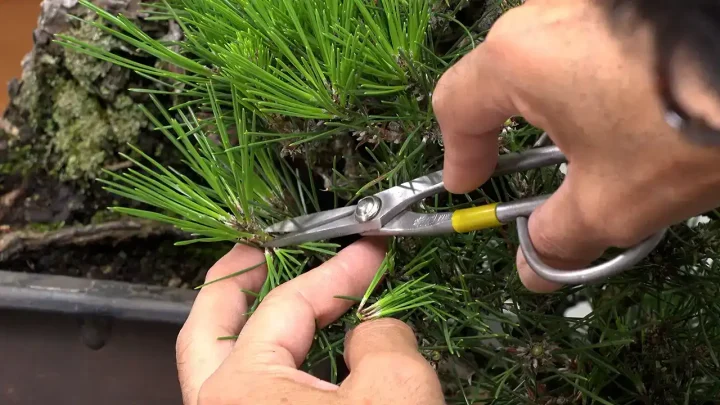
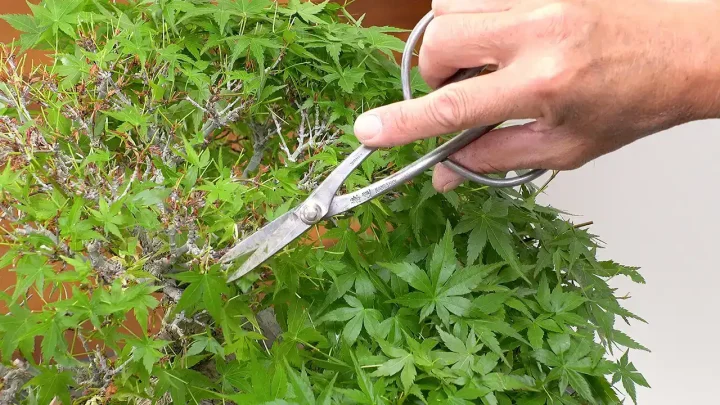
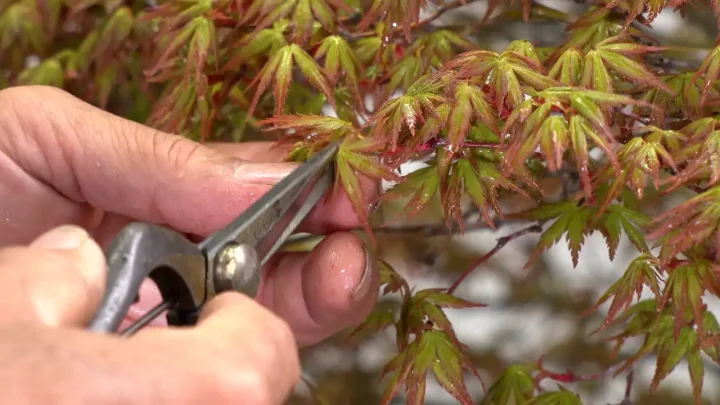
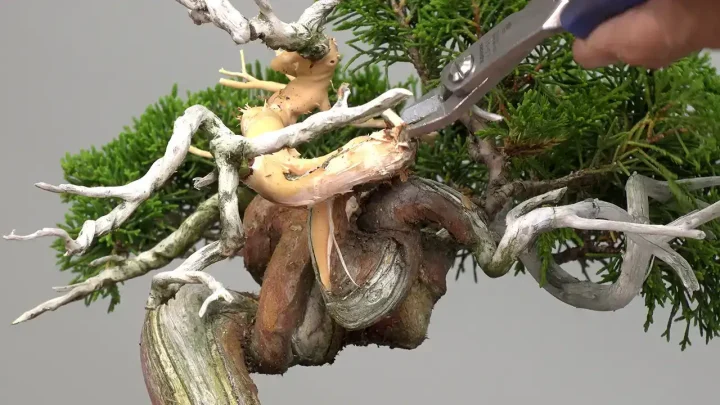
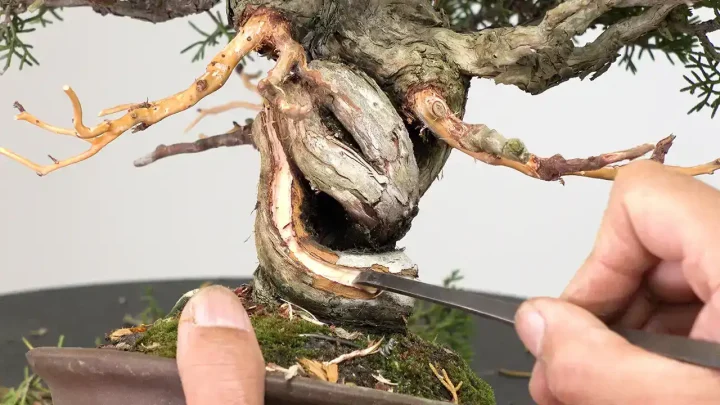
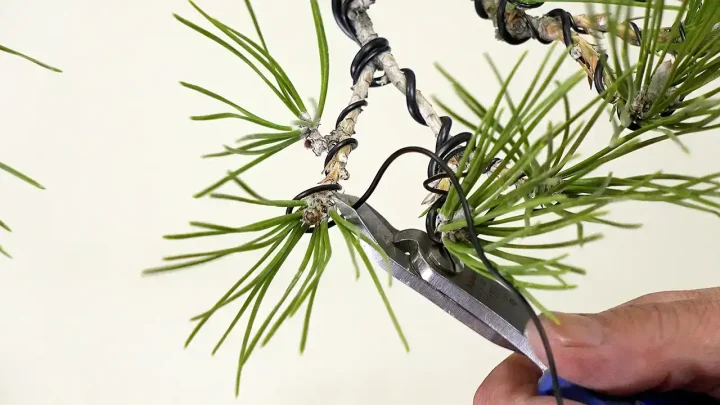
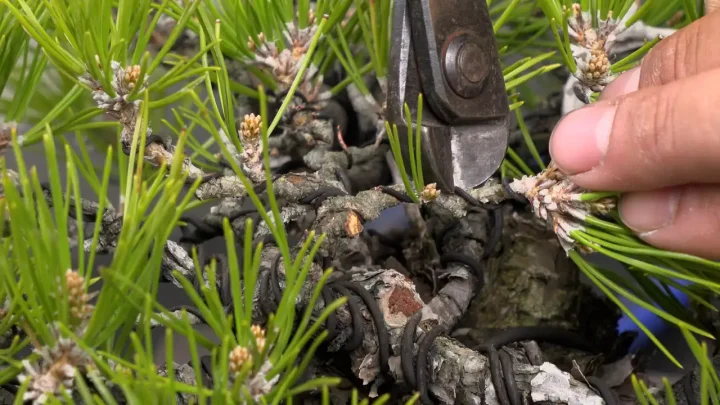
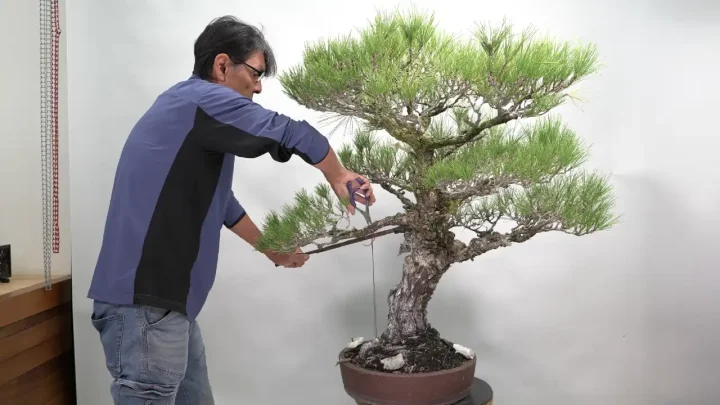
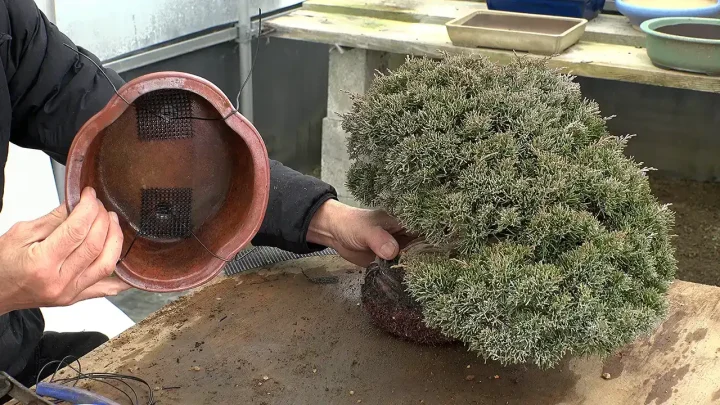
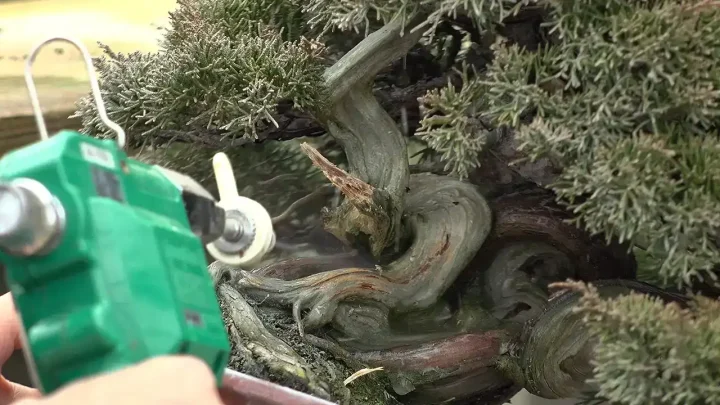
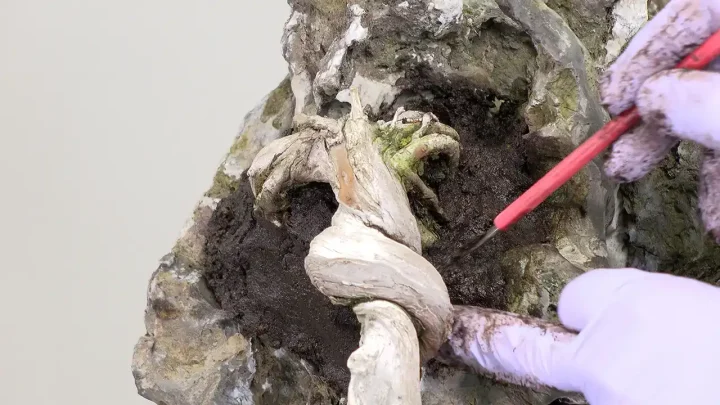
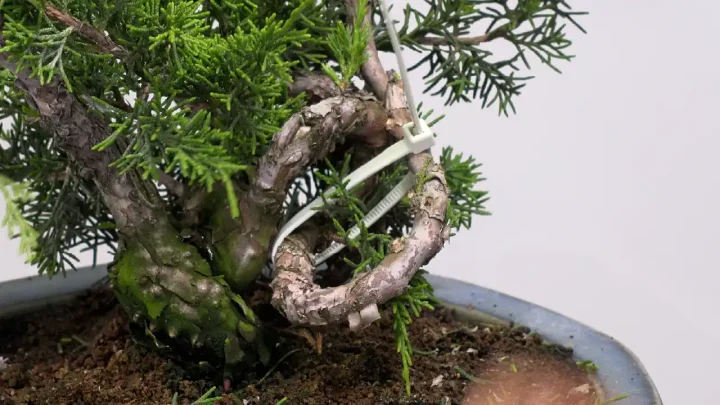
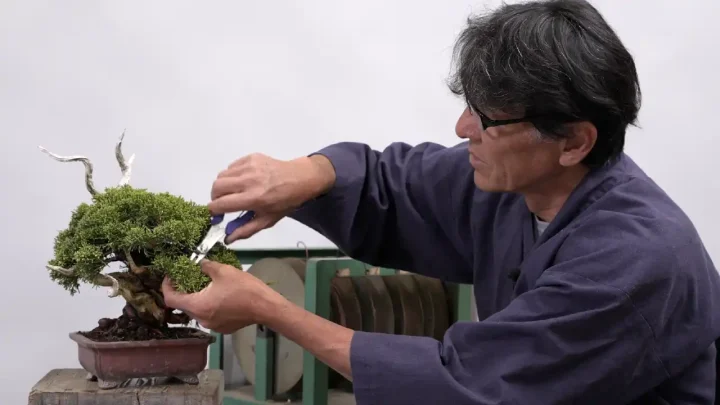
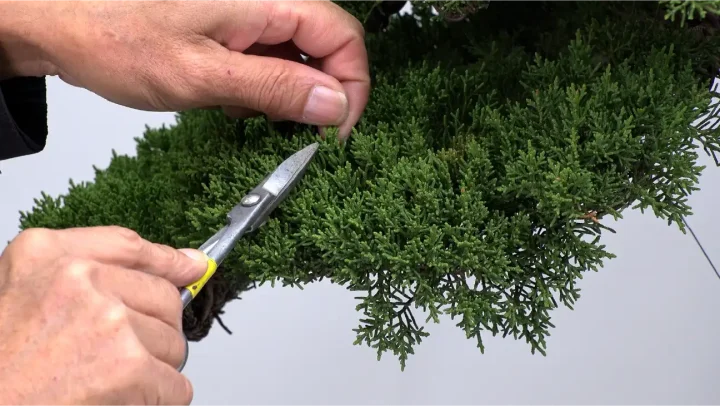
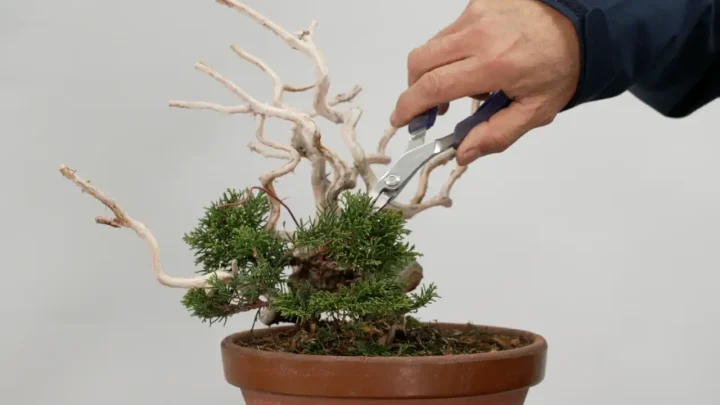
Work slowly from the outside, moving top to bottom. Even when the roots are tangled, do not pull by force. Because the timing is less than ideal, take more care than usual and tease them apart gently. When cutting, the sharpness of the blade shapes the tree's ability to recover — seen that way, choosing your scissors is already part of the work itself.
Be decisive when tidying the Bottom Roots. But protect the surrounding roots. Moving with clear priorities matters especially when working outside the ideal season.
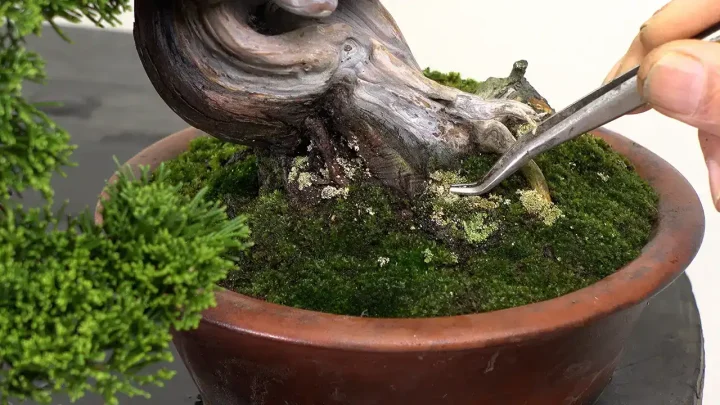
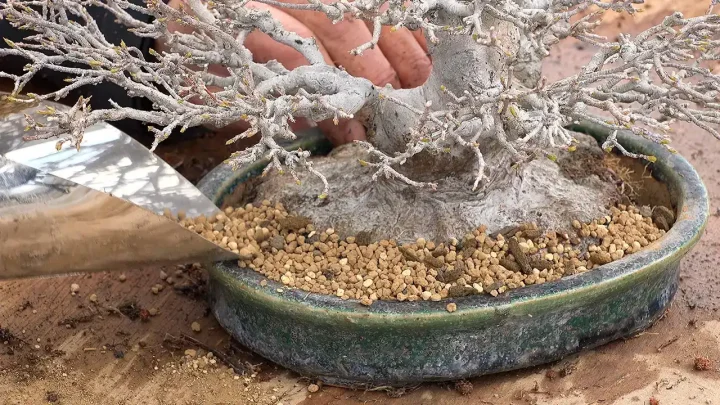
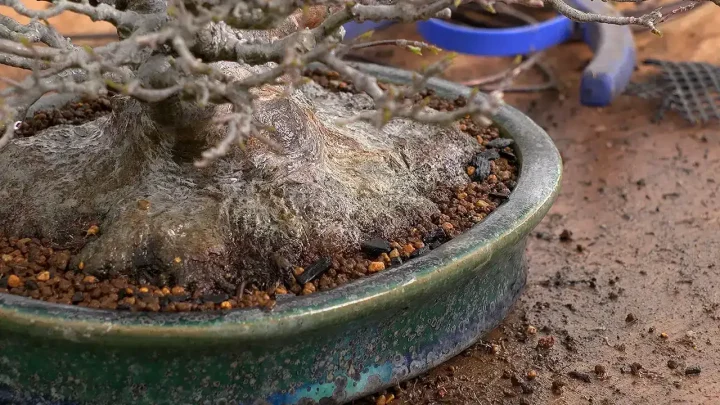
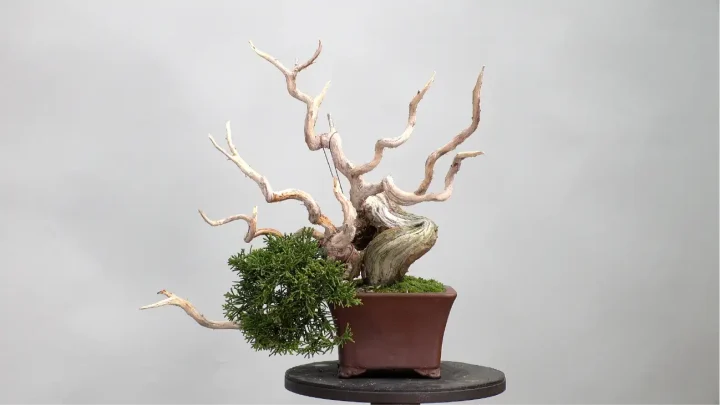
Planting toward the right side of the pot creates open space ahead of the leftward flow. That space allows the tree's movement to breathe.
Leaving room reveals things that crowding conceals. Negative space may not be decoration at all — it may simply be the passage through which the tree finds its voice.
The round pot was chosen because it made this Shimpaku Juniper look its largest. When the display ends, the tree goes back to its original pot and rests under the protection of the greenhouse. The pot is a temporary garment; the tree goes on.
Even so — for the sake of that one day — the roots are worked, the angle is set, and the soil is packed with care. Preparing for an exhibition, I think, is simply a way of spending your time like that.
The journey of "Master: “Fune”" begins with member registration.
Begin the Journey