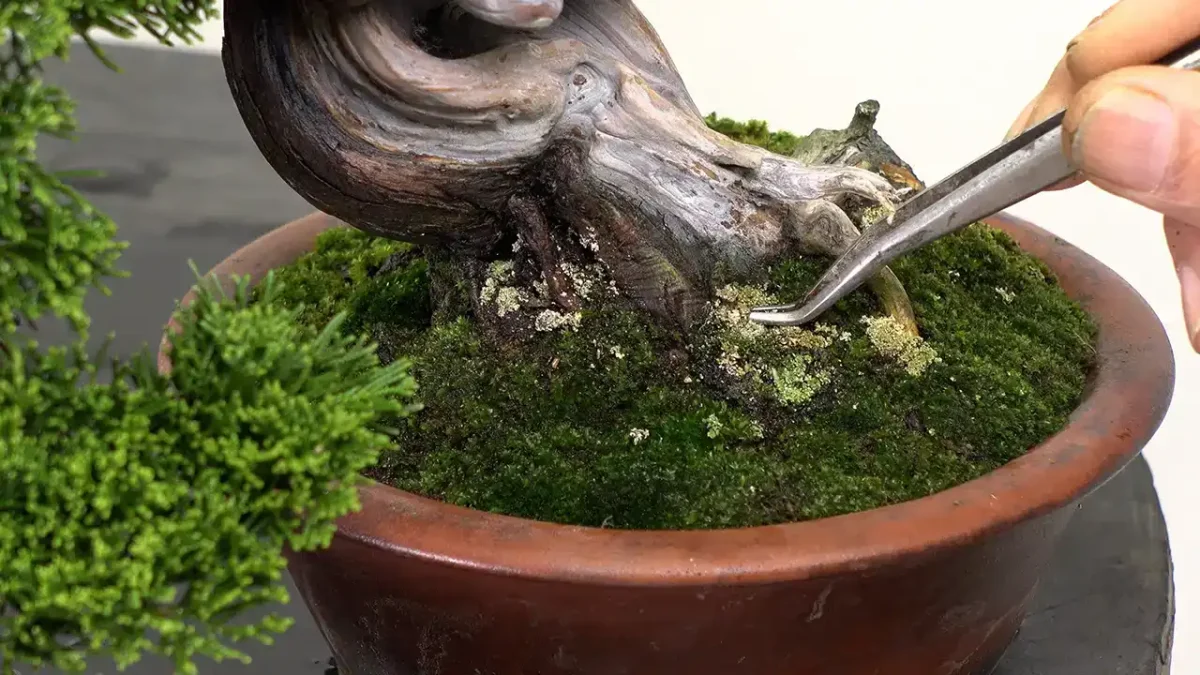
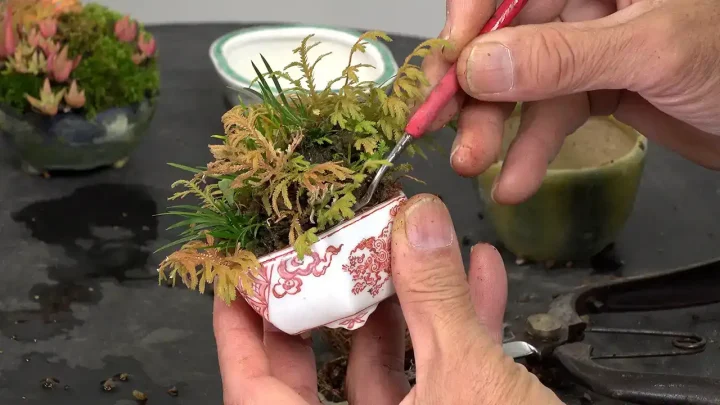
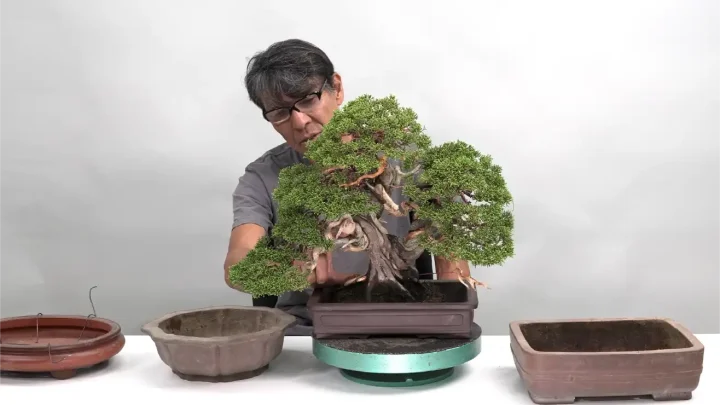
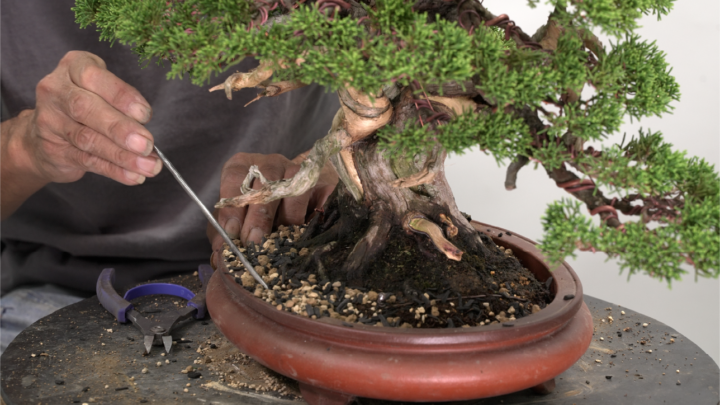
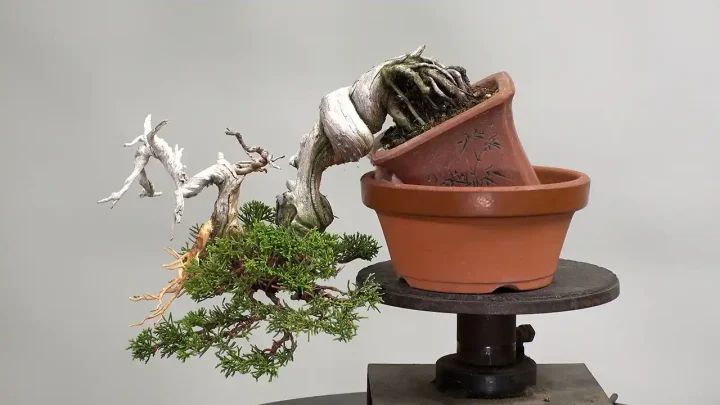
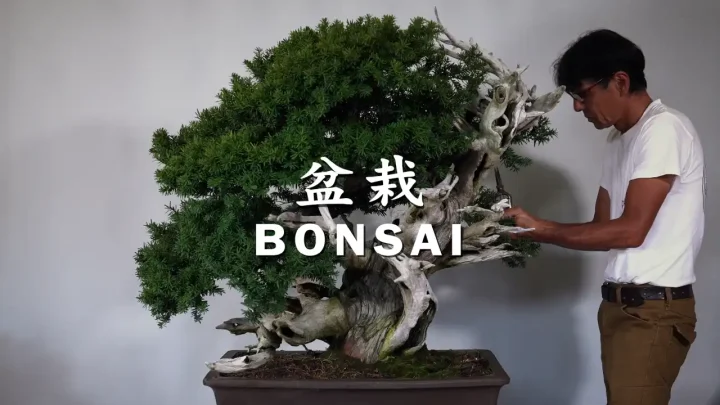
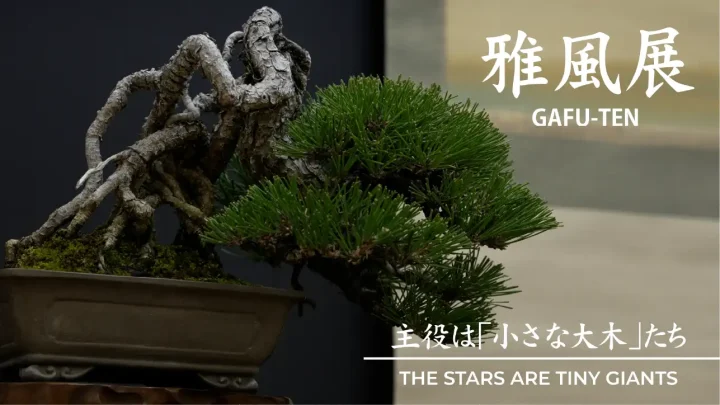
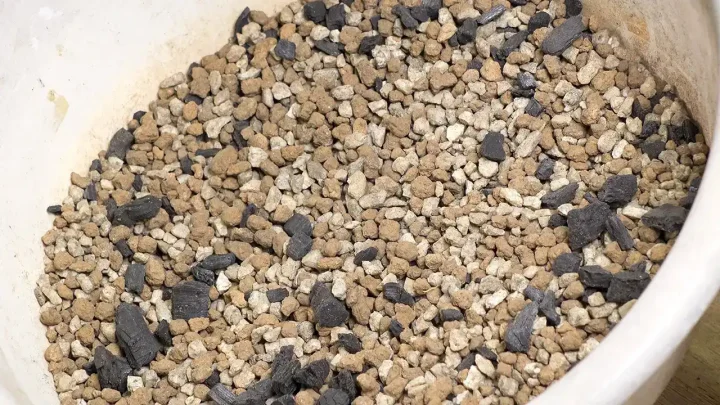
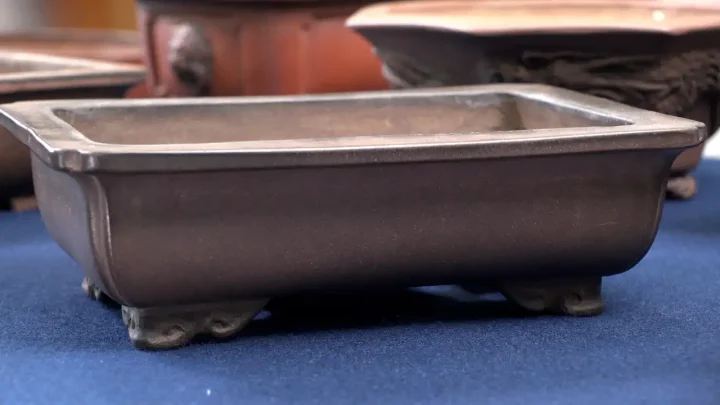
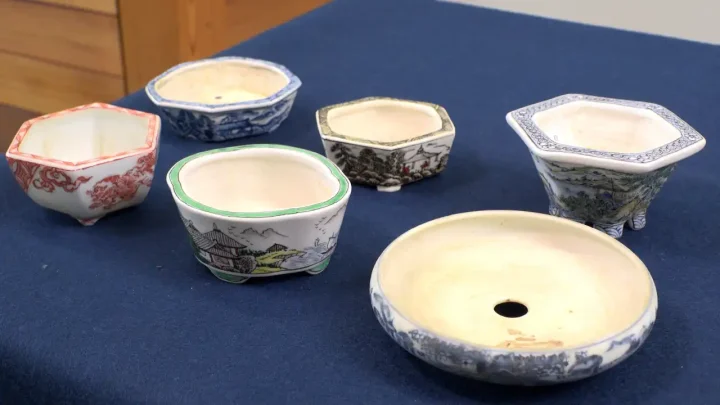
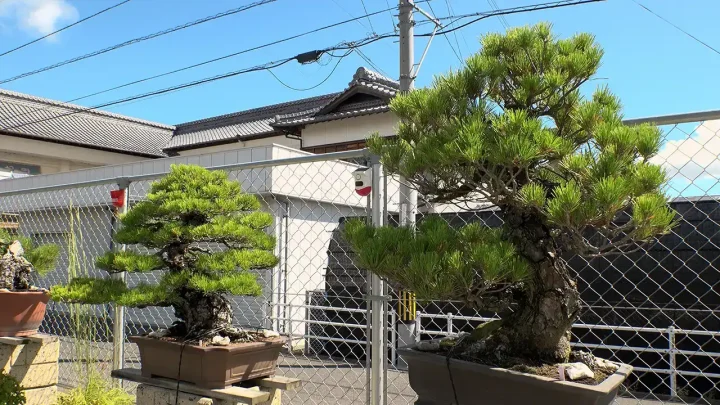
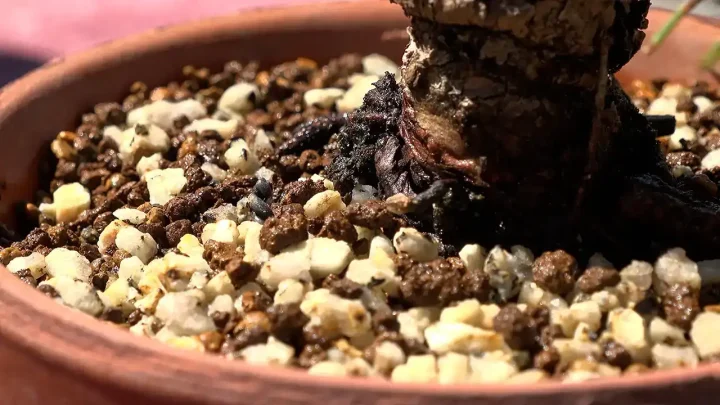
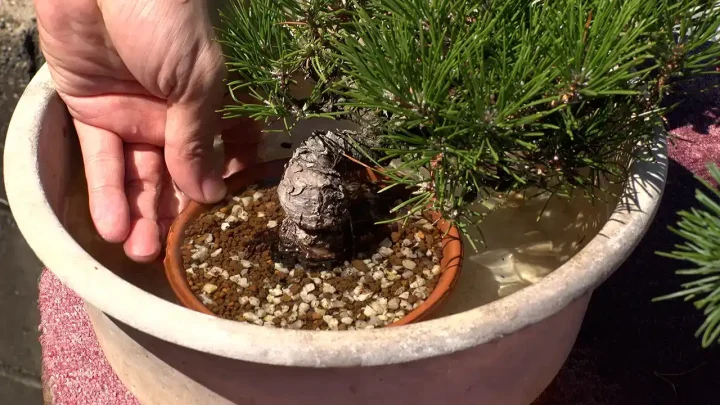
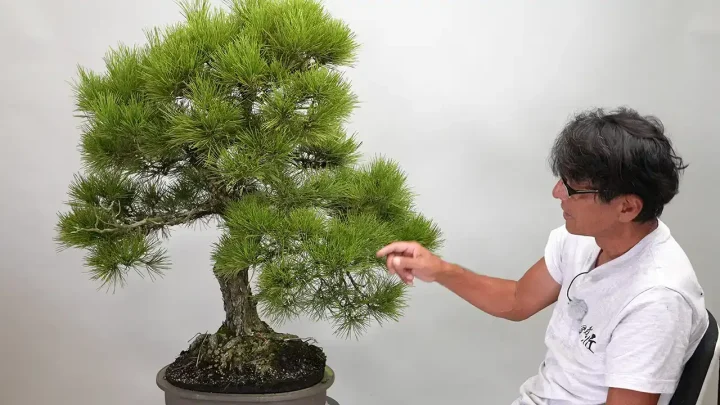
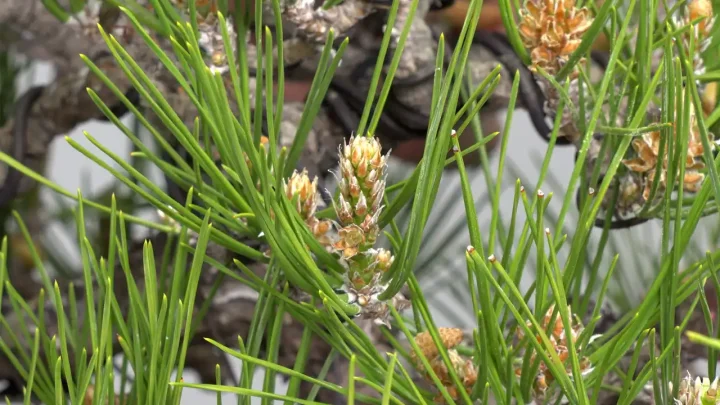
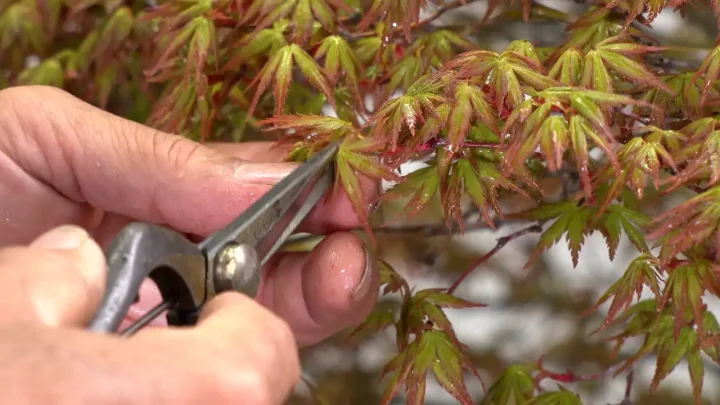
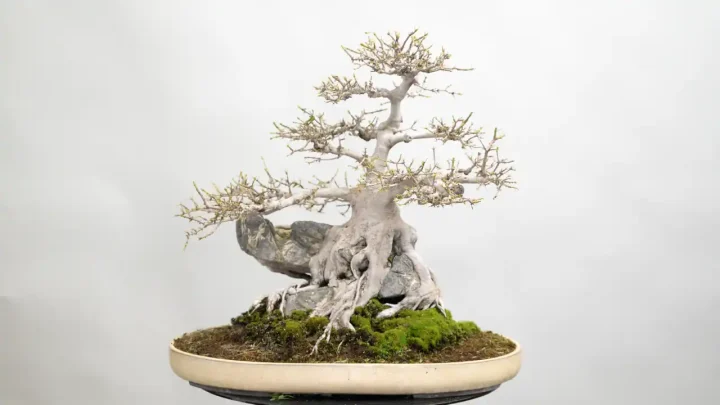
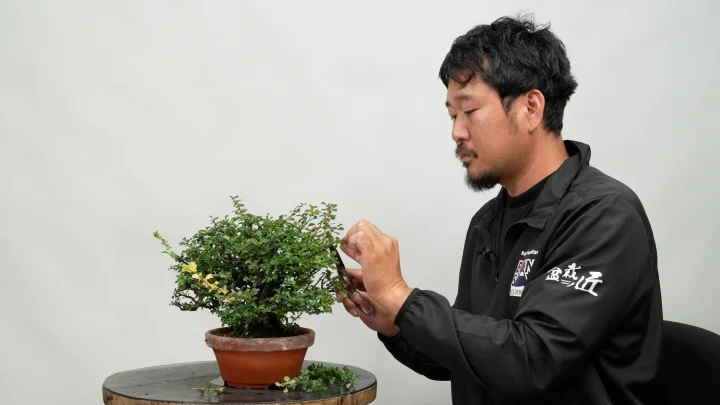
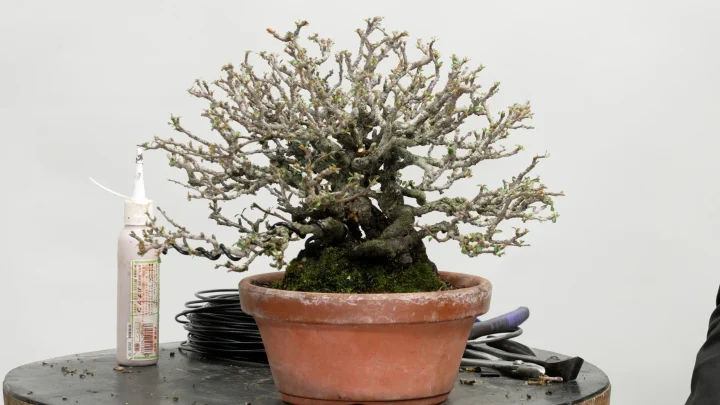
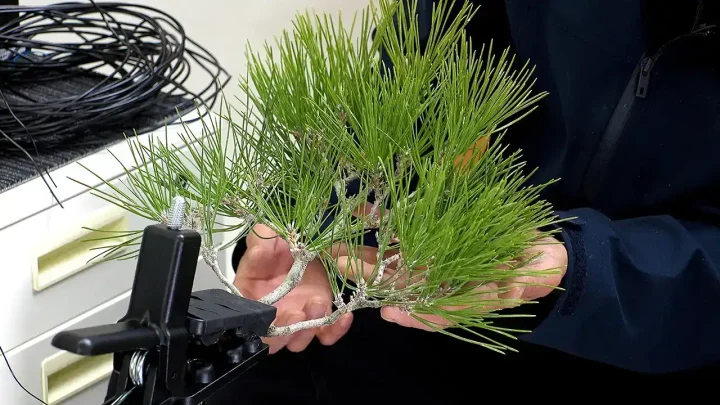
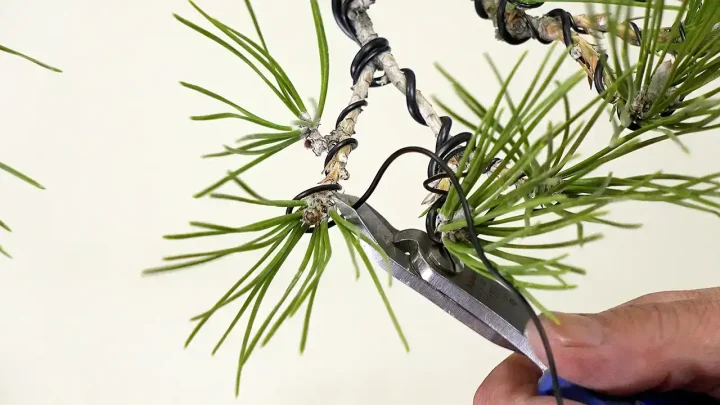
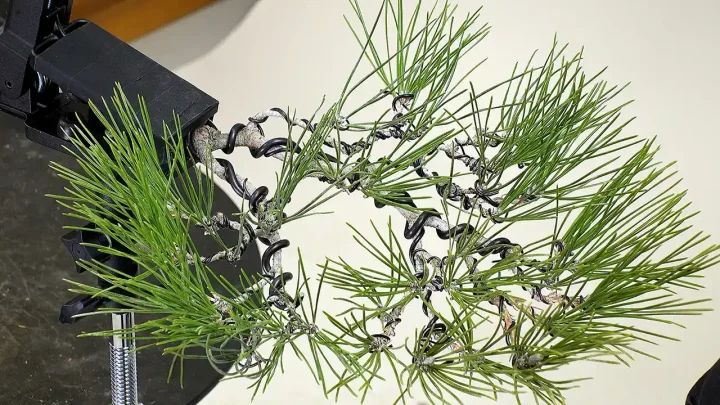
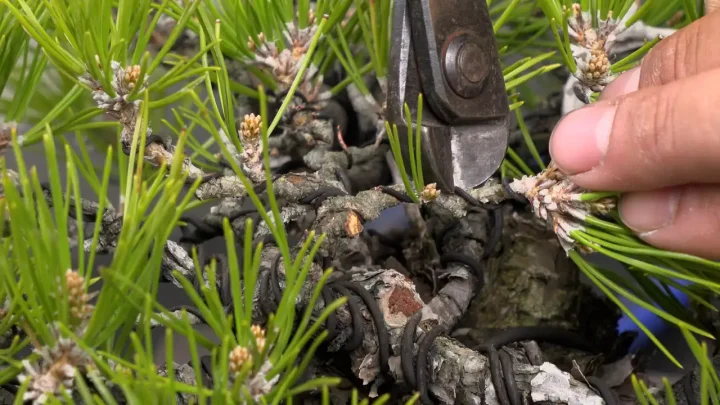
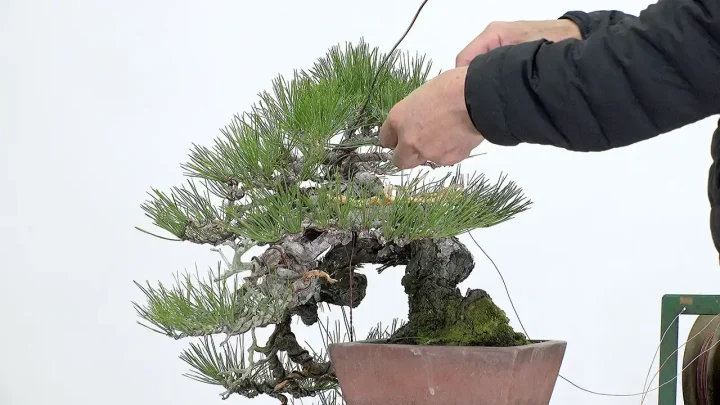
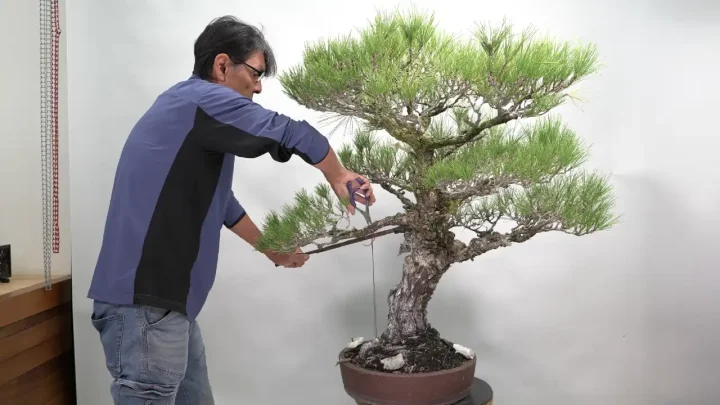
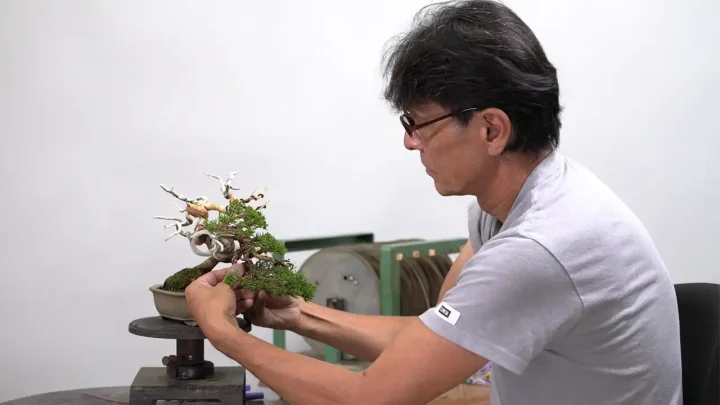
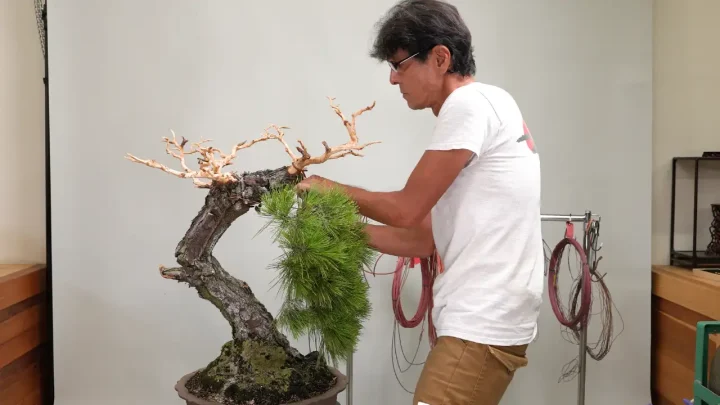
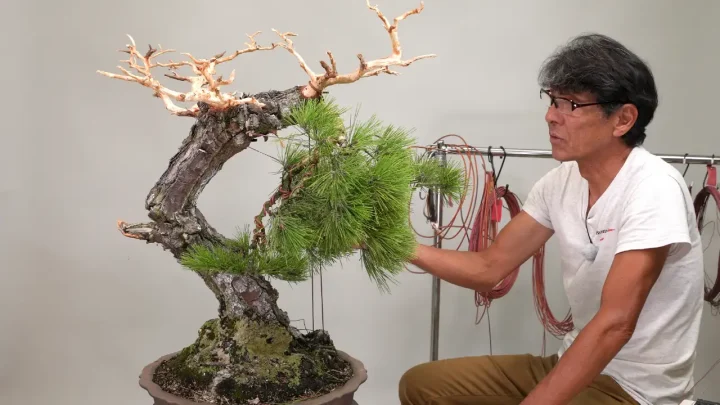
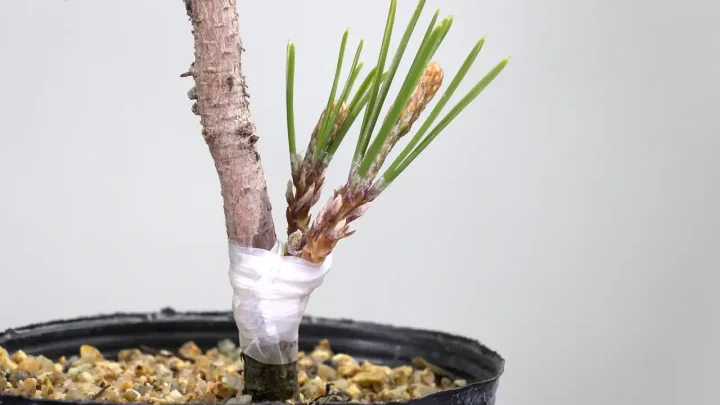
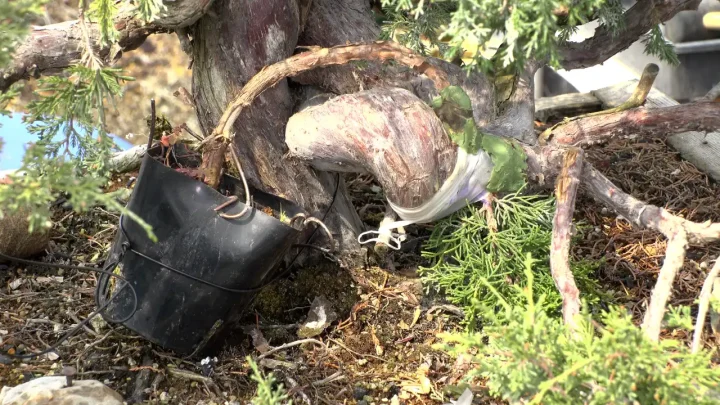
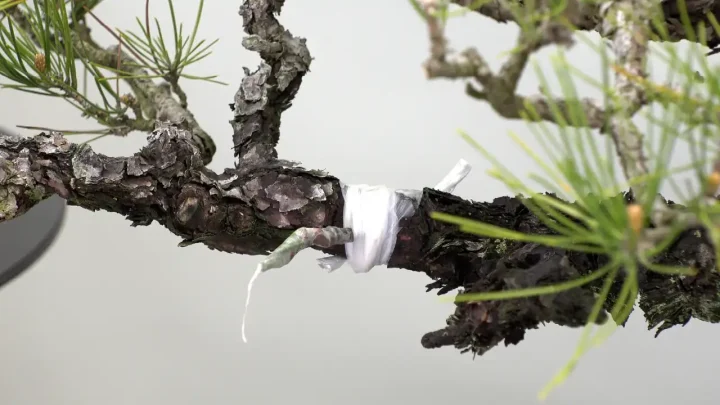
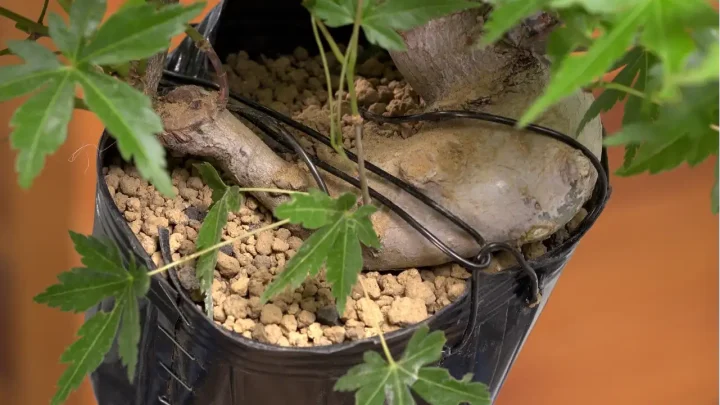
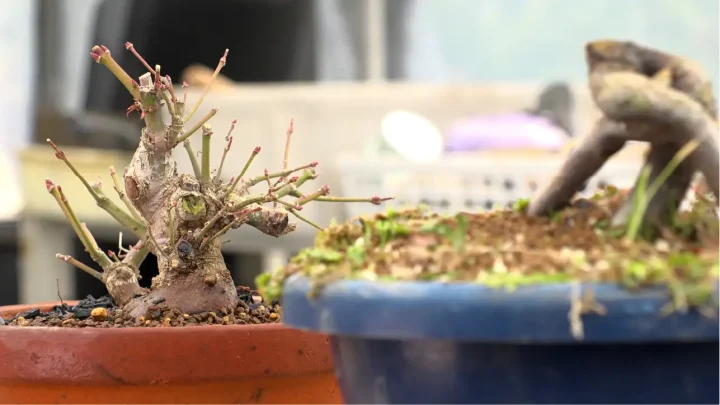
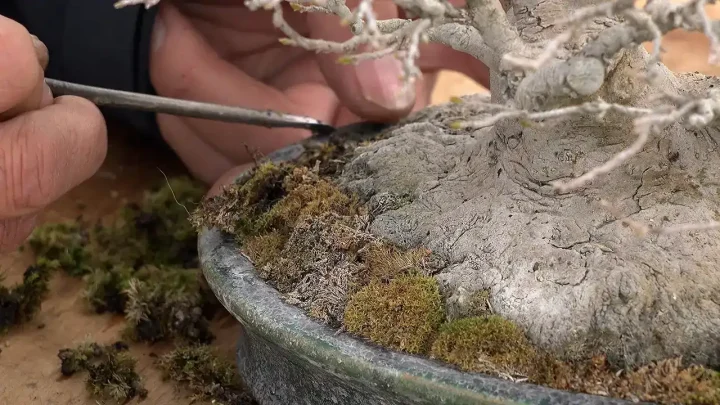
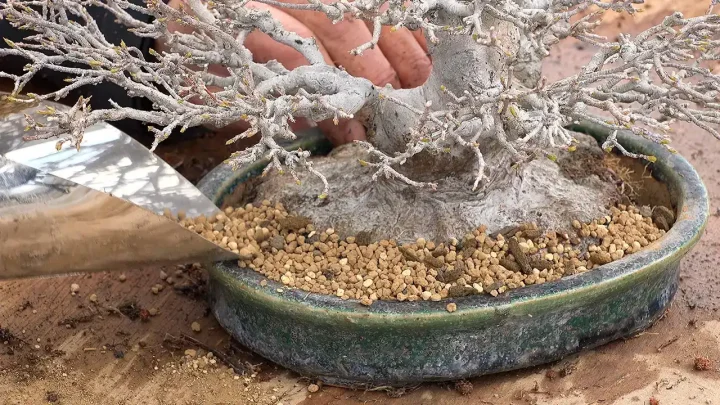
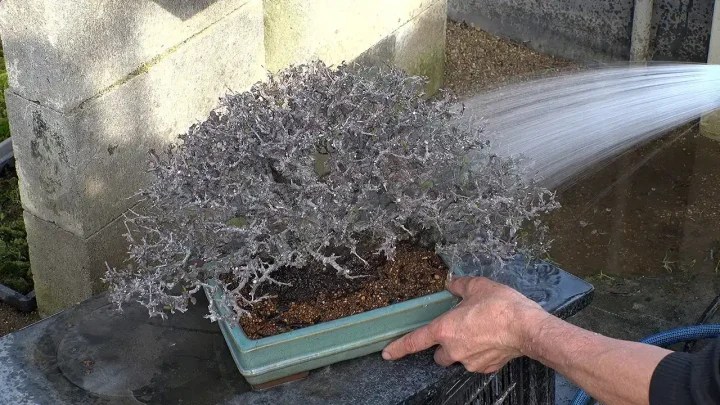
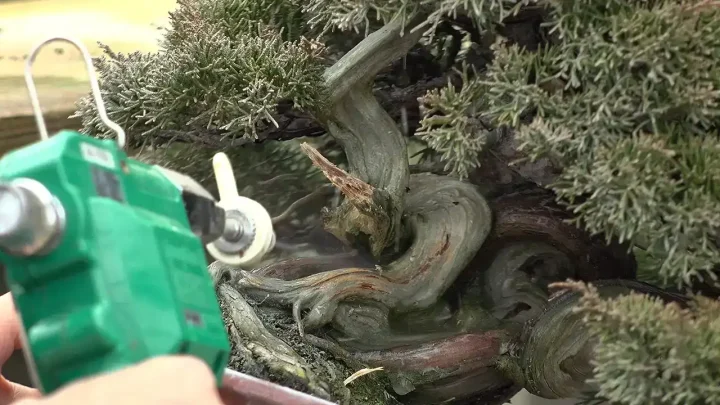
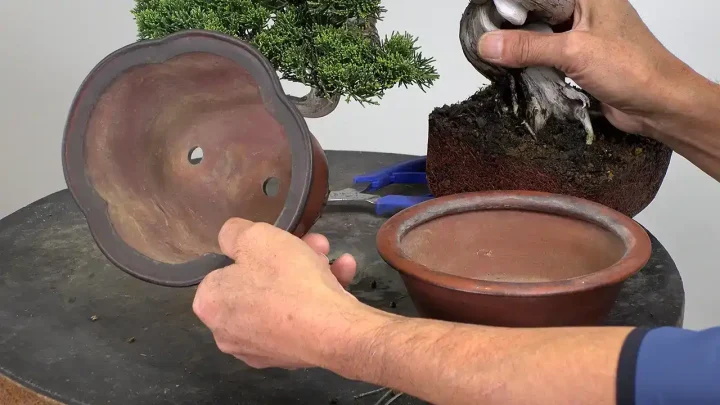
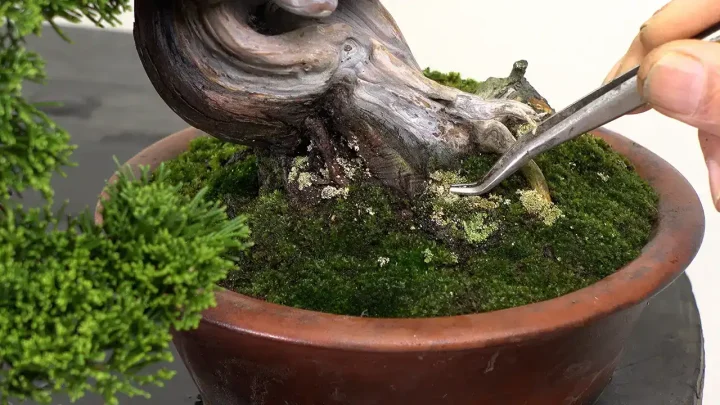
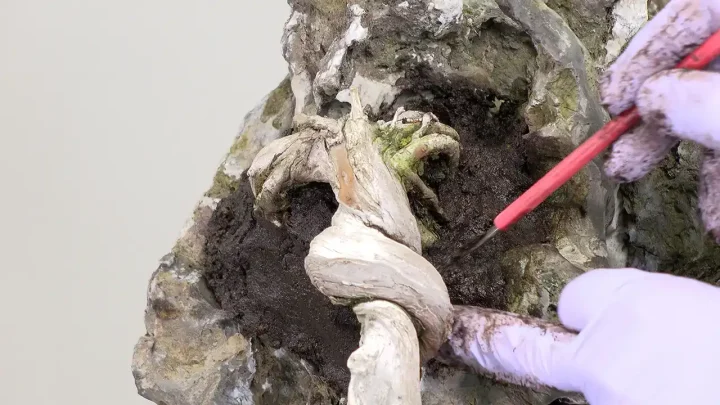
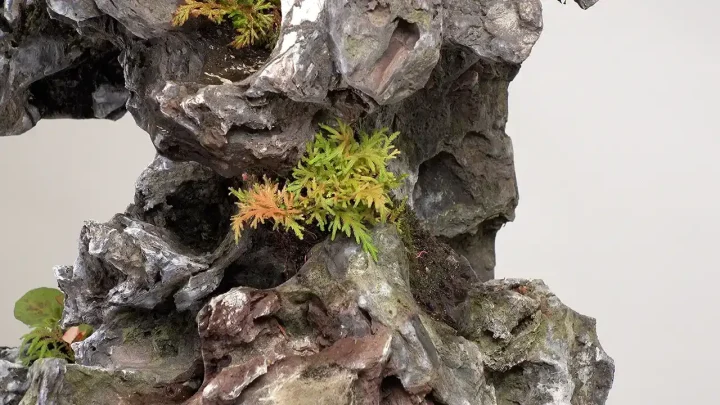
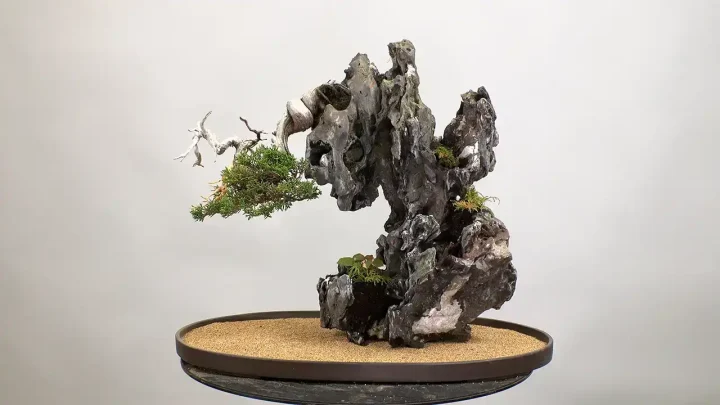
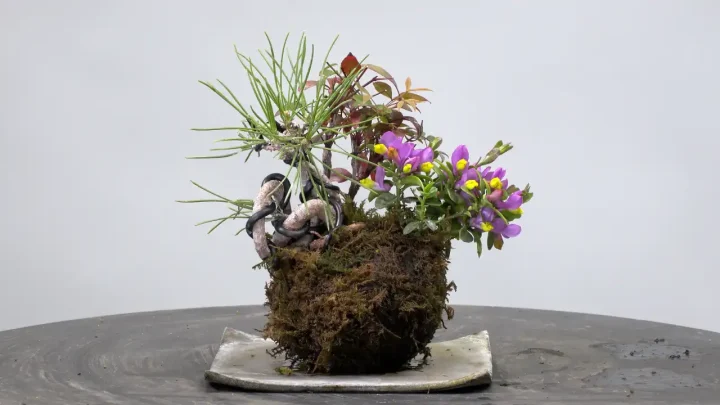
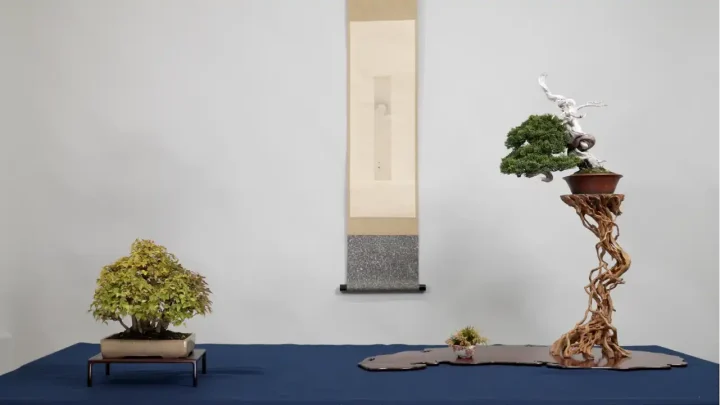
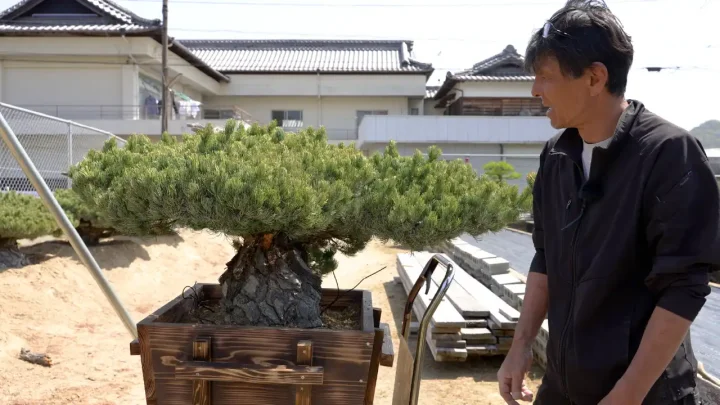
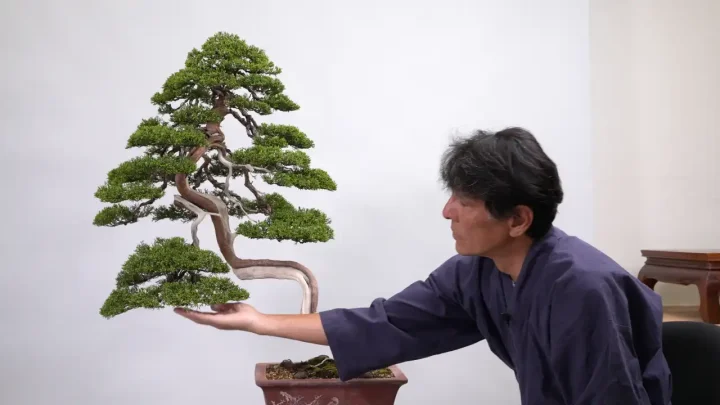
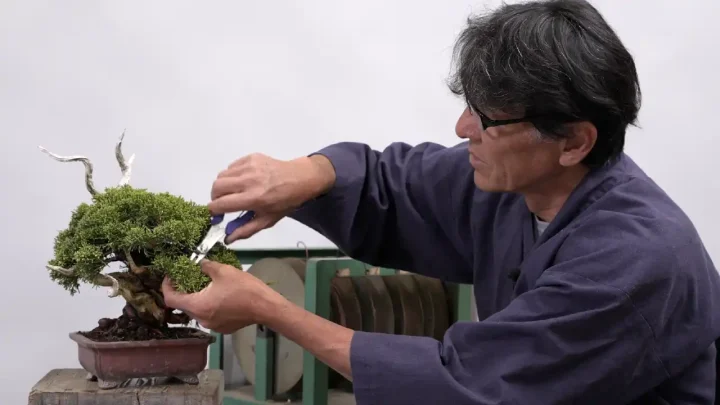
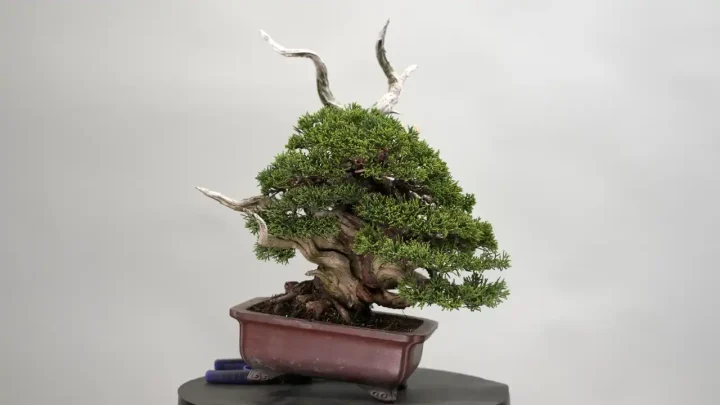
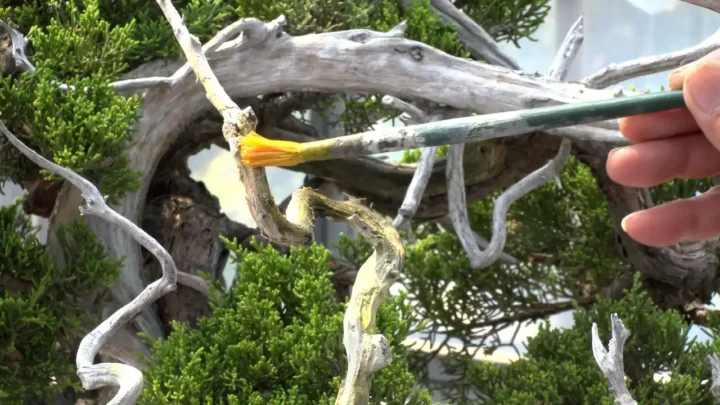
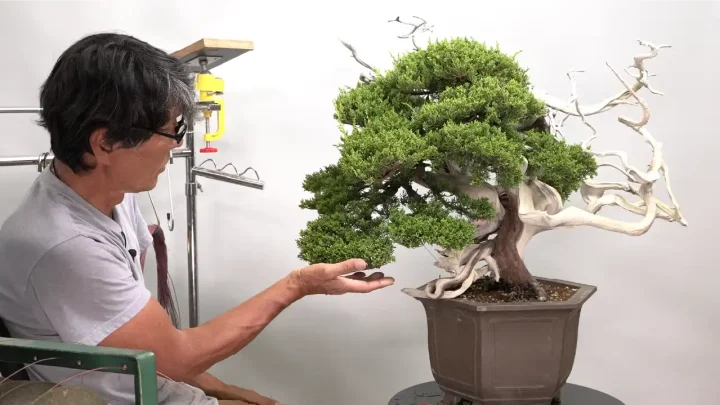
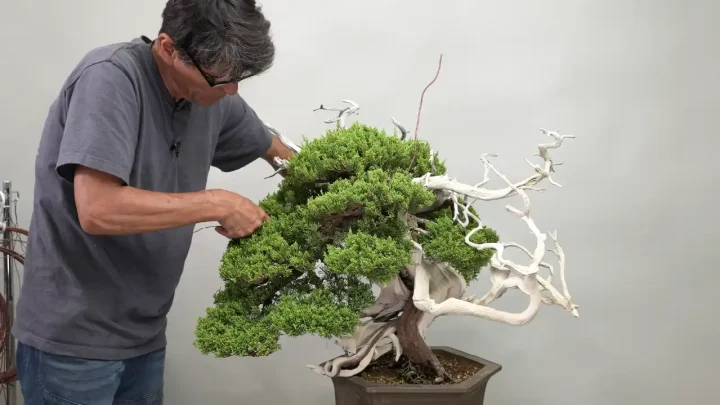
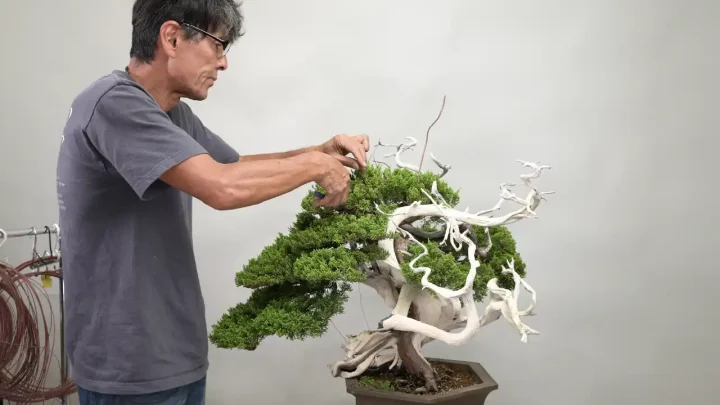
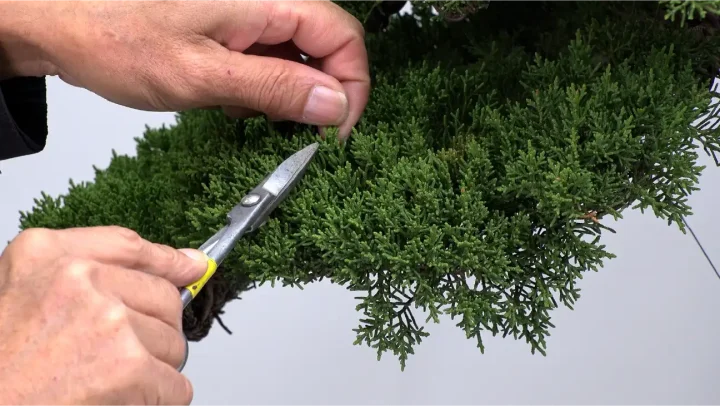
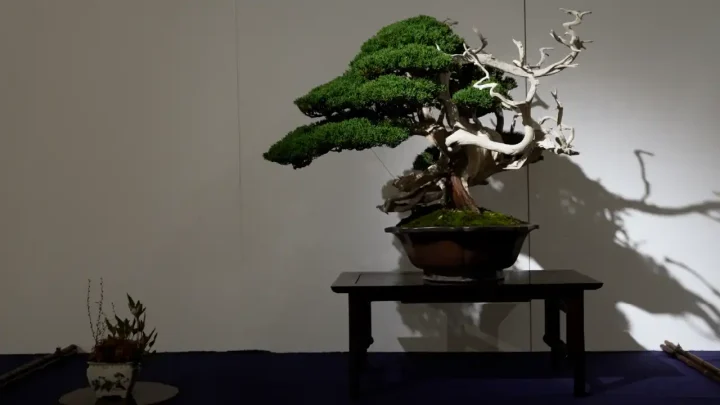
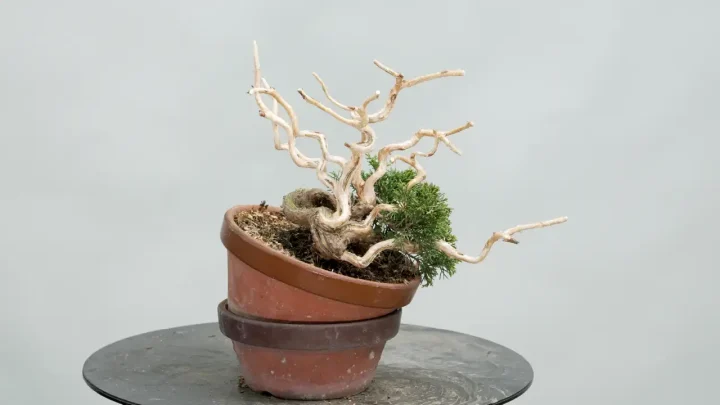
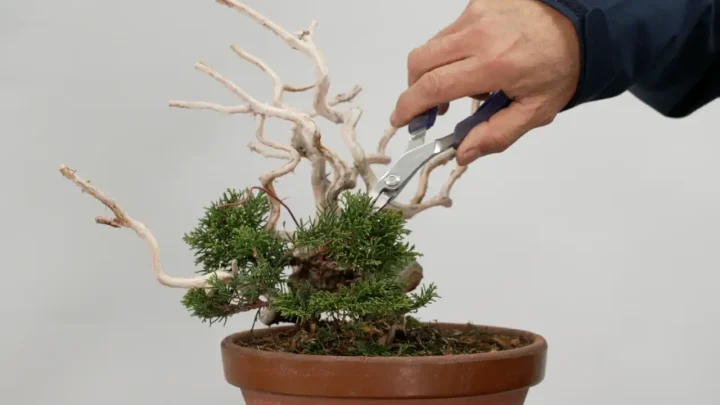
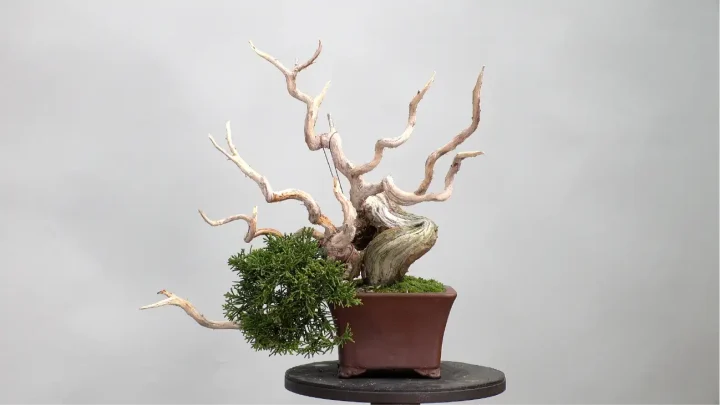
Moss Application on a Shohin Bonsai before an exhibition. Pieces of color-matched moss are arranged like a puzzle from the rim of the pot inward, while pale Sun Moss is gently placed at the base — together, they recreate the natural ground. Two weeks remain until the exhibition. The time needed to settle is also part of the preparation.
Before an exhibition, there is the work of Moss Application. If you think of it simply as covering the pot's surface with green, the result ends up feeling artificial. What is really being asked here is to reproduce the natural ground exactly as it is.
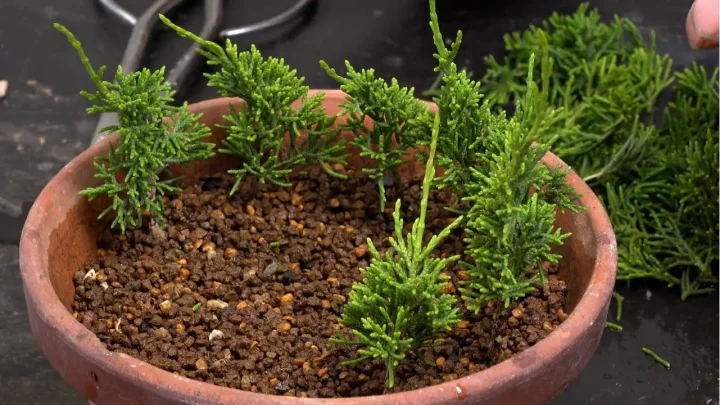
We use moss gathered about a month beforehand, with its tones carefully matched. Starting from the front, small pieces are arranged like a puzzle along the rim of the pot. Each piece is placed with a slight overlap so the seams are as invisible as possible, then pressed gently with the pad of a finger to settle it into the soil. Repeating this, we work our way toward the base of the tree.
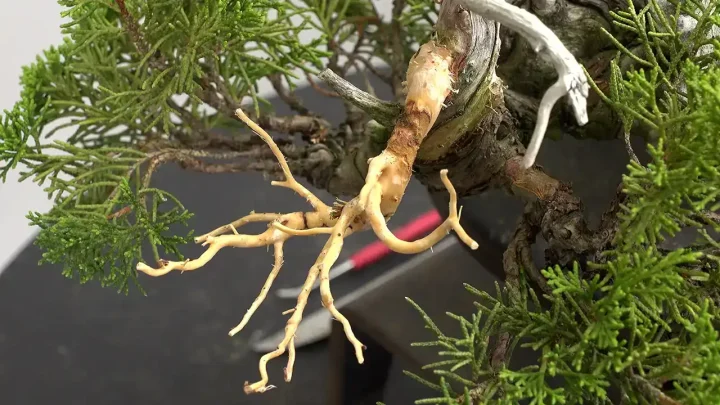
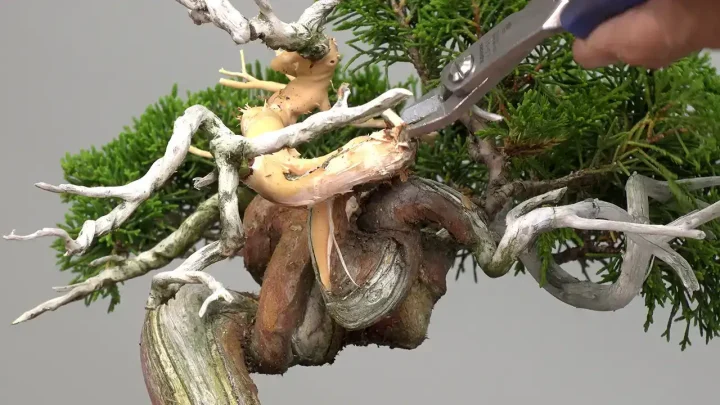
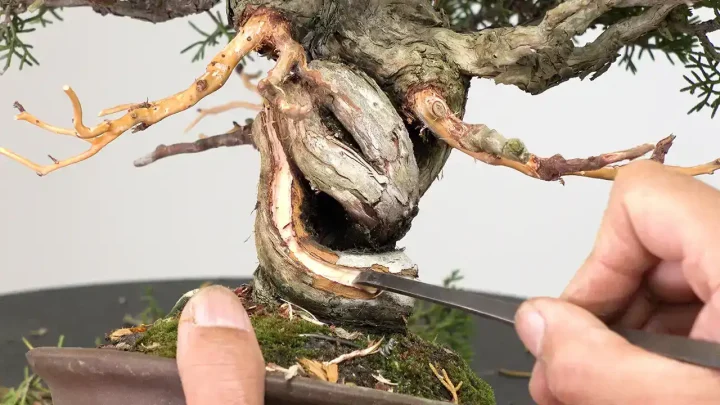
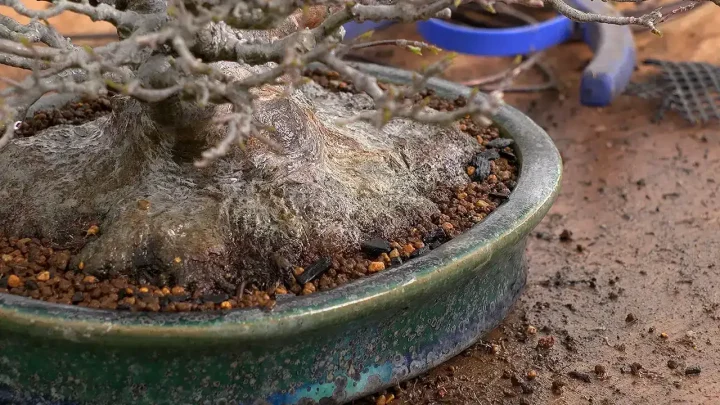
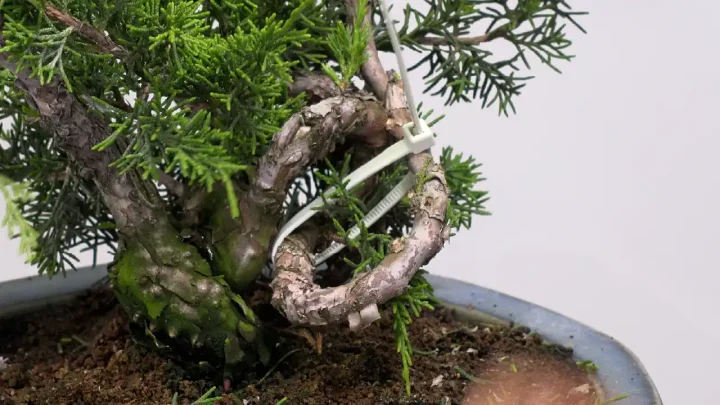
For Shohin Bonsai, small and fine moss is the right choice. Larger moss sits out of scale and floats. Creating a miniature of nature within the world of the pot — that perspective lives even in how a single piece of moss is chosen. Around exposed Surface Roots, moss is carefully tucked in to protect them from damage. Shaping and protecting at once.
As a finishing touch, Sun Moss is pressed in close to the base of the trunk. It is a pale, quietly understated moss. Why place it there?
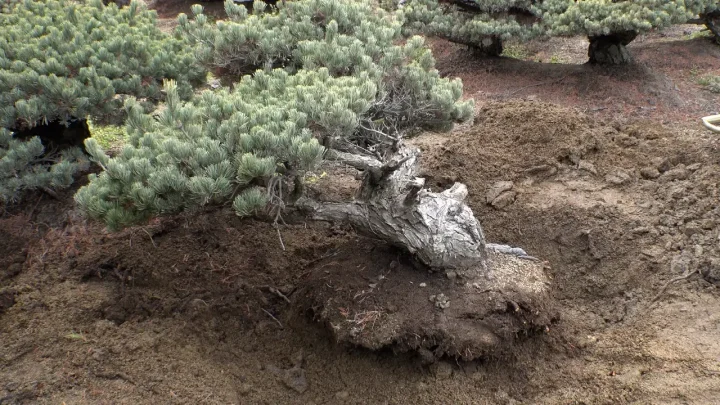
In a well-tended bonsai, Sun Moss naturally grows beside the trunk. That is knowledge born of long observation. It is placed there not for appearance, but because that is where nature puts it. 'Naturalness' does not come from imitating nature, but from faithfully reproducing nature's own logic — that way of thinking rests quietly within this small decision.
As each piece is settled in with a fingertip, the world of the pot gradually grows calm. It feels less like completion, and more like a beginning.
Moss that has just been applied is simply there for now. Its color and texture need time to dissolve into the atmosphere of the pot. That is why we finish two weeks before the exhibition.
Not 'complete it, then show it' — but 'prepare it, including the time needed to settle.' That unhurried attitude breathes through every aspect of bonsai.
After looking over the finished pot, the rest is left to time. That open space, too, is part of preparing for the display.
The journey of "Master: “Fune”" begins with member registration.
Begin the Journey