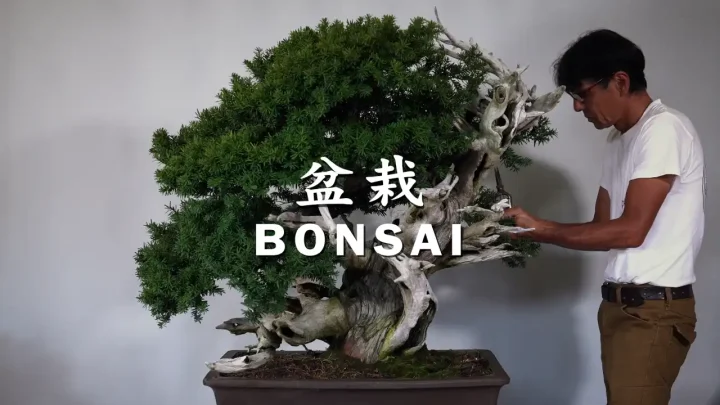
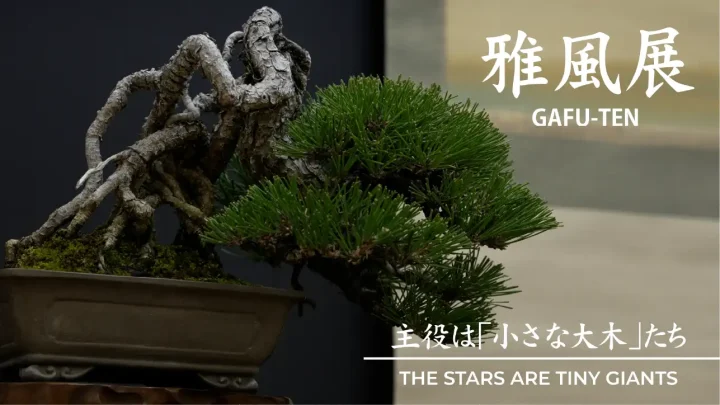
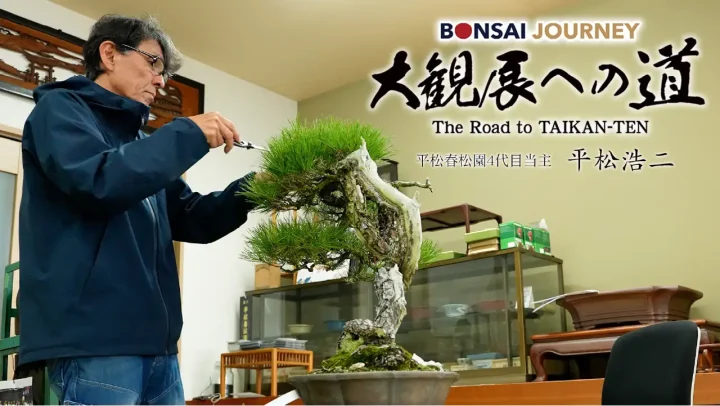
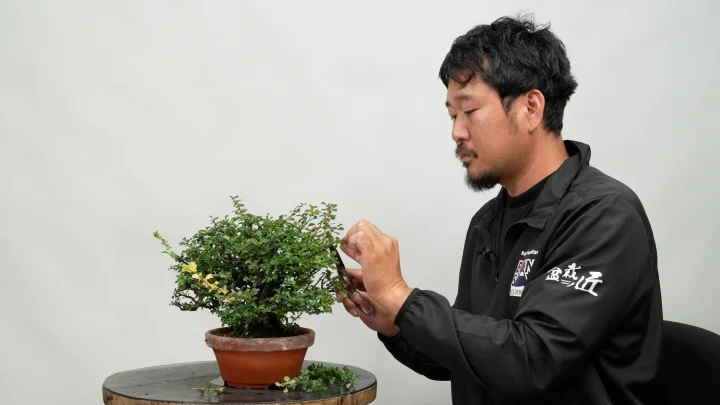
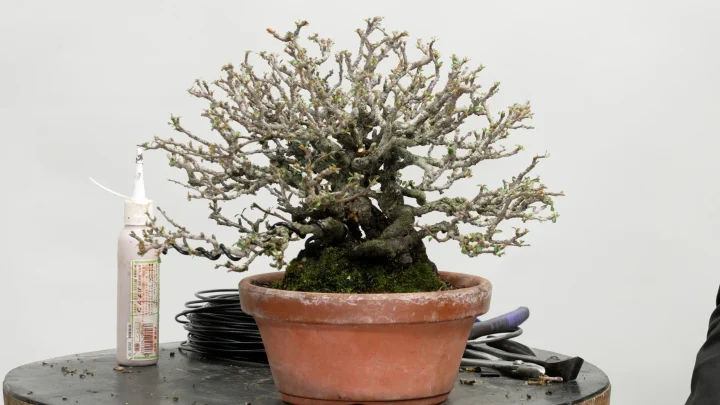
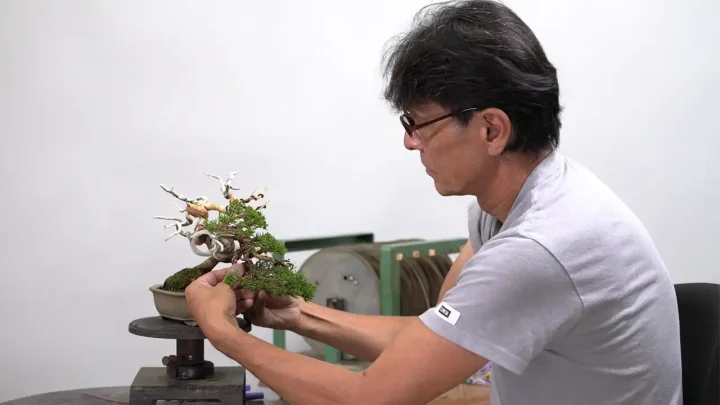
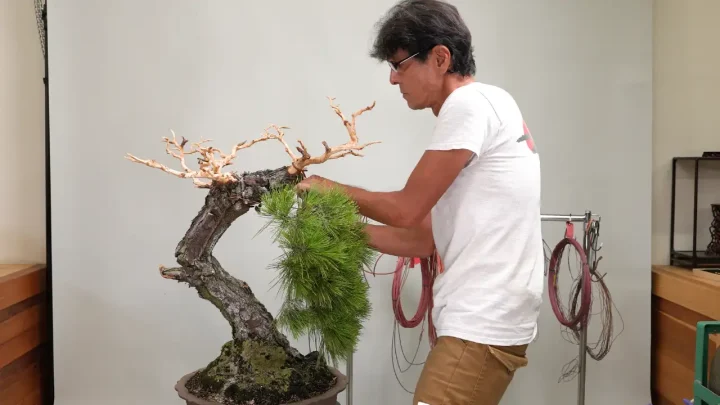
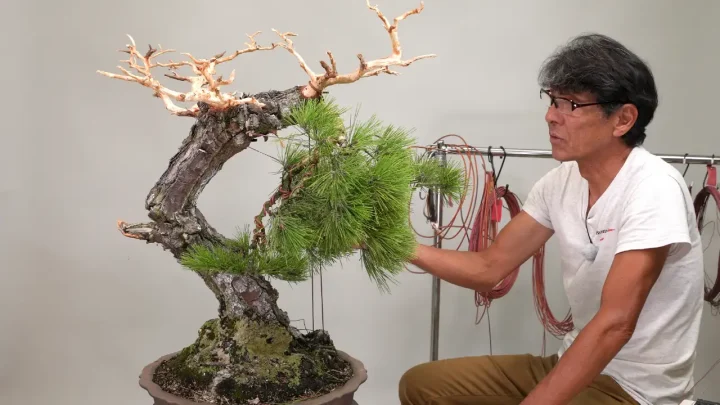
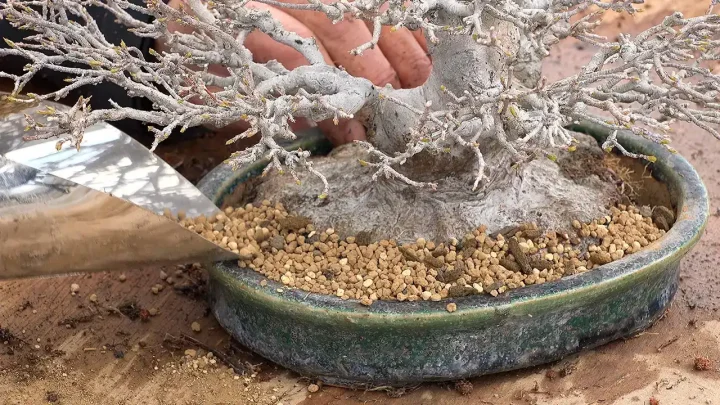
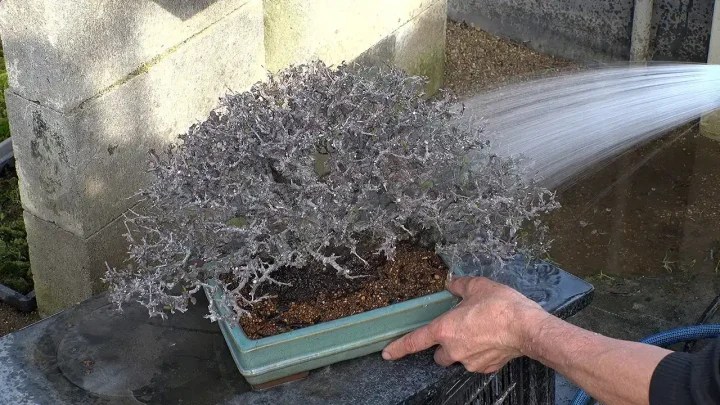
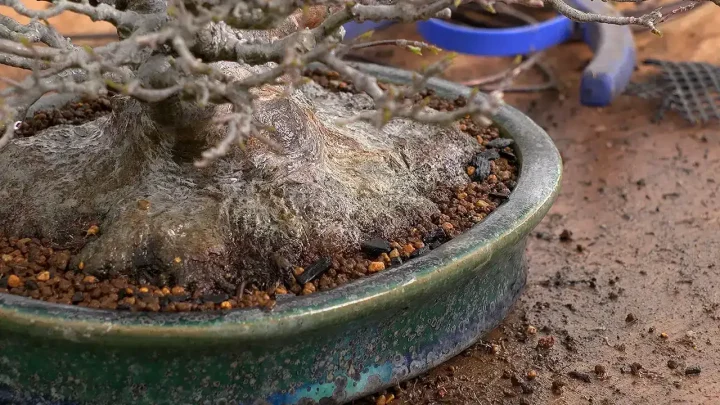
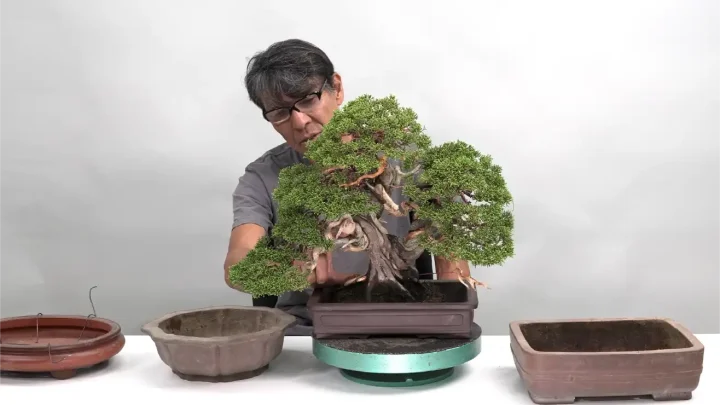
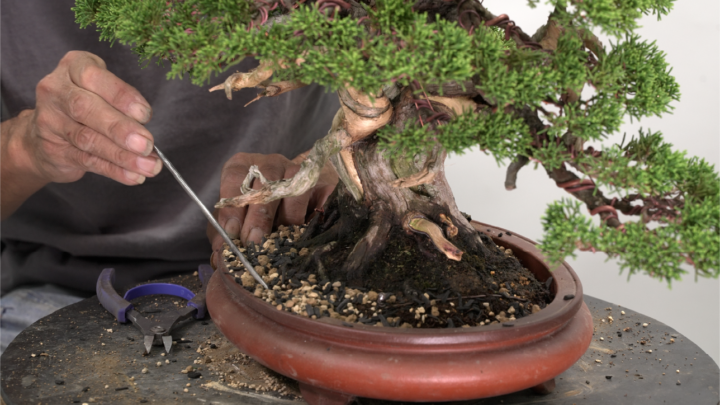
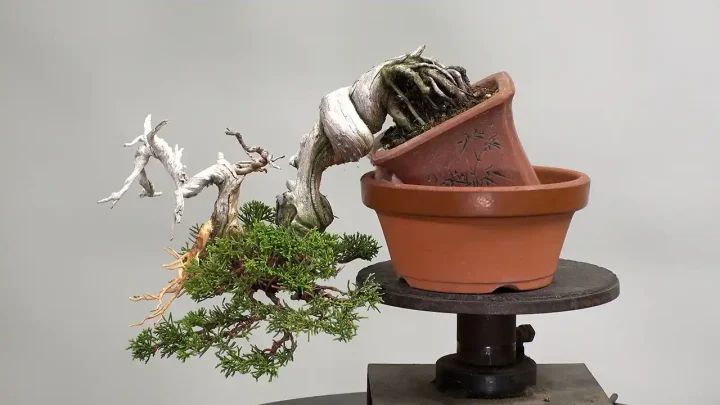
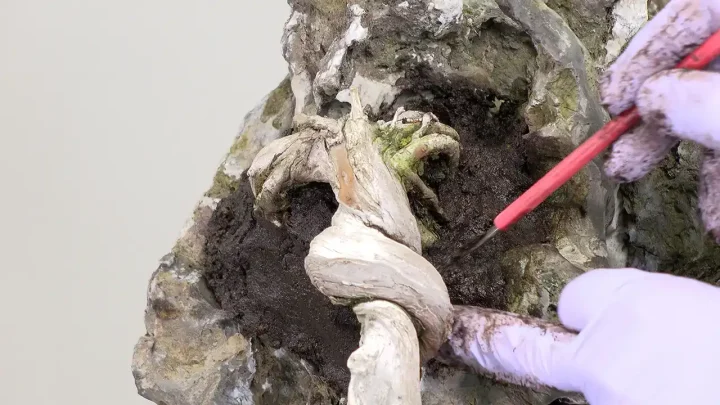
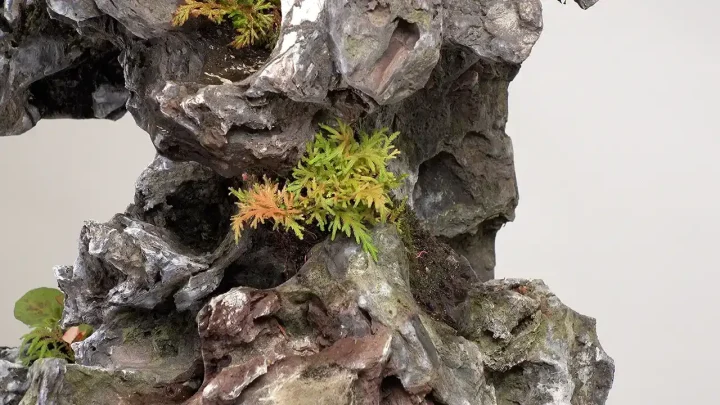
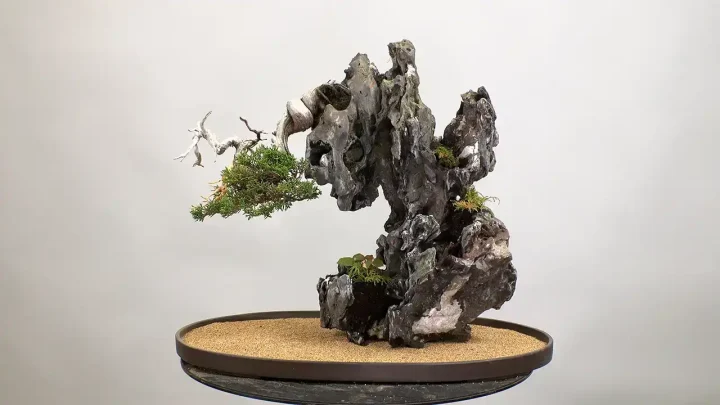
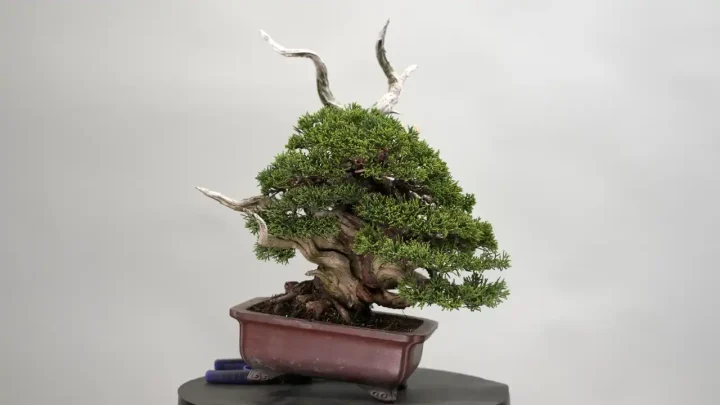
After repotting a Shimpaku juniper into a display pot, the work of shaping the jin begins. Splitting the tips to reveal a natural texture, gauging the right length, adjusting the angle with copper wire—each decision cannot be undone. With an exhibition approaching, the quiet hours of facing the tree continue.
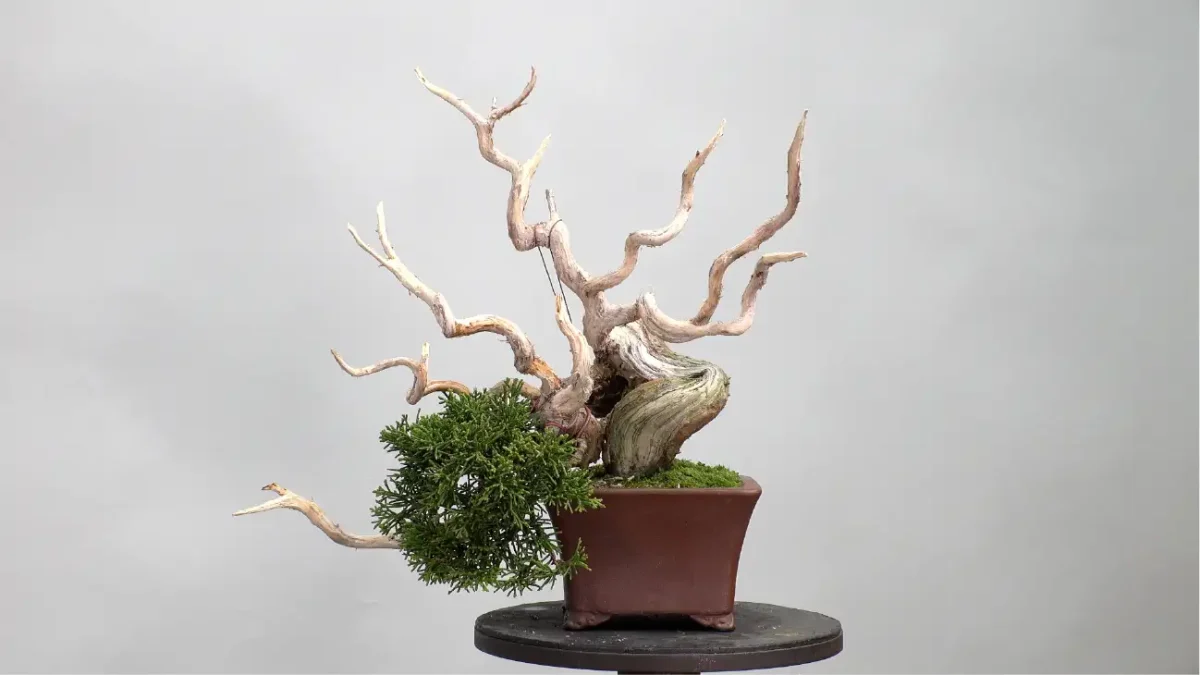
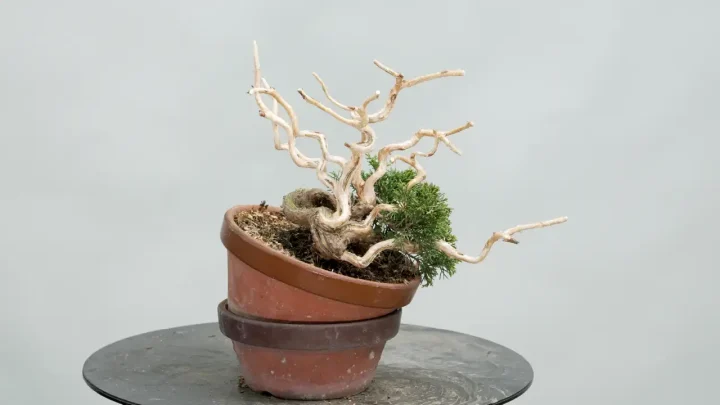
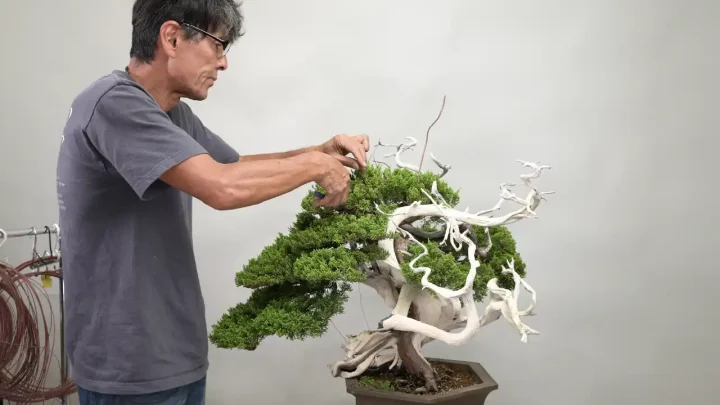
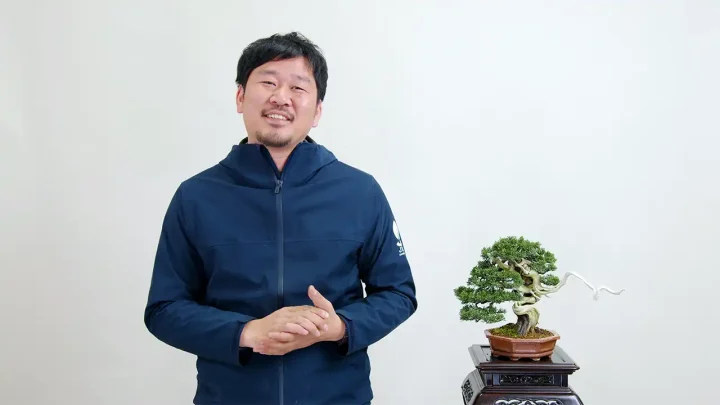
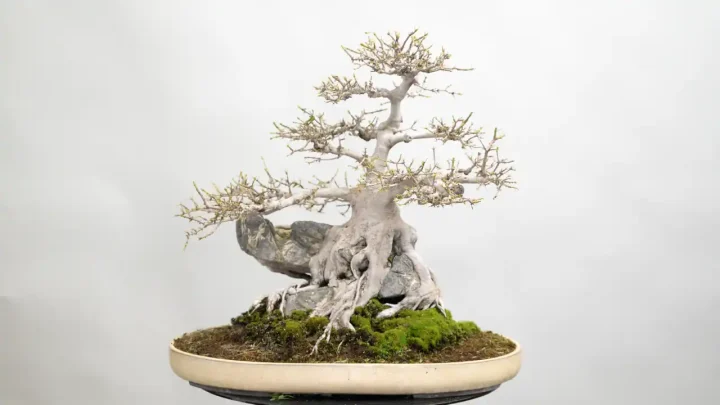
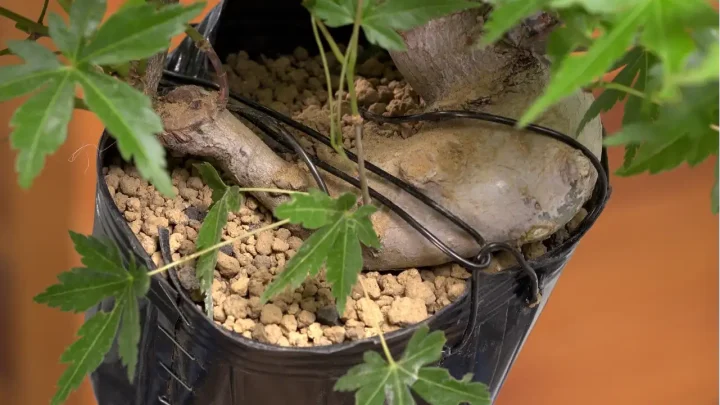
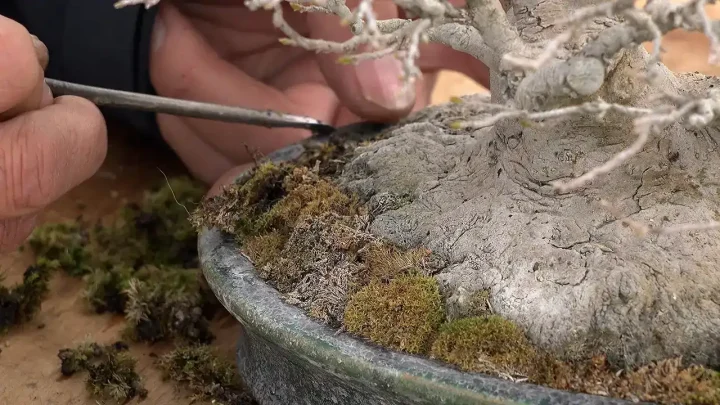
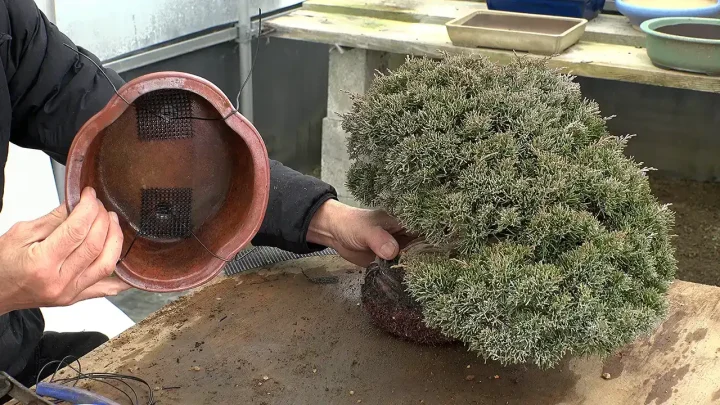
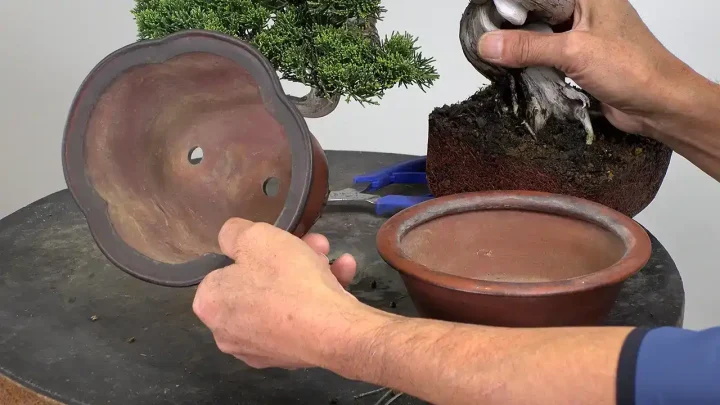
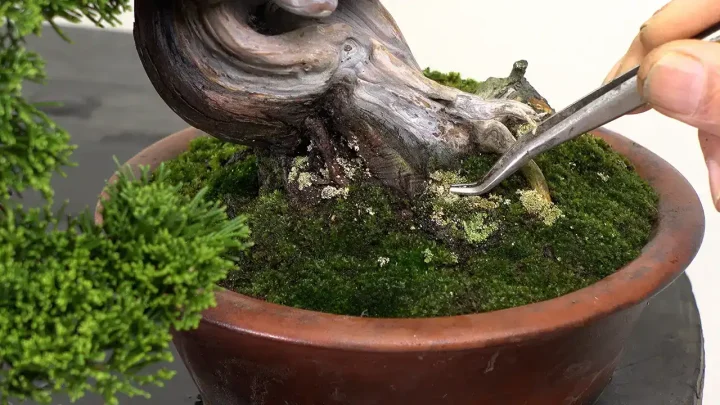
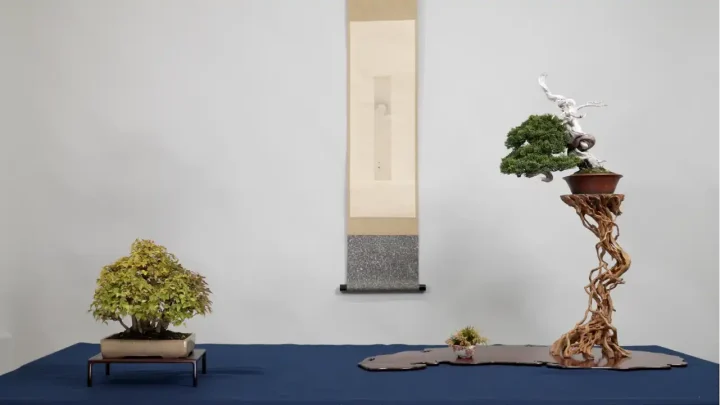
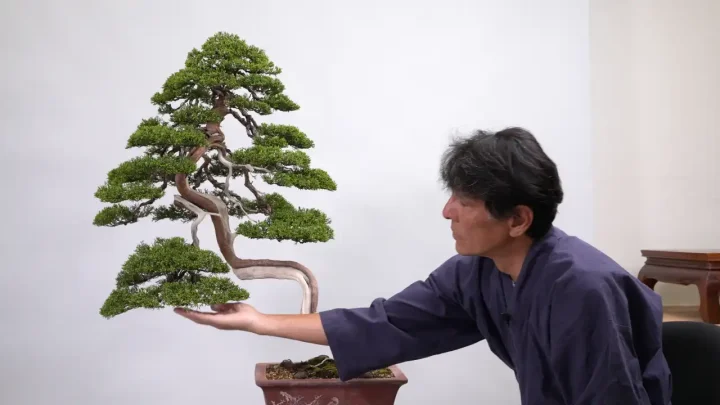
A Shimpaku juniper, just replanted at an angle in a display pot. The cascade’s flow has been decided. But the tree is still waiting for these hands. The jin is still soft, still movable. Now is the time to define its shape.
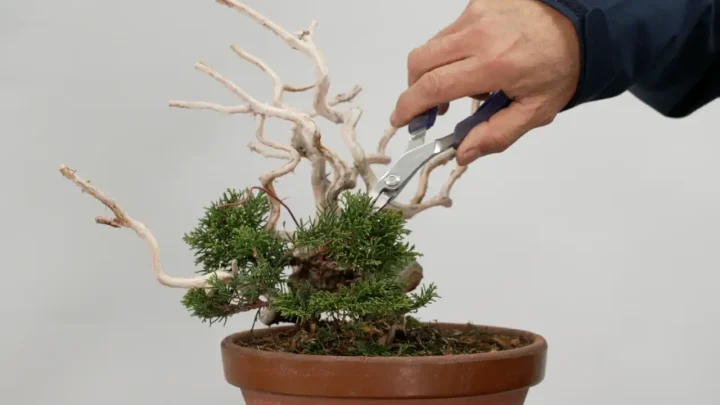
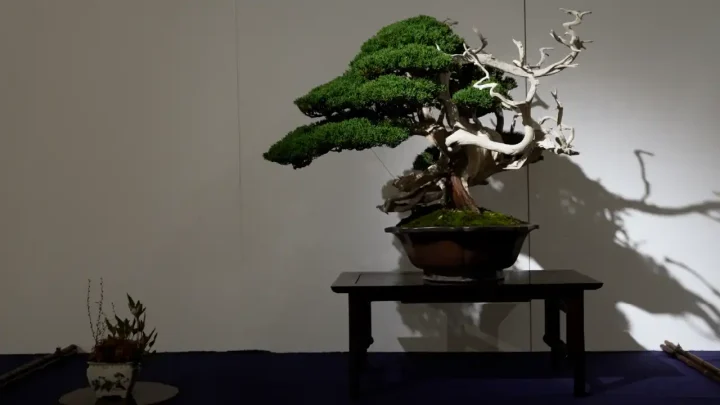
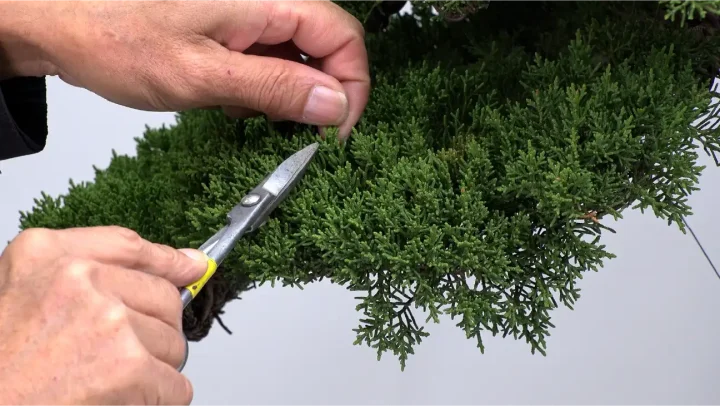
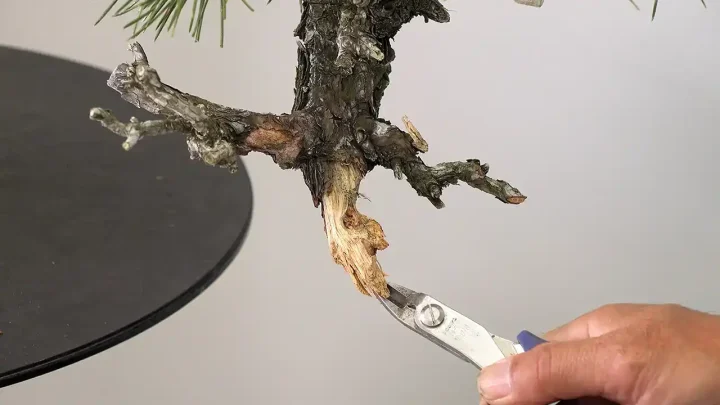
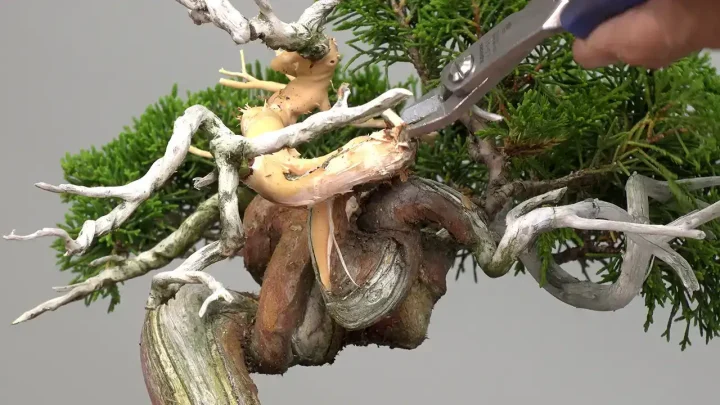
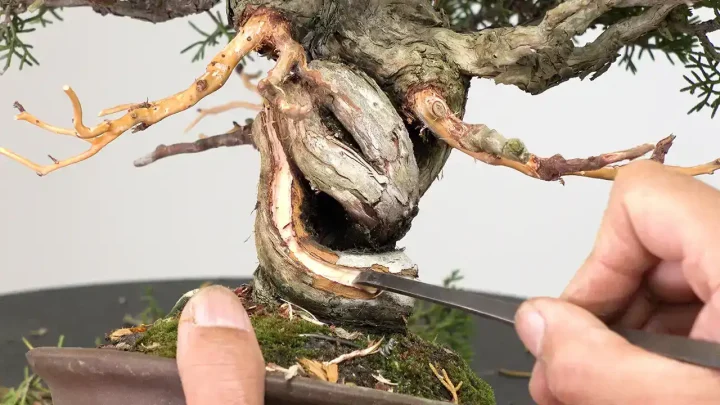
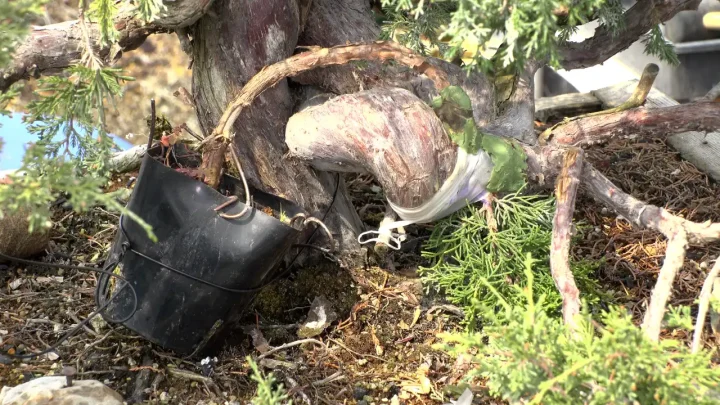
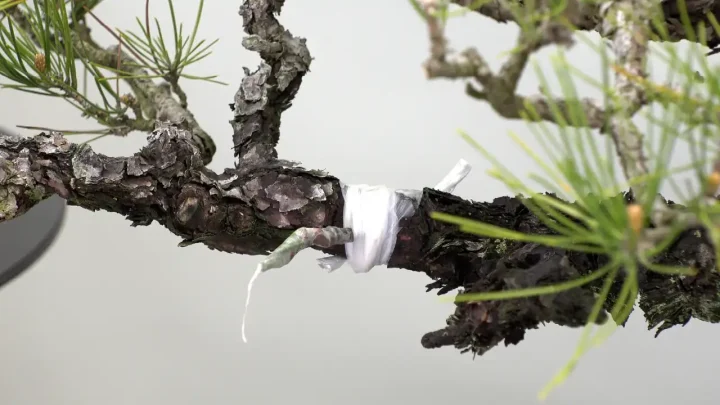
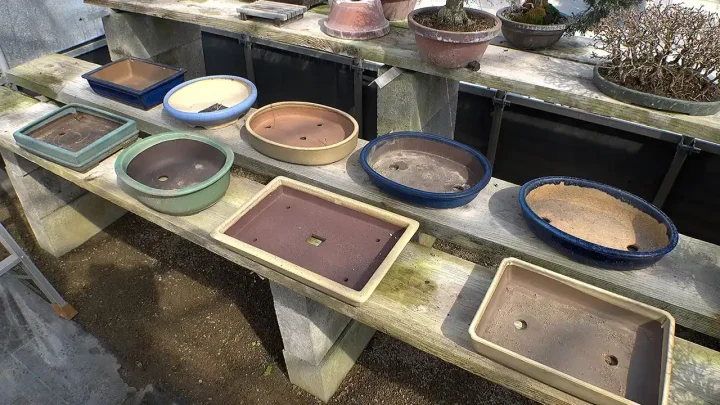
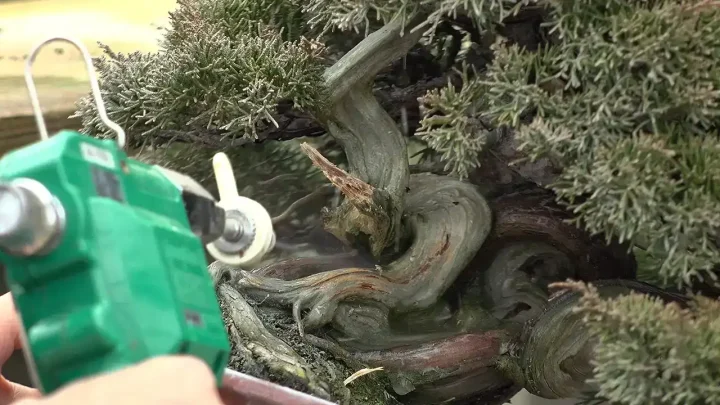
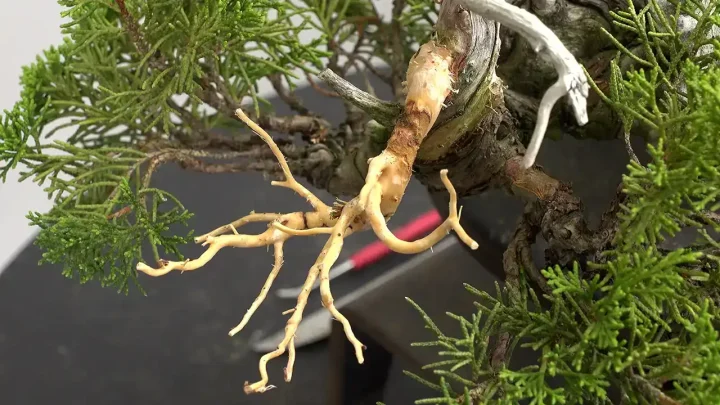
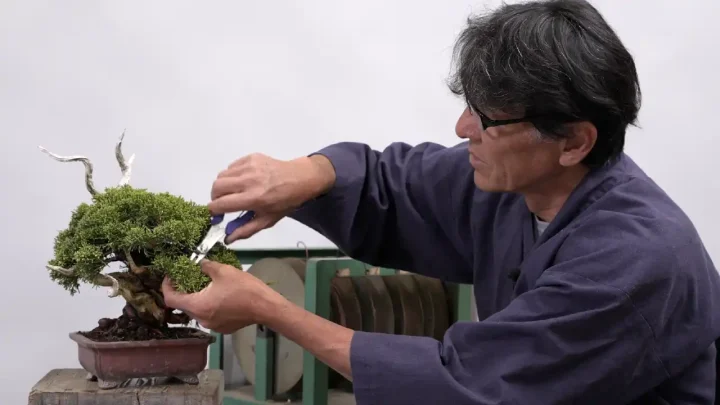
Score the tip and split it open, and the wood’s fibers emerge at the surface. Made by human hands, yet carrying the texture of something that withered and broke naturally. The difference seems small, but it is significant. When lined up on the shelves at an exhibition, the viewer’s eye perceives it clearly.
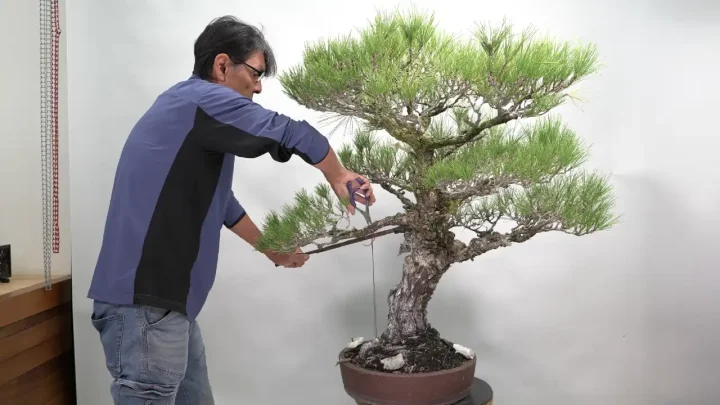
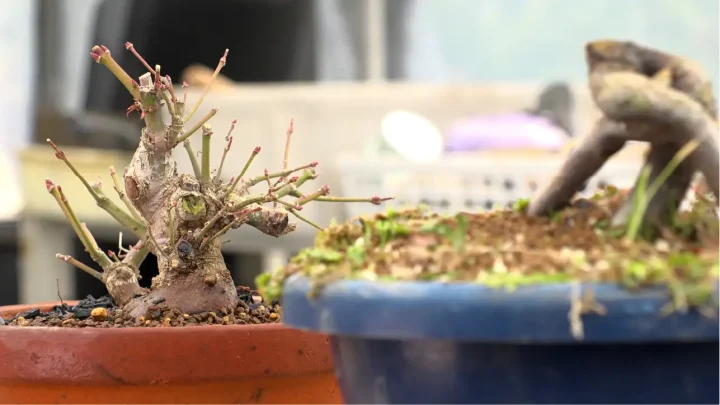
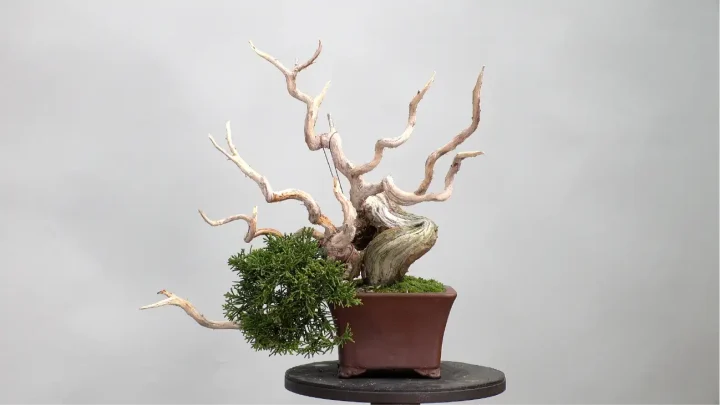
The first principle of jin shaping is to leave them longer than feels right—long enough to second-guess yourself. You can always shorten later. But what’s been cut cannot be restored. With shohin bonsai especially, making a jin too thin means it will rot away within a few years. So err on the side of thicker, longer—that judgment is what keeps regret at a distance.
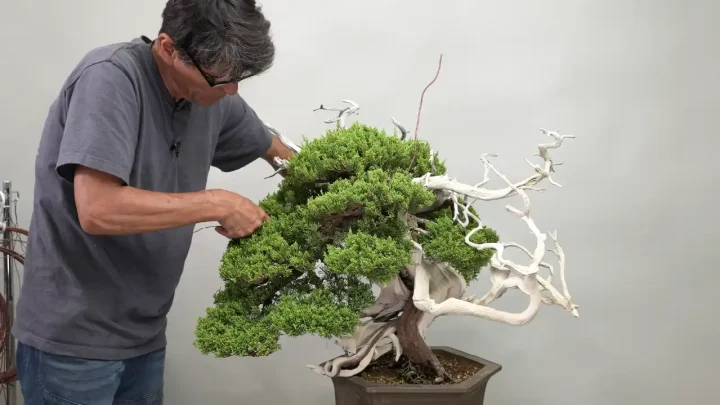
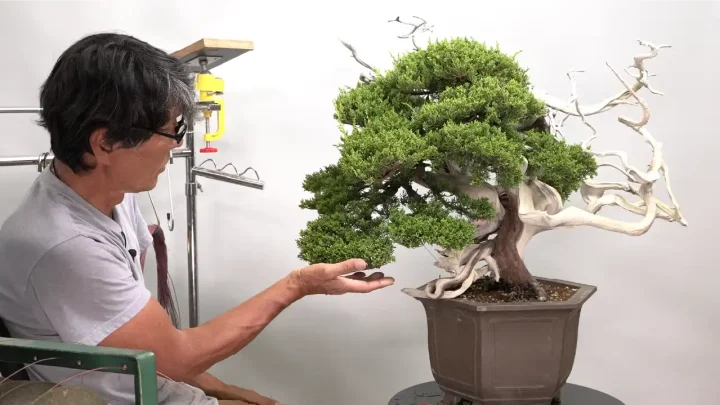
Once the shapes begin to emerge, the opposite judgment comes into play. A cluster of jin all trimmed to equal length can suddenly feel “merely showy.” That is the moment to cut some back and create space. Contrast and space—he says it is extraordinarily difficult to explain in words, yet his hands are already moving. This is the kind of work where words follow the action, rather than the other way around.
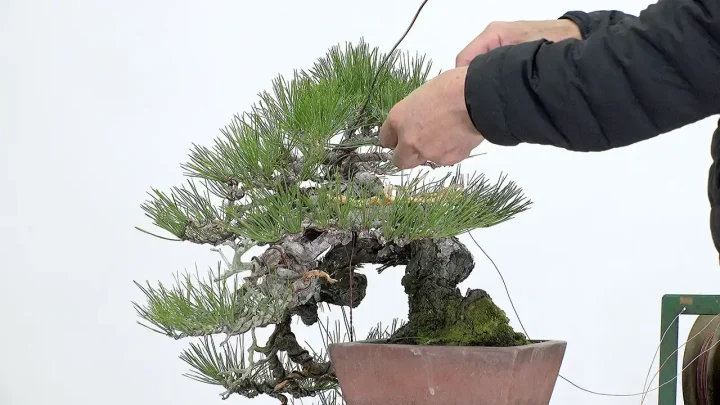
Lower this jin to follow the flow of the cascade form. When space opens up and the jin reveals itself through the gaps between the lower branches, there is a moment of recognition—yes, this is where it belongs. That feeling is hard to put into words, but the hands already know.
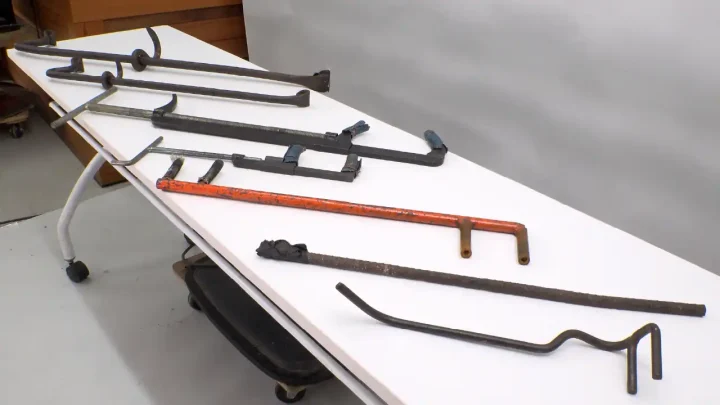
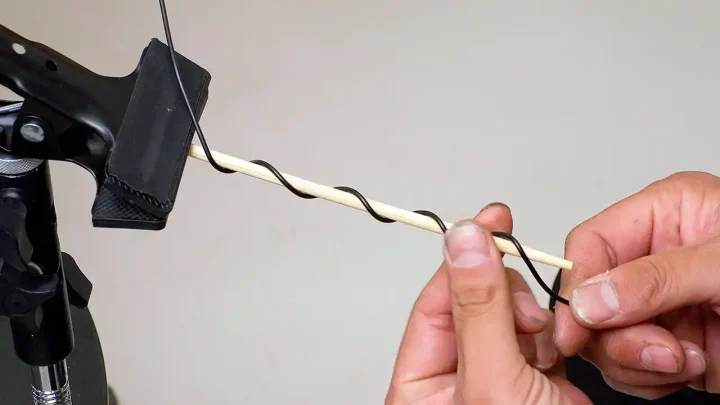
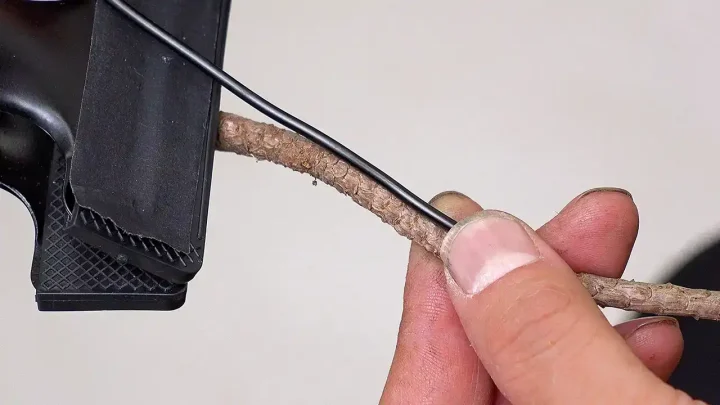
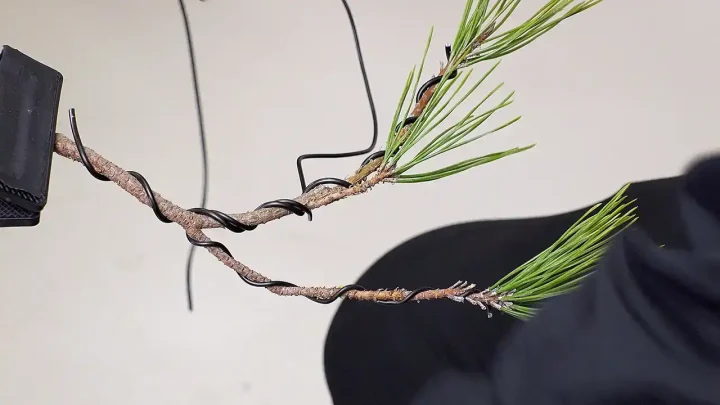
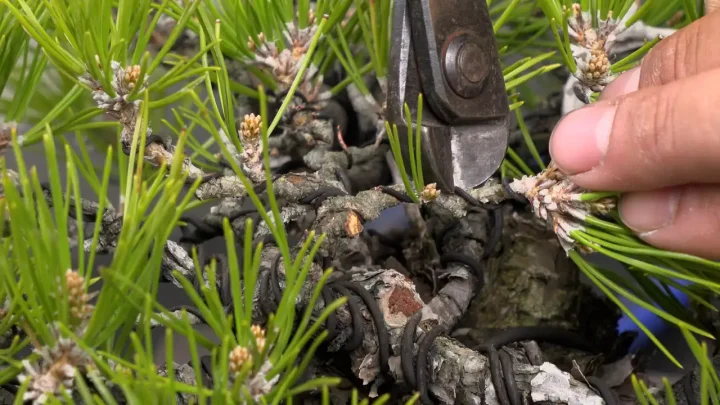
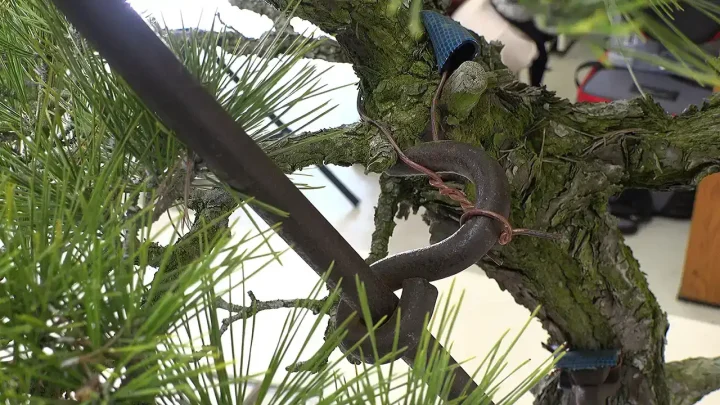
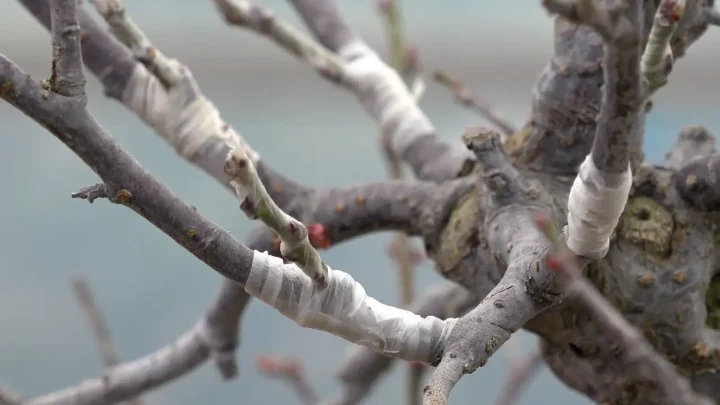
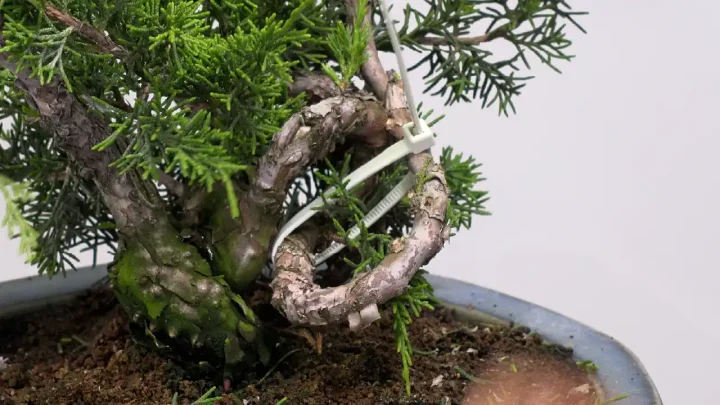
Twist copper wire to stiffen it and use it as a brace. Combine it with guy wires to draw the jin into the intended position. It will spring back slightly even after fixing, so bend it a little past where you envision it. There is no set procedure—you choose your method according to the situation at hand. It is this accumulation of small judgments that gradually becomes the tree’s presence.
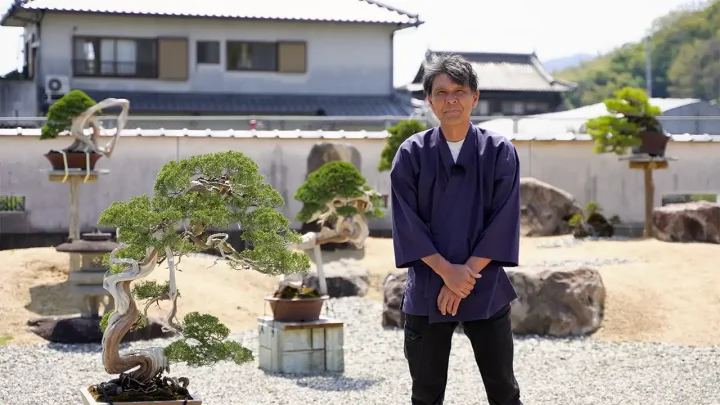
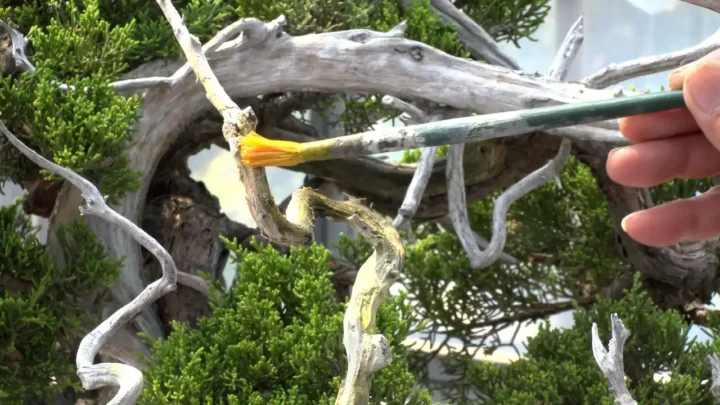
“Through facing it again and again”—he speaks these words as he brings today’s work to a close. Finishing touches for an exhibition, yes—but this is not completion in the truest sense. Lime sulfur is applied, watering is withheld, and over time the jin is left to dry and whiten.
Whether today’s decisions were right will only become clear months from now. The tree receives what was done today in silence, and turns toward the next season.
The journey of "Master: “Fune”" begins with member registration.
Begin the Journey