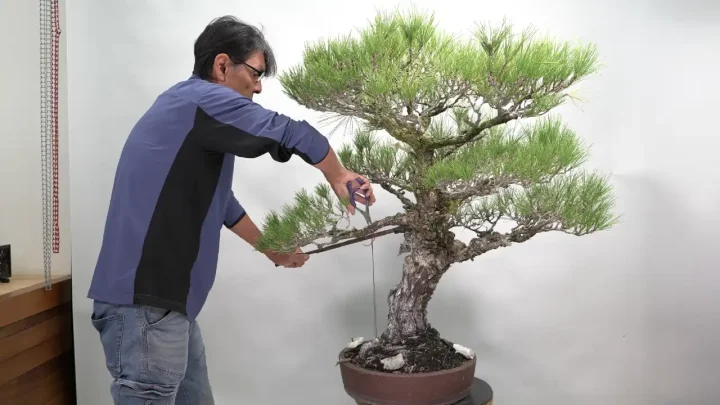
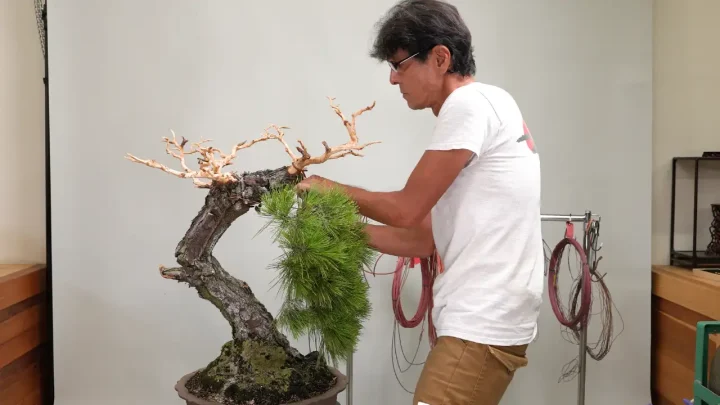
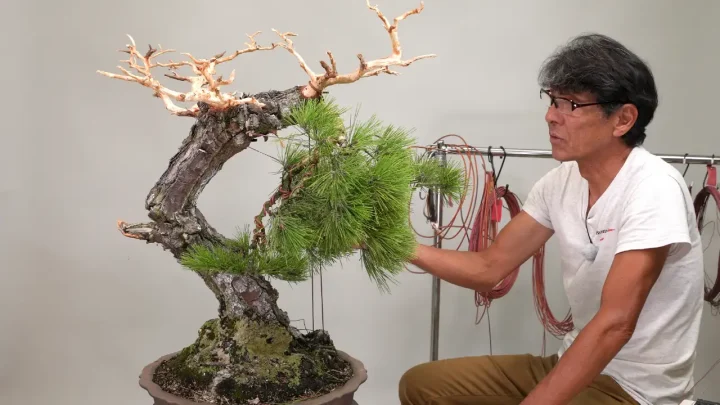
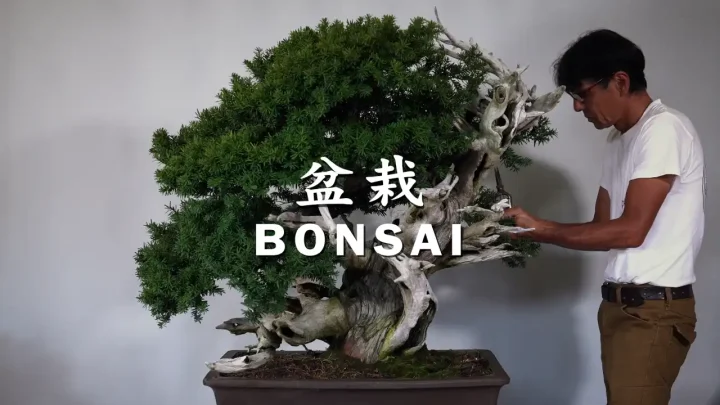
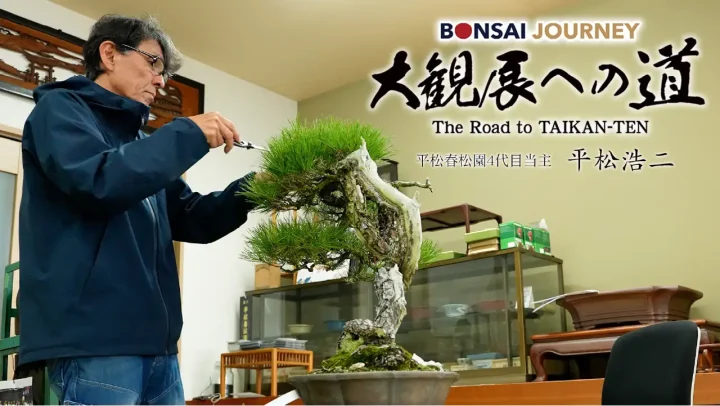
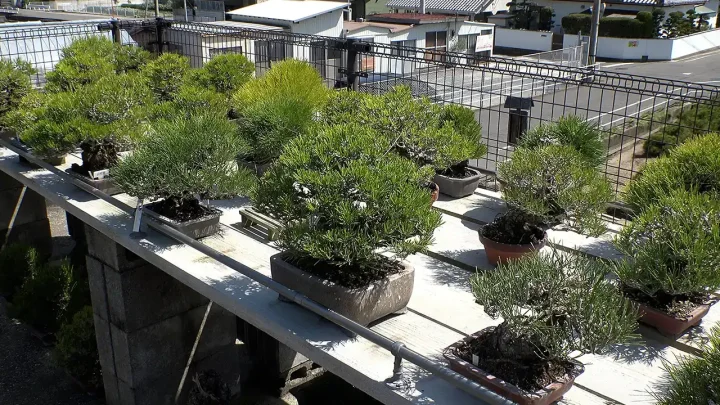
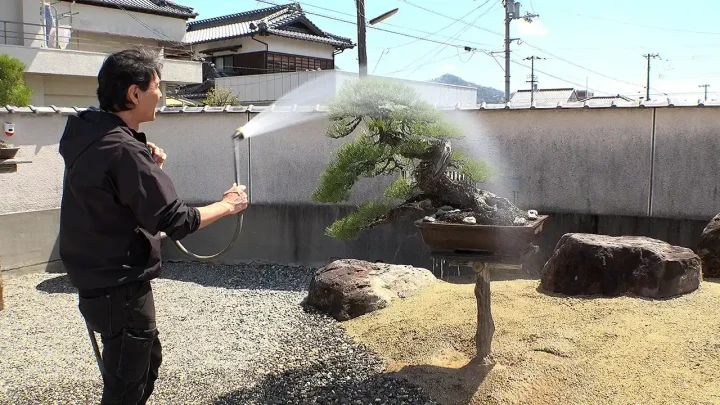
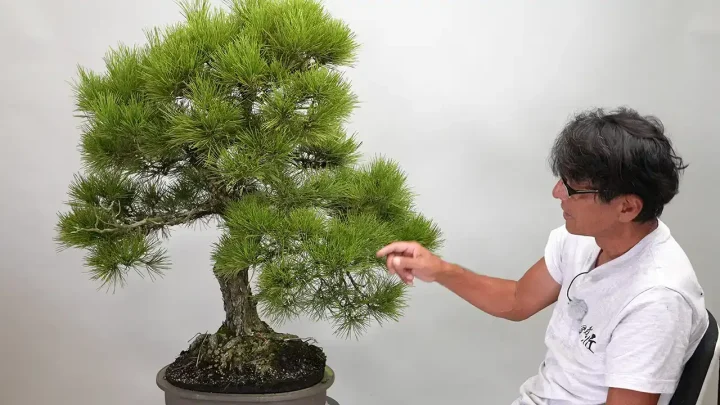
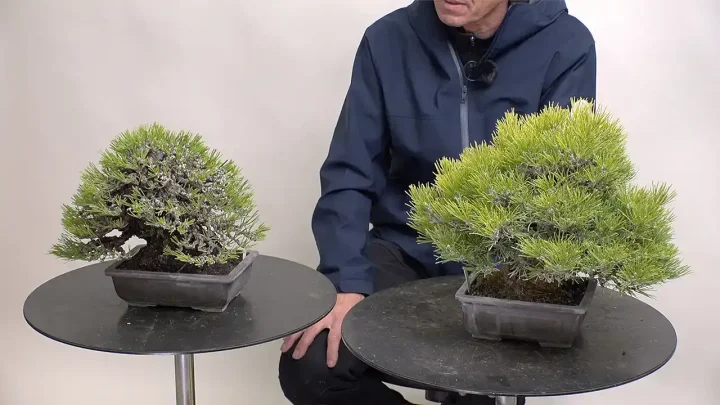
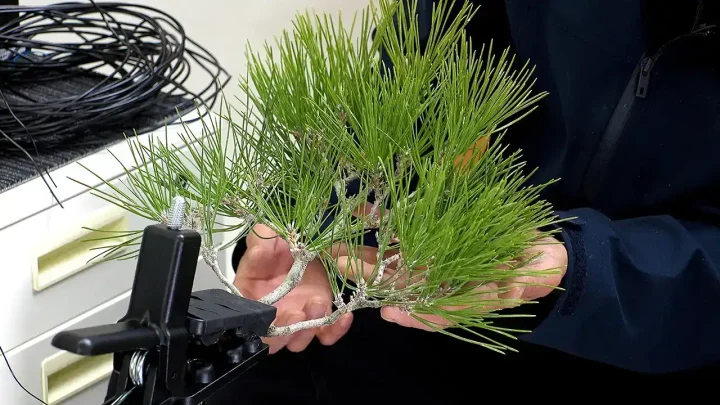
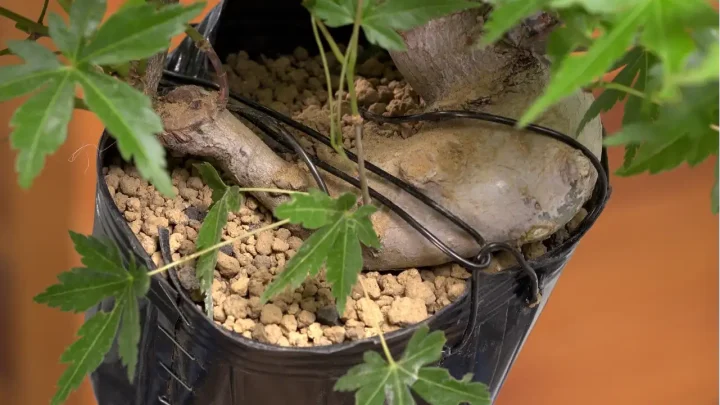
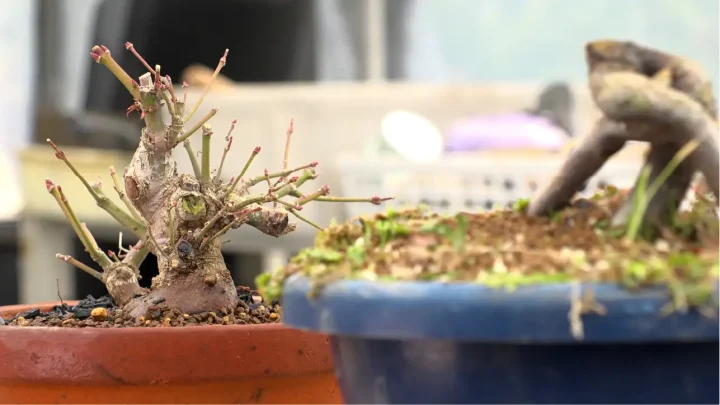
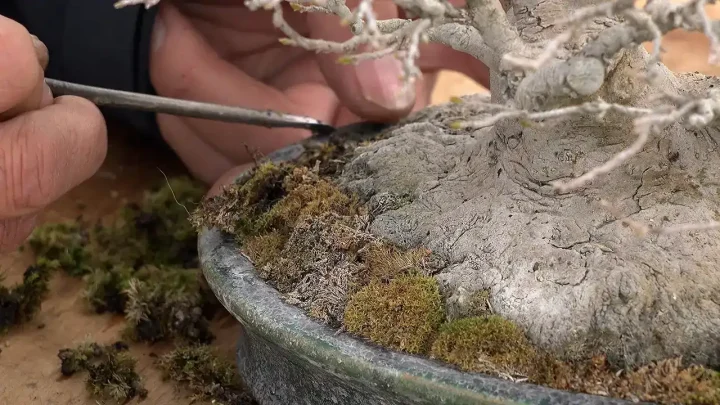
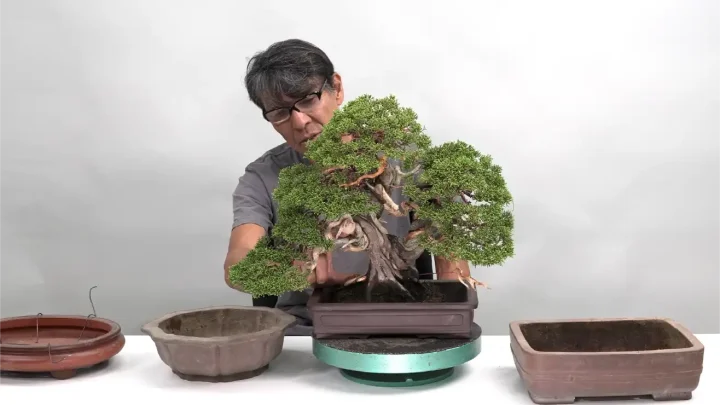
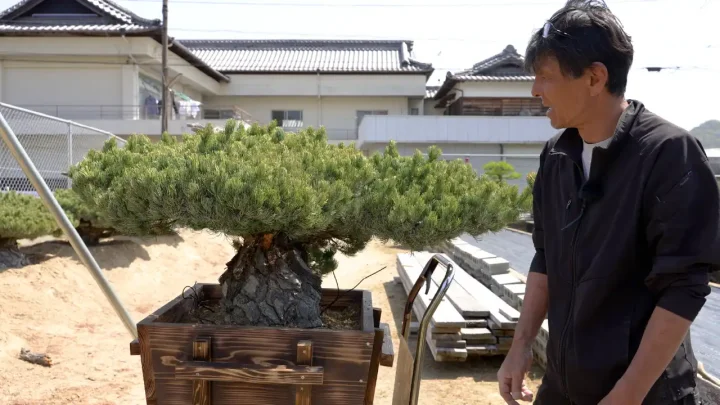
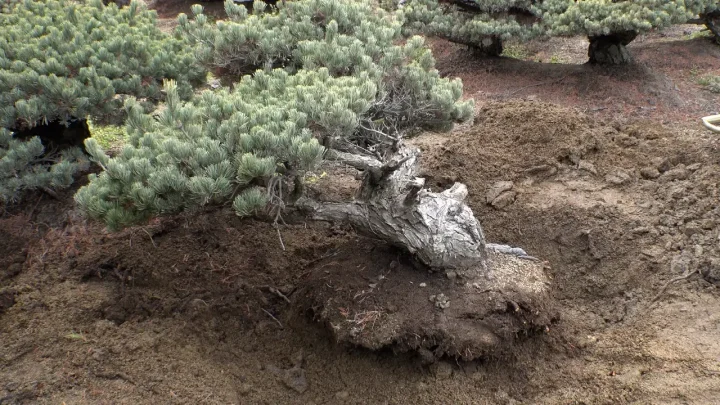
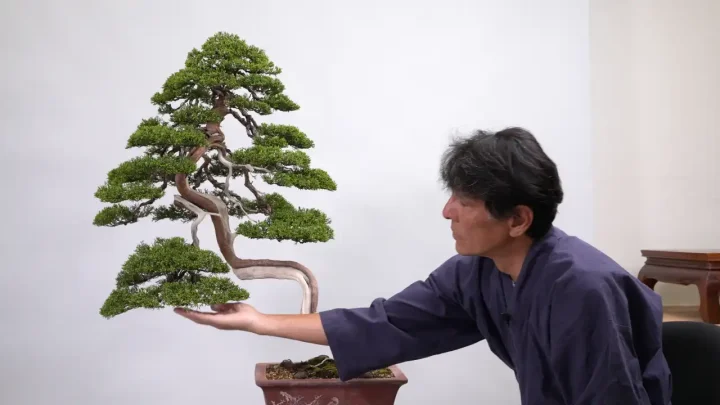
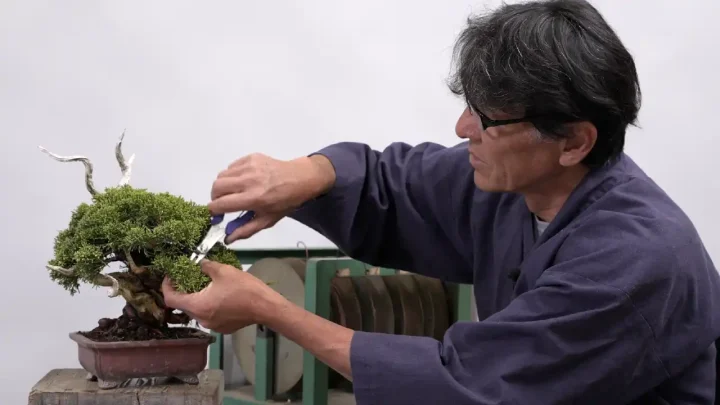
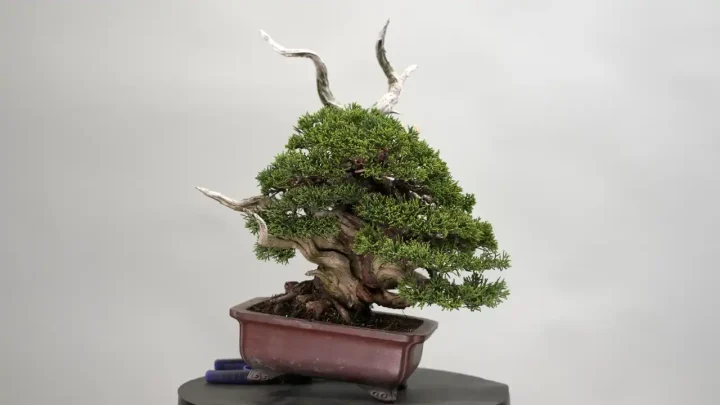
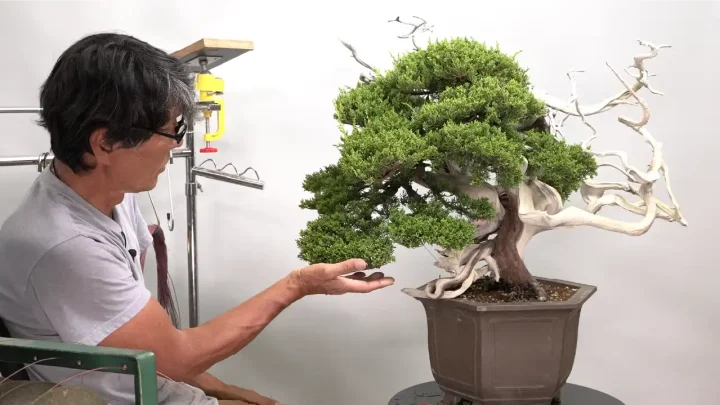
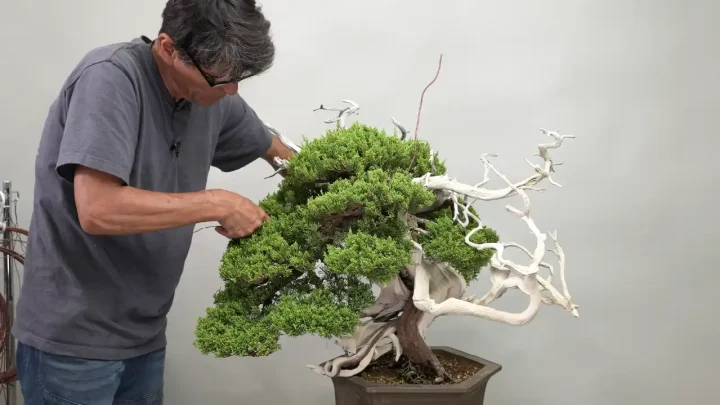
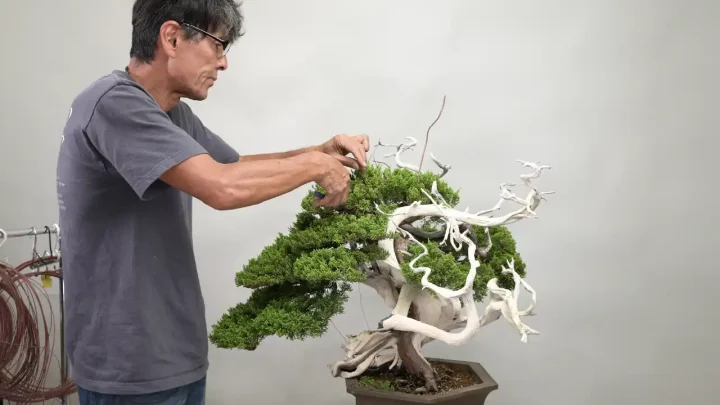
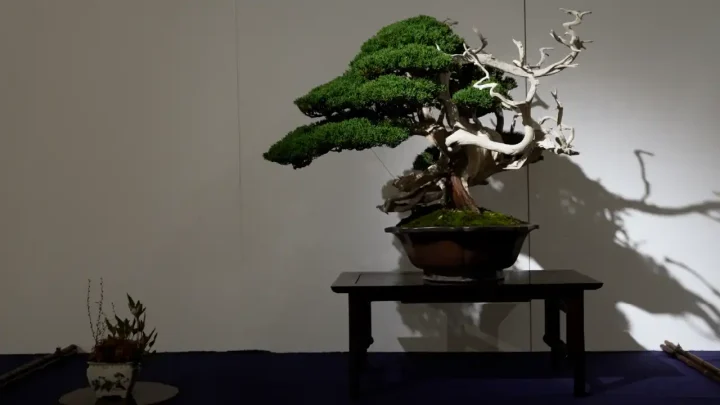
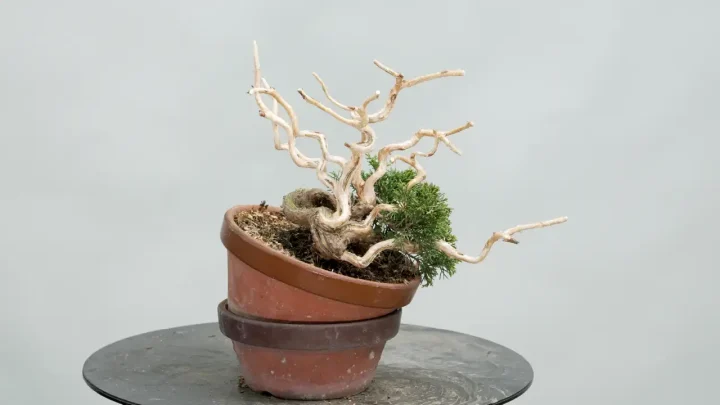
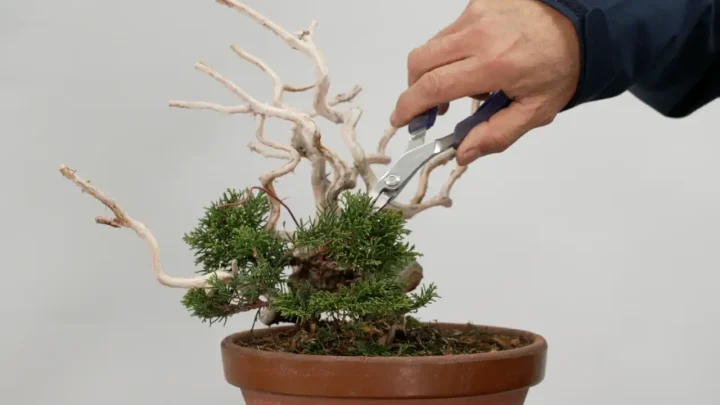
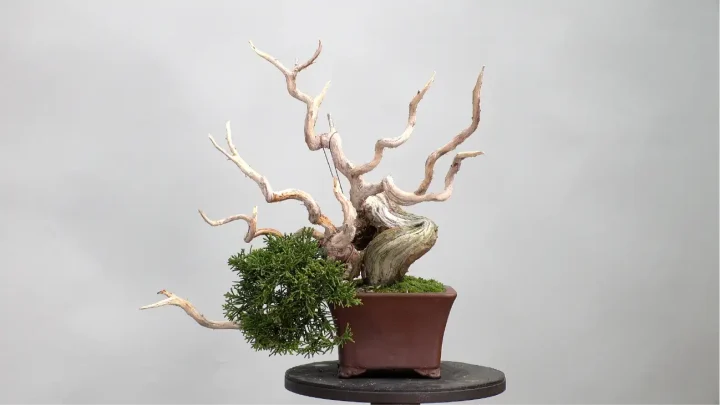
A Japanese Black Pine of over eighty years receives Trunk Bending with a tool passed down through three generations. To redirect its High Trunk Base into something more compact — Sensei turns toward the trunk with the words 'whether it will succeed, I cannot say.' What form the tree will settle into is something only the next winter will reveal.
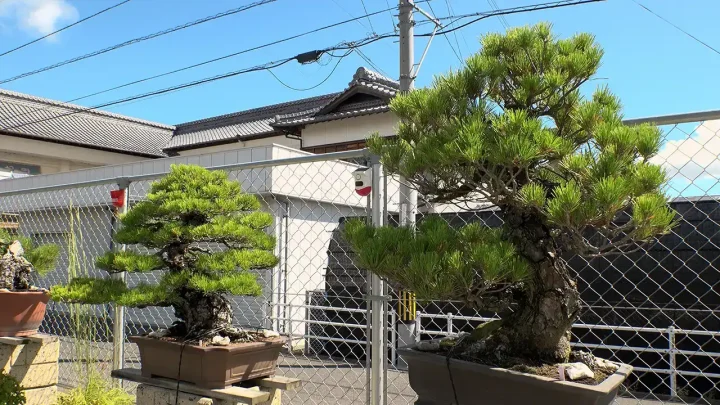
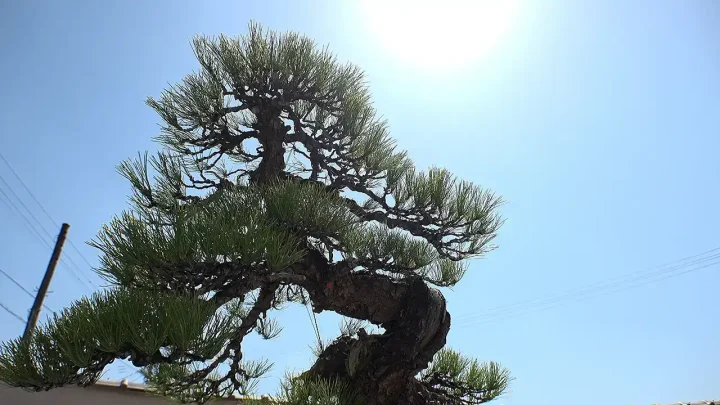
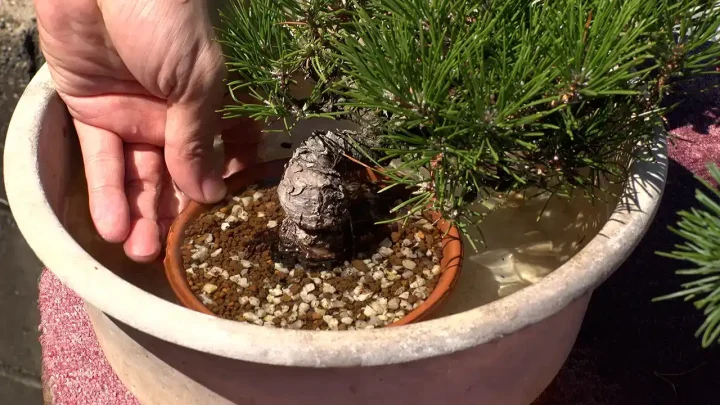
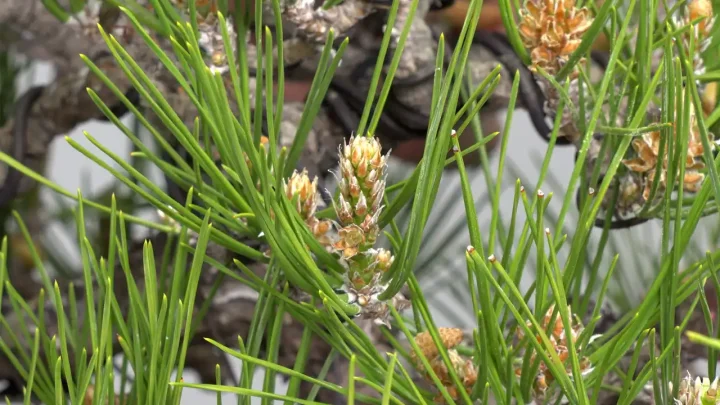
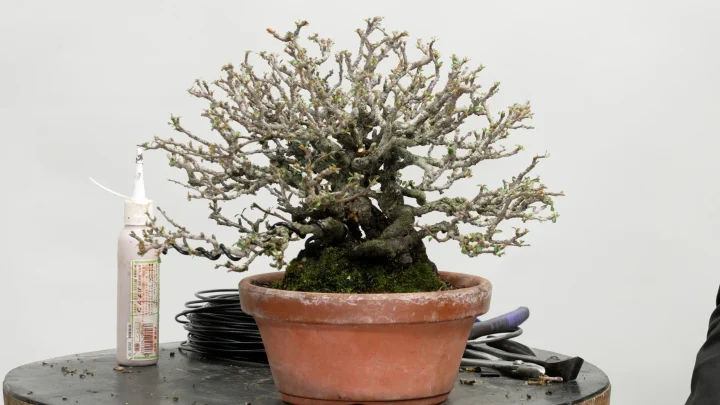
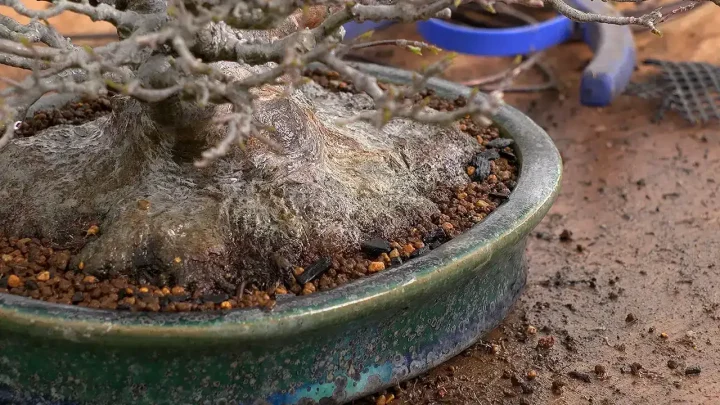
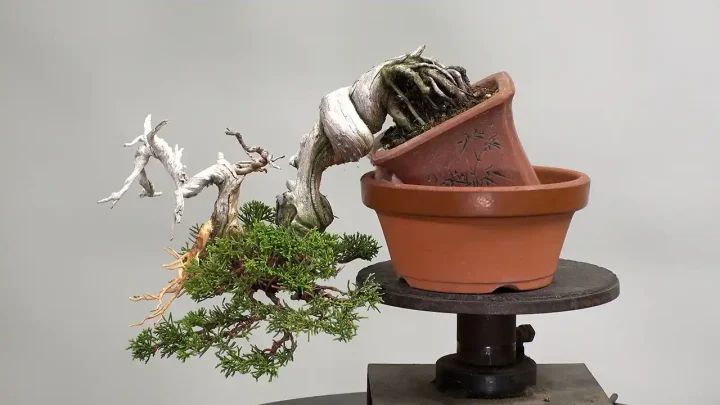
Eighty years old, perhaps a hundred. A Japanese Black Pine that has weathered wind and rain in the mountains still radiates a quiet presence even in a pot. The High Trunk Base it has grown into could lend itself to a Literati Style composition. There is a beauty, in its own right, to that slender, reaching form.
And yet Sensei reaches toward another possibility — toward compressing the trunk considerably, redirecting the tree into a more compact silhouette. 'Whether it will succeed, I cannot say' — and with those words, the work began.
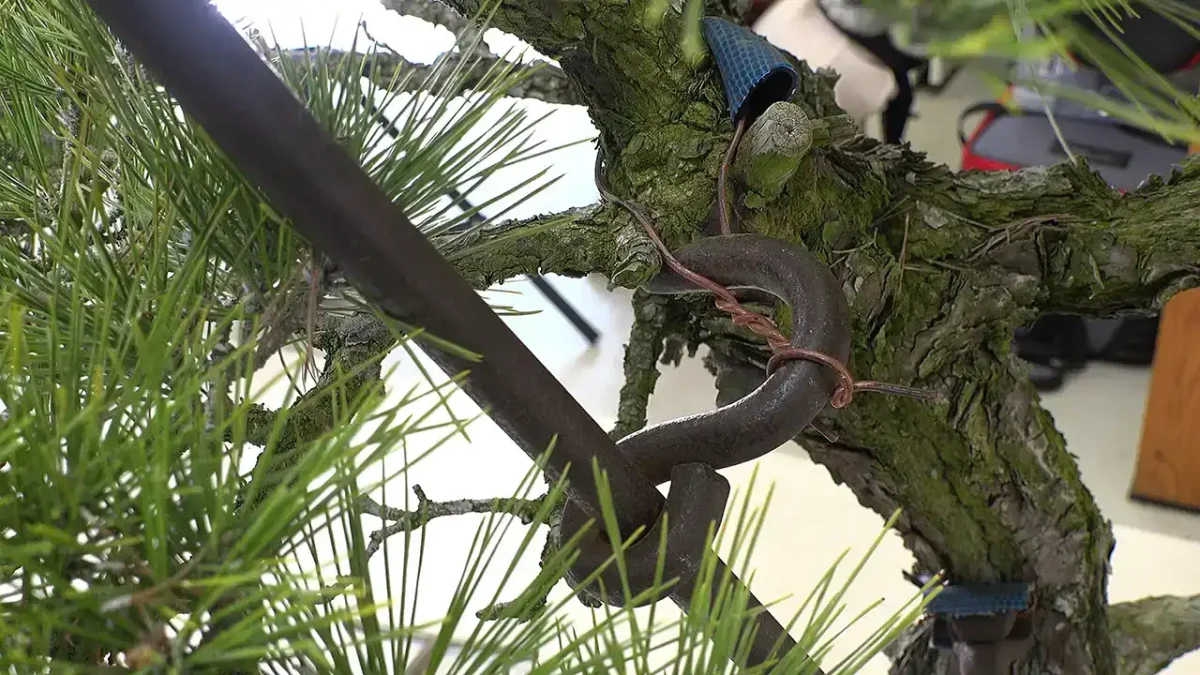
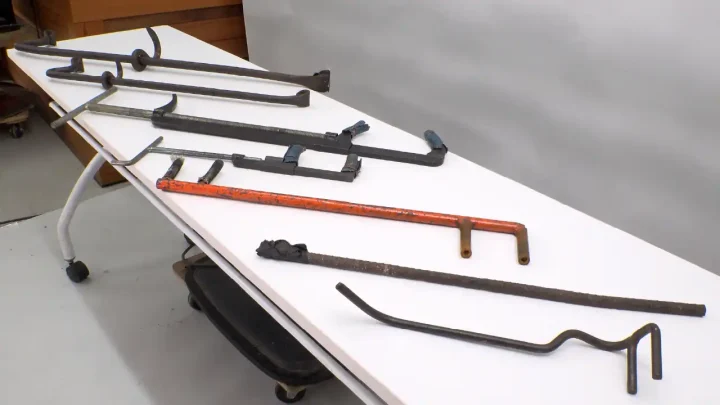
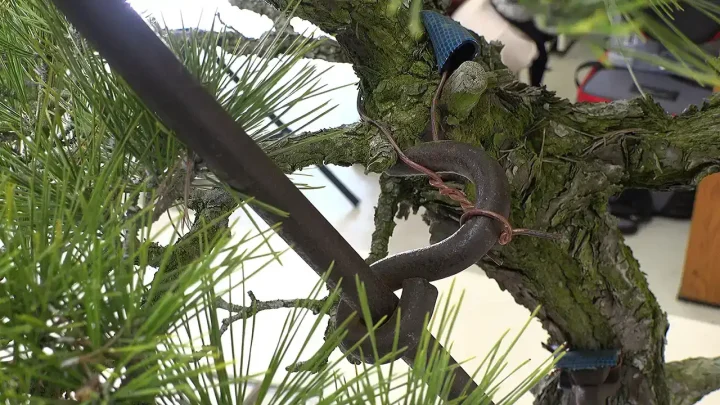
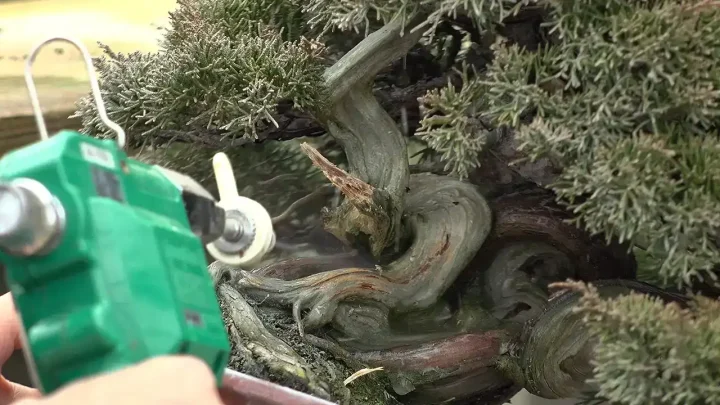
The tool used for Trunk Bending is a jack-type device his grandfather made. It passed through his father's hands, and now rests in his. The tool may show its age. But there is no hesitation in the way it is handled. Judgements accumulated over a long span of time have soaked into the very act of using it.
Technique is not the accumulation of steps — it is the accumulation of inheritance. To receive a tool is to receive the judgements of those who came before. In that sense, three generations of time live inside this machine.
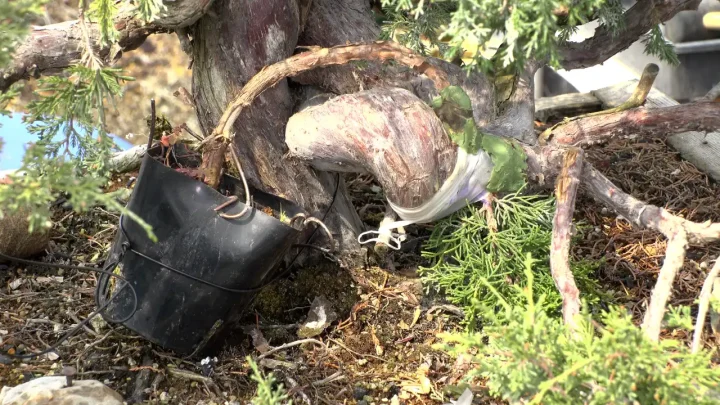
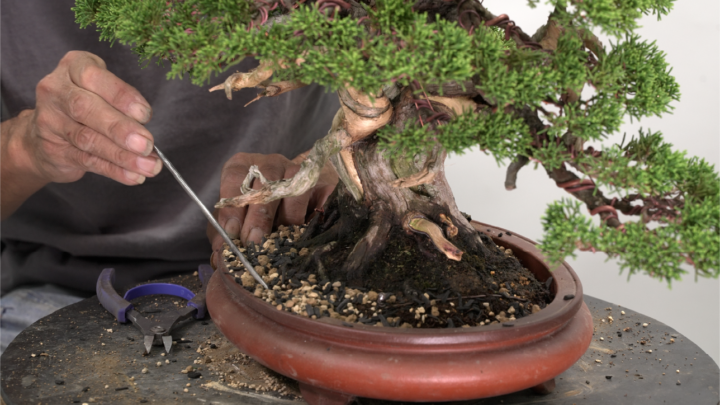
When bending the trunk, Sensei does not fix the fulcrum in one place. He shifts it little by little, distributing the load. 'Avoid concentrating stress in one spot' — these words are about physics, and yet they seem to be pointing at something larger as well. Do not rush toward a result. Do not concentrate force at a single point. Doing so protects both the tree and the person working on it.
And then: bend with conviction. Enough that you wonder whether you have gone too far. Caution and boldness coexist within the same movement — and in that seemingly contradictory handling lies the very heart of Trunk Bending as a practice.
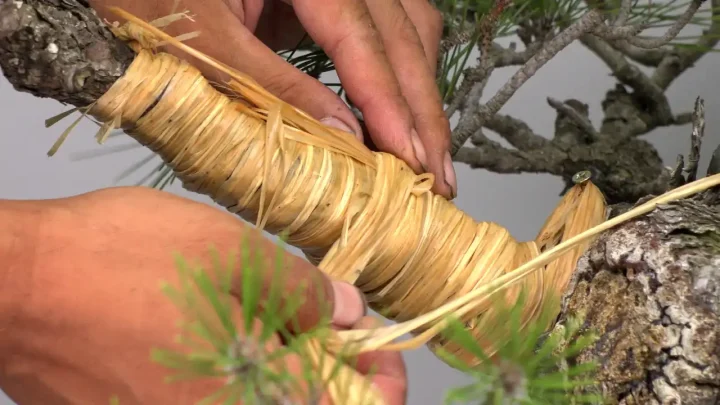
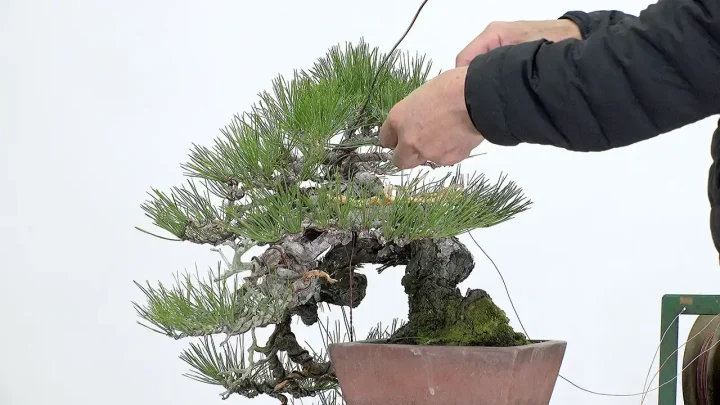
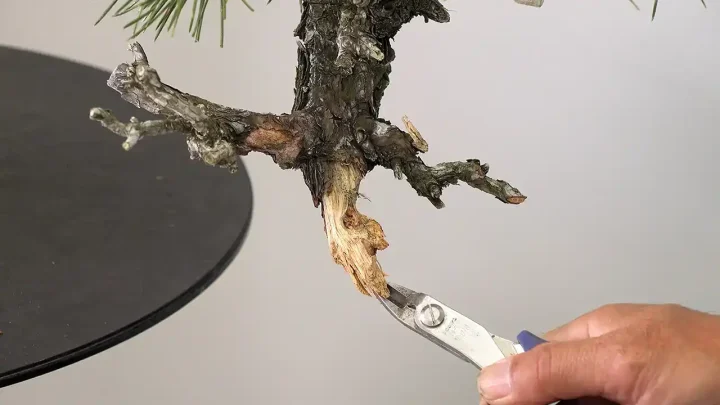
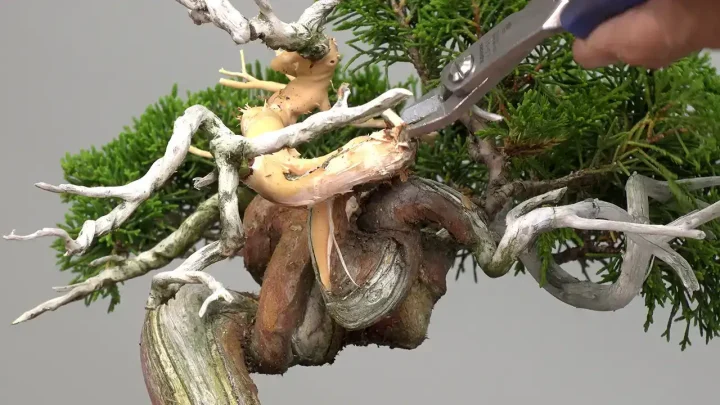
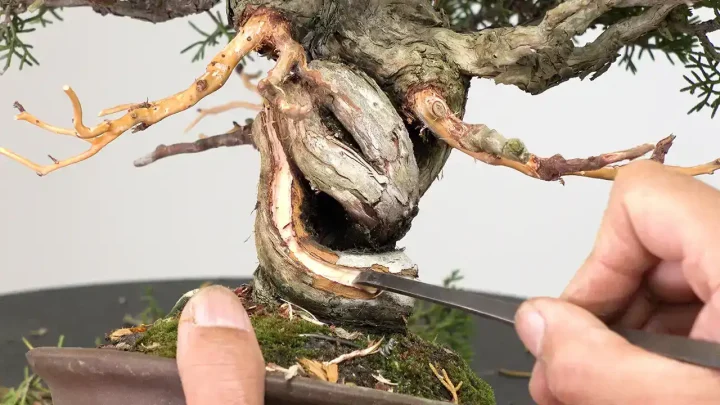
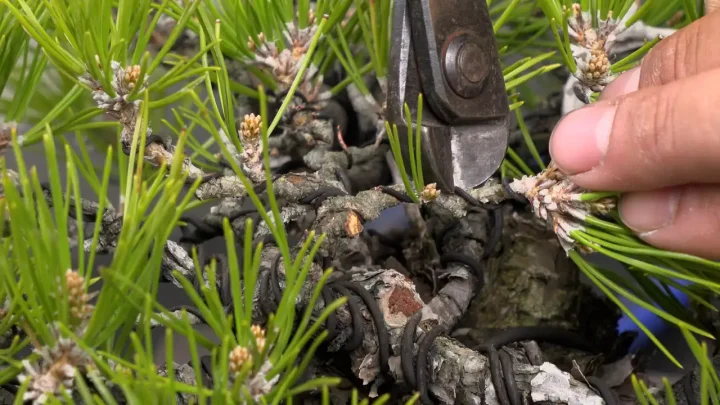
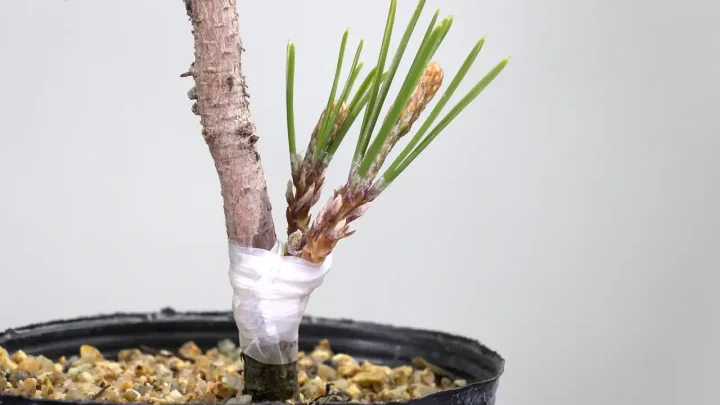
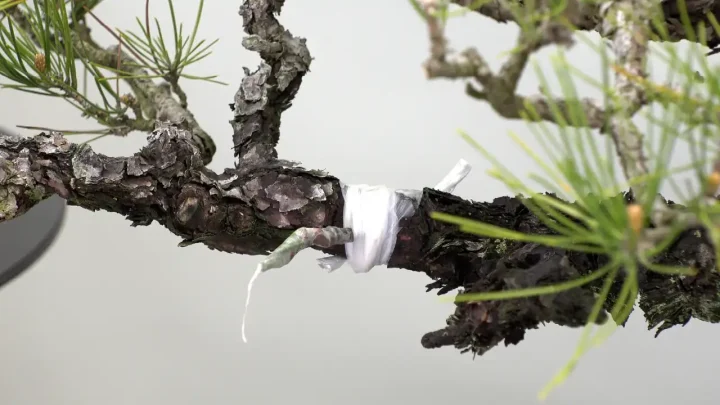
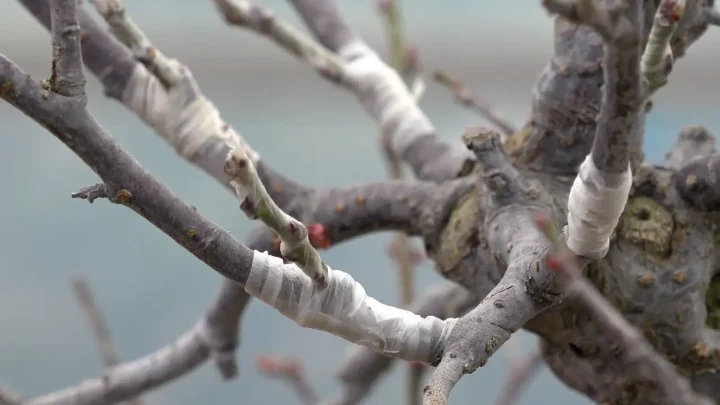
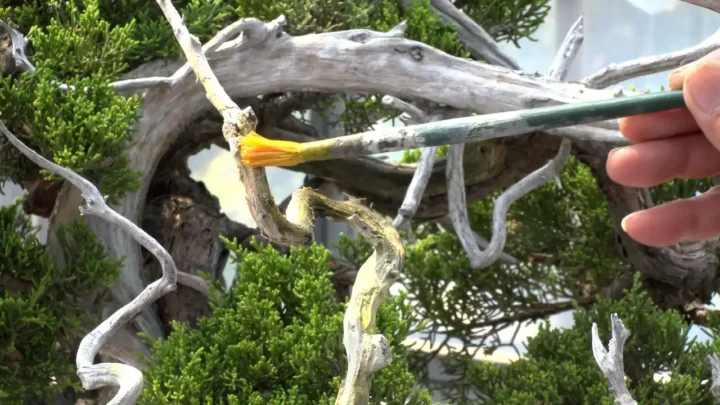
That a branch entangled with Shari and Jin / Deadwood might split is within the range of expectation. For a pine, a modest split is not a problem — and in those words, a deep trust in the tree quietly surfaces. The wound is treated with Cut Paste / Wound Sealant, and the direction will be assessed again come next winter. Today's work does not complete anything, nor is there any need to hurry toward completion.
'Whether it will succeed I cannot say — but I will try.' It is precisely this disposition, I think, that means facing a hundred-year-old tree squarely and honestly. To keep moving one's hands while holding the question open — what will emerge from that, only the next winter can tell.
The journey of "Master: “Fune”" begins with member registration.
Begin the Journey