
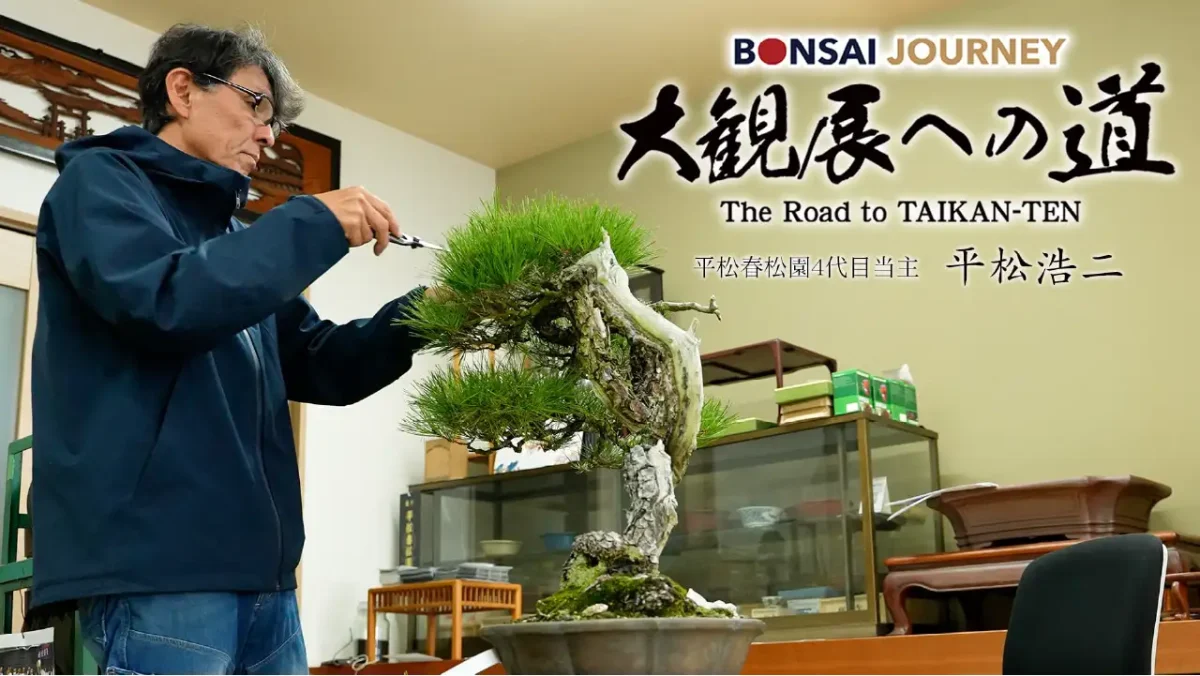
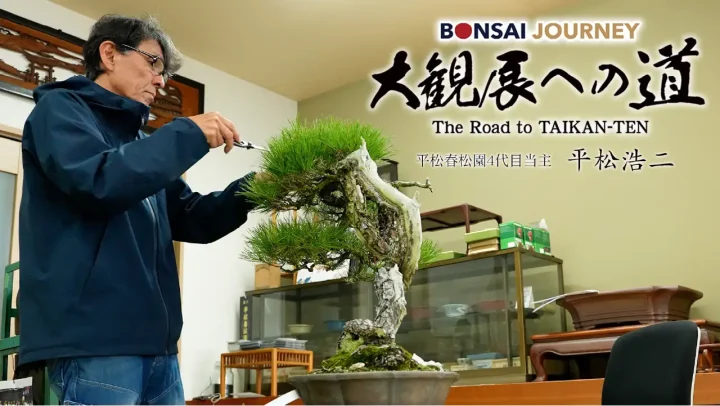
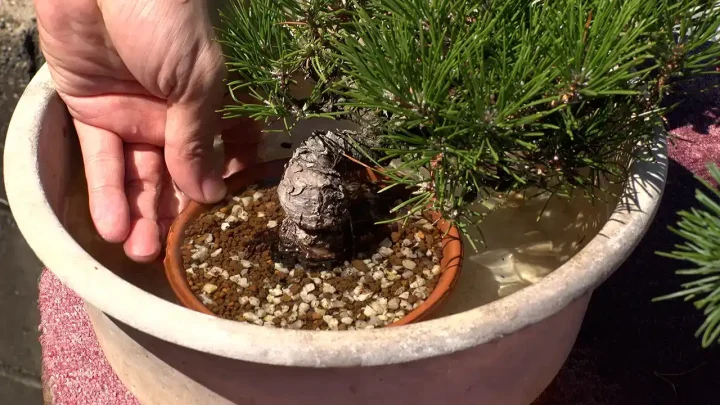
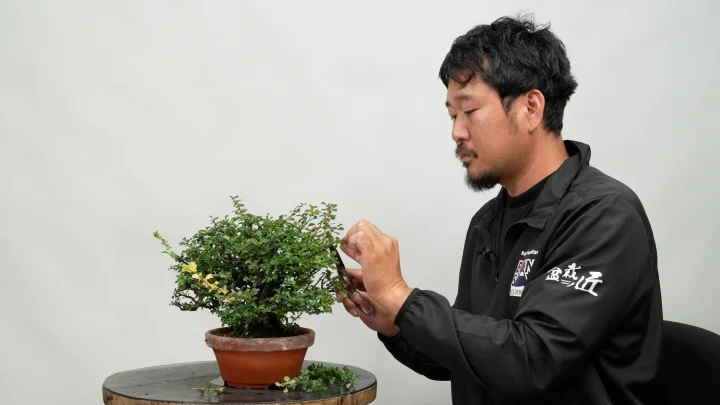
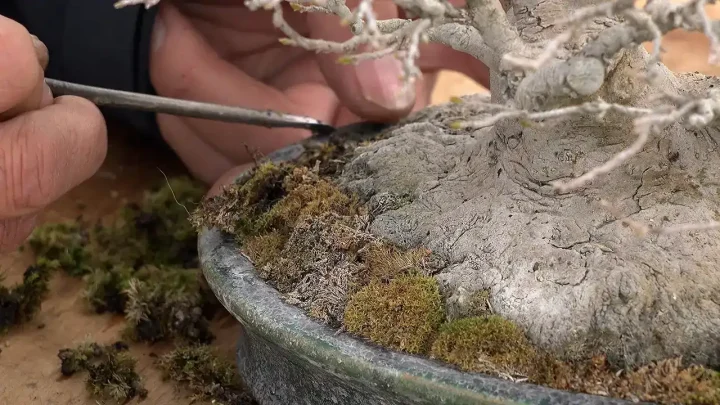
展示会1週間前、赤松の文人樹形に苔を貼る。指の腹で馴染ませながら自然な佇まいに整えていく、静かな手仕事の時間。「仕込みの準備で勝負は決まる」——みやこめっせ大観展に向けた先生の積み重ねが、ここにあります。
京都みやこめっせで開かれる大観展。平松浩二にとって、ここは毎年作り込んだものを世に問う場です。
けれども、展示会の本当の始まりは会場ではありません。1週間前の苔貼りから、深夜の搬入、翌朝の設営まで——勝負はすべて、そこに至る道の中にあります。
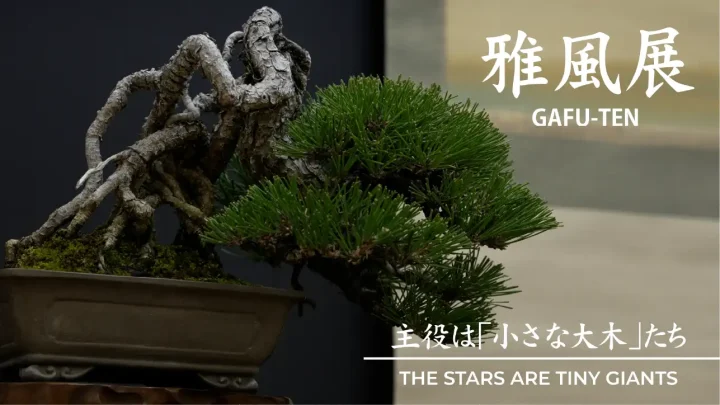
今回の主役は、赤松の文人樹形。白高知の鉢に収まった、数年をかけて仕立てられた作品です。
「これでもかという迫力の木とは違う」——文人はそういう樹形です。昔の人はこういう木を見ながら「お茶が飲める木だ」と言ったそうです。先生自身はまだその域ではないと言いながらも、この木には「味わいで見る」ものがある。静かに佇み、そばにいたくなる——そういう次元の美しさを、文人の樹形は持っています。
枝を整えすぎない。花を少し乱して、自然の佇まいを残す。天然のシャリの動きは人間には作れない——だから、手を入れすぎない判断が美学の核になる。どこまでやったら「やりすぎ」になるのか。その境界を知ることが、長い時間をかけて育てていくものなのかもしれません。
展示会の1週間前。平松浩二は苔を手に取ります。前日でもなく、当日でもなく——1週間前でなければならない。貼ってから馴染む時間が、仕上がりの美しさを決めるからです。
指の腹で押さえながら、鉢の表面に広げていく。モコモコと塊で盛り上げるのではなく、地に根を張るように自然に。つなぎ目は指の腹で押し込み、継ぎ目が見えないよう馴染ませる。静かな手仕事の時間が、やがて展示会場での一本の佇まいを決めていきます。
「仕込みの準備で勝負は決まってる。売れなかったら自分の目利きが悪かったということ」——50本ほどを車に積んで夜の道を走り、翌朝みやこめっせで棚を組む。先生の覚悟は、すでに揺るがない。
華やかな展示の光景の手前に、この輸送があり、1週間の苔貼りがあり、数年の仕立てがある。展示会当日に何かしようと思っても、もう遅い。すべての答えは、積み重ねてきた時間の中にすでにある。
展示は、作り込んだものを世に問う場でもあります。問われるのは当日の所作ではなく、それまでの積み重ねそのもの——職人の矜持がそこにあります。
「盆栽は死ぬまで終わることがない」——この旅に、終わりはありません。
来年もまた苔を貼り、また夜の道を走り、またみやこめっせへ向かう。同じ繰り返しのように見えて、木は違い、季節は違い、自分の目も少しずつ変わっていく。完成を目指す仕事ではなく、完成のない旅を愉しむ仕事——それが盆栽というものの正体なのかもしれません。
「中級:馬 -Uma-」の旅路は、会員登録から始まります。
旅をはじめるコメントを投稿するにはログインしてください。


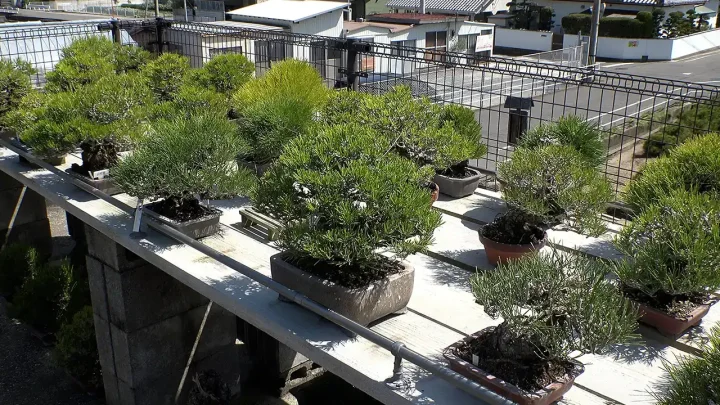
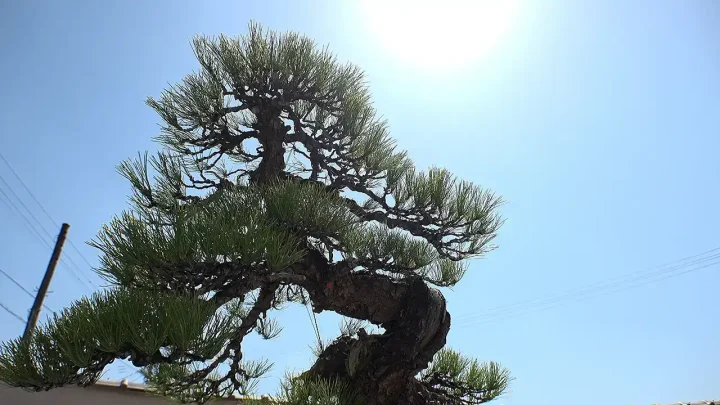

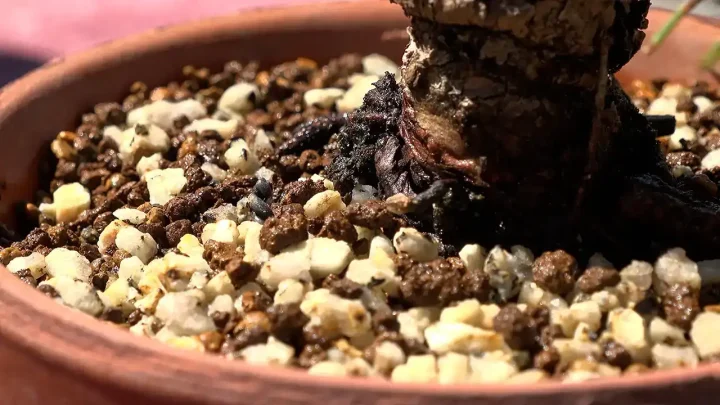
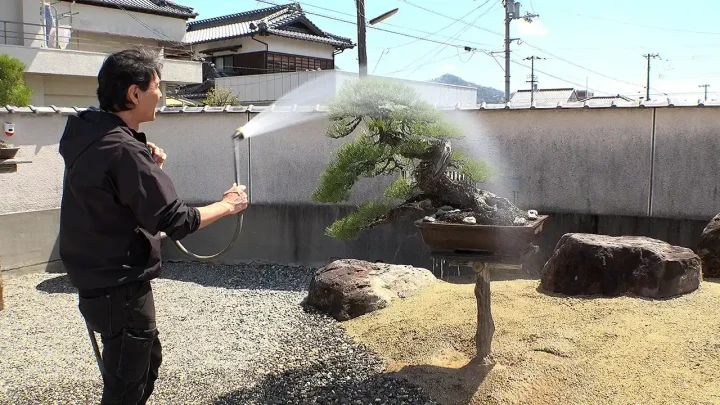
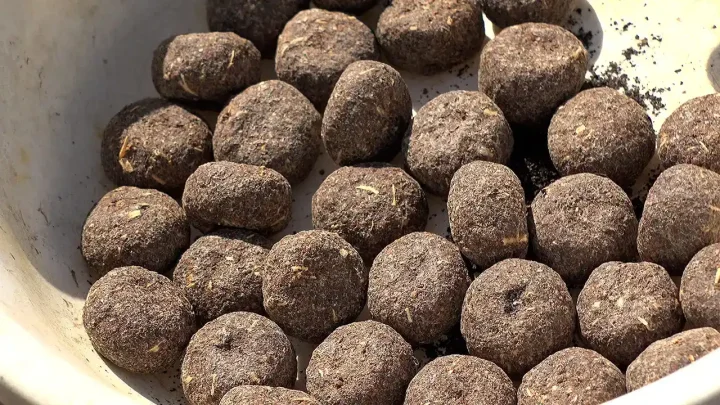
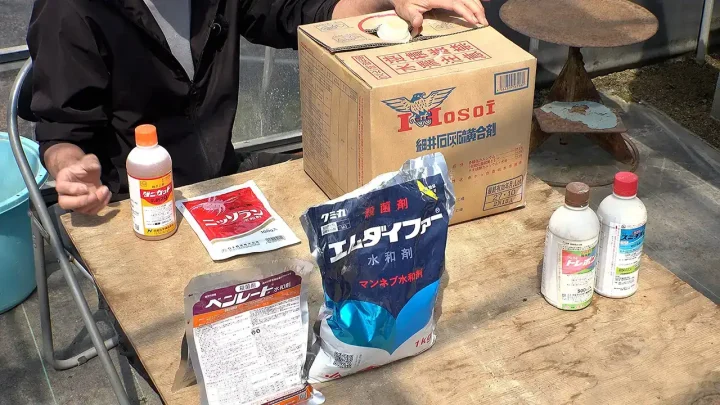
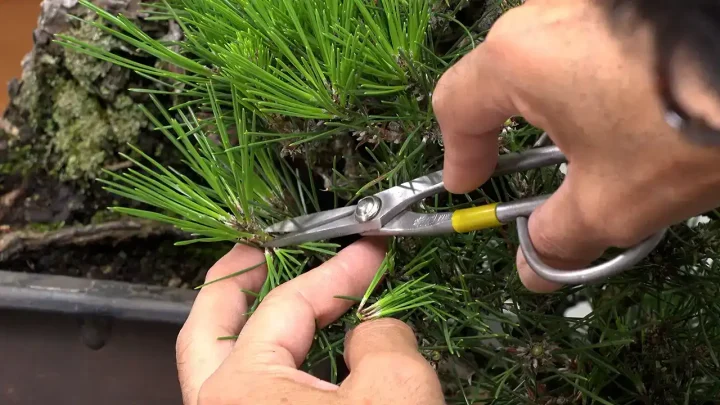
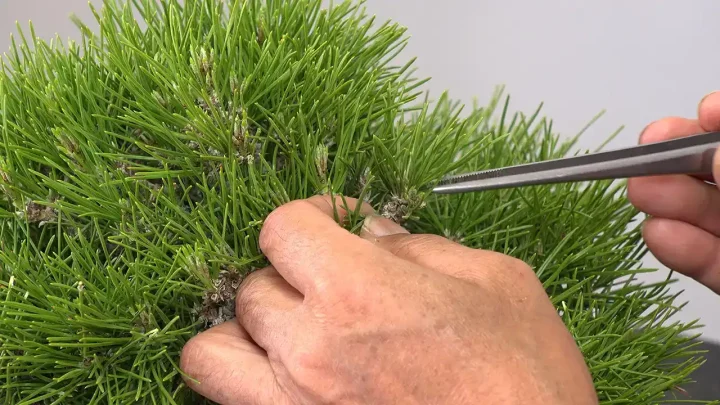
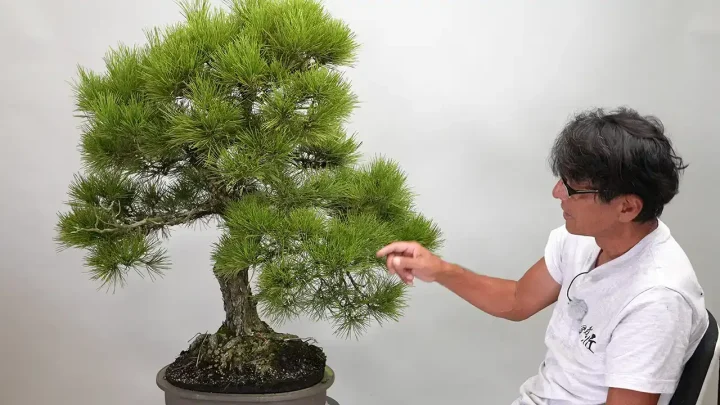
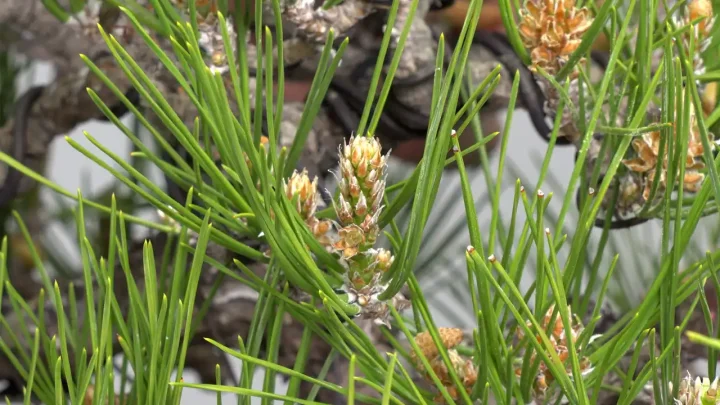
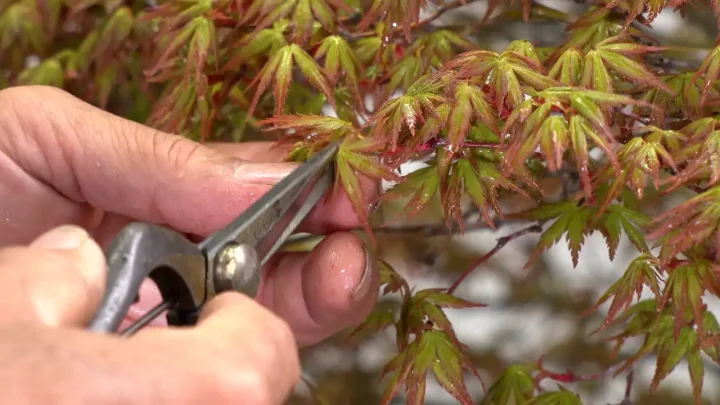
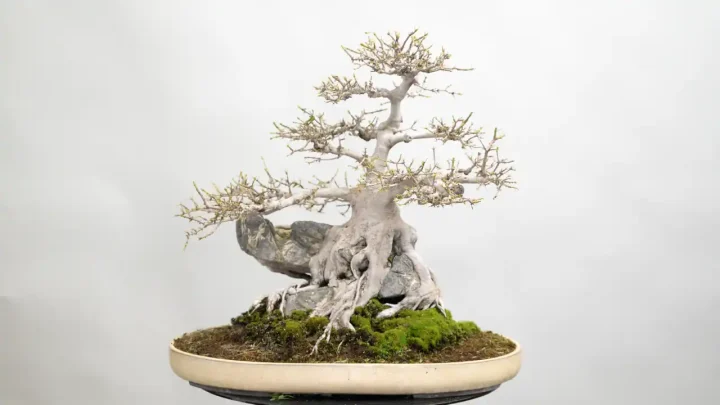
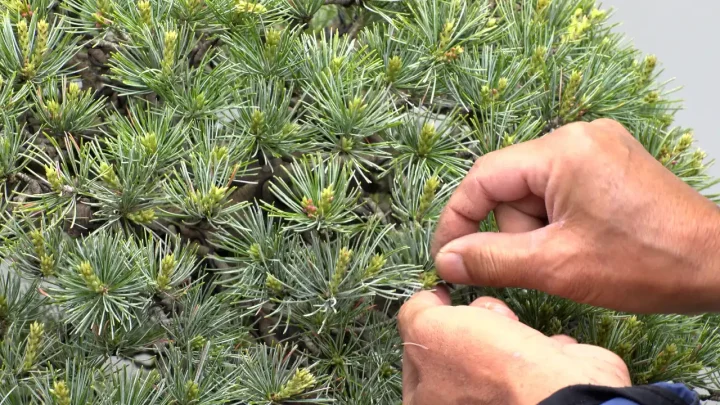
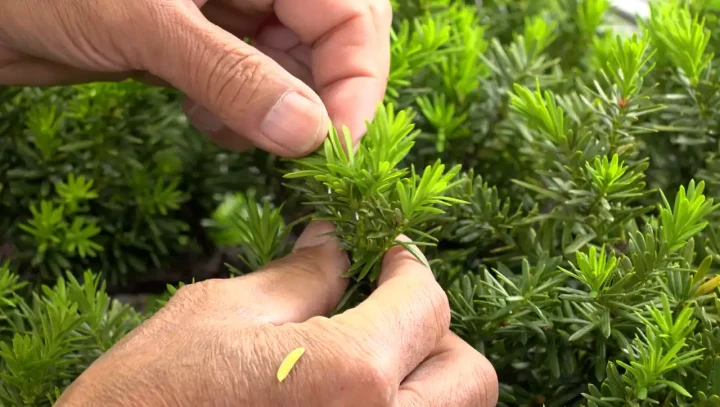
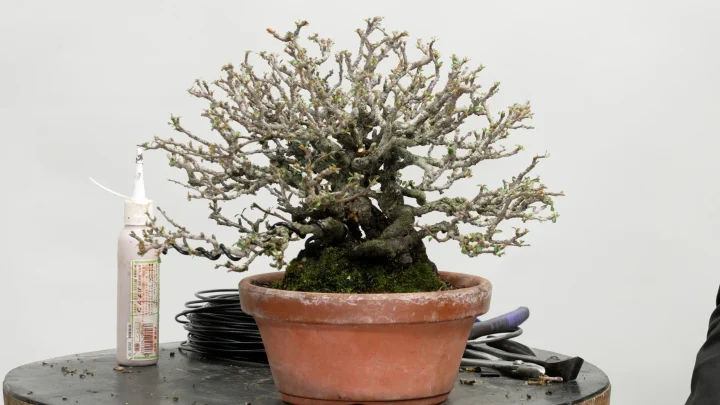
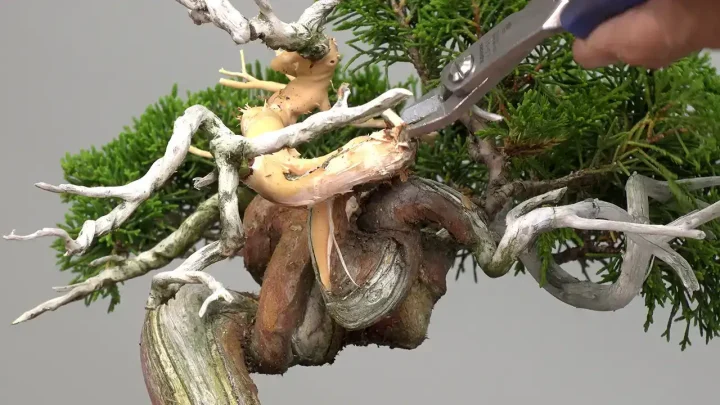
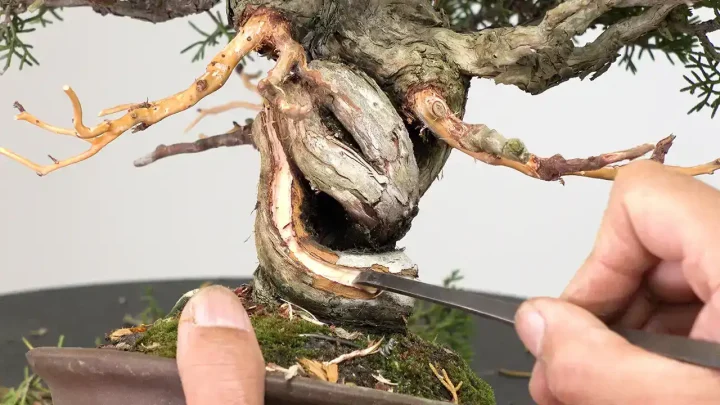
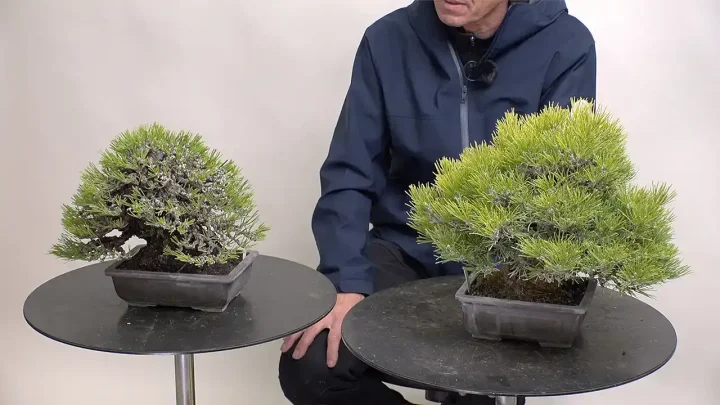
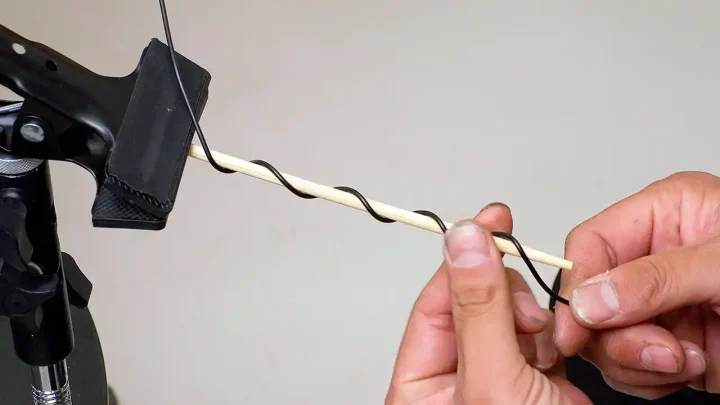
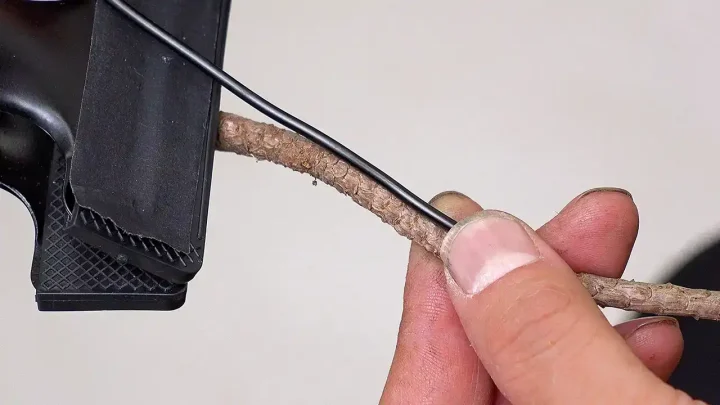
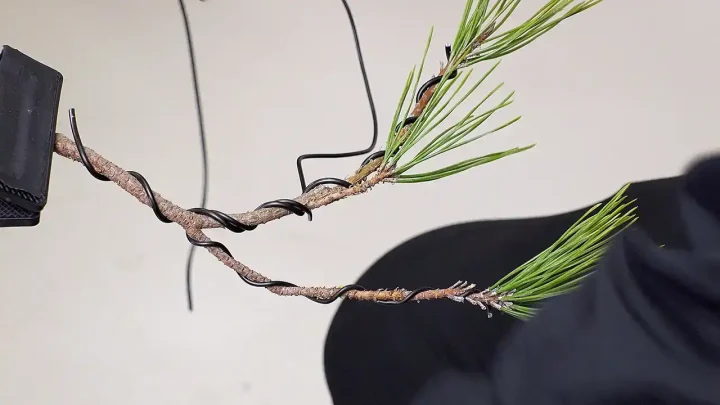
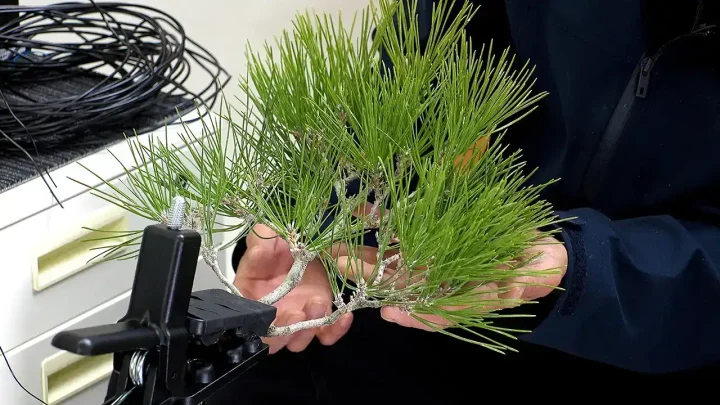
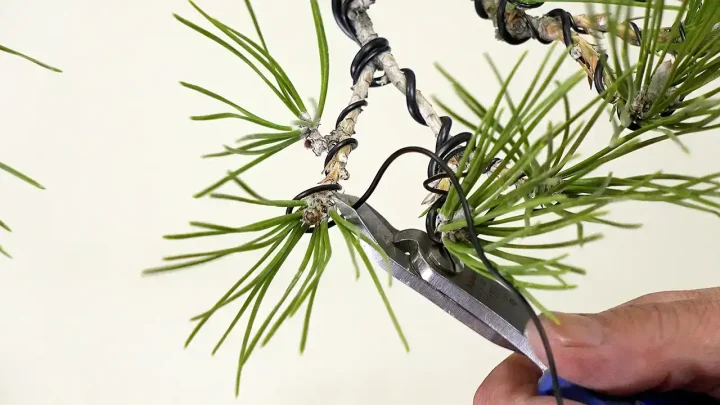
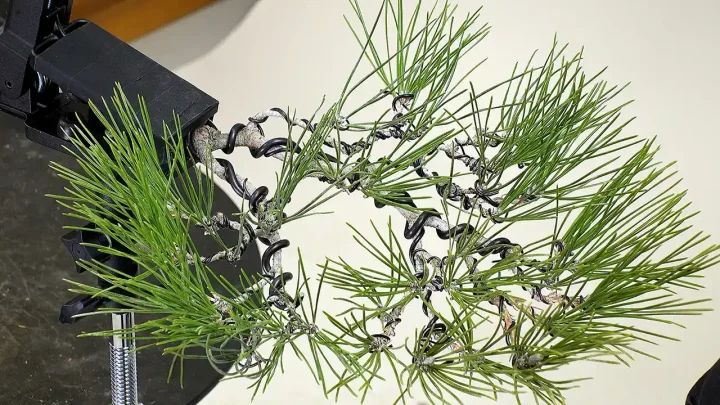
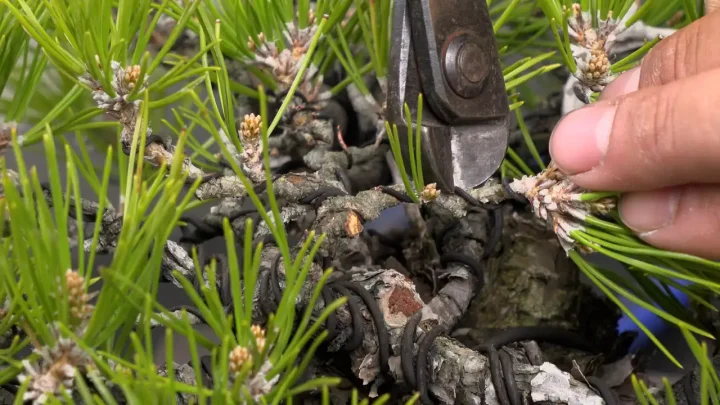

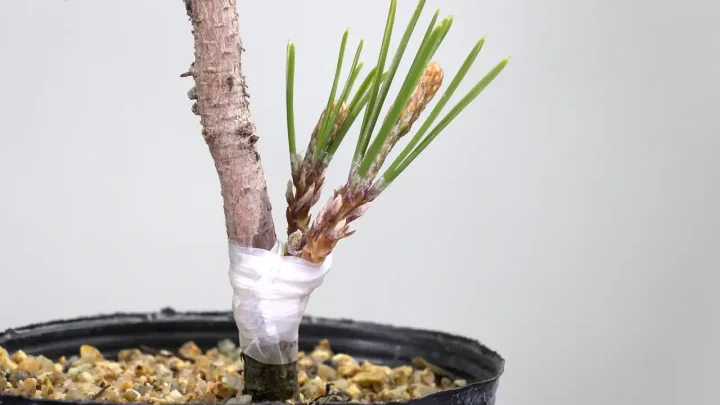
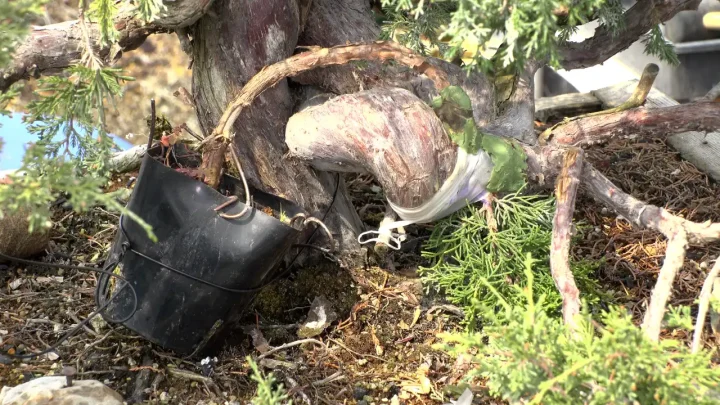
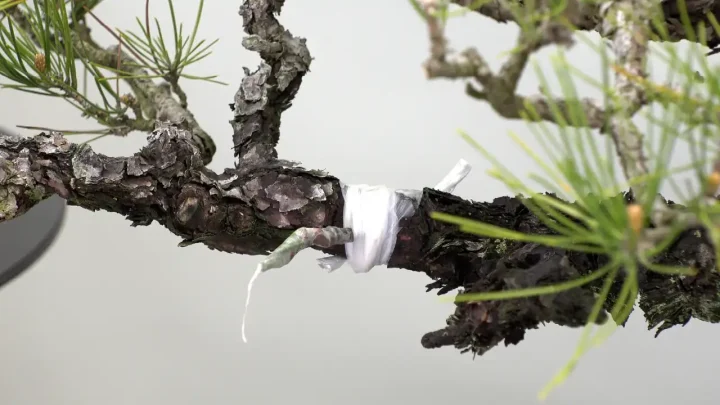
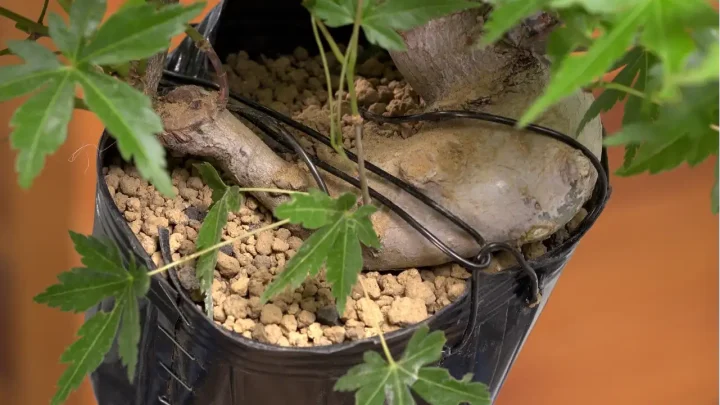
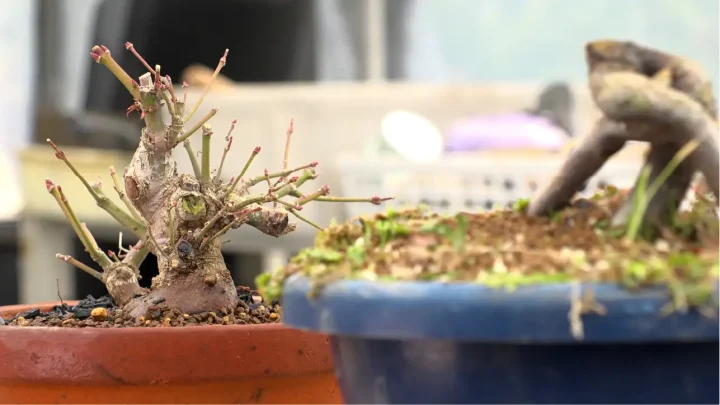


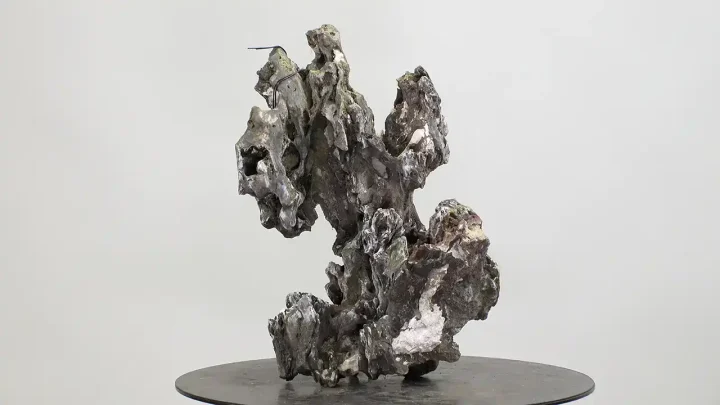
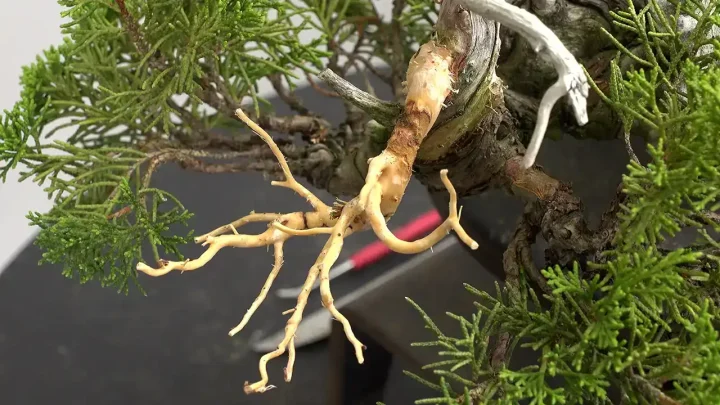
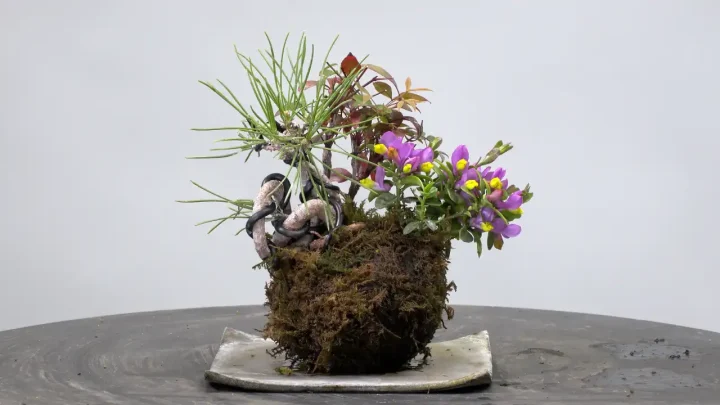
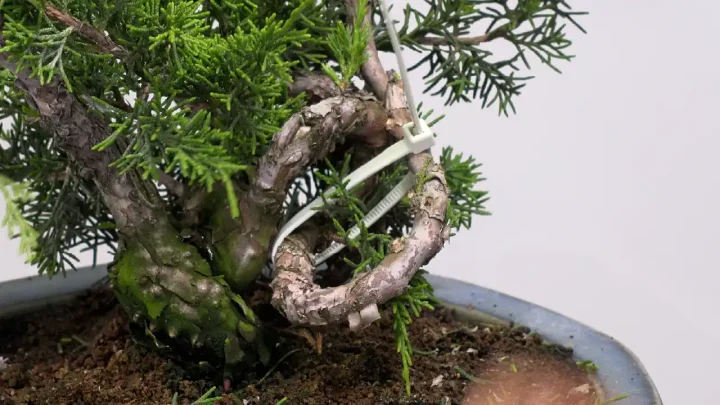
Dear Bonsai Sensei and Brothers, thank you so much for sharing with us the love and passion of the Art.. I have been growing and keeping Nishikimatsu for a bit of time now and arrived at a stage of training and shaping them to future bonsai. I have noticed that this variety is much weaker than standard kuromatsu by responding lightly to mekiri and also having some dieback branches etc.. My question is should it be better to apply metsumi instead of mekiri at right time of the year and also perform structural trimming during low growing season like winter? Thank you again
Here’s the advice from Sensei:
“Candle cutting and candle pinching are essentially the same technique, and as you’ve noticed, Nishikimatsu is weaker than standard kuromatsu. If you do perform full candle cutting, it’s best to do it earlier in the season than you would for kuromatsu. You also need to apply plenty of fertilizer beforehand to build up the tree’s vigor.
Generally, the recommended approach is selective candle pinching — pinching only the strong candles rather than cutting all of them. Another option is to skip candle cutting entirely in years when the tree has been repotted, and focus that year on building vigor instead.
For structural pruning, any time during the dormant season from November through March is fine. However, since Nishikimatsu has weaker water uptake in the branches compared to kuromatsu, more careful and delicate work is required.”
To summarize the key points:
– Focus on selective pinching: Pinch only the strong candles rather than performing full candle cutting across the tree
– If you do full candle cutting: Do it earlier than for kuromatsu, and prepare the tree with sufficient fertilizer beforehand
– Skip it in repotting years: Let the tree recover its vigor instead
– Structural pruning: Anytime during the dormant season (Nov–March) is fine, but work carefully due to the weaker water uptake in the branches
The key to managing Nishikimatsu seems to be reading the tree’s vigor and including “doing nothing” as a valid option in your toolkit.
We don’t currently have a video dedicated specifically to Nishikimatsu, but our paid lessons cover kuromatsu candle cutting, pinching, and structural pruning in detail by season. Since Nishikimatsu management is essentially an adaptation of kuromatsu techniques, those lessons would serve as a solid foundation. Feel free to consider it if you’re interested.
Thank you so much for all these detailed information.
From: “However, since Nishikimatsu has weaker water uptake in the branches compared to kuromatsu, more careful and delicate work is required.” Should we be more careful when cutting bigger branches like applying sealing paste etc even during the dormant season?
Also as mentioned in the quote, nishikimatsu have weaker water intake than kuromatsu..So does it mean that they need more water during growing season or less water than kuromatsu (using same growing soil media)?
Regards
Here’s the advice from Sensei:
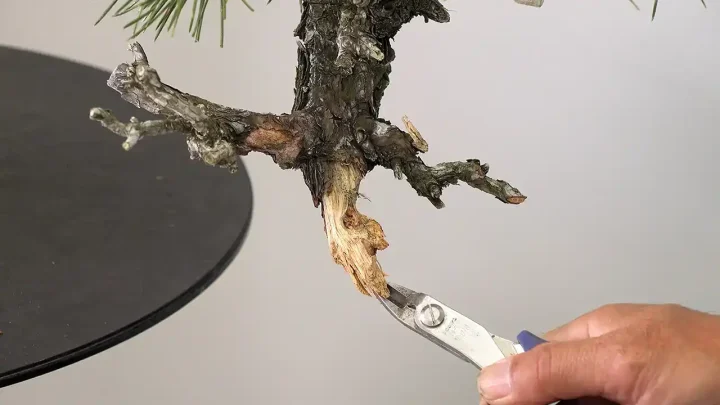
“1. For larger wounds, yes — applying sealing paste is recommended. For smaller cuts, it’s not necessary.
2. As for watering, it’s the same as for kuromatsu. ‘Weaker water uptake’ means the vascular channels are thinner, so you need to be careful during shaping and structural work — but the watering routine itself stays the same. For specifics on water quantity, please refer to the following lessons:”
– https://bonsai-journey.jp/courses/fune/lessons/l501/topics/l501-t03/
– https://bonsai-journey.jp/courses/fune/lessons/l501/topics/l501-t04/
Note: The linked lessons are part of our Fune Course (paid membership) and cover watering for pines and conifers in depth. The principles apply to pine varieties in general, including Nishikimatsu.
Thank you very much for the clear and precious information.
Are these key points also applicable for cultivar like Yatsubusa and kotobuki type?
Here’s the advice from Sensei:
“The basic management approach is the same as for kuromatsu. However, Yatsubusa-type cultivars, including Kotobuki, tend to develop crowded buds, so managing bud count is important. Depending on the cultivation stage, it’s also beneficial to use wiring to arrange the branches in a way that secures light penetration and airflow, which encourages inner buds (futokoro-me) to emerge.
Kotobuki-type varieties in particular tend to have trunks and branches that harden relatively quickly. For this reason, it’s best to establish the branch placement according to your final vision at an early stage.”
Thank you for the detailed advices.
For Yatsubusa-type cultivars, including Kotobuki, for managing the crowded buds tendency, is it better to perform Metsumi (early bud selection stage) or Mekiri (late stage)?
Regarding Futokoro-me on coniferous, does lowering down the branch tip can also help to promote inner buds to emerge?
Regards