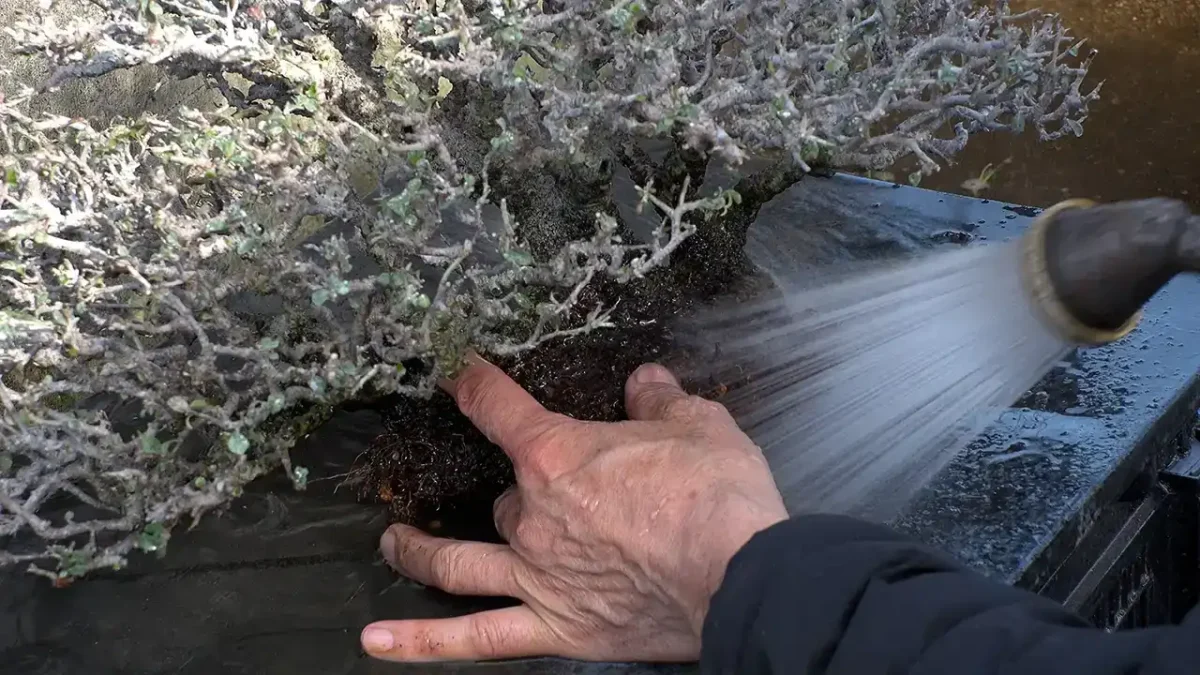
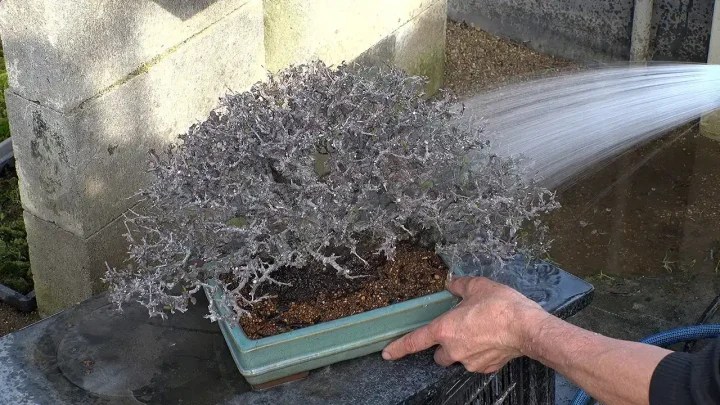
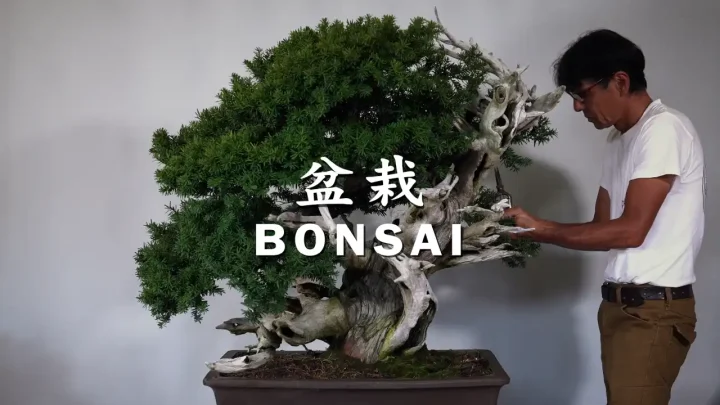
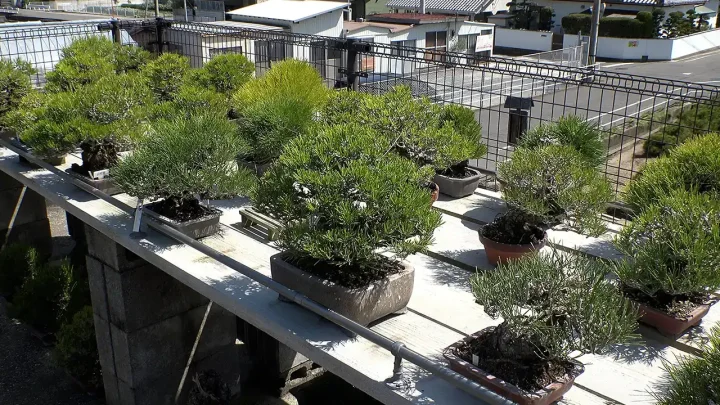
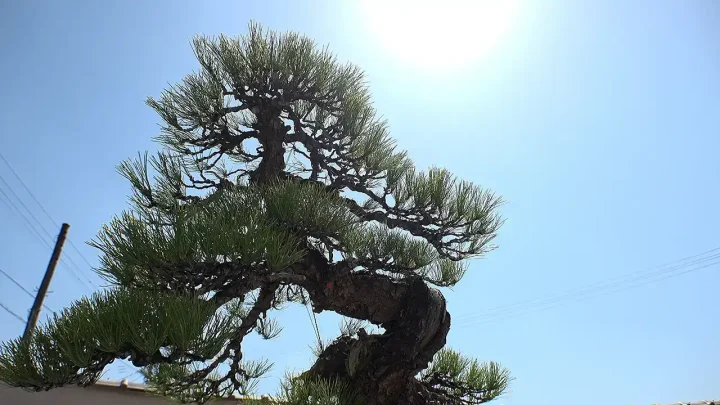
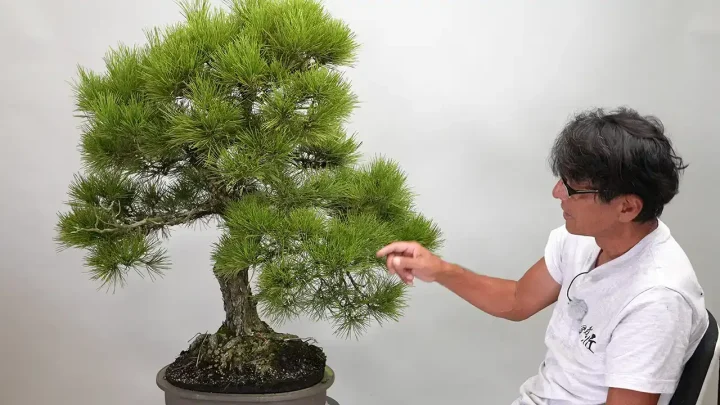
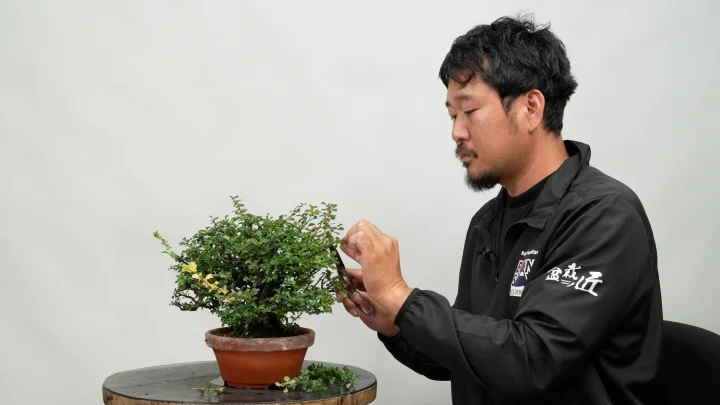
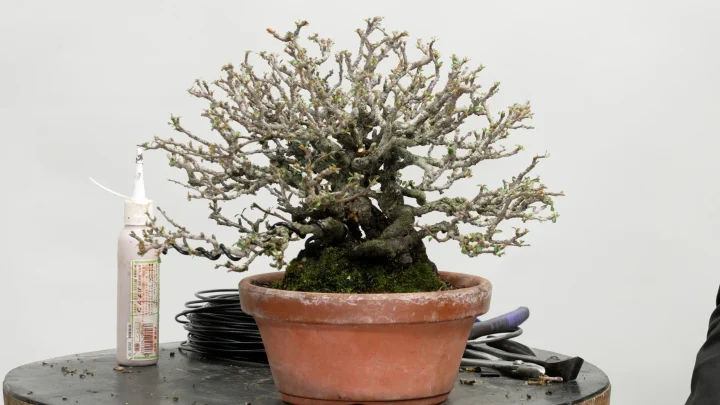
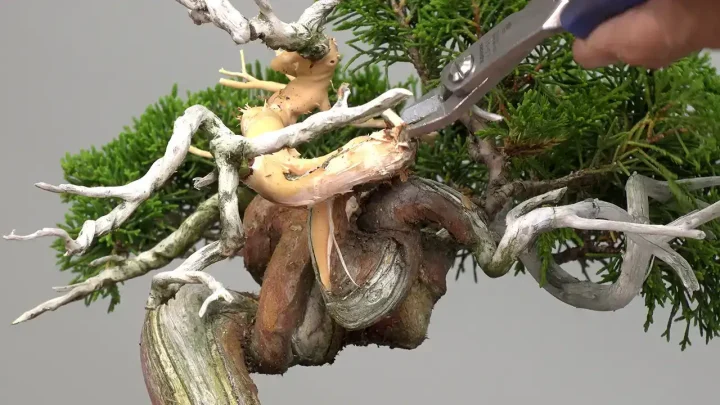
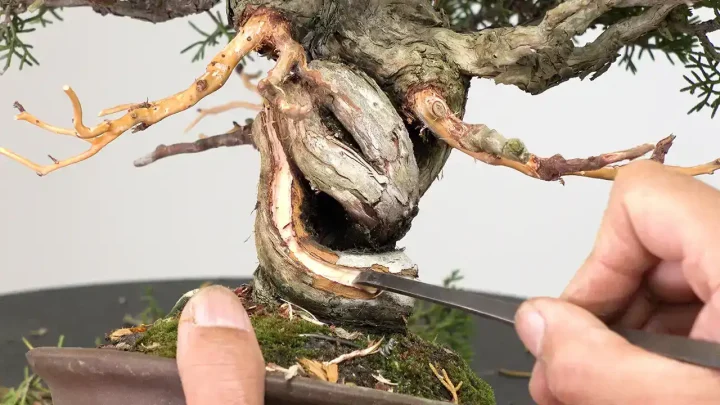
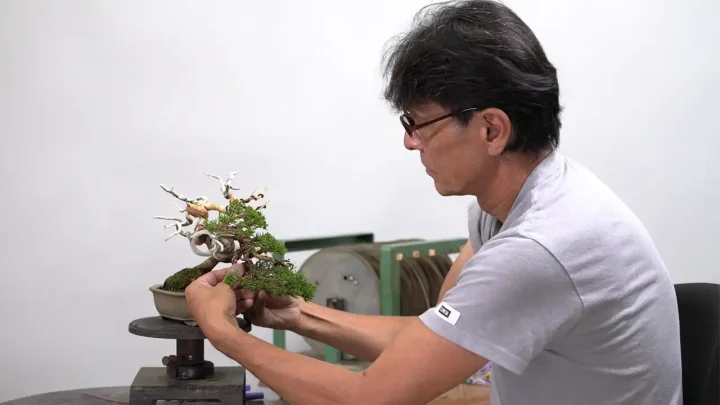
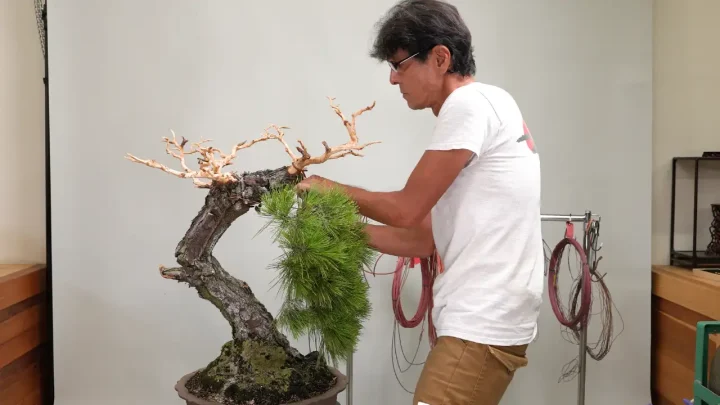
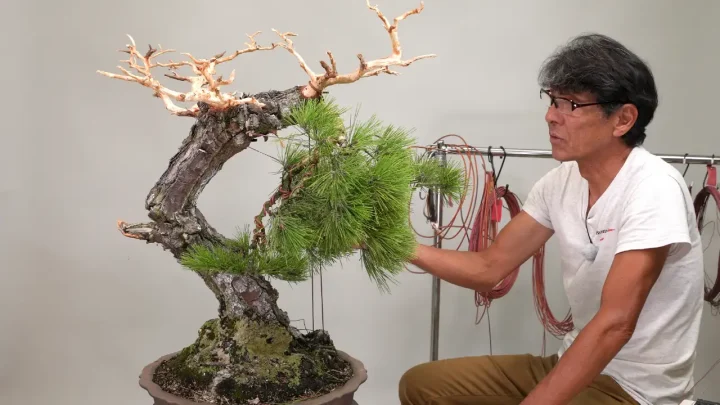
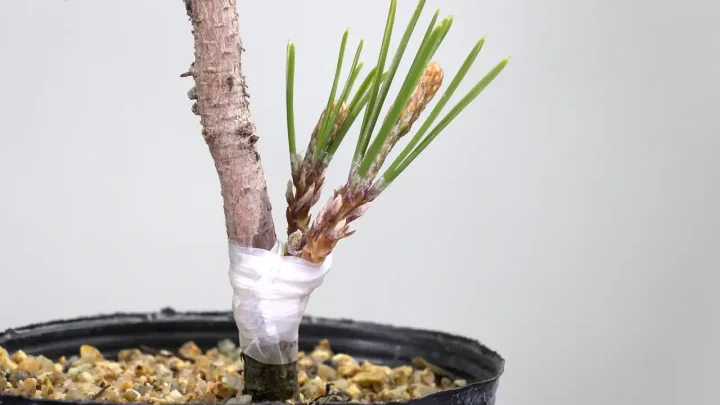
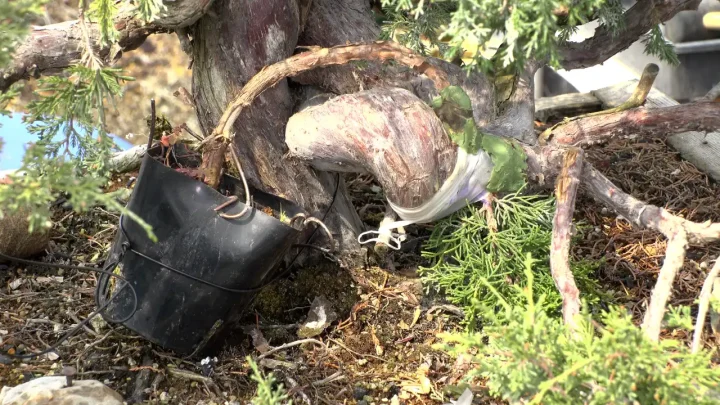
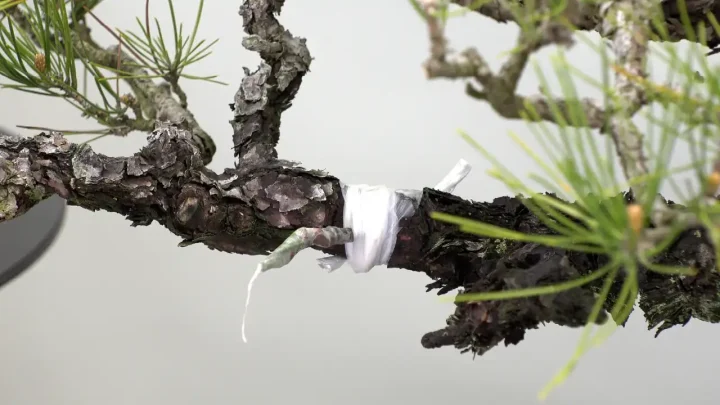
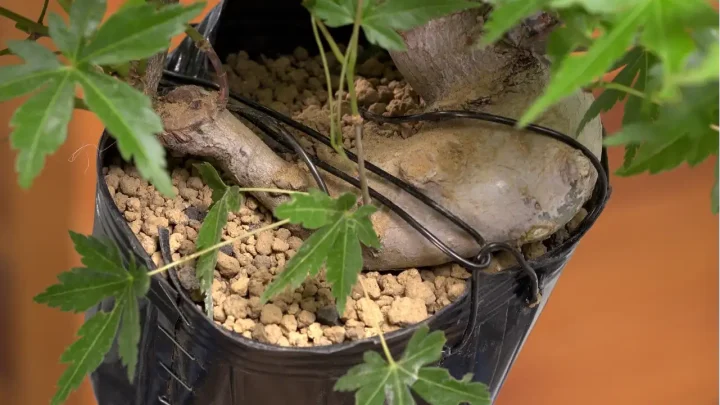
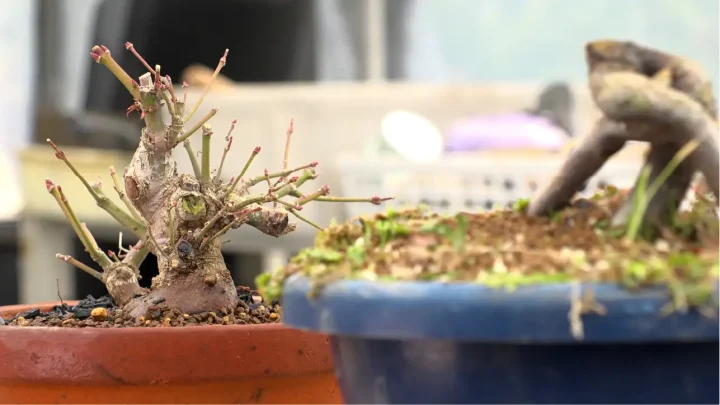
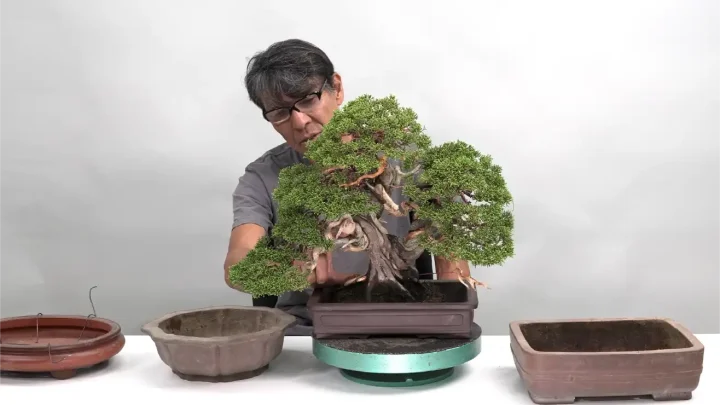
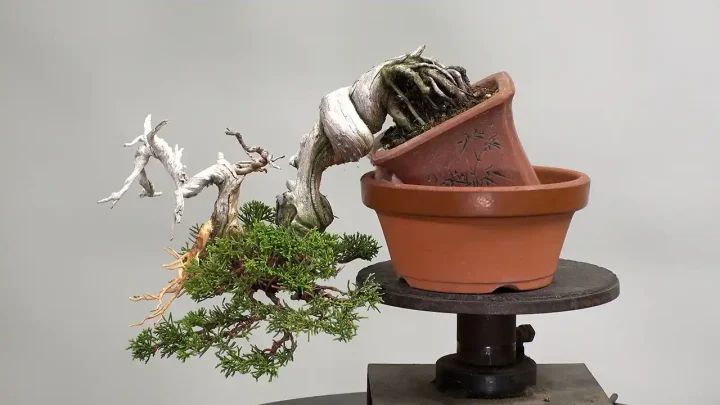
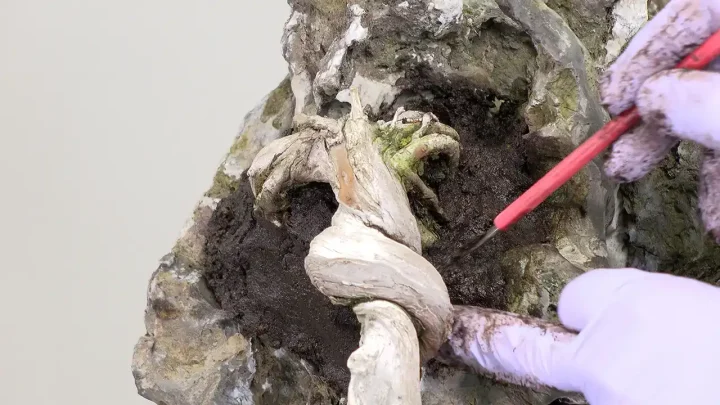
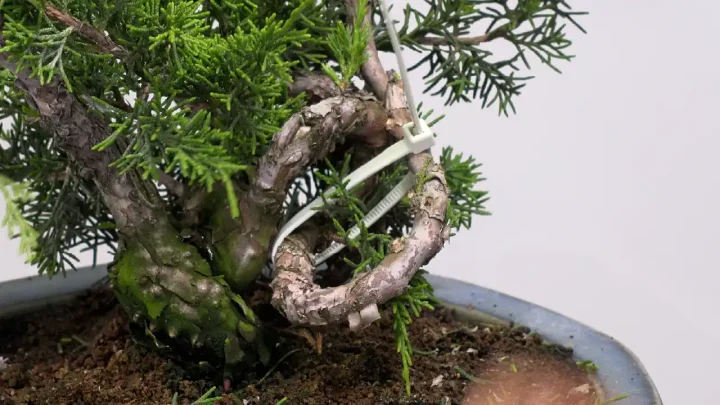
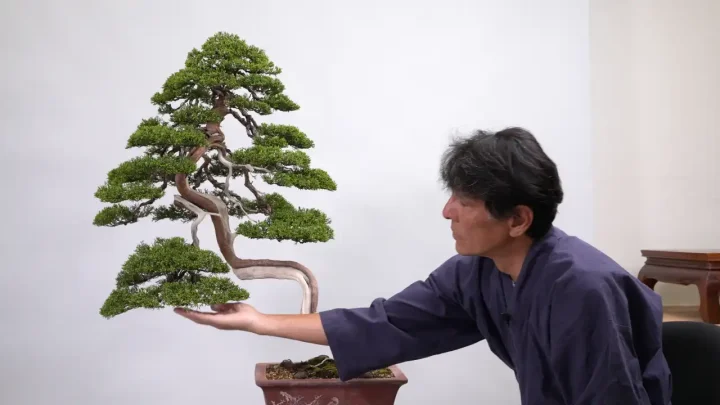
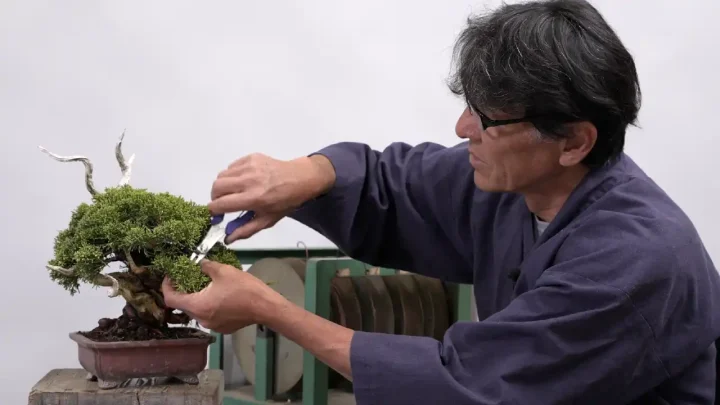
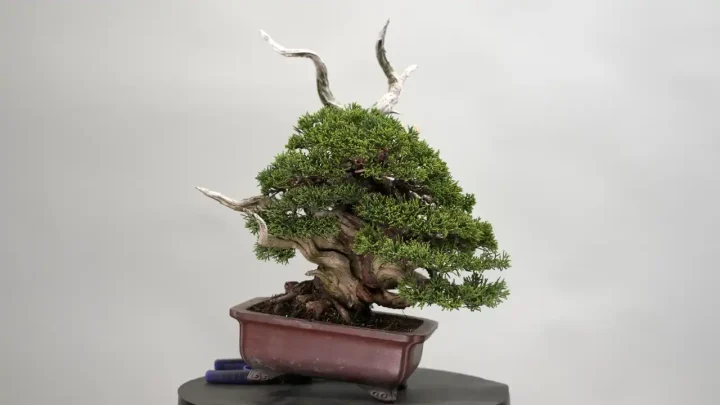
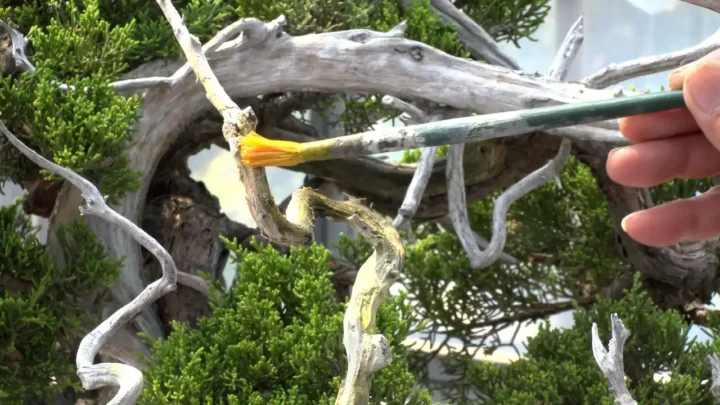
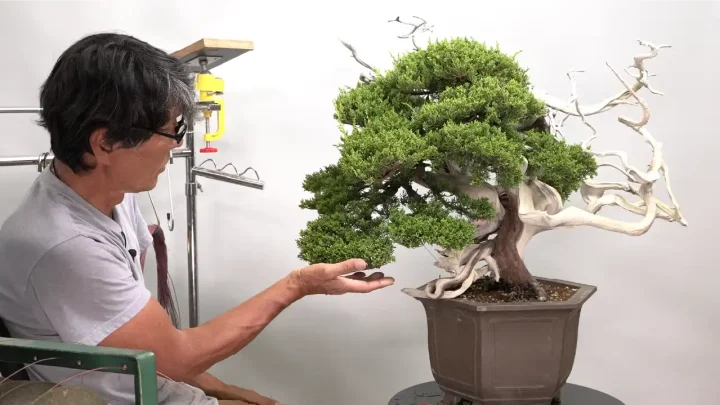
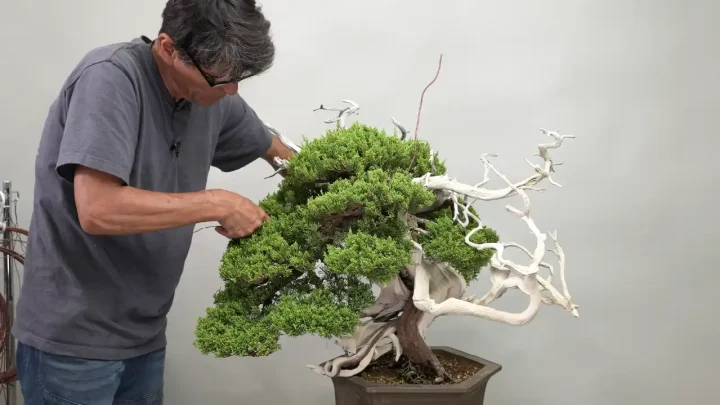
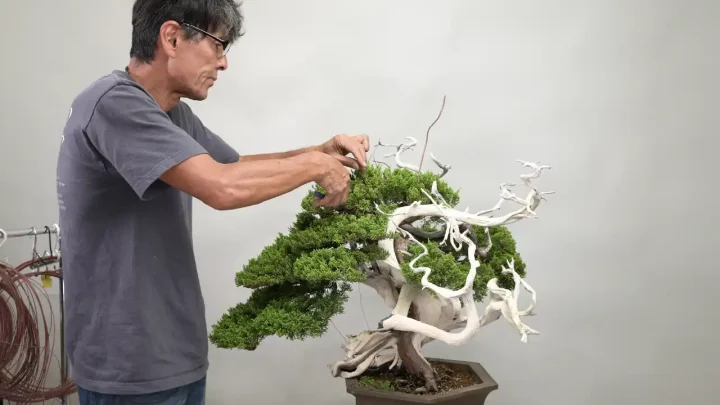
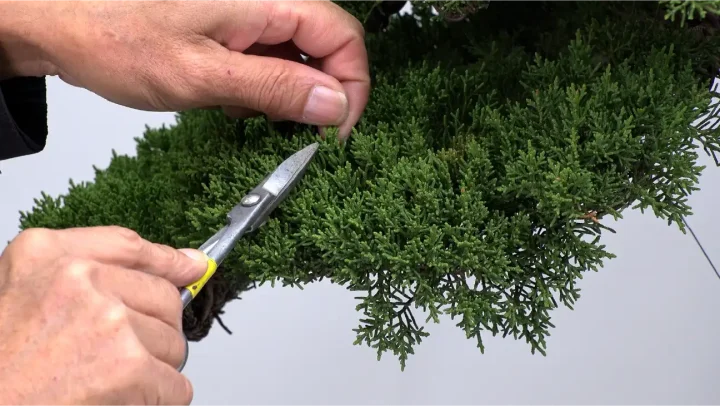
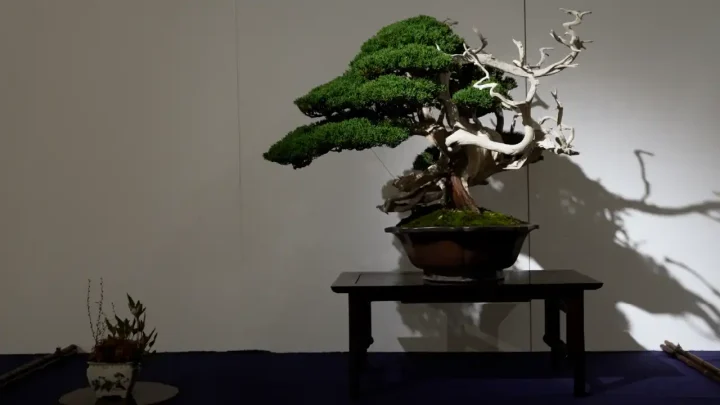
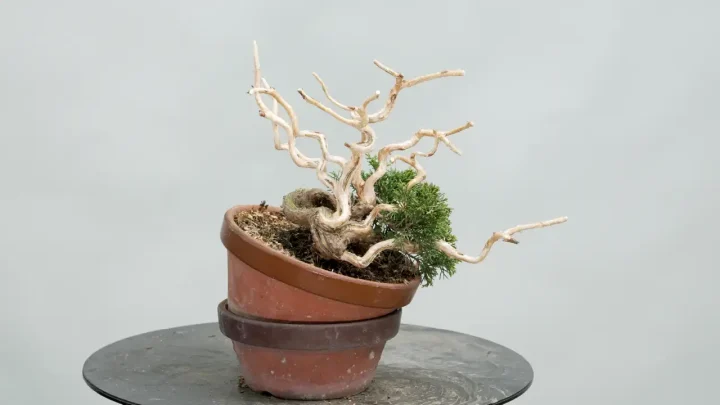
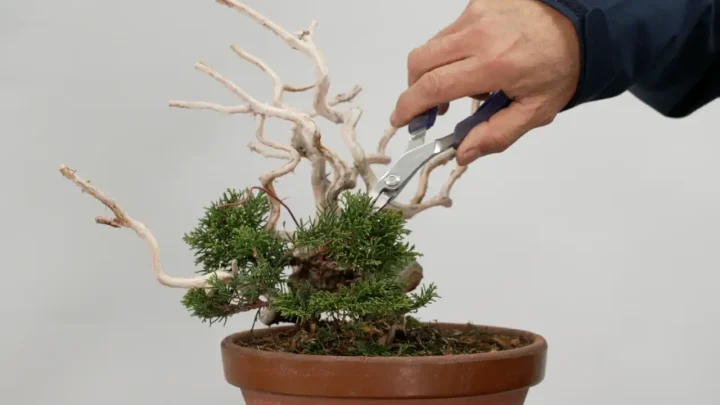
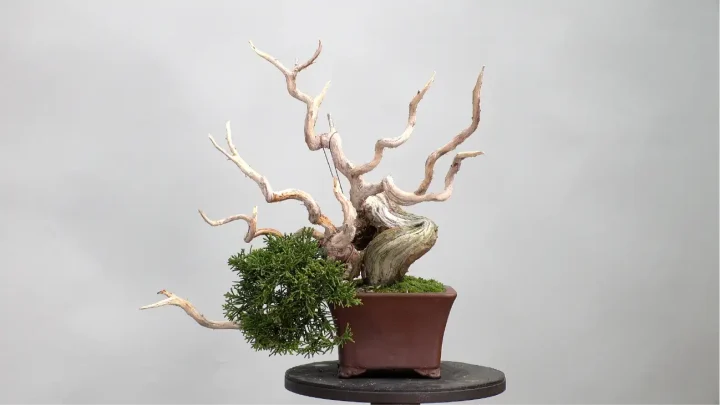
Before beginning Repotting on a Shimpaku Juniper, rinse the surface with a gentle-pressure spray and assess the condition of the roots. When grime settles into the Potting Soil, the soil dries more slowly — so this care is repeated several times a year. If there is no Root Rot and the soil is clean, Root Washing is not performed. Look carefully first, then move your hands.
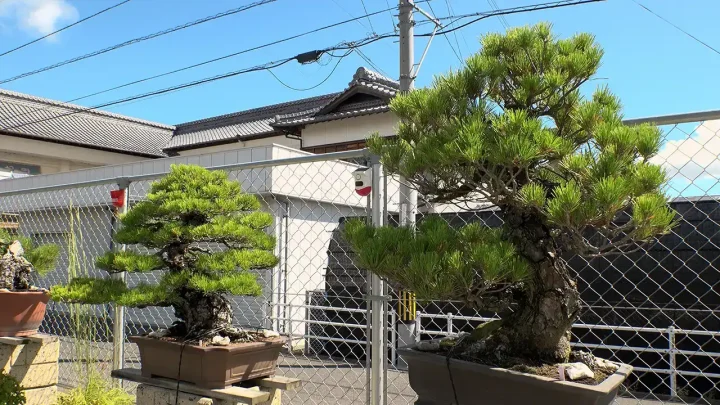
First, look at the tree. Take your time examining its surface. The essence of the work already lives in that quiet moment.
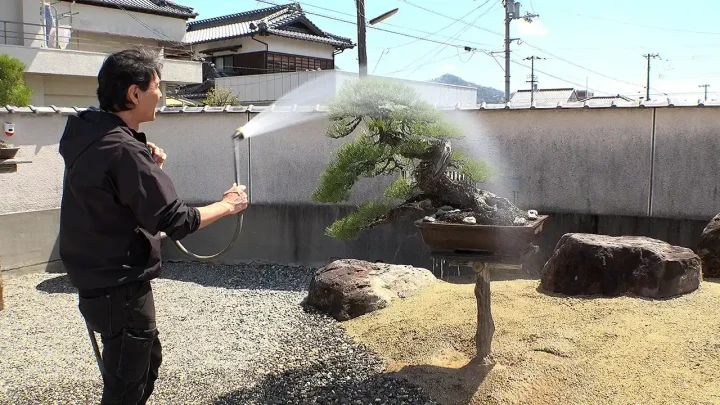
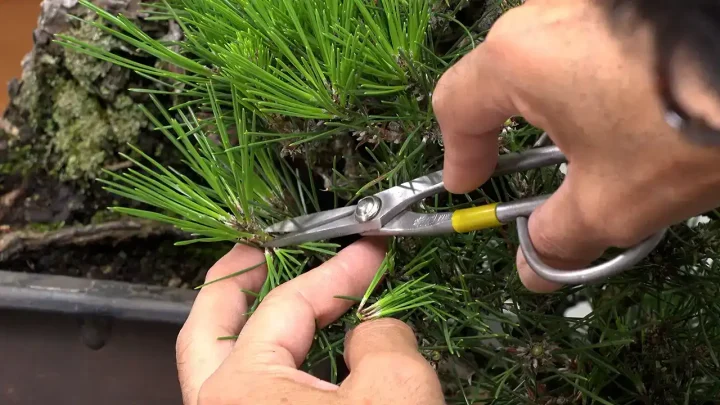
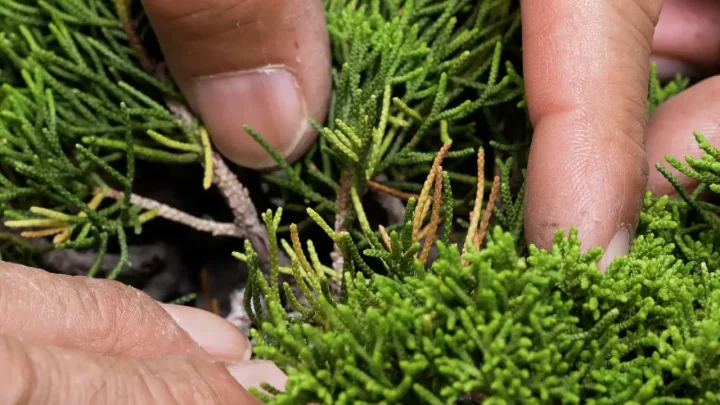
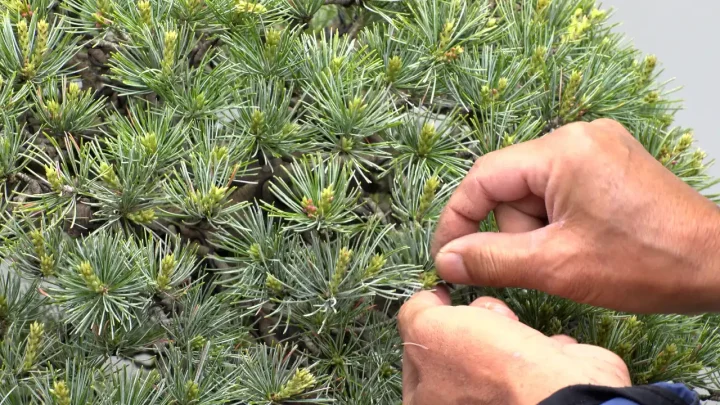
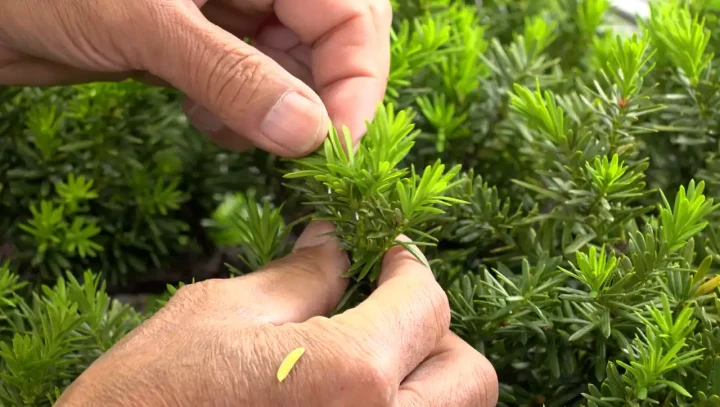
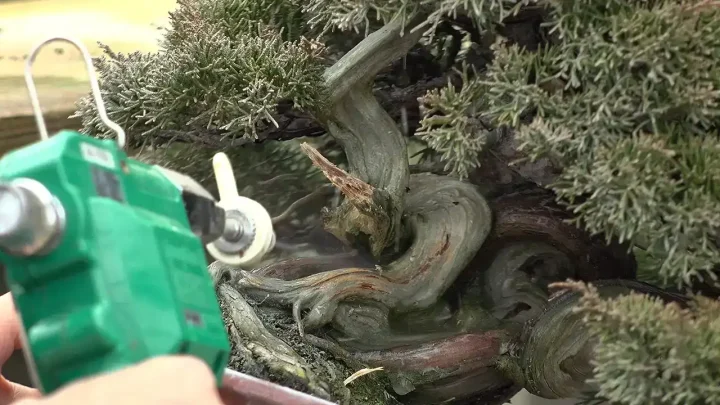
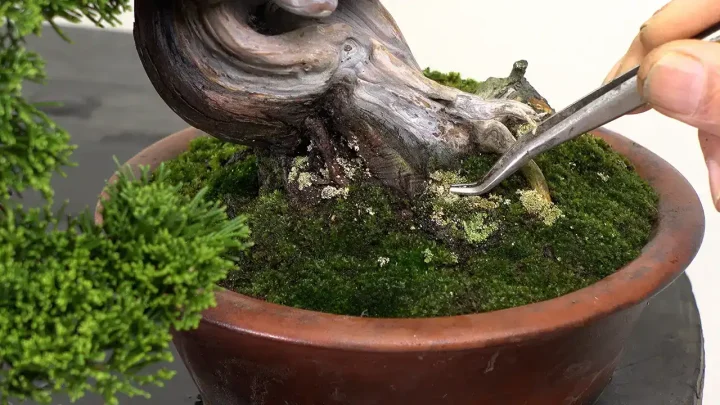
On a Shimpaku Juniper, residual fertilizer and airborne grime accumulate little by little. Rinse it away with a gentle-pressure spray, carefully rubbing the surface with your fingers and thumbs. Don't forget the underside. If you don't have a spray bottle, a showerhead and a toothbrush work just as well.
This isn't about aesthetics. When grime settles into the Potting Soil, the soil dries more slowly — and that directly affects the tree's ability to breathe. That's why this care is repeated several times a year, not only at Repotting. Especially during periods of heavy fertilization, the surface tends to build up quickly.
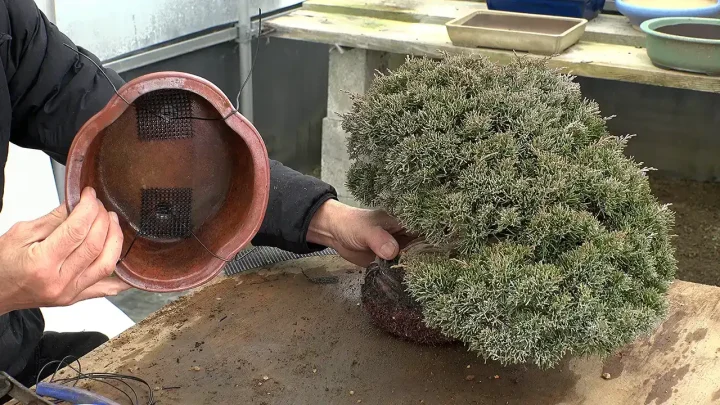
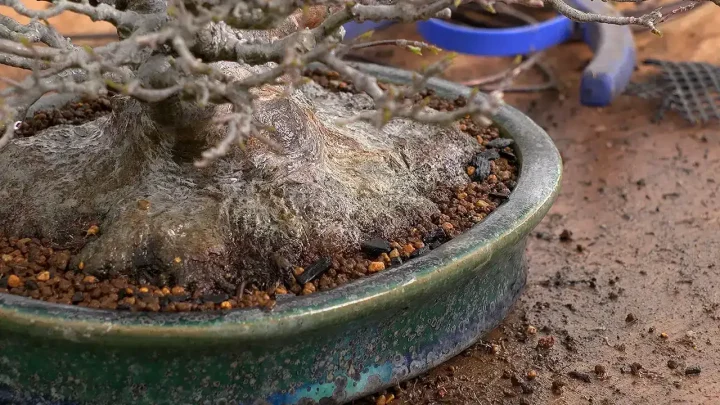
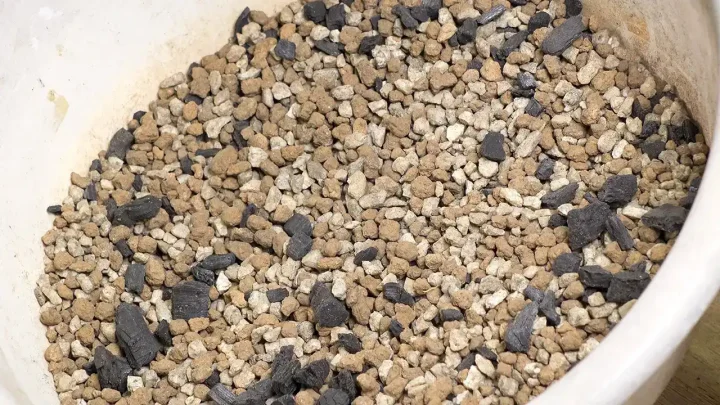
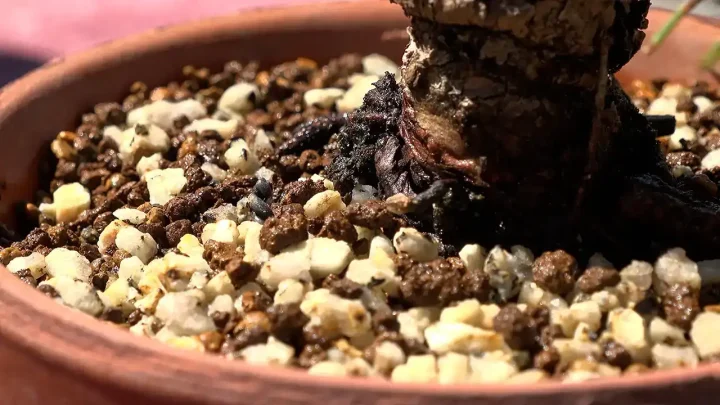
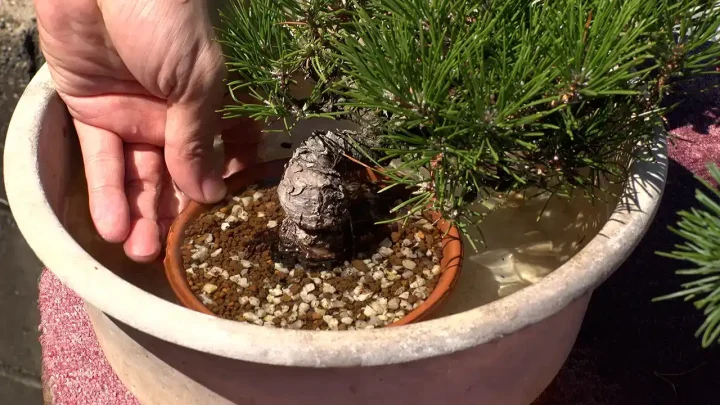
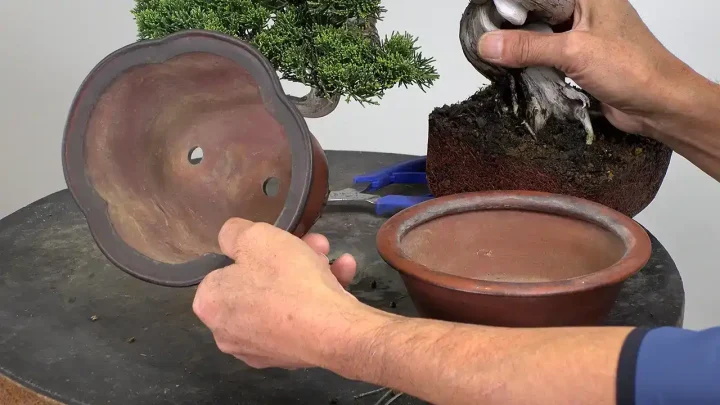
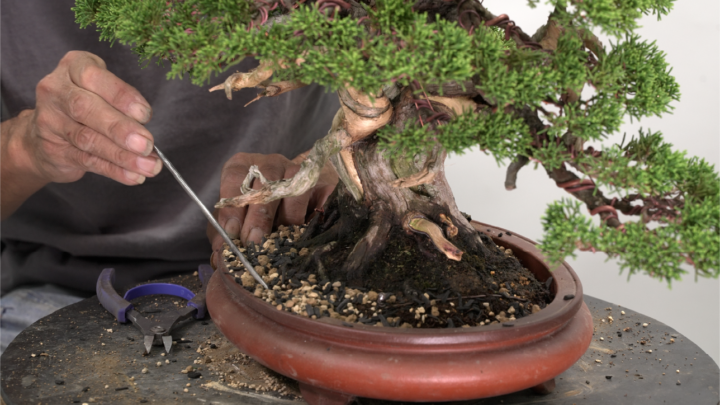
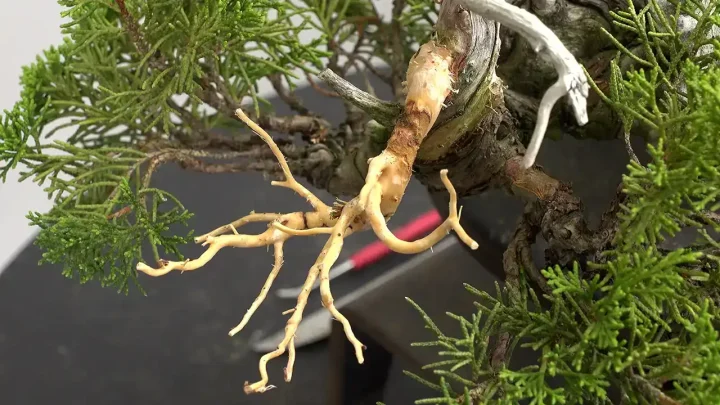
After removing the tree from its pot, take a careful look at the roots and the Potting Soil. Is there any Root Rot? Is the soil clean?
When Repotting Deciduous Trees (Zoki-rui), it's common to perform a full Root Washing, removing all the soil. But Shimpaku Juniper is different. If the roots are in good condition, leave them as they are. On this day, the Shimpaku Juniper showed no Root Rot, and the Potting Soil was clean. So Root Washing was not done — and that quiet decision carries you gently into the next step.
Different species call for different hands. Even with the same Shimpaku Juniper, the approach changes depending on the condition that day. What you do is decided only after looking carefully.
Repotting has a sequence of steps. But before any of those steps comes observation.
Whether to do Root Washing. How thorough to be with cleaning. Those decisions are made by the tree standing in front of you. Look, judge, then move your hands. Through that repeated process, you gradually begin to hear what the tree is telling you.
There is no need to rush. Looking carefully is where everything begins.
The journey of "Master: “Fune”" begins with member registration.
Begin the Journey